The Social Reaction: Public and Peer Perception of Women Chemists in the 1800s
🌟 Explore how women chemists in the 1800s faced societal skepticism and evolving public perception, revealing the challenges and breakthroughs that shaped…
Read article
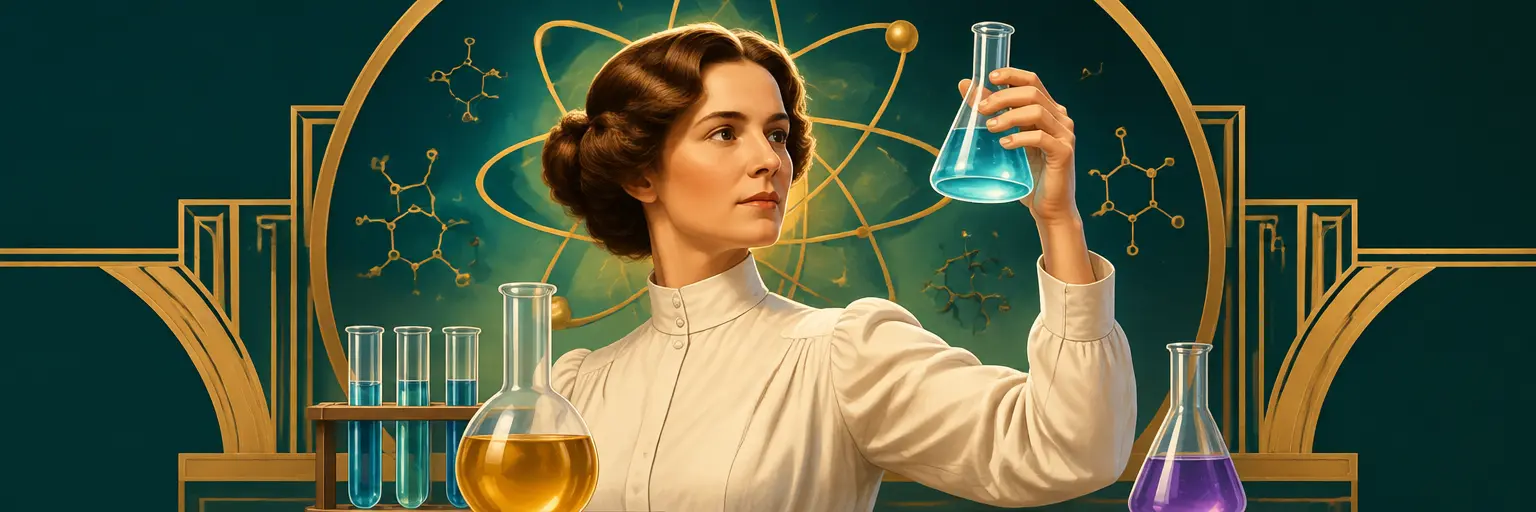
Chemistry has been shaped by brilliant women whose discoveries transformed our understanding of matter, from ancient alchemy to modern molecular science. This section of WomenInScienceHistory.com uncovers the pioneering female chemists who overcame systemic barriers to unlock secrets of the elements, forge new compounds, and redefine entire subfields—often without credit or recognition. Explore the trailblazers of organic and inorganic chemistry, the unseen architects behind major chemical discoveries, and the biochemists who decoded life’s molecular machinery. Journey through centuries of innovation, from 18th-century experimenters to 21st-century Nobel laureates, and meet the women who broke glass ceilings in laboratories worldwide. Their stories not only highlight groundbreaking achievements—such as isolating radium, pioneering polymer science, or mapping metabolic pathways—but also reveal the resilience and brilliance required to thrive in male-dominated academia and industry.
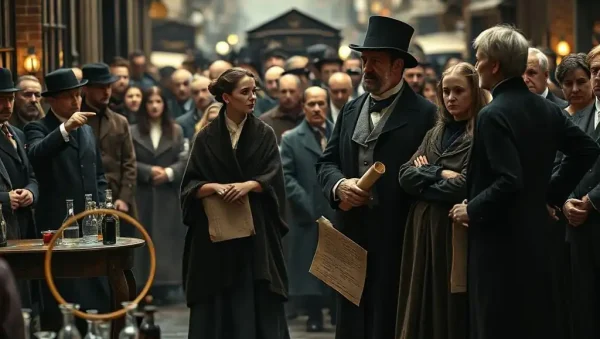
🌟 Explore how women chemists in the 1800s faced societal skepticism and evolving public perception, revealing the challenges and breakthroughs that shaped…
Read article
🌟 Explore inspiring stories of women who shattered barriers in women’s chemical research from 1950 to 2000, highlighting their groundbreaking contributions and…
Read article
🔍 Celebrating women’s chemistry historical breakthroughs, this article highlights female scientists unraveling mysteries at the molecular level, showcasing their groundbreaking contributions and…
Read article
🌟 Pauline Beery Mack's pioneering work in chemical research from the 1920s to 1950s exemplifies women's vital contributions to science, overcoming gender…
Read article
✨ Jacqueline Barton’s groundbreaking DNA research reveals how electricity uniquely traverses the DNA helix, illuminating new pathways in molecular science. Her pioneering…
Read article
🌟 Women discovering elements history is filled with trailblazers who revolutionized science despite facing immense challenges. Celebrating their pioneering contributions not only…
Read article
🌟 Uncover the hidden world of women’s alchemy, where secret knowledge and historical challenges shaped their perilous journey in pre-18th-century science, revealing…
Read article
🌟 MarieAnne Lavoisier's influence as a chemistry partner was pivotal in revolutionizing the field, showcasing how her collaboration with Antoine Lavoisier advanced…
Read article
🌟 Discover how Darleane Hoffman: Superheavy element research broke barriers, pioneering the exploration of uncharted scientific territory from 1950 to 2000, and…
Read article
🌟 Discover the inspiring story of Dorothy Hodgkin, a trailblazing scientist whose groundbreaking work in X-ray crystallography revolutionized our understanding of life's…
Read article
🌟 Uncover the inspiring stories of women whose groundbreaking chemical discoveries remain uncredited, shedding light on the often overlooked contributions in women’s…
Read article
🌟 Discover the inspiring stories of women chemists shaping the future of gene editing, highlighting the crucial role of women in gene…
Read articleExplore the remarkable stories of female chemists who transformed our understanding of matter, from ancient alchemists to modern researchers. This comprehensive guide highlights their discoveries, struggles, and enduring legacies, offering a rich resource for students, educators, and history enthusiasts. Dive into subcategories spanning centuries and specialties, each revealing how women overcame barriers to shape the periodic table, develop life-saving drugs, and revolutionize industrial processes.
This section celebrates contemporary innovators like Frances Arnold, who won the 2018 Nobel Prize for directed evolution of enzymes, and Jennifer Doudna, co-developer of CRISPR gene editing. Expect profiles of current researchers tackling climate change, sustainable materials, and nanomedicine, alongside their mentorship of next-generation scientists. You’ll also gain insight into modern equity initiatives, including award programs and institutional policies fostering gender parity in laboratories.
Discover trailblazers like Marie Curie, whose radium research earned two Nobel Prizes, and Gerty Cori, the first woman to win a Nobel in Physiology or Medicine for carbohydrate metabolism. This era saw women fighting for lab access, teaching posts, and recognition, often working unpaid. Learn about their pivotal contributions to radioactivity, vitamins (e.g., Elmer McCollum’s collaborator, though often uncredited), and industrial chemistry during World Wars, when labor shortages opened temporary doors.
Focus on synthetic chemistry pioneers such as Alice Ball, who developed the first injectable leprosy treatment (chaulmoogra oil derivatives) in the 1910s, and Stephanie Kwolek, inventor of Kevlar. Explore their breakthroughs in polymer science, drug synthesis, and natural product isolation. Expect case studies on alkaloid chemistry, heterocyclic compounds, and catalytic methods, highlighting how these women balanced innovative research with institutional skepticism and patent battles.
Uncover the stories behind major breakthroughs, including Dorothy Hodgkin’s X-ray crystallography of penicillin and vitamin B12 (Nobel 1964), and Ida Noddack’s co-discovery of rhenium and early suggestion of nuclear fission. This subcategory emphasizes the detective work of isolating elements, mapping molecular structures, and interpreting spectroscopy data. Each narrative reveals how meticulous experimentation, often in cramped basements or without formal appointments, yielded revolutionary insights.
Travel back to figures like Cleopatra the Alchemist, attributed with inventing the alembic still, and Mary the Jewess, whose kerotakis apparatus advanced distillation. In medieval Europe, Hildegard of Bingen systematically recorded herbal remedies and mineral properties. Expect discussions on ancient dye-making, metal refining, and medical potions, framed within philosophical alchemy’s quest for transmutation. These women navigated guild restrictions and religious taboos, leaving fragmented but fascinating legacies.
Highlight specialists in coordination complexes, catalysis, and solid-state chemistry. Learn about 19th-century figures like Ellen Swallow Richards, who pioneered water purity analysis, and 20th-century researchers like Isabella Karle, whose work on electron diffraction advanced structural chemistry. The section covers transition metal chemistry, radioisotope applications (e.g., Lise Meitner’s early work on thorium), and materials science, showing how women contributed to fertilizers, ceramics, and nuclear energy.
This era features crystallographers like Dorothy Hodgkin (Nobel 1964), biochemists like Gertrude B. Elion (Nobel 1988) who developed antiviral and anticancer drugs, and physical chemists like Mildred Cohn, who pioneered NMR and EPR techniques. Expect narratives of women entering industry and academia in greater numbers, yet facing subtle discrimination in lab culture, journal submissions, and grant reviews. Their resilience drove major advances in pharmaceuticals and analytical instrumentation.
Explore pioneers like Mary Somerville, who translated Laplace’s celestial mechanics and wrote on chemistry, and Eunice Foote, who demonstrated CO2’s heat absorption—a prelude to climate science. This subcategory covers amateur laboratories, public lectures, and home experiments, since universities were closed to women. Learn about their contributions to agricultural chemistry, mineral analysis, and early photography (e.g., Julia Margaret Cameron’s chemical processes), often published anonymously or via male relatives.
Discover figures like Marie-Anne Paulze Lavoisier, who translated and illustrated her husband’s works while co-authoring foundational texts, and Elizabeth Fulhame, who published on photocatalytic reduction of metals using light. Women in this era operated apothecary shops, ran family businesses, and performed public demonstrations. Their work on gases, acids, and redox reactions helped debunk phlogiston theory, yet textbooks often erased their names. Expect insights into gendered access to scientific instruments and periodicals.
This vibrant subcategory spans from Phoebe Omlie’s early enzyme studies to Ada Yonath’s Nobel-winning ribosome crystallography (2009). Emphasize pioneers in DNA research (Rosalind Franklin’s X-ray images), metabolic pathways (allosteric regulation by Monod’s colleague, though often overlooked), and protein engineering. Expect profiles of woman-founded biotech firms, public health breakthroughs (e.g., Dorothy Crowfoot Hodgkin’s insulin structure), and modern CRISPR applications. Each story demonstrates the integration of chemistry with biology, medicine, and genetics.
Marie Curie was the first, winning the 1911 Nobel Prize in Chemistry for her discovery of radium and polonium. She was also the first person—male or female—to win Nobel Prizes in two different sciences, having previously earned the 1903 Physics Prize with her husband Pierre and Henri Becquerel.
Systemic bias excluded women from university degrees, lab positions, and membership in scientific societies until the late 19th century. Their work often appeared under male colleagues’ names, or they were labeled as assistants. Additionally, patents required property ownership, which women rarely held, so discoveries were legally assigned to men.
Many ran apothecary shops, brewed medicinal concoctions, and developed distillation apparatus (e.g., Mary the Jewess). They worked with dyes, metals, and herbal extracts, recording practical recipes. While banned from universities, they transmitted knowledge through apprenticeships and craft guilds, blending empirical observation with mystical writings.
Reports indicate underrepresentation in senior faculty roles and Nobel awards, plus higher rates of harassment and funding disparities. However, programs like the L'Oréal-UNESCO For Women in Science award and institutional NSF ADVANCE initiatives actively counter these barriers, though attrition from PhD to faculty roles remains a concern.
Browse our biographical index, use the subcategory filters above, and check our timeline feature. Each profile includes primary source archives, notable publications, and teaching resources. Subscribe to our newsletter for monthly highlights and virtual lectures featuring historian-scientist collaborations.