
Jacqueline Barton: Tracing Electricity's Surprising Path Through DNA's Helix

Welcome to WomenInScienceHistory.com!
Delve into the untold stories of remarkable women who shaped the scientific landscape. Today, we illuminate the fascinating work of Jacqueline Barton, a chemist whose groundbreaking DNA research revealed a surprising truth: that electricity can travel along the double helix. But how does this discovery reshape our understanding of DNA, and what implications does it hold for the future of medicine and nanotechnology? Explore her journey and the electrifying world of DNA with us.
- Introduction: Jacqueline Barton, Pioneer of DNA Charge Transport Research
- Early Life and Education of Jacqueline Barton
- Jacqueline Barton's Groundbreaking DNA Research: Unveiling Charge Transport
- Exploring DNA Charge Transport Mechanisms with Jacqueline Barton
- The Applications of Jacqueline Barton's DNA Research
- Challenges and Recognition in Jacqueline Barton's Career
- Jacqueline Barton's Legacy: Inspiring Future Generations of Scientists
- Conclusion: Jacqueline Barton, a Trailblazer in DNA Research and Women in Science
-
Frequently Asked Questions
- ### Who is Jacqueline Barton and what is she known for?
- ### What is DNA charge transport, and why is Jacqueline Barton's work on it significant?
- ### What challenges did Jacqueline Barton face as a woman in science?
- ### How has Jacqueline Barton's research impacted our understanding of DNA?
- ### Where can I learn more about Jacqueline Barton's work and other women in science?
- Final Reflection: Illuminating DNA's Electrical Secrets
- Unveil DNA's Secrets & Ignite Discovery!
Introduction: Jacqueline Barton, Pioneer of DNA Charge Transport Research
Women in Chemistry: Highlighting Jacqueline Barton's Contributions
Jacqueline K. Barton stands as a towering figure in the realm of bioinorganic chemistry, a field that bridges the complexities of biological systems with the principles of inorganic chemistry. Her pioneering work, particularly in the mid-late 20th century, redefined our understanding of DNA's fundamental properties. At a time when women in chemistry faced significant barriers, Barton's intellectual prowess and unwavering dedication propelled her to the forefront of scientific discovery, making her an exemplary role model for aspiring female scientists.
Her contributions challenged conventional wisdom, demonstrating that DNA was far more than a passive repository of genetic information. Through meticulous experimentation and innovative thinking, Barton illuminated a previously unseen aspect of the molecule, setting the stage for entirely new avenues of research and application in biological and material sciences.
The Significance of Barton's Work in DNA Science
Prior to Jacqueline Barton's groundbreaking investigations, DNA was predominantly viewed as an inert insulator, a stable genetic archive that simply stored information. This perception was radically overturned by her seminal "Jacqueline Barton DNA research," which revealed DNA's surprising capacity to conduct electricity over significant distances. This discovery of DNA-mediated charge transport fundamentally altered the landscape of molecular biology and chemistry.
The ability of DNA to act as a "molecular wire" has profound implications, from understanding natural DNA repair mechanisms to developing novel diagnostic tools and nanoscale electronic components. Barton's insights into how charges move through the DNA helix provided a crucial new lens through which to examine processes like DNA damage, replication, and even gene expression, making her work a cornerstone for much subsequent innovation in the field.
Early Life and Education of Jacqueline Barton
Barton's Academic Journey: From Chemistry to Ph.D.
Jacqueline Barton's academic journey began with a strong foundation in chemistry, culminating in her Bachelor of Arts degree from Vassar College in 1974. Her undergraduate years honed her analytical skills and ignited a deep fascination with the intricate world of molecules. This initial spark propelled her towards advanced studies, where she sought to merge the rigor of inorganic chemistry with the mysteries of biological systems.
She pursued her doctoral studies at Columbia University, earning her Ph.D. in inorganic chemistry in 1979. Under the mentorship of Professor Stephen Lippard, a distinguished figure in bioinorganic chemistry, Barton delved into the interactions of transition metal complexes with nucleic acids. This formative period provided her with the theoretical framework and experimental expertise that would later underpin her most significant discoveries.
Influences and Mentors Shaping Barton's Scientific Path
The mentorship of Stephen Lippard at Columbia University was a pivotal influence on Jacqueline Barton's scientific trajectory. Lippard's emphasis on understanding the roles of metals in biological processes provided a rich intellectual environment for Barton to explore the interface of inorganic chemistry and biology. This early exposure to bioinorganic chemistry was instrumental in shaping her research interests and her unique interdisciplinary approach.
Following her Ph.D., Barton undertook postdoctoral research at Bell Laboratories, an environment renowned for its interdisciplinary scientific culture and cutting-edge innovation. This experience, though brief, further broadened her perspective, exposing her to diverse experimental techniques and collaborative research models that would prove invaluable as she embarked on her independent career, ultimately leading to her revolutionary "Jacqueline Barton DNA research."
Jacqueline Barton's Groundbreaking DNA Research: Unveiling Charge Transport
The Discovery of DNA-Mediated Charge Transport by Barton
Before Jacqueline Barton's pioneering efforts, the scientific community largely regarded DNA as an electrical insulator, a static molecule primarily known for its role in encoding genetic information. This conventional view began to unravel in the late 1980s and early 1990s, as Barton and her team initiated a series of meticulous experiments. Their initial observations, involving the interaction of certain metal complexes with DNA, suggested an unexpected phenomenon: that electrons could traverse the DNA double helix.
This paradigm-shifting discovery challenged decades of established thought, revealing that DNA possessed an intrinsic electrical conductivity. The implications were immense, suggesting that biological processes, particularly those involving DNA repair and damage, might involve charge transfer events, a concept previously unexplored. This marked a monumental turning point in "Jacqueline Barton DNA research."
How DNA Acts as a Molecular Wire: Barton's Key Findings
Jacqueline Barton's subsequent investigations meticulously elucidated the mechanism by which DNA functions as a "molecular wire." Her research demonstrated that electrons could move through the stacked base pairs of the DNA helix, a process known as DNA-mediated charge transport. This electron hopping occurs efficiently, particularly when the DNA is structurally intact, allowing for rapid communication along the molecule.
Her key findings highlighted that the pi-stacking interactions between adjacent base pairs create a conductive pathway, enabling electron transfer over significant distances—sometimes up to 100 Angstroms or more. This unexpected conductivity provided a novel framework for understanding how DNA might detect and repair damage, suggesting that disruptions in the charge transport pathway could signal errors or lesions in the genetic code.
Exploring DNA Charge Transport Mechanisms with Jacqueline Barton
Understanding the Role of Pi-Stacking in DNA Conductivity
The ability of DNA to conduct charge, as elucidated by Jacqueline Barton's team, is fundamentally rooted in the unique structural arrangement of its base pairs. Within the DNA double helix, the planar nitrogenous bases (adenine, guanine, cytosine, and thymine) are stacked upon one another, much like a tightly packed stack of coins. This arrangement allows for the overlap of their pi-orbitals, creating a continuous electronic pathway along the helix.
This phenomenon, known as pi-stacking, facilitates the delocalization of electrons across the stacked bases, enabling charge to move efficiently from one base to the next. Barton's work demonstrated that this stacking provides the crucial electronic coupling necessary for DNA to function as a molecular wire, allowing for rapid charge transfer over considerable distances within the molecule.
The Influence of DNA Sequence on Charge Transport Efficiency
Jacqueline Barton's "Jacqueline Barton DNA research" also revealed that the efficiency of charge transport through DNA is not uniform but is significantly influenced by the specific sequence of base pairs. Her studies showed that certain sequences, particularly those rich in guanine (G) bases, are more effective at transporting electrons. Guanine, with its lower oxidation potential, acts as a "stepping stone" or a more favorable site for electron transfer, promoting conductivity.
Conversely, disruptions in the stacking, such as mismatches, lesions, or the presence of bulky adducts, can impede or completely block charge transport. This sequence-dependent conductivity has profound implications for understanding DNA repair mechanisms, suggesting that the cell might utilize these electrical properties to detect damage or errors in the genetic code by monitoring changes in local DNA conductivity.
Barton's Experiments: Investigating DNA Electron Transfer
To probe the intricacies of DNA electron transfer, Jacqueline Barton's laboratory employed a sophisticated array of experimental techniques. A cornerstone of her approach involved the use of specially designed transition metal complexes, such as those containing ruthenium or rhodium, which could bind to DNA and serve as electron donors or acceptors. By attaching these probes at specific points along the DNA strand, her team could initiate charge transfer events and monitor their progression.
Techniques like time-resolved spectroscopy, electrochemistry, and fluorescence quenching were crucial in measuring the rates and efficiencies of electron movement. For instance, by observing the quenching of fluorescence from a donor molecule when an electron was transferred to a distant acceptor through the DNA, Barton's team provided compelling evidence for long-range charge transport. These elegant experiments were pivotal in establishing the fundamental principles of DNA conductivity, solidifying the impact of "Jacqueline Barton DNA research."
The Applications of Jacqueline Barton's DNA Research
DNA-Based Sensors and Diagnostics: Barton's Innovations
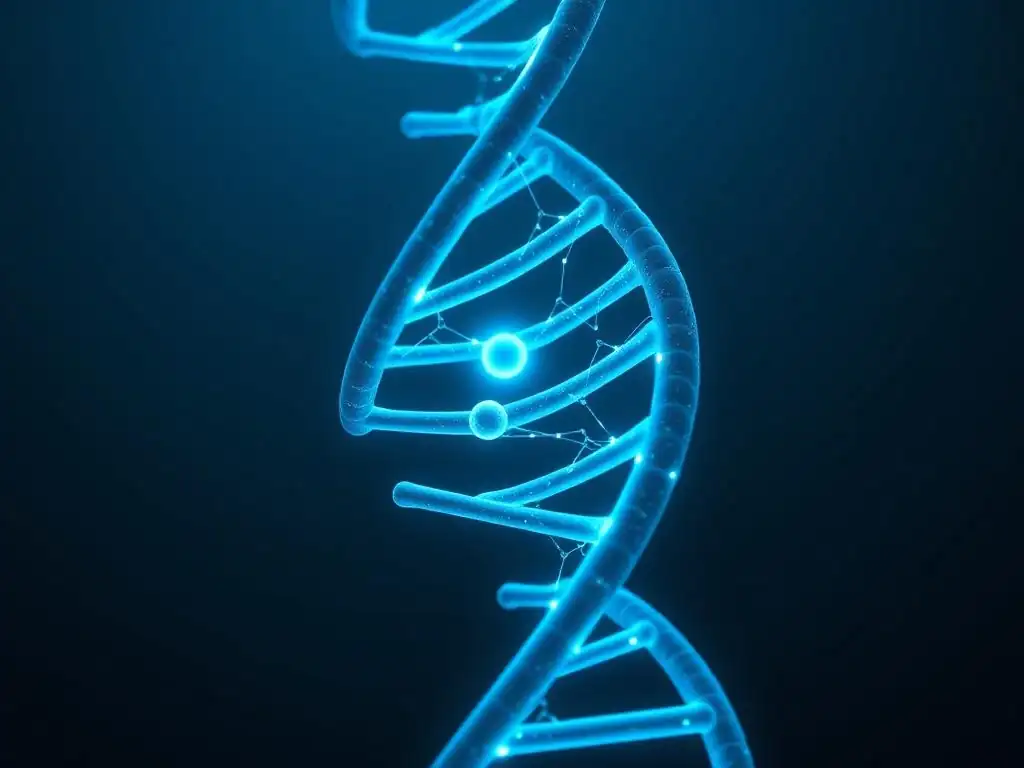
The discovery of DNA-mediated charge transport by Jacqueline Barton opened up a revolutionary avenue for the development of highly sensitive DNA-based sensors and diagnostic tools. By exploiting the principle that DNA damage or specific sequences can alter the molecule's electrical conductivity, researchers can design electrochemical sensors that detect these changes. For example, a sensor might be engineered where a disruption in a specific DNA sequence, indicative of a mutation or the presence of a viral gene, leads to a measurable change in current.
This technology holds immense promise for rapid and accurate disease diagnosis, potentially allowing for the early detection of cancer markers, infectious agents like HIV, or even genetic predispositions. Such innovations could significantly reduce diagnostic times and improve patient outcomes by providing quick, reliable information from biological samples.
Developing New Cancer Therapies Through DNA Targeting
Jacqueline Barton's "Jacqueline Barton DNA research" has also provided crucial insights that could inform the development of novel cancer therapies. Many chemotherapeutic drugs work by damaging DNA in cancer cells, but understanding how DNA repairs itself is vital for increasing treatment efficacy. By comprehending DNA charge transport, scientists can design molecules that specifically interfere with the repair pathways that rely on this electrical signaling.
For instance, small molecules could be engineered to bind to DNA in a way that disrupts its charge transport capabilities, thereby hindering the cell's ability to detect and repair damage induced by chemotherapy or radiation. This targeted approach could potentially enhance the effectiveness of existing cancer treatments, leading to more potent and specific anti-cancer agents with fewer side effects.
Barton's Work and the Future of Nanotechnology
Beyond biology and medicine, Jacqueline Barton's foundational discoveries have profoundly influenced the burgeoning field of nanotechnology. The idea that DNA can act as a molecular wire has sparked intense interest in using DNA as a programmable component in nanoscale electronic devices. Researchers are exploring the possibility of constructing "DNA nanowires" or using DNA as a template for organizing other conductive materials at the molecular level.
This vision extends to the potential for creating highly compact and efficient bio-electronic circuits, novel memory devices, and even DNA-based computers. Her "Jacqueline Barton DNA research" has laid the conceptual groundwork for these futuristic applications, demonstrating that nature's own genetic material could be harnessed as a versatile building block for the next generation of advanced materials and technologies.
Challenges and Recognition in Jacqueline Barton's Career
Overcoming Obstacles in a Male-Dominated Scientific Field
Jacqueline Barton pursued her groundbreaking "Jacqueline Barton DNA research" during a period when women were still significantly underrepresented in senior scientific roles, particularly in fields like chemistry and physics. Throughout her career, she likely navigated the subtle and overt biases prevalent in male-dominated academic and research environments. This could have included challenges in securing funding, gaining equal recognition for her work, or simply being taken as seriously as her male counterparts in a competitive landscape.
Despite these systemic obstacles, Barton's unwavering commitment to rigorous science and her intellectual brilliance allowed her to not only persist but to thrive. Her ability to challenge established scientific dogma and forge new research frontiers stands as a testament to her resilience and serves as an inspiring example for women aspiring to careers in STEM.
Awards and Accolades Recognizing Barton's Scientific Excellence
Jacqueline Barton's monumental contributions to science have been widely recognized and celebrated with numerous prestigious awards and accolades. In 1991, she was awarded a MacArthur Fellowship, often referred to as the "genius grant," which provided significant support for her innovative research. Her pioneering work in DNA charge transport was further honored with the National Medal of Science in 2011, the highest scientific honor bestowed by the President of the United States.
Among her many other distinguished awards are the Priestley Medal in 2015, the American Chemical Society's highest honor, and the Willard Gibbs Award in 2007. She is also an elected member of the National Academy of Sciences, the American Academy of Arts and Sciences, and the American Philosophical Society, underscoring the profound impact and widespread recognition of her "Jacqueline Barton DNA research" across the scientific community.
Barton's Impact on Women in Science and STEM Fields
Beyond her scientific breakthroughs, Jacqueline Barton has had a profound impact as a role model and advocate for women in science and STEM fields. Her career trajectory, marked by exceptional achievement in a historically challenging environment for women, has inspired countless aspiring female scientists. She has demonstrated that intellectual curiosity, perseverance, and groundbreaking ideas can overcome societal barriers.
As a prominent female leader in academia, Barton has actively mentored younger generations of scientists, providing guidance and support to help them navigate their own careers. Her visibility and success have contributed significantly to shifting perceptions, demonstrating that women are not only capable of contributing to, but also leading, revolutionary scientific discoveries, thereby fostering greater diversity and inclusion in the scientific enterprise.
Jacqueline Barton's Legacy: Inspiring Future Generations of Scientists
Barton's Influence on the Field of Bioinorganic Chemistry
Jacqueline Barton's "Jacqueline Barton DNA research" fundamentally reshaped the landscape of bioinorganic chemistry. By demonstrating that DNA could conduct electricity, she introduced an entirely new dimension to the study of nucleic acids, moving beyond their well-established roles in genetics and catalysis. Her work integrated concepts from solid-state physics and materials science into biological chemistry, forging novel interdisciplinary connections.
Her discoveries spurred a wave of research into the electronic properties of biomolecules, leading to a deeper understanding of how charge transfer might be implicated in biological processes like DNA repair, protein folding, and even cellular signaling. The field of bioinorganic chemistry now routinely considers the electronic characteristics of biological systems, a testament to Barton's visionary influence.
Continuing Research and Developments Inspired by Barton's Work
The ripples of Jacqueline Barton's foundational discoveries continue to expand, inspiring ongoing research and development across numerous scientific disciplines. Her insights into DNA charge transport serve as a cornerstone for current efforts in nanobiotechnology, where researchers are exploring the use of DNA as a scaffold for molecular electronics and sensors. For example, scientists are now designing DNA-based circuits that can detect specific biomarkers with unprecedented sensitivity, building directly on the principles Barton uncovered.
Furthermore, her work remains critical in the study of DNA damage and repair. Understanding how lesions disrupt charge transport pathways helps in developing new strategies for early disease detection and targeted therapeutic interventions, particularly in cancer research. The questions she posed and the answers she provided continue to fuel innovation, making "Jacqueline Barton DNA research" a vibrant and evolving area of scientific inquiry.
Conclusion: Jacqueline Barton, a Trailblazer in DNA Research and Women in Science
Barton's Enduring Contribution to Understanding DNA
Jacqueline Barton's enduring contribution to science lies in her revolutionary redefinition of DNA. She transformed our understanding of this iconic molecule from a passive genetic archive into an active, electrically conductive entity. Her discovery of DNA-mediated charge transport fundamentally altered molecular biology, revealing that DNA possesses intrinsic electronic properties that are crucial for its biological function, particularly in processes like damage detection and repair.
This paradigm shift, born from her meticulous "Jacqueline Barton DNA research," has opened up entirely new avenues for scientific exploration, influencing fields from medicine to materials science. Her work continues to provide the conceptual framework for developing advanced diagnostic tools and innovative therapeutic strategies, solidifying her legacy as a visionary in modern chemistry.
Jacqueline Barton's Lasting Impact on the Scientific Community
Jacqueline Barton's impact extends far beyond her groundbreaking scientific discoveries. As a pioneering woman in a historically male-dominated field, she has served as a powerful role model, inspiring countless young women to pursue careers in science, technology, engineering, and mathematics. Her career exemplifies intellectual courage, perseverance, and the transformative power of challenging conventional wisdom.
Her numerous accolades, including the National Medal of Science and the Priestley Medal, underscore the profound respect and admiration she commands within the global scientific community. Jacqueline Barton's legacy is not only one of profound scientific insight into DNA's surprising electrical path but also one of advocacy and mentorship, leaving an indelible mark on both the scientific landscape and the advancement of women in science.
Frequently Asked Questions
### Who is Jacqueline Barton and what is she known for?
Jacqueline Barton is a renowned chemist known for her groundbreaking research on the electrical properties of DNA. She pioneered the field of DNA charge transport, exploring how electrons move through the DNA double helix.
### What is DNA charge transport, and why is Jacqueline Barton's work on it significant?
DNA charge transport refers to the movement of electrons through DNA. Barton's work is significant because it revealed that DNA is not just a passive carrier of genetic information, but can also conduct electricity, opening new avenues for understanding DNA damage and repair.
### What challenges did Jacqueline Barton face as a woman in science?
Like many women in science, Barton likely encountered gender bias and discrimination throughout her career. The WomenInScienceHistory.com website highlights such challenges, as women often face difficulties gaining recognition and access to resources in male-dominated fields.
### How has Jacqueline Barton's research impacted our understanding of DNA?
Barton's research has fundamentally changed our understanding of DNA, demonstrating its ability to conduct electricity and its role in processes like DNA damage sensing. This has led to new approaches in diagnostics and therapeutics, particularly in cancer research.
### Where can I learn more about Jacqueline Barton's work and other women in science?
You can explore WomenInScienceHistory.com for detailed biographies of Jacqueline Barton and other pioneering female scientists. The site offers insights into their groundbreaking work and the obstacles they overcame.
Final Reflection: Illuminating DNA's Electrical Secrets
The exploration of Jacqueline Barton's groundbreaking work in DNA charge transport reveals more than just scientific discovery; it unveils the profound interconnectedness of biology and physics at the molecular level. Her research, initially met with skepticism, now stands as a testament to the power of interdisciplinary thinking and the potential for unexpected breakthroughs when conventional boundaries are challenged. This understanding of DNA's electrical properties has far-reaching implications for fields ranging from diagnostics to therapeutics, underscoring its enduring relevance in today's scientific landscape.
The impact of Barton's work extends beyond the laboratory, influencing how we perceive the very essence of life's building blocks. Her relentless pursuit of knowledge, even in the face of doubt, serves as a powerful reminder that true innovation often lies in questioning established paradigms. What I really want to do is to understand how the chemistry of DNA is coupled to its biology.
This quote encapsulates the driving force behind her research, a desire to unravel the intricate relationship between structure, function, and the fundamental laws of nature.
As we conclude this journey through the electrifying world of DNA, let us reflect on the enduring lessons learned from Jacqueline Barton's pioneering spirit. Consider how her dedication to unraveling the mysteries of DNA can inspire you to embrace curiosity, challenge assumptions, and pursue your own intellectual passions with unwavering determination. The future of scientific discovery lies in the hands of those who dare to explore the uncharted territories of knowledge, just as Barton did, illuminating the path for generations to come.
Unveil DNA's Secrets & Ignite Discovery!
Thank you for joining us on this electrifying journey through Jacqueline Barton's groundbreaking work! We hope you've gained a new appreciation for the hidden wonders within DNA. Now, let's take that inspiration and turn it into action.
- Dive deeper: Explore Barton's published research papers to gain a profound understanding of her methodologies and findings.
- Share this article with fellow science enthusiasts and spark conversations about the role of women in STEM!
- Consider nominating a deserving female scientist you know for an award or recognition.
What new avenues of scientific exploration does Barton's work inspire you to pursue?