
The Building Blocks of Progress: Women's Contributions to Element Discovery

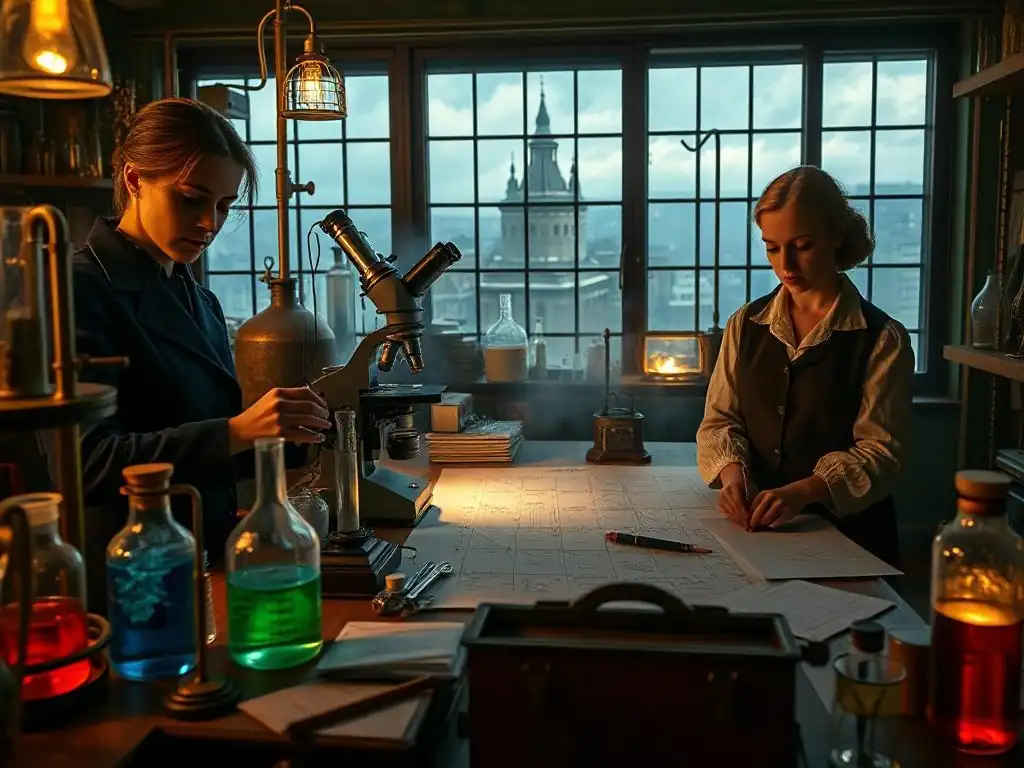
Welcome to WomenInScienceHistory.com!
Dive into the fascinating world of scientific breakthroughs and uncover the untold stories of remarkable women who defied expectations and shaped our understanding of the universe. Ever wondered about the pioneering role women played in chemistry? Our latest article, "The Building Blocks of Progress: Women's Contributions to Element Discovery," explores the captivating history of women discovering elements, revealing their crucial, yet often overlooked, contributions. Prepare to be inspired by the ingenuity and perseverance of these groundbreaking scientists – their discoveries will surprise you!
- Introduction: Unveiling the Untold Stories of Women in Element Discovery
- Early Pioneers: Women Laying the Foundation for Element Research
- Marie Curie: A Paragon of Element Discovery
- Lise Meitner: Nuclear Fission and the Path to Understanding New Elements
- Ida Noddack: Challenging the Status Quo in Element Research
- Marguerite Perey: The Discovery of Francium
- Beyond the Famous Names: Other Women Contributing to Elemental Knowledge
- The Challenges Faced by Women Discovering Elements: A Historical Perspective
- The Legacy of Women in Element Discovery: Inspiring Future Generations
- Conclusion: Recognizing and Honoring Women's Contributions to the Periodic Table
-
Frequently Asked Questions
- What is WomenInScienceHistory.com's main focus?
- Why is it important to study the history of women discovering elements?
- What were some of the major obstacles women faced while trying to discover elements?
- Can you name a pioneering female scientist who contributed to element discovery?
- How does WomenInScienceHistory.com aim to inspire future generations?
- Final Reflection: Illuminating the Elemental Legacy of Women
- Ignite Your Inner Discoverer!
Introduction: Unveiling the Untold Stories of Women in Element Discovery
Highlighting the Overlooked Roles of Female Scientists in Chemistry
The annals of scientific history, particularly in the foundational field of chemistry, have often been presented as a predominantly male narrative. Yet, beneath the surface of commonly acknowledged discoveries, lies a rich tapestry of contributions from pioneering women whose ingenuity and perseverance were instrumental in shaping our understanding of the natural world. These unsung heroines often worked in the shadows, their groundbreaking work sometimes overlooked or misattributed, making it crucial to illuminate their profound impact on "women discovering elements history".
Many significant breakthroughs in chemistry, including the identification and characterization of new elements, were directly influenced by or resulted from the tireless efforts of female scientists. From early alchemical explorations to the rigorous methodologies of modern nuclear chemistry, women have consistently pushed the boundaries of knowledge, challenging existing paradigms and enduring systemic biases to leave an indelible mark on the periodic table.
The Importance of Recognizing Women's Contributions to the Periodic Table
Recognizing the pivotal roles of women in element discovery is not merely about historical accuracy; it is about inspiring future generations and providing complete narratives of scientific progress. The periodic table, a cornerstone of chemistry, is a testament to collective human ingenuity, and the stories of the women who helped build it are essential for a holistic understanding of scientific evolution. Their struggles and triumphs serve as powerful examples of dedication against formidable odds.
By highlighting the achievements of these remarkable women, we not only correct historical omissions but also provide vital role models for young girls and women aspiring to careers in STEM. Understanding the full scope of "women discovering elements history" helps dismantle the persistent stereotype that science is a male domain, fostering a more inclusive and equitable scientific community where talent, regardless of gender, is recognized and celebrated.
Early Pioneers: Women Laying the Foundation for Element Research
Hypatia of Alexandria: Early Contributions to Alchemy and Scientific Thought
While not directly discovering elements in the modern sense, Hypatia of Alexandria, living in the 4th and 5th centuries CE, stands as a beacon of early scientific inquiry and intellectual pursuit. As a prominent philosopher, mathematician, and astronomer, she presided over a school in Alexandria, teaching and conducting research. Her contributions to alchemy, the precursor to modern chemistry, involved the development of apparatuses and the study of substances, laying foundational groundwork for experimental methodology.
Hypatia's intellectual rigor and experimental approach, though shrouded in the mists of time, influenced the spirit of scientific investigation that would eventually lead to the systematic discovery of elements. She is credited with inventing or improving several scientific instruments, including the astrolabe and the hydrometer, demonstrating a practical engagement with the physical world that was crucial for the nascent stages of chemical understanding. Her legacy underscores the long and complex journey of scientific thought, where early female scholars played a vital, albeit often uncredited, role.
Marie Anne Paulze Lavoisier: Revolutionizing Chemistry Through Translation and Experimentation
Marie Anne Paulze Lavoisier (1758–1836) was an indispensable collaborator to her husband, Antoine Lavoisier, often hailed as the "father of modern chemistry." Her contributions extended far beyond mere assistance; she was a highly educated and skilled scientist in her own right. Marie Anne was fluent in English, a crucial asset that enabled her to translate key scientific texts, including Richard Kirwan's "Essay on Phlogiston," which allowed Antoine to critically engage with and ultimately refute the prevailing phlogiston theory.
Her role in the laboratory was equally significant. She maintained detailed laboratory notebooks, meticulously illustrating the experimental setups and observations with precision and artistic skill. These illustrations were vital for documenting and communicating the Lavoisiers' groundbreaking experiments on combustion and respiration, which ultimately led to the understanding of oxygen's role in chemical reactions and the law of conservation of mass. Marie Anne's intellectual partnership was fundamental to the chemical revolution, demonstrating the profound influence of "women discovering elements history" through foundational theoretical and experimental work.
Marie Curie: A Paragon of Element Discovery
Marie Curie's Groundbreaking Work with Radioactivity
Marie Skłodowska Curie (1867–1934) stands as one of the most iconic figures in the history of science, particularly for her pioneering work on radioactivity. Her doctoral research, initiated in 1897 at the Sorbonne, focused on the mysterious rays emitted by uranium, a phenomenon recently discovered by Henri Becquerel. Marie, with her characteristic meticulousness, systematically examined various compounds of uranium and thorium, discovering that the intensity of the radiation was proportional to the amount of the element present, regardless of its chemical state.
This led her to hypothesize that the radiation was an atomic property, a radical idea at the time. She then turned her attention to pitchblende, a uranium ore, and discovered that it was significantly more radioactive than pure uranium. This observation spurred her to believe that there must be other, unknown radioactive elements within the ore, initiating a quest that would redefine our understanding of matter and energy.
Discovery of Polonium and Radium: A Legacy in Element Discovery
Driven by her initial findings, Marie Curie, alongside her husband Pierre Curie, embarked on an arduous process of chemical separation to isolate the source of pitchblende's intense radioactivity. Their relentless efforts, involving the processing of tons of crude ore in a makeshift laboratory, led to two monumental discoveries. In July 1898, they announced the discovery of a new element, which Marie named Polonium (atomic number 84) in honor of her native Poland.
Just five months later, in December 1898, they announced the isolation of a second, even more intensely radioactive element: Radium (atomic number 88). The isolation of radium in a pure, measurable form was an immense challenge, requiring years of further painstaking work, culminating in 1902 when Marie succeeded in preparing a decigram of pure radium chloride. These discoveries fundamentally altered the landscape of physics and chemistry, proving that elements could spontaneously transform and release immense energy, a critical chapter in "women discovering elements history."
The Challenges Faced by Marie Curie as a Woman in Science
Despite her unparalleled scientific achievements, Marie Curie faced significant challenges and discrimination as a woman in a male-dominated scientific establishment. She was initially denied admission to the University of Warsaw because of her gender, forcing her to pursue her education abroad. Even after her groundbreaking discoveries, her path to full recognition was fraught with obstacles. In 1903, when the Nobel Prize in Physics was initially considered for the discovery of radioactivity, the committee intended to honor only Henri Becquerel and Pierre Curie.
It was only through Pierre's insistence and the intervention of a Swedish mathematician that Marie's name was added to the nomination. She became the first woman to win a Nobel Prize. Later, in 1911, she faced a smear campaign by the French press during her second Nobel Prize nomination for chemistry, yet she persevered, becoming the only person to win Nobel Prizes in two different scientific fields. Her story is a testament to the resilience required for "women discovering elements history" in a prejudiced environment.
Lise Meitner: Nuclear Fission and the Path to Understanding New Elements
Lise Meitner's Crucial Role in the Discovery of Nuclear Fission
Lise Meitner (1878–1968), an Austrian-Swedish physicist, played a pivotal role in the discovery of nuclear fission, a phenomenon that revolutionized physics and chemistry. For over 30 years, she collaborated with chemist Otto Hahn in Berlin, primarily researching radioactivity and nuclear physics. In 1938, as a Jewish woman, Meitner was forced to flee Nazi Germany, corresponding with Hahn from Sweden. Hahn and Fritz Strassmann conducted experiments bombarding uranium with neutrons, observing baffling results: the formation of lighter elements like barium.
It was Meitner, in collaboration with her nephew Otto Robert Frisch, who provided the theoretical explanation for these perplexing observations. In January 1939, they published a paper in Nature, explaining that the uranium nucleus had split into smaller nuclei, releasing an enormous amount of energy—approximately 200 megaelectronvolts (MeV) per fission event. This groundbreaking insight not only elucidated the experimental results but also coined the term "nuclear fission," marking a monumental moment in "women discovering elements history."
Overlooked Contributions and the Nobel Prize Controversy
Despite her undeniable and critical contribution to the understanding of nuclear fission, Lise Meitner was controversially overlooked for the 1944 Nobel Prize in Chemistry, which was awarded solely to Otto Hahn. This exclusion remains one of the most egregious examples of the "Matilda Effect," where the achievements of women in science are systematically undervalued or attributed to their male colleagues. Meitner's Jewish heritage and her forced exile from Germany were significant factors, as the political climate of the time made it difficult for the Nobel Committee to acknowledge her contributions.
Historians and scientists alike have widely condemned this injustice, recognizing that without Meitner's theoretical interpretation, Hahn's experimental results would have remained unexplained. Her intellectual courage and profound understanding of nuclear physics were indispensable to the discovery. While Hahn received the formal recognition, Meitner's scientific community acknowledged her central role, forever associating her name with this transformative discovery in "women discovering elements history."
The Significance of Meitner's Work in Nuclear Chemistry
Lise Meitner's theoretical explanation of nuclear fission had profound implications for nuclear chemistry and the broader scientific landscape. Her work provided the fundamental understanding necessary for the development of both nuclear energy and atomic weapons. By demonstrating that a heavy nucleus could be split into lighter ones, releasing vast amounts of energy, Meitner opened up entirely new avenues of research and application.
Her insights paved the way for controlled nuclear chain reactions, leading to the construction of the first nuclear reactors and the subsequent harnessing of atomic power. Furthermore, her work contributed significantly to the understanding of nuclear structure and the potential for creating new, heavier elements through nuclear reactions. Meitner's legacy extends beyond fission; she was a pioneer in nuclear physics, whose meticulous research and theoretical prowess profoundly shaped our modern world.
Ida Noddack: Challenging the Status Quo in Element Research
Ida Noddack's Prediction of Nuclear Fission
Ida Noddack (1896–1978), a German chemist, is remarkable not only for her element discovery but also for her astonishing foresight regarding nuclear fission. In 1934, four years before Meitner and Hahn's definitive work, Noddack published a paper titled "On Element 93," where she criticized Enrico Fermi's experiments on bombarding uranium with neutrons.
Fermi believed he had created transuranic elements, but Noddack proposed an alternative, radical hypothesis: "It is conceivable that when heavy nuclei are bombarded with neutrons, these nuclei might break up into several large fragments, which are actually isotopes of known elements, but not neighbors of the elements subjected to irradiation."
This was a direct, albeit unproven, prediction of nuclear fission. Her paper was largely ignored or dismissed by the scientific community at the time, partly because the idea of a nucleus fragmenting was considered too improbable based on prevailing atomic models. Her prescient insight, however, highlights her independent thinking and willingness to challenge established scientific dogma, a significant, though unrecognized at the time, contribution to "women discovering elements history."
The Discovery of Rhenium: A Testament to Noddack's Skill
Ida Noddack, alongside her husband Walter Noddack and Otto Berg, achieved a verifiable and significant element discovery. In 1925, they announced the discovery of Rhenium (element 75), the last naturally occurring stable element to be identified. Their discovery was the result of painstaking analysis of platinum ores and the mineral columbite, where rhenium is present in extremely minute quantities. They used X-ray spectroscopy to confirm the presence of the new element, distinguishing it from other elements.
The isolation of even a milligram of rhenium required processing over 600 kilograms of molybdenite ore, a testament to Ida Noddack's exceptional analytical skills and perseverance. Rhenium is a rare, silvery-white transition metal, and its discovery filled a gap in the periodic table, completing the row of transition metals. This achievement firmly cemented her place in "women discovering elements history" as a trailblazer in inorganic chemistry.
Overcoming Obstacles and Fighting for Recognition
Despite her significant contributions, Ida Noddack faced the pervasive gender bias of her era. While she collaborated extensively with her husband, her individual contributions were often downplayed or overshadowed. The scientific community's initial dismissal of her nuclear fission hypothesis further exemplifies the challenges she encountered in gaining recognition for her innovative ideas. Her career path was also non-traditional for women of her time; she worked primarily in industry and private laboratories, rather than holding a prestigious academic position, which might have limited her visibility.
Nevertheless, Noddack continued her research throughout her life, focusing on analytical chemistry and geochemistry. Her persistent pursuit of scientific truth, even when her revolutionary ideas were met with skepticism, underscores the resilience and dedication characteristic of "women discovering elements history." Her legacy serves as a reminder of the many female scientists whose brilliance was often obscured by societal norms.
Marguerite Perey: The Discovery of Francium
Marguerite Perey's Dedicated Research on Radioactive Elements
Marguerite Perey (1909–1975) was a French physicist and chemist, a protégé of Marie Curie, who dedicated her career to the study of radioactive elements. She began her work at the Radium Institute in Paris in 1929, initially as a technician, but quickly advanced due to her exceptional talent and meticulous approach. Perey's research focused on the radioactive decay processes of actinium (Ac-227), an element known to decay by emitting alpha or beta particles.
Her keen observational skills and rigorous experimental design allowed her to detect subtle decay products that had previously gone unnoticed. Perey's work was characterized by precise measurements and a deep understanding of radiochemistry, essential qualities for identifying new, ephemeral radioactive species.
The Isolation and Identification of Francium
In 1939, while meticulously studying the purification of actinium-227, Marguerite Perey observed a small, unexpected amount of beta radiation. This led her to suspect the presence of a new element, a decay product of actinium. Through careful radiochemical separation and analysis, she isolated and identified element 87, a highly unstable alkali metal. She named it Francium (Fr) in honor of her native country, France.
Francium is the second rarest naturally occurring element on Earth, with its most stable isotope, Francium-223, having a very short half-life of approximately 22 minutes. Perey's discovery filled the last remaining gap in the periodic table among the naturally occurring elements up to uranium, completing the alkali metal group. This achievement was a monumental step in "women discovering elements history" and a testament to her precise radiochemical techniques.
Perey's Contributions to Nuclear Medicine
Beyond the discovery of Francium, Marguerite Perey made significant contributions to nuclear medicine. She investigated the biological and therapeutic applications of Francium, particularly its potential use in cancer diagnosis and treatment. Her research explored how Francium might target cancerous cells, laying groundwork for future radiopharmaceutical developments.
In 1949, she became the head of the Department of Nuclear Chemistry at the University of Strasbourg, where she continued her research into the medical uses of radioactivity and fostered a new generation of radiochemists. Perey was also the first woman to be elected to the French Academy of Sciences in 1962, a significant recognition of her enduring impact and a landmark moment for "women discovering elements history" in France.
Beyond the Famous Names: Other Women Contributing to Elemental Knowledge
Stefania Horovitz: Pioneering Isotope Separation Techniques
While not discovering a new element, Stefania Horovitz (1887–1940), a Polish-Jewish chemist, made crucial contributions to our understanding of elemental composition through her work on isotopes. Working with Otto Hönigschmid in Vienna in the early 20th century, Horovitz meticulously demonstrated that the atomic weight of lead varied depending on its radioactive origin. She isolated lead from different radioactive minerals, such as pitchblende and carnotite, and painstakingly measured their atomic weights.
Her precise measurements confirmed that lead derived from radioactive decay of uranium had a different atomic weight (e.g., 206.04) than lead from thorium (e.g., 207.84), providing compelling experimental evidence for the existence of isotopes—atoms of the same element with different numbers of neutrons and thus different atomic masses. Her work was fundamental to the development of the concept of isotopes and the understanding that elements are not always uniform in atomic mass, a vital insight into the complexity of "women discovering elements history."
Harriet Brooks: Early Pioneer in Nuclear Physics and Radioactive Decay
Harriet Brooks (1876–1933), a Canadian physicist, was an early and influential pioneer in the nascent field of nuclear physics and radioactivity. She worked with some of the greatest minds of her time, including Ernest Rutherford at McGill University and J.J. Thomson at Cambridge. In 1901, Brooks made significant observations regarding the "emanation" (later identified as radon gas) produced by radium, noting that it was a gas that decayed rapidly.
Her groundbreaking work on the radioactive recoil of atoms in 1904 provided crucial insights into the nature of radioactive decay and the transformation of elements. She demonstrated that when a radioactive atom emits an alpha particle, the remaining atom recoils with considerable energy, leading to its displacement.
Her early contributions were instrumental in laying the groundwork for understanding radioactive decay series and the spontaneous transmutation of elements, a key aspect of "women discovering elements history." Despite her brilliance, societal expectations and limited opportunities led her to leave scientific research for a period, highlighting the systemic barriers faced by women in science.
The Challenges Faced by Women Discovering Elements: A Historical Perspective
Gender Bias and Discrimination in Scientific Fields
Throughout history, women in science, particularly those involved in "women discovering elements history," have faced pervasive gender bias and discrimination. This bias manifested in various forms, from outright exclusion from educational institutions and professional societies to subtle but damaging prejudices that questioned their intellectual capabilities. Women were often denied access to well-equipped laboratories, funding, and prestigious academic positions, severely limiting their opportunities for groundbreaking research.
Even when their work was undeniably significant, it was frequently undervalued, dismissed, or attributed to male colleagues, a phenomenon known as the "Matilda Effect." This systemic marginalization meant that many brilliant female scientists had to fight tirelessly not only for their discoveries to be accepted but also for their own recognition within the scientific community.
Limited Access to Resources and Opportunities
A significant obstacle for women pursuing scientific careers, including those involved in "women discovering elements history," was the severe limitation on resources and opportunities. Unlike their male counterparts, women often struggled to secure funding for their research, gain access to advanced laboratory equipment, or obtain positions that offered the necessary time and support for intensive experimentation. Many worked in unpaid or low-paying assistant roles, often in subpar facilities, making their discoveries even more remarkable.
Furthermore, networking opportunities, mentorship, and access to scientific publications and conferences were often restricted for women. This isolation meant that female scientists had to overcome immense logistical and professional barriers to conduct and disseminate their research, highlighting the extraordinary determination required to make contributions in such challenging circumstances.
The Fight for Recognition and Credit
The struggle for recognition and proper credit was a constant battle for many women in science. As seen in the cases of Lise Meitner and Ida Noddack, even monumental discoveries or crucial theoretical insights were often attributed solely to their male collaborators or ignored entirely. This fight for recognition extended beyond Nobel Prizes to authorship on papers, invitations to speak at conferences, and inclusion in historical narratives.
The societal norms of the time often assumed that women's contributions were secondary or assistive, rather than primary and intellectual. This systemic devaluing of their work meant that many "women discovering elements history" were denied the rightful acknowledgment that their male peers often received automatically. Their enduring legacies are a testament to their resilience and the undeniable impact of their scientific achievements, despite the historical injustices.
The Legacy of Women in Element Discovery: Inspiring Future Generations
The Importance of Role Models for Young Women in Science
The stories of women discovering elements history are invaluable as role models for young women aspiring to careers in science, technology, engineering, and mathematics (STEM). By highlighting the achievements of trailblazers like Marie Curie, Lise Meitner, and Marguerite Perey, we provide tangible examples of success and demonstrate that scientific excellence knows no gender. These narratives illustrate that women have always been, and continue to be, at the forefront of scientific innovation.
Seeing these pioneering women overcome immense societal and scientific challenges to make groundbreaking discoveries can inspire confidence and ambition in girls and young women. It shows them that their intellectual curiosity and scientific talents are valid and can lead to profound contributions, helping to break down persistent stereotypes about who belongs in science.
Promoting Diversity and Inclusion in STEM Fields
Celebrating the legacy of "women discovering elements history" is crucial for promoting greater diversity and inclusion in contemporary STEM fields. A diverse scientific community, encompassing varied perspectives, backgrounds, and experiences, is demonstrably more innovative and effective in solving complex problems. When women and other underrepresented groups are fully integrated and supported, the scientific enterprise as a whole benefits.
This involves not only acknowledging past contributions but also actively working to dismantle current barriers, such as unconscious bias, lack of mentorship, and insufficient representation in leadership roles. By fostering an environment where all individuals feel welcome and empowered to contribute, we can unlock the full potential of human ingenuity and ensure that future scientific progress is truly equitable and comprehensive.
Celebrating the Achievements of Women in Chemistry
The field of chemistry, in particular, owes an immense debt to the women who shaped its understanding of matter and the elements. From the fundamental principles of radioactivity to the isolation of new elements, their contributions have been foundational. Platforms like WomenInScienceHistory.com play a vital role in ensuring that these achievements are not forgotten but are instead celebrated and amplified.
By detailing the specific discoveries, the challenges overcome, and the lasting impact of these remarkable chemists, we enrich the historical record and provide a more accurate and inspiring account of scientific progress. This ongoing celebration ensures that the profound legacy of "women discovering elements history" continues to resonate, encouraging continuous recognition and support for women's contributions to science worldwide.
Conclusion: Recognizing and Honoring Women's Contributions to the Periodic Table
The Enduring Impact of Women's Discoveries
The journey through "women discovering elements history" reveals an undeniable truth: women have been central to the expansion of our chemical knowledge and the construction of the periodic table. From Marie Curie's pioneering work with Polonium and Radium, which unveiled the power of radioactivity, to Marguerite Perey's isolation of Francium, and Lise Meitner's critical explanation of nuclear fission, their discoveries have fundamentally reshaped chemistry, physics, and medicine. These women not only identified new building blocks of matter but also developed new methodologies and theoretical frameworks that continue to influence scientific research today.
Their relentless pursuit of scientific truth, often in the face of significant adversity, has left an indelible mark on the scientific landscape. The periodic table, with its organized array of elements, silently bears witness to their intellectual prowess and unwavering dedication, reflecting the profound and enduring impact of their contributions.
Continuing the Fight for Equality in Science
While significant progress has been made in recognizing women's roles in science, the fight for full equality is far from over. Gender bias, though perhaps more subtle than in previous centuries, still exists in STEM fields, affecting everything from funding opportunities and publication rates to promotions and awards. It is crucial to acknowledge that the historical challenges faced by "women discovering elements history" persist in various forms for women in science today.
Therefore, continued vigilance and active advocacy are necessary to ensure that scientific merit is the sole criterion for recognition and advancement. Institutions must implement policies that promote diversity, equity, and inclusion, fostering environments where all scientists, regardless of gender, can thrive and contribute their full potential to the advancement of knowledge.
A Call to Action: Supporting Women in STEM
The stories of "women discovering elements history" are not just tales of the past; they are a powerful call to action for the present and future. Supporting women in STEM means more than just acknowledging their historical contributions; it requires actively investing in their education, mentorship, and career development. It means challenging gender stereotypes, advocating for equitable opportunities, and celebrating their successes loudly and proudly.
By doing so, we not only honor the legacy of those who came before but also pave the way for future generations of female scientists to make their own groundbreaking discoveries, enriching our understanding of the universe and addressing the grand challenges facing humanity. Let us continue to champion the brilliant minds of women in chemistry, ensuring their rightful place in the ongoing story of scientific progress.
Frequently Asked Questions
What is WomenInScienceHistory.com's main focus?
The website primarily focuses on highlighting the contributions of women to various scientific fields, particularly their groundbreaking work and the challenges they faced in overcoming gender-based obstacles.
Why is it important to study the history of women discovering elements?
Studying this history reveals overlooked narratives and acknowledges the significant contributions women made to science, inspiring future generations and promoting gender equality in STEM fields.
What were some of the major obstacles women faced while trying to discover elements?
Women faced discrimination and exclusion from formal scientific education and professional opportunities. They often had to overcome societal biases and lack of recognition for their work.
Can you name a pioneering female scientist who contributed to element discovery?
While not explicitly discovering a new element, Marie Curie is a prominent example. She pioneered research on radioactivity and discovered two radioactive elements: polonium and radium.
How does WomenInScienceHistory.com aim to inspire future generations?
By showcasing the remarkable achievements of female scientists, the platform provides role models and encourages young women to pursue careers in science, technology, engineering, and mathematics (STEM).
Final Reflection: Illuminating the Elemental Legacy of Women
The historical narrative of scientific discovery often overlooks the pivotal roles played by women, and reclaiming their contributions to element discovery is not just about historical accuracy, but about inspiring future generations. By understanding the challenges they faced and the ingenuity they displayed, we can foster a more inclusive and equitable scientific community today.
The impact of these women extends far beyond the laboratory. Their stories serve as a powerful reminder of the untapped potential that exists when diverse voices are empowered to contribute to scientific advancement. Recognizing their achievements is crucial for dismantling systemic biases and fostering a culture where all individuals, regardless of gender, can thrive in STEM fields. The most effective way to do it, is to do it.
- Amelia Earhart, a sentiment that resonates deeply with the spirit of these pioneering women.
As we reflect on the "building blocks of progress" laid by these remarkable women, let us commit to amplifying their voices and ensuring that their stories are never forgotten. Consider how you can actively champion inclusivity in your own sphere of influence, fostering an environment where innovation flourishes and the potential of every individual is realized. Let us build upon their legacy and continue to push the boundaries of scientific discovery, together.
Ignite Your Inner Discoverer!
Thank you for exploring the remarkable contributions of women to element discovery. We hope you've gained a newfound appreciation for their often-overlooked brilliance and are inspired to champion inclusivity in STEM. Ready to take action?
- Boldly advocate for the recognition of women's historical contributions to science in educational materials and public forums.
- Delve deeper by researching contemporary women scientists and share their groundbreaking work on social media.
- Surprise yourself: Attempt to create a mnemonic device to memorize the elements, giving each element a persona inspired by a woman in science.
How will you use your newfound knowledge to inspire the next generation of women scientists?