
The Chemical Detectives: Women Solving Mysteries at the Molecular Level

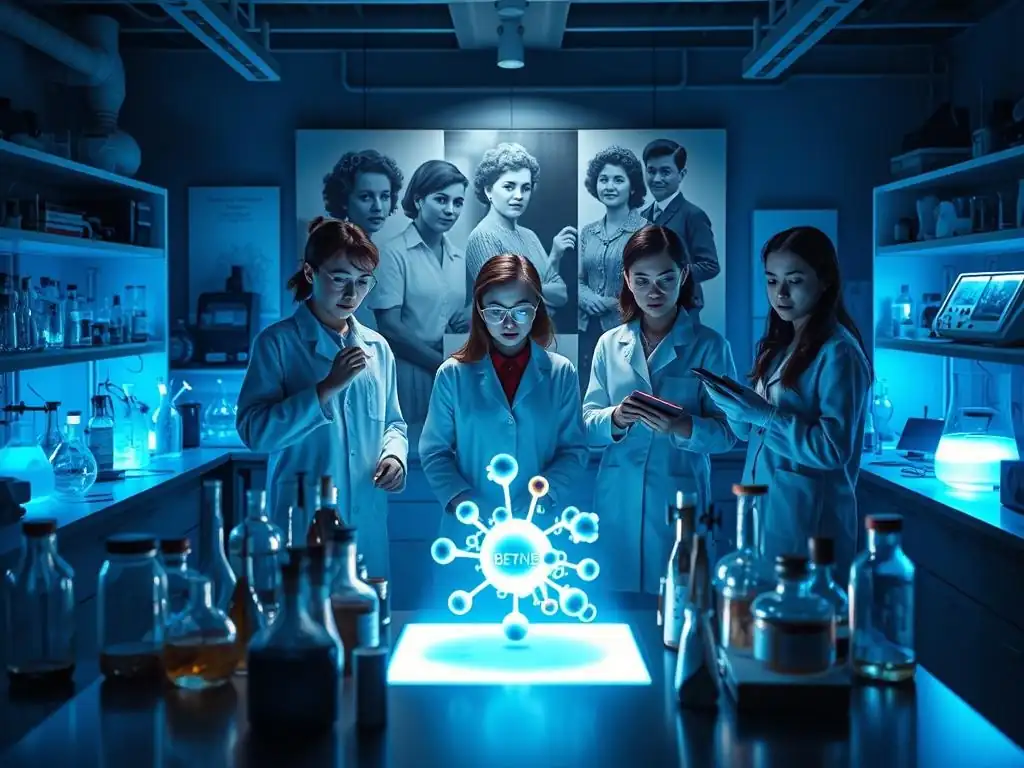
Welcome to WomenInScienceHistory.com, where we unearth the captivating stories of women who shaped the world of science! Prepare to be amazed as we delve into the often-hidden narratives of brilliant minds who dared to challenge the status quo. Today, we're diving into chemistry, exploring the intriguing world of women’s chemistry historical breakthroughs mysteries. What secrets did these pioneers unlock at the molecular level, and what obstacles did they overcome to make their mark? Join us as we unravel the chemical detectives' tales and uncover the groundbreaking contributions of women in this vital field.
- Introduction: Women's Chemistry Historical Breakthroughs and Unsolved Mysteries
- Pioneering Women Chemists: Unraveling Molecular Mysteries
- Key Areas of Women's Impact in Chemical Problem-Solving
- Challenges Faced by Women in Chemical Research Throughout History
- Modern-Day Women Chemists: Continuing the Legacy of Discovery
- The Future of Women in Chemistry: Solving Tomorrow's Mysteries
- Conclusion: Honoring Women's Chemistry Historical Breakthroughs
-
Frequently Asked Questions
- How did women contribute to the field of chemistry despite facing societal barriers?
- What are some examples of "chemical mysteries" that women scientists helped solve?
- Why is it important to highlight the historical contributions of women in chemistry?
- What were some of the challenges faced by women seeking recognition for their chemical discoveries?
- What are some specific examples of "Women’s chemistry historical breakthroughs mysteries" mentioned on WomenInScienceHistory.com?
- Final Reflection: Illuminating the Invisible: Women's Chemistry and Enduring Mysteries
- Ignite Your Inner Chemist: Solve the Molecular Mysteries!
Introduction: Women's Chemistry Historical Breakthroughs and Unsolved Mysteries
Celebrating Women in Science History: Chemical Discoveries and Beyond
Women throughout history have served as unsung chemical detectives, meticulously unraveling the intricate molecular mysteries that govern our world. From the fundamental composition of matter to the complex biological processes within living organisms, their insightful contributions have led to profound chemical discoveries. This article aims to highlight these often-overlooked narratives, celebrating the ingenuity and perseverance of women whose work has significantly advanced our understanding of chemistry, marking crucial women’s chemistry historical breakthroughs.
These trailblazing scientists have not only expanded theoretical knowledge but have also applied their expertise to solve real-world problems, ranging from medical diagnostics to environmental protection. Their investigative spirit has illuminated pathways for new technologies and therapies, demonstrating that the pursuit of chemical knowledge is a powerful tool for societal progress. By recognizing their pioneering efforts, we honor a rich legacy of innovation and inspire future generations to engage with the fascinating world of chemical exploration.
Despite their impactful contributions, women in chemistry have historically faced significant underrepresentation and often had their work minimized or entirely uncredited. Societal norms, institutional biases, and a lack of access to educational and professional opportunities frequently relegated their achievements to the footnotes of scientific history. This systemic marginalization has created a veil over numerous pivotal discoveries, leaving many women’s chemistry historical breakthroughs as unsolved mysteries in their own right.
Unveiling these hidden contributions is crucial for a complete and accurate understanding of scientific progress. Many women operated in the shadows, working as assistants, unacknowledged collaborators, or in informal settings, their names rarely appearing on publications or patents. Their brilliant insights and meticulous experimental work were nonetheless instrumental in advancing various chemical fields, laying groundwork that others would later claim or build upon without proper acknowledgment.
Pioneering Women Chemists: Unraveling Molecular Mysteries
Marie Curie: Pioneering Work in Radioactivity
Marie Skłodowska Curie stands as an unparalleled figure among chemical detectives, whose relentless pursuit of knowledge led to the discovery of two new elements and fundamentally reshaped our understanding of matter. Born in Poland in 1867, she moved to Paris to pursue her scientific ambitions, eventually earning a physics degree from the Sorbonne.
Working alongside her husband, Pierre Curie, she embarked on an intensive study of pitchblende, a uranium ore, driven by the observation that it was more radioactive than uranium itself. In 1898, this meticulous chemical separation process led to the isolation of polonium, named after her native country, and later, radium, an element thousands of times more radioactive than uranium.
Her groundbreaking work not only expanded the periodic table but also laid the foundation for the field of nuclear physics and medicine. For their collective work on radioactivity, Marie and Pierre Curie, along with Henri Becquerel, were awarded the Nobel Prize in Physics in 1903. Undeterred, Marie continued her research, successfully isolating pure radium metal in 1910.
This extraordinary feat of chemical purification, achieved through arduous laboratory work, earned her a second Nobel Prize, this time in Chemistry, in 1911—making her the first person ever to win Nobel Prizes in two different scientific fields and the only person to win Nobel Prizes in two different sciences. Her discoveries initiated the era of atomic energy and revolutionized medical treatments through radiotherapy, truly unraveling molecular mysteries.
Dorothy Hodgkin: Unlocking the Structures of Biomolecules
Dorothy Crowfoot Hodgkin, a British chemist, was a master chemical detective renowned for her pioneering work in X-ray crystallography, a technique used to determine the three-dimensional structures of complex molecules. Her meticulous application of this method provided unprecedented insights into the architecture of vital biomolecules, solving critical biological and chemical mysteries. Her most celebrated achievements include the elucidation of the structure of penicillin in 1945, which was crucial for its large-scale synthesis and understanding its antibacterial action, and later, the complete structure of vitamin B12 in 1956, a monumental task that took years of dedicated effort.
Her groundbreaking work on vitamin B12, the most complex non-protein molecule known at the time, earned her the Nobel Prize in Chemistry in 1964. This achievement was a testament to her extraordinary patience, precision, and intellectual rigor.
Hodgkin's methods and findings significantly advanced fields such as biochemistry, medicine, and pharmacology, enabling the rational design of drugs and a deeper understanding of metabolic pathways. Her later work included determining the structure of insulin in 1969, a project she pursued for over 35 years, providing crucial insights for diabetes research and management, solidifying her legacy as a key figure in women’s chemistry historical breakthroughs.
Rosalind Franklin: Contributions to Understanding DNA Structure
Rosalind Franklin was a brilliant English chemist and X-ray crystallographer whose meticulous work was absolutely pivotal in understanding the structure of DNA, one of the most significant biological mysteries of the 20th century. Working at King's College London in the early 1950s, Franklin produced remarkably clear X-ray diffraction images of DNA fibers, most famously "Photo 51." This image provided crucial evidence that DNA had a helical structure and revealed key dimensions, such as the spacing between base pairs. Her detailed scientific notebooks also contained critical data on the two forms of DNA (A and B) and their symmetry.
Despite the foundational nature of her contributions, Franklin's work was not fully acknowledged during her lifetime, particularly in the context of the 1962 Nobel Prize awarded to James Watson, Francis Crick, and Maurice Wilkins for their DNA model. Her data and images were shared with Watson and Crick without her explicit knowledge or consent, directly influencing their double helix model. While the full extent of her influence has been posthumously recognized, her rigorous experimental approach and precise data collection were indispensable to unraveling the molecular mystery of DNA, representing a profound women’s chemistry historical breakthrough that shaped modern biology.
Key Areas of Women's Impact in Chemical Problem-Solving
Forensic Chemistry: Women's Role in Solving Criminal Cases at the Molecular Level
Forensic chemistry is a specialized field where chemical principles are applied to solve criminal investigations, often at the molecular level. Women have played an increasingly vital role in this domain, acting as real-life chemical detectives who analyze trace evidence, identify unknown substances, and reconstruct events from minute chemical clues. Their work is crucial in identifying drugs, poisons, explosives, and fibers, which can be the difference between conviction and acquittal.
From analyzing blood alcohol levels in impaired driving cases to identifying specific accelerants used in arson investigations, women forensic chemists apply their analytical skills to provide objective, scientific evidence. They meticulously examine samples for DNA, fingerprints, and other chemical residues that can link suspects to crime scenes or victims. Their precision and attention to detail are paramount, as the integrity of their findings can directly impact legal proceedings and help bring closure to complex criminal mysteries.
Frances Glessner Lee and the Nutshell Studies of Unexplained Death: Pioneering Forensic Science
While not a chemist herself, Frances Glessner Lee (1878–1962) was a pioneering figure whose innovative work profoundly influenced forensic science and indirectly highlighted the need for meticulous chemical analysis in criminal investigations. An heiress from a prominent Chicago family, Lee channeled her passion for justice into promoting forensic medicine, establishing the Department of Legal Medicine at Harvard Medical School in 1931. Her most famous contribution, however, are the "Nutshell Studies of Unexplained Death," a series of incredibly detailed dioramas depicting real-life crime scenes.
These miniature crime scenes, built to a scale of one inch to one foot, were not merely artistic creations; they were meticulously crafted training tools used to teach police investigators how to observe, analyze, and interpret evidence without disturbing the scene. Each "Nutshell" presented a complex scenario designed to challenge detectives to look for subtle clues, including those that would later require chemical analysis, such as the presence of specific substances or residues.
Lee's emphasis on thorough, unbiased observation laid the groundwork for the systematic collection of evidence that modern forensic chemists rely on, making her a foundational figure in the broader context of solving criminal mysteries at the molecular level.
Environmental Chemistry: Women Addressing Pollution and Protecting the Planet
Environmental chemistry is a crucial field dedicated to understanding the chemical processes occurring in the natural environment and how human activities impact them. Women have been at the forefront of this vital area, acting as chemical detectives to identify, quantify, and mitigate pollution, thereby protecting both ecosystems and human health. Their research often involves analyzing complex mixtures of contaminants in air, water, and soil, tracing their origins, and predicting their long-term effects.
These women scientists have developed innovative methods for detecting pollutants at extremely low concentrations and have contributed significantly to understanding the fate and transport of chemicals in the environment. Their work informs policy decisions, guides remediation efforts, and raises public awareness about ecological issues. By unraveling the chemical mysteries of environmental degradation, they strive to create a more sustainable future, contributing directly to women’s chemistry historical breakthroughs in environmental protection.
Rachel Carson's Silent Spring: Raising Awareness of DDT's Impact
Rachel Carson, an American marine biologist, writer, and conservationist, became a towering figure in environmental chemistry through her seminal 1962 book, Silent Spring. Although not a laboratory chemist, Carson meticulously synthesized and presented scientific data on the widespread use of synthetic pesticides, particularly DDT, and their devastating environmental and health impacts. Her powerful narrative exposed the chemical mysteries of how these persistent organic pollutants accumulated in the food chain, leading to ecological damage and threatening wildlife, especially birds.
Carson's book was a meticulously researched expose, drawing upon countless scientific studies and interviews with experts. She highlighted how DDT, initially hailed as a miracle pesticide, was causing widespread ecological disruption, leading to a "silent spring" devoid of birdsong. Her work ignited a global environmental movement, challenging the prevailing notion that humans could dominate nature without consequence. Silent Spring directly led to the ban of DDT in the United States in 1972 and spurred the creation of the Environmental Protection Agency (EPA), marking a monumental women’s chemistry historical breakthrough in environmental awareness and policy.
Pharmaceutical Chemistry: Women Developing Life-Saving Drugs and Therapies
Pharmaceutical chemistry is a dynamic field where chemists design, synthesize, and test new compounds to develop life-saving drugs and therapies. Women have made profound and often unheralded contributions to this area, acting as chemical detectives in the quest to solve complex medical mysteries and combat diseases. Their work involves understanding disease mechanisms at a molecular level and then rationally designing molecules that can interact with biological targets to produce therapeutic effects.
From identifying novel drug targets to optimizing lead compounds for efficacy and safety, women pharmaceutical chemists have been instrumental in bringing countless medications to market. They work across various stages of drug development, including synthesis, purification, characterization, and preclinical testing. Their innovations have led to breakthroughs in treating a wide range of conditions, from infectious diseases and cancer to cardiovascular disorders and neurological conditions.
Gertrude B. Elion's Development of Acyclovir: A Breakthrough Antiviral Drug
Gertrude B. Elion (1918–1999) was an American biochemist and pharmacologist whose groundbreaking approach to drug design revolutionized the treatment of numerous diseases. Working at Burroughs Wellcome (now GlaxoSmithKline), Elion eschewed the traditional trial-and-error method of drug discovery, instead focusing on understanding the biochemical differences between healthy cells and disease-causing pathogens or cancer cells. Her innovative "rational drug design" strategy involved synthesizing compounds that would selectively interfere with the replication of pathogens or abnormal cells, without harming normal host cells.
Among her many significant achievements, Elion co-developed acyclovir, the first effective and selective antiviral drug for herpes infections, approved in 1984. This drug specifically targets the viral DNA polymerase, preventing the virus from replicating while leaving host cells largely unharmed. Acyclovir transformed the management of herpes simplex and varicella-zoster viruses, offering relief and improved quality of life for millions.
Her pioneering work, which also included drugs for leukemia (6-mercaptopurine), gout (allopurinol), and organ transplant rejection (azathioprine), earned her the Nobel Prize in Physiology or Medicine in 1988, shared with George H. Hitchings and James W. Black. Her contributions represent monumental women’s chemistry historical breakthroughs in pharmaceutical science, solving complex medical mysteries.
Challenges Faced by Women in Chemical Research Throughout History
Gender Bias and Discrimination in Scientific Institutions
Throughout history, women in chemical research have faced pervasive gender bias and outright discrimination within scientific institutions. From limited access to education to professional exclusion, these systemic barriers significantly hindered their ability to pursue careers, conduct research, and gain recognition. Many talented women were denied admission to universities, excluded from laboratories, or relegated to unpaid, uncredited assistant roles, solely based on their gender.
Even when women managed to secure positions, they often encountered unequal pay, lack of promotion opportunities, and subtle or overt sexism from male colleagues. Their scientific contributions were frequently undervalued, dismissed, or even appropriated by men. This environment of discrimination meant that many brilliant chemical detectives had to work twice as hard to prove their capabilities, often against a backdrop of skepticism and prejudice, impacting the visibility of women’s chemistry historical breakthroughs.
Limited Access to Resources and Opportunities for Women in Chemistry
Beyond overt discrimination, women in chemistry historically faced severe limitations in accessing essential resources and opportunities vital for scientific research. This included lack of funding for their projects, limited access to state-of-the-art laboratory equipment, and exclusion from informal scientific networks and collaborations. Without adequate resources, their capacity to conduct ambitious experiments or pursue complex chemical mysteries was severely constrained.
Furthermore, opportunities such as presenting at conferences, publishing in prestigious journals, or receiving mentorship were often scarce for women. This restricted access hampered their professional development, limited their visibility within the scientific community, and made it exceedingly difficult for their work to gain the recognition it deserved. These systemic disadvantages compounded the challenges for women striving to make significant chemical discoveries.
Overcoming Stereotypes: Women's Perseverance in the Face of Adversity
Women in chemistry have consistently had to contend with deeply entrenched societal stereotypes that questioned their intellectual capacity and suitability for scientific careers. Prevailing beliefs often portrayed women as inherently less rational, less capable of abstract thought, or simply unsuited for the rigor and demands of scientific investigation. These stereotypes were not merely societal prejudices but were often reflected in academic and professional settings, leading to a lack of encouragement and support.
Despite facing such pervasive adversity, countless women demonstrated extraordinary perseverance and resilience. They defied expectations, challenged norms, and dedicated themselves to their research, often working in isolation or with minimal resources. Their unwavering commitment to scientific truth and their passion for unraveling chemical mysteries allowed them to make groundbreaking discoveries, proving that intellect and scientific acumen know no gender boundaries and paving the way for future women’s chemistry historical breakthroughs.
Modern-Day Women Chemists: Continuing the Legacy of Discovery
Jennifer Doudna: Leading Research in CRISPR-Cas9 Gene Editing
Jennifer Doudna is a preeminent American biochemist whose co-discovery of the CRISPR-Cas9 gene-editing technology has revolutionized biology and medicine. Working with Emmanuelle Charpentier, Doudna demonstrated in 2012 that the bacterial CRISPR-Cas9 system could be reprogrammed to precisely edit DNA in any organism, making it a powerful tool for genetic engineering. This discovery, which earned them the Nobel Prize in Chemistry in 2020, provided an unprecedented ability to modify genes with high precision, speed, and affordability.
Doudna's work has opened new avenues for treating genetic diseases like sickle cell anemia, cystic fibrosis, and Huntington's disease, as well as developing new diagnostics and agricultural applications. Her research exemplifies the modern chemical detective, delving into the intricate molecular mechanisms of life to correct genetic errors and unlock therapeutic potential. She continues to lead research into the ethical implications and broader applications of this transformative technology, pushing the boundaries of what is possible in molecular biology and medicine.
Carolyn Bertozzi: Innovating in Bioorthogonal Chemistry
Carolyn Bertozzi is a pioneering American chemist celebrated for her groundbreaking work in bioorthogonal chemistry, a field she essentially invented. Bioorthogonal chemistry involves chemical reactions that can occur inside living systems without interfering with native biochemical processes, allowing scientists to study molecules in their natural environment. Her innovative approach, developed in the late 1990s, allowed for the labeling and tracking of biomolecules, particularly glycans (complex sugars), which play crucial roles in cellular function and disease.
Her development of "click chemistry" reactions that are biocompatible has had a profound impact on drug discovery, diagnostics, and fundamental biological research. For instance, her methods allow researchers to visualize and understand the role of glycans in cancer, inflammation, and viral infections. Bertozzi's work has enabled the development of new cancer therapies, including those that specifically target glycan-modified proteins on tumor cells. Her contributions, recognized with the Nobel Prize in Chemistry in 2022 (shared with Barry Sharpless and Morten Meldal), exemplify how contemporary women chemists are solving complex molecular mysteries within living organisms.
Empowering Future Generations of Women in Chemistry
The remarkable achievements of modern women chemists like Jennifer Doudna and Carolyn Bertozzi underscore the immense potential when talent is nurtured and barriers are dismantled. Empowering future generations of women in chemistry is crucial for continuing this legacy of discovery and addressing the complex challenges of tomorrow. This involves fostering an inclusive and equitable environment from early education through professional careers, ensuring that all aspiring chemical detectives have the support and resources they need.
Initiatives such as mentorship programs, scholarships, and networking opportunities specifically designed for young women in STEM fields are vital. Highlighting successful female role models and promoting diverse perspectives within chemistry can inspire and encourage girls to pursue scientific pathways. By actively working to dismantle lingering biases and creating truly equitable opportunities, we can ensure that the next wave of women chemists is fully equipped to unravel new molecular mysteries and achieve even greater women’s chemistry historical breakthroughs.
The Future of Women in Chemistry: Solving Tomorrow's Mysteries
Encouraging STEM Education and Mentorship for Young Women
The future of chemistry, and indeed all scientific fields, hinges on cultivating a diverse and inclusive talent pipeline. Encouraging young women to pursue STEM (Science, Technology, Engineering, and Mathematics) education from an early age is paramount. This involves providing engaging and accessible science curricula in schools, fostering curiosity, and dismantling gender stereotypes that might deter girls from pursuing these subjects. Hands-on learning experiences, science clubs, and exposure to real-world applications of chemistry can ignite a passion for the subject.
Beyond foundational education, mentorship plays a critical role in guiding young women through their academic and professional journeys in chemistry. Experienced female chemists can serve as invaluable role models, offering advice, support, and practical insights into navigating a scientific career. These mentorship relationships can help bridge the confidence gap, provide networking opportunities, and ensure that aspiring female chemical detectives have the guidance needed to overcome challenges and thrive in their chosen field, leading to more women’s chemistry historical breakthroughs.
Promoting Diversity and Inclusion in Chemical Research
Promoting true diversity and inclusion within chemical research institutions is essential for fostering innovation and solving complex scientific mysteries. Diverse teams, encompassing a range of backgrounds, perspectives, and experiences, have been shown to be more creative and effective in problem-solving. This means actively working to recruit, retain, and promote women in all levels of chemical research, from graduate students to tenured professors and leadership positions.
Inclusion goes beyond mere representation; it involves creating an environment where all voices are heard, valued, and respected. Addressing implicit biases, implementing equitable hiring and promotion practices, and establishing supportive institutional policies are crucial steps. By fostering a truly inclusive culture, chemical research can harness the full potential of its workforce, leading to more robust scientific inquiry and accelerating the pace of discovery for future women’s chemistry historical breakthroughs.
Recognizing and Celebrating the Achievements of Women in Chemistry
To inspire future generations and correct historical oversights, it is imperative to consistently recognize and celebrate the achievements of women in chemistry. Platforms like "Women in Science History" play a vital role in bringing these important narratives to light, ensuring that the contributions of female chemical detectives are no longer overlooked. This recognition should extend beyond historical figures to contemporary scientists, highlighting their ongoing impact and providing visible role models.
Public recognition through awards, media features, and educational materials can inspire young women to see themselves in scientific roles. By actively promoting the stories of women who have made significant chemical discoveries, we not only honor their past contributions but also encourage a new generation to embrace the challenges and rewards of chemical research. This continuous celebration helps to solidify the place of women’s chemistry historical breakthroughs in the broader scientific narrative.
Conclusion: Honoring Women's Chemistry Historical Breakthroughs
The Enduring Impact of Women's Contributions to Chemical Science
The journey through the lives and discoveries of women in chemistry reveals an enduring legacy of profound impact on scientific understanding and societal well-being. From Marie Curie's foundational work in radioactivity to Dorothy Hodgkin's structural elucidations and Rosalind Franklin's critical insights into DNA, women have consistently acted as brilliant chemical detectives, unraveling the most intricate molecular mysteries.
Their contributions span across diverse fields, from forensic science and environmental protection to the development of life-saving pharmaceuticals. These women’s chemistry historical breakthroughs have not only advanced the boundaries of knowledge but have also directly improved human health, safeguarded our planet, and enhanced our quality of life.
Despite facing systemic barriers, discrimination, and often a lack of recognition, these pioneering women persevered with remarkable resilience and intellectual rigor. Their work has fundamentally shaped modern chemistry, laying the groundwork for subsequent scientific advancements and inspiring countless others. The depth and breadth of their achievements underscore the fact that scientific genius knows no gender, and that true progress relies on harnessing talent from all corners of society.
Inspiring Future Generations of Chemical Detectives
Acknowledging and celebrating the rich history of women in chemistry is not merely an act of historical correction; it is a powerful catalyst for inspiring future generations. By highlighting the courage, intellect, and groundbreaking discoveries of these female chemical detectives, we demonstrate the immense possibilities within the field and challenge outdated stereotypes. Platforms dedicated to sharing these narratives serve as beacons, guiding aspiring young women towards careers in science and showing them that their curiosity and talents are invaluable.
The ongoing work of contemporary chemists like Jennifer Doudna and Carolyn Bertozzi further reinforces this legacy, proving that women continue to be at the forefront of chemical innovation, solving tomorrow's complex molecular mysteries. By investing in STEM education, promoting diversity and inclusion, and ensuring equitable opportunities, we can empower the next wave of female scientists to continue this vital work, ensuring a future rich with new women’s chemistry historical breakthroughs and discoveries.
Frequently Asked Questions
How did women contribute to the field of chemistry despite facing societal barriers?
Women often faced significant gender discrimination in accessing education and research opportunities. Despite these hurdles, they persevered through private studies, collaborations, and positions in less recognized roles to contribute substantially.
What are some examples of "chemical mysteries" that women scientists helped solve?
Women chemists have been instrumental in unraveling mysteries in areas such as radioactivity, drug development, and environmental science. Their work has led to breakthroughs in understanding complex chemical processes.
Why is it important to highlight the historical contributions of women in chemistry?
Highlighting these contributions helps to correct historical gender imbalances in science. It also serves to inspire future generations of women to pursue careers in STEM fields.
What were some of the challenges faced by women seeking recognition for their chemical discoveries?
Women often faced issues such as lack of credit for their work, gender bias in publications, and exclusion from prestigious scientific societies, hindering their recognition.
What are some specific examples of "Women’s chemistry historical breakthroughs mysteries" mentioned on WomenInScienceHistory.com?
While specific examples vary, the site likely covers figures like Marie Curie's work on radioactive elements or Rosalind Franklin's contributions to understanding DNA structure, showcasing their groundbreaking achievements.
Final Reflection: Illuminating the Invisible: Women's Chemistry and Enduring Mysteries
The stories of these pioneering women, once relegated to the footnotes of scientific history, resonate powerfully today. Their breakthroughs, achieved against significant societal barriers, serve as a potent reminder of the untapped potential that exists when diverse voices are empowered in STEM fields. We see echoes of their struggles and triumphs in the ongoing fight for equity and inclusion in science, highlighting the continued relevance of celebrating and supporting women's contributions to chemistry.
The impact of these "chemical detectives" extends far beyond their individual discoveries; it reshapes our understanding of scientific progress itself. Their perseverance and ingenuity inspire us to question established narratives and to recognize the crucial role of diverse perspectives in solving complex problems. The mysteries they unraveled at the molecular level continue to inform our understanding of the world, reminding us that scientific advancement is a collaborative and ongoing endeavor. Science is not a boy's game, it's not a girl's game. It's everyone's game. It's about where we are and where we're going.
- Mae Jemison
As we reflect on the legacies of these remarkable women, let us not only celebrate their past achievements but also commit to fostering a future where every aspiring scientist, regardless of gender, has the opportunity to contribute their unique talents to unraveling the mysteries that still lie ahead. Embrace the spirit of inquiry, challenge the status quo, and remember that the most profound discoveries often come from those who dare to see the world through a different lens. The chemical mysteries of tomorrow await your brilliance.
Ignite Your Inner Chemist: Solve the Molecular Mysteries!
Thank you for delving into the fascinating world of women shaping chemistry. We hope you've discovered a newfound appreciation for their groundbreaking contributions and the power of molecular understanding. Now, it's your turn to get involved!
- Dive deeper: Research one of the women mentioned and share a fact you found most inspiring in the comments below.
- Become a Chemical Detective: Try a simple, safe science experiment at home, like baking soda and vinegar, to understand basic chemical reactions firsthand.
- Share the Inspiration: Tell a friend or family member about these unsung heroines of chemistry and encourage them to visit WomenInScienceHistory.com.
What everyday mystery will you attempt to solve using your newfound chemical knowledge?