
MarieAnne Lavoisier: The Indispensable Partner in Chemistry's Revolution

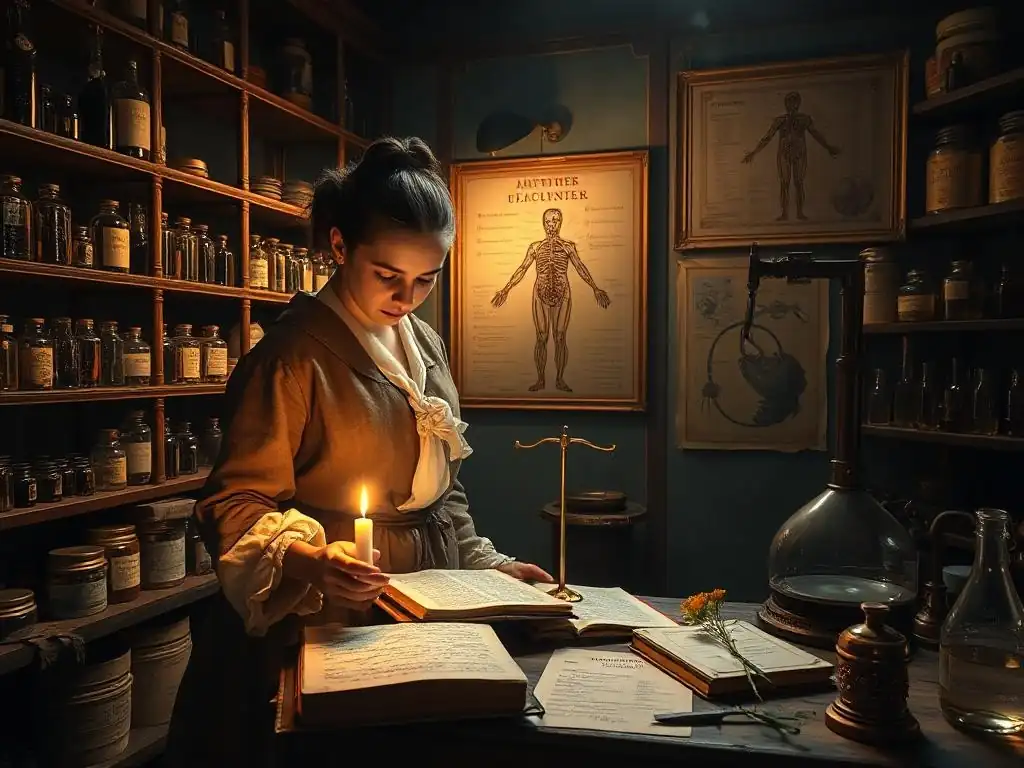
Welcome to WomenInScienceHistory.com!
Dive into the captivating story of MarieAnne Lavoisier, a name often whispered but seldom fully understood. More than just a wife, she was an indispensable partner in the chemistry revolution. Uncover the extent of her influence in shaping the field, translating scientific texts, and illustrating groundbreaking experiments. What role did she truly play alongside her famous husband? Prepare to be surprised as we explore her profound contributions and challenge the conventional narrative. Continue reading to unlock the secrets of MarieAnne Lavoisier's lasting legacy!
- Introduction: Unveiling Marie-Anne Lavoisier's Chemistry Influence
- Early Life and Education: Shaping Marie-Anne's Scientific Mind
- Marie-Anne Lavoisier's Partnership with Antoine Lavoisier: A Chemistry Powerhouse
- Marie-Anne Lavoisier's Key Contributions to Chemistry's Revolution
- Navigating Challenges in a Male-Dominated Scientific World
- Marie-Anne Lavoisier's Post-Revolution Life and Scientific Pursuits
- Marie-Anne Lavoisier: A Lasting Impact on Chemistry and Science History
- Conclusion: Celebrating Marie-Anne Lavoisier's Indispensable Role
-
Frequently Asked Questions
- What was MarieAnne Lavoisier's primary role in chemistry?
- How did MarieAnne Lavoisier contribute to the advancement of chemistry through translation?
- What artistic skills did MarieAnne Lavoisier bring to her collaboration with her husband?
- What challenges did MarieAnne Lavoisier face as a woman in science during her time?
- How did MarieAnne Lavoisier's influence extend beyond her direct scientific work?
- Final Reflection: The Enduring Legacy of Collaboration
- Ignite Your Inner Chemist: Take Action Now!
Introduction: Unveiling Marie-Anne Lavoisier's Chemistry Influence
Highlighting the Overlooked Contributions of Women in Science History
Throughout history, countless women have made profound contributions to scientific advancement, yet their stories often remain obscured or relegated to footnotes in traditional narratives. This oversight is particularly prevalent in fields historically dominated by men, where the achievements of female scientists were frequently attributed to male counterparts or simply dismissed. Unearthing these hidden figures is crucial not only for historical accuracy but also to provide role models for future generations and to demonstrate the diverse intellects that have shaped our understanding of the world.
The efforts to shine a light on these pioneering women reveal how much of our scientific heritage has been incomplete, missing the crucial perspectives and brilliant minds of individuals like Marie-Anne Lavoisier. By actively seeking out and celebrating their accomplishments, we begin to paint a more comprehensive and inspiring picture of scientific progress, acknowledging the full spectrum of human ingenuity that has driven discovery. This process helps us understand the complex interplay of collaboration and individual genius that underpins major scientific revolutions.
Marie-Anne Lavoisier: More Than Just a Wife – A Scientific Collaborator
Marie-Anne Pierrette Paulze Lavoisier, often remembered simply as the wife of the renowned chemist Antoine Lavoisier, was in fact a formidable scientific collaborator whose MarieAnne Lavoisier chemistry partner influence was indispensable to the chemical revolution of the 18th century. Her role extended far beyond that of a mere assistant; she was an active participant in experiments, a meticulous record-keeper, a translator of critical scientific texts, and an accomplished scientific illustrator.
Without her multifaceted contributions, the scale and impact of Lavoisier’s work, particularly his dismantling of the phlogiston theory and his foundational work in modern chemistry, would have been significantly diminished.
Her intellectual partnership with Antoine Lavoisier exemplifies a profound synergy where her unique skills and dedication amplified his scientific pursuits. She was not just a supportive spouse but an integral part of their shared scientific enterprise, embodying a model of collaboration that was remarkably progressive for her time. Understanding her true MarieAnne Lavoisier chemistry partner influence is vital to fully appreciate the collaborative nature of scientific discovery and to correctly attribute the profound contributions she made to the field of chemistry.
Early Life and Education: Shaping Marie-Anne's Scientific Mind
Family Background and Intellectual Environment
Born in 1758 into a prominent and wealthy family in Paris, Marie-Anne Pierrette Paulze was the daughter of Jacques Paulze, a director of the Ferme Générale, the powerful private tax collection agency of pre-revolutionary France. Her privileged upbringing afforded her access to an environment rich in intellectual stimulation, far exceeding the typical education available to young women of her era. The Paulze household was a hub of enlightened thought, frequently hosting discussions among influential figures of the Enlightenment, including philosophers, scientists, and artists.
This early exposure to a vibrant intellectual milieu undoubtedly cultivated Marie-Anne's natural curiosity and her keen analytical mind. While formal scientific education for women was virtually nonexistent, her family's social standing and connections meant she was immersed in conversations about the latest scientific theories and philosophical debates. This informal but intensive intellectual conditioning provided a fertile ground for her later deep engagement with chemistry and laid the foundation for her significant MarieAnne Lavoisier chemistry partner influence.
Self-Education and Artistic Talents: A Foundation for Scientific Understanding
Despite the societal limitations on women's formal education, Marie-Anne pursued extensive self-education, particularly in languages and the arts. She became proficient in English, a skill that proved invaluable for her later scientific work, enabling her to translate crucial texts from leading British chemists. Her artistic talents were equally remarkable; she was trained in drawing and painting, skills she would later apply to meticulously illustrate her husband's experimental apparatus and results.
These seemingly disparate skills – linguistic proficiency and artistic precision – converged to make her an indispensable scientific partner. Her ability to translate works like Richard Kirwan's Essay on Phlogiston provided Antoine Lavoisier with direct access to contemporary scientific debates, while her detailed illustrations transformed abstract experimental setups into clear, comprehensible visual records. This unique blend of intellectual curiosity, linguistic aptitude, and artistic skill was a cornerstone of Marie-Anne Lavoisier's chemistry contributions, showcasing her profound MarieAnne Lavoisier chemistry partner influence.
Marie-Anne Lavoisier's Partnership with Antoine Lavoisier: A Chemistry Powerhouse
The Marriage of Minds: A Collaborative Chemistry Laboratory
In 1771, at the age of 13, Marie-Anne Paulze married Antoine Lavoisier, who was then 28. What began as a marriage of convenience, typical for the aristocracy of the time, swiftly evolved into an extraordinary intellectual and scientific partnership. Their home in Paris, particularly their well-equipped laboratory, became the epicenter of groundbreaking chemical research. Marie-Anne was not merely present; she was an active and central figure in their daily scientific endeavors, demonstrating a deep understanding of the experimental process and the theoretical underpinnings of their work.
This collaborative environment fostered an unparalleled synergy, where Antoine's theoretical brilliance was complemented by Marie-Anne's meticulous attention to detail and practical skills. She took on various roles, from preparing reagents to operating instruments, ensuring the precision that characterized Lavoisier’s experiments. The success of their joint work, which ultimately reshaped the understanding of combustion and the nature of elements, is a testament to the power of their shared scientific pursuit and highlights the significant MarieAnne Lavoisier chemistry partner influence.
Translating Scientific Texts: Crucial for Knowledge Dissemination
One of Marie-Anne Lavoisier's most significant contributions was her extensive work as a translator of scientific texts, particularly from English to French. At a time when scientific knowledge was rapidly expanding across national borders, the ability to access and understand foreign research was paramount. Her most notable translation was Richard Kirwan's Essay on Phlogiston and the Constitution of Acids (1787), a seminal work by a leading proponent of the phlogiston theory, which Lavoisier sought to refute.
Her translation was not merely a linguistic conversion; it was a deeply analytical process. She added critical annotations and commentaries to Kirwan's text, highlighting points of contention and providing a direct platform for Lavoisier's counter-arguments. This meticulous work allowed the French scientific community to engage directly with the prevailing phlogiston theory and provided a clear intellectual battleground for Lavoisier's revolutionary oxygen theory. This crucial role in knowledge dissemination underscores Marie-Anne Lavoisier's chemistry influence as a vital link in the international scientific discourse.
Mastering Chemistry: Marie-Anne's Direct Involvement in Experiments
Marie-Anne Lavoisier was far from a passive observer in her husband's laboratory; she was an active participant, demonstrating a profound understanding of experimental chemistry. She assisted Antoine in nearly all his experiments, from the precise measurements of mass in combustion reactions to the intricate setup of gas collection apparatus. Her role involved not only handling the delicate equipment but also meticulously recording observations and data, ensuring the accuracy and reproducibility that were hallmarks of their research.
Her hands-on involvement allowed her to gain a deep practical knowledge of chemical processes and reactions. She was trained to use the various instruments, many of which were custom-built for their experiments, and understood the theoretical implications of the results. This direct engagement in the experimental process solidifies her status as a true scientific collaborator and highlights the profound MarieAnne Lavoisier chemistry partner influence on the development of modern chemistry.
Marie-Anne Lavoisier's Key Contributions to Chemistry's Revolution
Precise Documentation and Experimental Observations
The success of the Lavoisierian revolution in chemistry was heavily reliant on meticulous experimental design and precise documentation, areas where Marie-Anne Lavoisier played a crucial role. She maintained detailed laboratory notebooks, recording experimental procedures, observations, and quantitative data with exceptional accuracy. This rigorous approach to record-keeping was vital for the reproducibility of their experiments and for building a compelling case against the established phlogiston theory.
Her keen eye for detail ensured that no critical observation was missed, and her organized documentation provided a clear and undeniable record of their findings. This systematic approach to scientific inquiry, heavily influenced by her precision, became a cornerstone of modern experimental chemistry, distinguishing Lavoisier’s work from previous, less rigorous methodologies. Marie-Anne Lavoisier's chemistry contributions in this area were foundational to establishing the empirical basis for the new chemical paradigm.
Challenging Phlogiston Theory: Marie-Anne's Role in the Oxygen Revolution
The late 18th century was dominated by the phlogiston theory, which proposed that a fire-like element, phlogiston, was released during combustion. Antoine Lavoisier, with Marie-Anne by his side, systematically dismantled this theory through their experiments on combustion and respiration, ultimately identifying oxygen as the key element. Marie-Anne's involvement in this intellectual battle was multifaceted, extending beyond just experimental assistance to intellectual engagement.
Her translations of phlogiston proponents, notably Kirwan, allowed the Lavoisiers to directly address and refute the arguments of their opponents. She participated in discussions, understood the theoretical nuances, and helped articulate the counter-arguments for the new oxygen theory. Her intellectual grasp of the debate and her role in communicating its complexities demonstrate her significant MarieAnne Lavoisier chemistry partner influence in ushering in the oxygen revolution and fundamentally changing chemical understanding.
Visualizing Science: The Art of Scientific Illustration in Chemistry
Marie-Anne Lavoisier's artistic talents were not merely a hobby but a vital component of the Lavoisiers' scientific communication strategy. She meticulously drew and engraved the illustrations for Antoine's seminal work, Traité Élémentaire de Chimie (Elementary Treatise of Chemistry), published in 1789. These illustrations were not simply decorative; they were precise technical drawings of experimental apparatus, laboratory setups, and chemical processes.
For instance, her detailed engravings of the calorimeter used to measure heat in chemical reactions, or the sophisticated gas collection systems, provided clarity and insight that words alone could not convey. In an era before photography, these accurate visual representations were indispensable for conveying the novelty and precision of their experiments to the wider scientific community. Her ability to translate complex scientific setups into clear, understandable visuals was a unique and profound MarieAnne Lavoisier chemistry partner influence that significantly enhanced the dissemination and acceptance of modern chemical principles.
Overcoming Societal Expectations and Gender Bias
In 18th-century France, societal expectations for women, especially those of aristocratic birth, largely confined them to domestic roles or social engagements. Opportunities for formal education in science or participation in scientific research were virtually non-existent for women. Marie-Anne Lavoisier, despite her privileged background, faced immense gender bias that sought to dismiss or diminish her intellectual capabilities and contributions. Her active presence in the laboratory and her engagement in scientific discourse challenged these deeply ingrained norms.
She often had to navigate a world where her scientific insights might be overlooked or attributed to her husband, simply because of her gender. Her steadfast dedication to scientific work, her rigorous self-education, and her unwavering commitment to the Lavoisiers' shared research were powerful statements against the prevailing gender biases of her time. Her ability to transcend these limitations and carve out a significant role for herself is a testament to her intellect and determination, highlighting the strength of her MarieAnne Lavoisier chemistry partner influence against all odds.
Establishing Credibility as a Female Scientist
Establishing credibility as a female scientist in the 18th century was an arduous task, given the exclusion of women from universities, academies, and formal scientific societies. Marie-Anne Lavoisier could not pursue a degree or hold an official scientific position. Instead, she built her credibility through her undeniable competence and the tangible results of her work. Her precise translations, her meticulous record-keeping, and her skillful scientific illustrations were concrete demonstrations of her scientific acumen.
Her presence in the laboratory was not merely decorative; she participated in discussions with leading scientists of the day who visited the Lavoisier home, often acting as an interpreter and an informed interlocutor. Through her active participation and the undeniable quality of her contributions to their joint publications, she gradually earned the respect of many of her husband's scientific peers, though full recognition of her MarieAnne Lavoisier chemistry partner influence would only come much later.
Preserving and Promoting Lavoisier's Legacy After His Execution
The French Revolution brought a tragic end to Antoine Lavoisier's life, as he was guillotined in 1794 due to his association with the Ferme Générale. In the immediate aftermath, Marie-Anne faced not only profound personal loss but also the monumental task of preserving and promoting her husband's unfinished scientific legacy amidst political turmoil and the threat of persecution. This period showcased her incredible resilience and unwavering commitment to science.
She meticulously collected and organized all of Lavoisier's laboratory notebooks, papers, and unfinished manuscripts. Her tireless efforts culminated in the posthumous publication of Mémoires de Chimie (Memoirs of Chemistry), a two-volume collection of Antoine's unpublished papers, in 1805. This monumental undertaking ensured that his crucial research, which laid the groundwork for modern chemistry, was not lost to history. Her dedication to this task cemented her MarieAnne Lavoisier chemistry partner influence not just during his lifetime, but also in safeguarding his enduring contribution to science.
Marie-Anne Lavoisier's Post-Revolution Life and Scientific Pursuits
Continuing Scientific Work and Intellectual Salons
Following Antoine Lavoisier's execution, Marie-Anne did not retreat from the intellectual world. Although her direct involvement in experimental chemistry diminished without her partner, she continued to engage with scientific ideas and discussions. She hosted intellectual salons at her home, which became gathering places for prominent scientists, philosophers, and thinkers of the post-revolutionary era, including figures like Benjamin Thompson (Count Rumford) and the chemist Joseph-Louis Gay-Lussac.
These salons served as vital forums for the exchange of scientific ideas and the continuation of intellectual discourse in a turbulent period. Marie-Anne, with her deep understanding of chemistry and her extensive network, remained an influential figure in the Parisian scientific community. She actively participated in these discussions, demonstrating her continued intellectual prowess and her unwavering commitment to the advancement of knowledge, further solidifying her lasting MarieAnne Lavoisier chemistry partner influence.
Legacy and Lasting Influence on Chemistry
Marie-Anne Lavoisier's legacy extends far beyond her direct contributions to specific experiments or publications. Her lasting influence on chemistry lies in her embodiment of the collaborative scientific partnership and her role in establishing the rigorous standards of experimental documentation and scientific illustration that became hallmarks of modern chemistry. She demonstrated that intellectual partnership can transcend traditional roles and significantly accelerate scientific progress.
Moreover, by meticulously preserving and publishing Antoine Lavoisier's Mémoires de Chimie, she ensured that the foundational principles of modern chemistry, developed through their joint efforts, were disseminated and recognized globally. Without her dedication, much of this crucial work might have been lost or delayed in its impact. Her efforts were pivotal in securing the enduring recognition of the chemical revolution, making her an unsung hero whose MarieAnne Lavoisier chemistry partner influence reverberates through the annals of scientific history.
Marie-Anne Lavoisier: A Lasting Impact on Chemistry and Science History
Recognizing Marie-Anne Lavoisier's Influence
For many years, Marie-Anne Lavoisier's contributions were largely overshadowed by her husband's towering reputation, often reduced to a footnote in historical accounts. However, contemporary scholarship has increasingly recognized her as an indispensable scientific partner whose MarieAnne Lavoisier chemistry partner influence was pivotal to the chemical revolution. Her roles as translator, illustrator, experimental assistant, and intellectual collaborator were not supplementary but fundamental to the success and communication of Lavoisier’s groundbreaking work.
Acknowledging her full impact means understanding that science is often a collective endeavor, built on the synergistic efforts of many individuals. Marie-Anne's story serves as a powerful reminder to scrutinize historical narratives and to ensure that the contributions of women, often marginalized, are fully recognized and celebrated. Her scientific rigor, intellectual curiosity, and unwavering dedication exemplify the qualities of a truly indispensable scientist.
Inspiring Future Generations of Women in Science
The story of Marie-Anne Lavoisier is a profound source of inspiration for future generations of women in science. Her ability to thrive and contribute significantly in a field that largely excluded women highlights the immense potential that societal barriers have historically suppressed. Her unwavering pursuit of knowledge, despite the limitations placed upon her gender, serves as a powerful testament to resilience and intellectual passion.
By celebrating her as a true scientific collaborator and recognizing her MarieAnne Lavoisier chemistry partner influence, we provide a vital historical precedent for women's active and central roles in scientific discovery. Her life demonstrates that dedication, intelligence, and a collaborative spirit can overcome significant obstacles, encouraging young women today to pursue their scientific ambitions with confidence and determination.
Conclusion: Celebrating Marie-Anne Lavoisier's Indispensable Role
Frequently Asked Questions
What was MarieAnne Lavoisier's primary role in chemistry?
MarieAnne Lavoisier was more than just a wife; she was an indispensable scientific partner. She actively participated in her husband Antoine Lavoisier's work, contributing through translations, illustrations, and experimental assistance.
How did MarieAnne Lavoisier contribute to the advancement of chemistry through translation?
She translated crucial scientific works from English, allowing the Lavoisiers to stay abreast of the latest developments in foreign research and discoveries, including those related to oxygen and combustion.
What artistic skills did MarieAnne Lavoisier bring to her collaboration with her husband?
MarieAnne Lavoisier was a skilled artist who created detailed illustrations of laboratory equipment and experimental setups, which were essential for communicating their scientific findings effectively.
What challenges did MarieAnne Lavoisier face as a woman in science during her time?
As a woman in the 18th century, MarieAnne faced significant societal barriers and lack of recognition in the male-dominated scientific community, often having her contributions overshadowed by her husband's.
How did MarieAnne Lavoisier's influence extend beyond her direct scientific work?
Beyond her direct contributions, MarieAnne Lavoisier hosted salons that brought together leading scientists, fostering intellectual exchange and solidifying her role as a key figure in the scientific community of her time.
Final Reflection: The Enduring Legacy of Collaboration
The story of MarieAnne Lavoisier serves as a potent reminder that scientific breakthroughs are rarely solitary endeavors. Her contributions, often overshadowed, were undeniably crucial to the chemical revolution. By recognizing and celebrating her role, we not only rectify a historical injustice but also gain a deeper understanding of the collaborative nature of scientific progress, a principle that remains profoundly relevant in today's increasingly interconnected world of research and innovation.
MarieAnne's influence extends far beyond the laboratory. Her translation skills, artistic talent, and intellectual acumen shaped the very language and visual representation of chemistry, impacting how we understand and communicate scientific concepts even now. Her story underscores the vital role of diverse perspectives and skill sets in advancing knowledge. Nothing is lost, nothing is created, everything is transformed.
- Antoine Lavoisier's famous quote, while often attributed solely to him, reflects the meticulous observation and analytical thinking that MarieAnne helped to cultivate within their shared scientific pursuits.
Let us, therefore, embrace the spirit of collaboration and recognize the indispensable contributions of all who work behind the scenes, often without due recognition. Consider how you can foster a more inclusive and equitable environment in your own field, ensuring that every voice is heard and every contribution valued. The legacy of MarieAnne Lavoisier challenges us to look beyond the surface, to acknowledge the power of partnership, and to build a future where scientific progress is driven by collective intelligence and shared purpose.
Ignite Your Inner Chemist: Take Action Now!
Thank you for diving into the fascinating story of Marie Anne Lavoisier and her pivotal role in shaping chemistry. Now, it's time to channel that inspiration into action and explore the world around you!
Here's how you can get started:
- Translate your own world! Find a scientific paper or historical document and challenge yourself to interpret it with a fresh perspective, just as Marie Anne did with her translations.
- Delve deeper into the era. Read a biography of a contemporary scientist or artist of the time to understand the socio-cultural influences of her work.
- Share this story with other budding historians or science enthusiasts. Help spread awareness of unsung women scientists!
What hidden scientific connections will you uncover today?