The Chemical Ceiling: Stories of Women Who Smashed Through (19502000)
🌟 Explore inspiring stories of women who shattered barriers in women’s chemical research from 1950 to 2000, highlighting their groundbreaking contributions and…
Read article
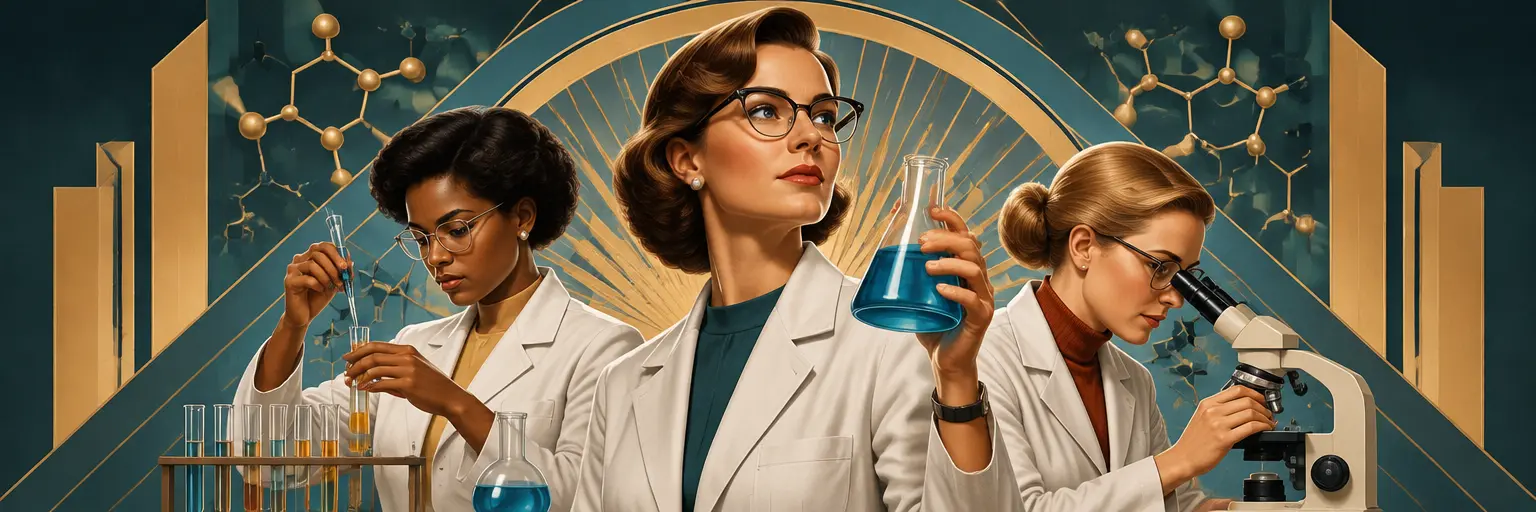
Between 1950 and 2000, women in chemistry shattered glass ceilings and redefined the field—from unraveling the structure of DNA to pioneering greener industrial processes. This era saw brilliant minds like Dorothy Crowfoot Hodgkin, whose X-ray crystallography revealed the architecture of penicillin and vitamin B12, and Rosalind Franklin’s crucial imagery that underpinned modern genetics. Amid post-war labs and rising academic barriers, these chemists navigated systemic bias while making transformative discoveries in pharmaceuticals, materials science, and environmental chemistry. Their work not only advanced foundational knowledge but also forged pathways for future generations, proving that gender never dictates scientific brilliance. By spotlighting their struggles, patents, and publications, we honor the resilience that turned overlooked laboratories into launchpads for global change. Their legacy remains a beacon for today’s innovators, reminding us that curiosity, precision, and persistence know no gender. Explore their stories to see how mid-century breakthroughs still fuel modern chemistry—and why championing diversity in science is essential for every future breakthrough.
🌟 Explore inspiring stories of women who shattered barriers in women’s chemical research from 1950 to 2000, highlighting their groundbreaking contributions and…
Read article
✨ Jacqueline Barton’s groundbreaking DNA research reveals how electricity uniquely traverses the DNA helix, illuminating new pathways in molecular science. Her pioneering…
Read article
🌟 Discover how Darleane Hoffman: Superheavy element research broke barriers, pioneering the exploration of uncharted scientific territory from 1950 to 2000, and…
Read article
🌟 Celebrating Dorothy Hodgkin’s groundbreaking X-ray crystallography, her pioneering work unveiled the 3D structures of vital molecules, inspiring women in science and…
Read article
🌟 Discover how Marie Curie’s impact on chemistry revolutionized scientific understanding and paved the way for women in science, inspiring countless generations…
Read article
🌟 Discover the inspiring story of Rosalind Franklin’s DNA research, a groundbreaking contribution by a pioneering woman chemist. Her legacy not only…
Read article
✨ Discover the trailblazing women of late 20th-century chemistry, whose groundbreaking contributions transformed science and challenged gender barriers. Women’s late 20th century…
Read articleDiscover the transformative era when women in chemistry broke laboratory ceilings, from postwar expansion to the dawn of the digital age. This subcategory highlights the brilliant minds who advanced molecular biology, developed life-saving drugs, pioneered environmental analysis, and reshaped polymer science—all while navigating institutional barriers. Dive into their Nobel-worthy breakthroughs, mentorship legacies, and the evolving fight for recognition in a field once dominated by men.
Between 1950 and 2000, only three women claimed the Nobel Prize in Chemistry, yet their impact was seismic. Dorothy Crowfoot Hodgkin (1964) decoded vitamin B12 and penicillin structures using X-ray crystallography, revolutionizing biochemical understanding. Ada Yonath (2009, but foundational work in the 1980s) mapped ribosome structures, opening antibiotic development pathways. These laureates not only advanced science but also became role models, proving that rigorous, patient investigation transcends gender.
Expect detailed biographies covering their experimental methods, collaborative networks, and the institutional biases they overcame. You’ll learn how Hodgkin’s work on insulin took decades of dedication, while Yonath’s cryo-crystallography challenged existing paradigms. Each profile includes primary source quotes, lab notebook excerpts, and contextual timelines linking their discoveries to broader scientific currents—from antibiotics to genetic code translation.
Women like Stephanie Kwolek (inventor of Kevlar, 1965) and Edith Flanigen (molecular sieves for petroleum refining) redefined materials science. Kwolek’s discovery of liquid crystalline polymers led to lightweight, bulletproof fibers now used in body armor and aerospace. Flanigen’s zeolite catalysts transformed petrochemical processes, making cleaner fuels possible. Their work exemplifies how curiosity-driven research solves real-world problems.
This section profiles over a dozen such innovators, detailing their patent portfolios, industrial lab cultures, and the gender-specific challenges they faced—like Kwolek’s initial struggle to convince male colleagues of her polymer’s viability. You’ll find accessible explanations of polymer chemistry principles, factory-floor anecdotes, and the eventual commercial and military adoption of their materials, highlighting how these women shaped modern technology infrastructure.
The mid-to-late 20th century saw women like Gertrude B. Elion (Nobel 1988) develop groundbreaking drugs for leukemia, herpes, and organ transplant rejection. Elion’s rational drug design—based on nucleotide metabolism—spawned AZT, acyclovir, and 6-mercaptopurine. Similarly, Rosalyn Yalow (Nobel 1977) co-invented radioimmunoassay, enabling precise hormone measurements. These scientists merged chemistry with biology, creating tools that saved millions of lives.
Here, we explore their pathway from bench to bedside, including clinical trial protocols, ethical debates, and the collaborative partnerships that amplified their work—like Elion’s decades-long partnership with George Hitchings. Expect deep dives into assay techniques, drug synthesis routes, and the regulatory landscape of mid-century FDA approvals, plus personal narratives about balancing research with societal expectations for women’s roles.
Women such as Claire Patterson (though geochemist, her lead-free gasoline campaign relied on mass spectrometry) and Mildred Cohn (NMR spectroscopy pioneer) advanced analytical methodologies. Environmental chemists like Diane Wilson (corporate whistleblower) and Ruth Patrick (freshwater ecology) used chemical analysis to expose pollution, influencing the Clean Water Act. Their work bridged pure chemistry and public policy.
This segment details their instrumental innovations—from isotope ratio mass spectrometry to chromatographic separation techniques—and their applications in detecting environmental contaminants. You’ll also read about their advocacy, court testimonies, and scientific activism, showing how exacting laboratory skills translated into regulatory victories. Profiles include career trajectories in academia, government labs, and NGOs, with emphasis on mentorship networks among women scientists.
Despite accomplishments, women chemists faced severe underrepresentation. This section profiles those who challenged academic hierarchies, like Mary L. Good (first female president of ACS in 1987) and Isabella Karle (Navy researcher who developed direct methods for X-ray crystallography but was denied faculty roles). Their persistence opened tenure-track positions, grant access, and editorial board seats for future generations.
Expect analysis of discriminatory policies—from nepotism rules to “marriage bars”—and the strategic responses women used, such as forming the Association for Women in Science (1971). We include oral histories, salary data comparisons, and documentation of slow cultural shifts, alongside success stories of department chairs and university presidents. This section also covers legislative changes like Title IX’s impact on graduate admissions and lab funding equity.
Dorothy Crowfoot Hodgkin won in 1964 for her work on vitamin B12 and other vital molecules using X-ray crystallography. She remains the only British woman scientist to receive a Nobel Prize in Chemistry, and her standard-setting techniques became essential tools in biochemistry and pharmaceutical research.
Kwolek invented Kevlar in 1965 while at DuPont—a liquid crystalline polymer that is five times stronger than steel by weight. Used in body armor, tires, and fiber-optic cables, Kevlar saves thousands of lives annually. Her discovery stemmed from unconventional experiments with polyamides at low temperatures.
Elion pioneered rational drug design by studying differences in nucleic acid metabolism between normal and diseased cells. This approach led to acyclovir for herpes, AZT for HIV, and 6-mercaptopurine for leukemia. She won the 1988 Nobel Prize in Physiology or Medicine, despite lacking a Ph.D.
Yalow co-developed radioimmunoassay (RIA) in 1959, a technique that measures minute concentrations of hormones, vitamins, and drugs in blood. RIA revolutionized endocrinology, enabling diagnosis of diabetes, thyroid disorders, and growth abnormalities. She won the 1977 Nobel Prize for this breakthrough.
They formed networks like the Association for Women in Science, challenged nepotism rules and unequal pay through lawsuits, and advocated for Title IX enforcement. Pioneers like Mary L. Good also rose to leadership roles, while others used government labs to circumvent academic bias, gradually transforming policies on hiring and grants.