The Data Deficit: Why We Need Better Metrics for Diversity in Global Science
🌟 Recognizing the vital role women have played in science, the article emphasizes the urgent need for improved women in science metrics…
Read article

Explore the cutting-edge conversations shaping women’s roles in science today, from gender bias in research and the STEM pay gap to diversity & inclusion initiatives that are transforming labs and lecture halls. Dive into current challenges facing women in STEM, discover organizations championing equity, and learn how mentorship for young women is building a stronger future. Whether you’re seeking actionable insights on advancing women in science or inspiration from trailblazers paving the way, this hub connects the dots between historical struggles and tomorrow’s breakthroughs—empowering you to be part of the change. 💡🔬

🌟 Recognizing the vital role women have played in science, the article emphasizes the urgent need for improved women in science metrics…
Read article
✨ Women’s STEM tenure track challenges often clash with women’s life cycles, creating barriers for female scientists pursuing long-term academic careers. Addressing…
Read article
🌟 Unconscious bias in STEM labs remains a significant barrier for women, often hidden behind assumptions and stereotypes. By uncovering these biases,…
Read article
🌟 Despite progress, achieving women STEM pay parity remains a challenge due to persistent biases and structural barriers. However, inspiring stories of…
Read article
🌟 Embracing diversity in healthcare is crucial, as "Diverse healthcare improves patient outcomes" by ensuring personalized treatment and reducing disparities. Highlighting women…
Read article
🌟 Discover how women scientists in institutional leadership roles are transforming science, breaking barriers, and inspiring future generations. WomenInScienceHistory.com celebrates pioneering women…
Read article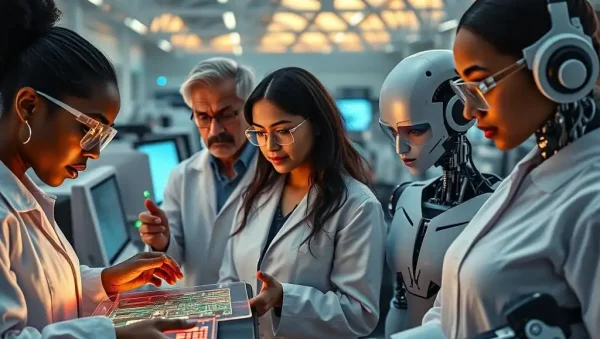
🌟 Women in STEM role models illuminate the path forward, inspiring future generations by showcasing groundbreaking achievements and overcoming challenges in male-dominated…
Read article
🌟 Gender bias significantly contributes to women STEM research attrition, pushing talented female scientists out of the field. Addressing these systemic barriers…
Read article
🌟 A one-size-fits-all approach ignores the diverse experiences of women in STEM, overlooking crucial intersectional challenges that hinder their progress. Recognizing these…
Read article
🌟 Discover the next wave of women’s science organization support groups shaping the future. These emerging organizations are empowering female scientists, overcoming…
Read article
🌟 Explore how STEM motherhood career impact continues to challenge women in science, highlighting historic and modern struggles faced by pioneering female…
Read article
🌟 Discover inspiring stories of companies that successfully narrowed the STEM gender pay gap, demonstrating that equitable pay is achievable. These pioneers…
Read articleExplore the pressing topics shaping the experiences of women in STEM today. From systemic barriers like gender bias and pay disparity to actionable solutions such as mentorship and inclusive policies, this category examines the current landscape. Understand the challenges, celebrate progress, and discover how organizations and individuals are driving change. These discussions build on the historical struggles documented across our site, connecting past pioneers to today’s advocates and tomorrow’s innovators.
The future of women in science is bright, yet uneven. Emerging technologies—AI, genomics, climate modeling—offer new opportunities for female leadership, but only if systemic barriers are dismantled. Expect insights on emerging research fields, policy shifts, and how increasing female representation in senior roles will transform scientific priorities. The horizon includes more interdisciplinary collaboration and equitable funding models, driven by a new generation of female researchers who are unapologetically visible and vocal.
Countless organizations are actively leveling the playing field. Groups like AWIS (Association for Women in Science), WISE, and the L’Oréal-UNESCO For Women in Science program provide grants, networking, and advocacy. Readers will learn about their missions, eligibility criteria, and success stories. These organizations not only fund research but also create safe spaces for mentorship, combatting isolation and fostering community that is essential for retention and career advancement in male-dominated fields.
Diversity and inclusion go beyond gender—they encompass race, ethnicity, LGBTQ+ identity, disability, and socioeconomic background. This subcategory explores how intersectional approaches strengthen scientific innovation. Expect discussions on inclusive hiring practices, culturally responsive mentorship, and the importance of diverse perspectives in research design. A truly equitable scientific community requires dismantling overlapping biases, ensuring that no woman is left behind because of her other identities or circumstances.
Gender bias infiltrates every stage of research—from funding allocation and peer review to citation patterns and data interpretation. Studies show female-led studies receive less funding and are often cited less than male equivalents. Here, we analyze landmark studies on implicit bias, examine how algorithms can replicate sexism, and highlight interventions such as double-blind reviews and bias training. Awareness is the first step, but actionable systemic changes are crucial for true scientific integrity.
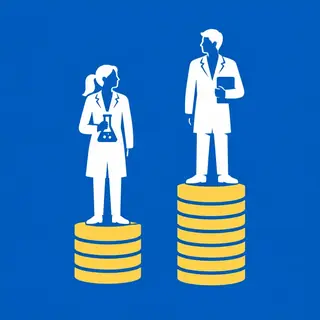
Despite equal qualifications, women in STEM earn roughly 80 cents for every dollar earned by male peers—with the gap wider for women of color. This section breaks down salary data by field, education level, and geography, exposing the "motherhood penalty" and negotiation disparities. We also discuss legislative fixes, salary transparency policies, and unionization efforts. Closing the pay gap is not just fairness; it is critical for retaining talent and ensuring financial security for future generations of female scientists.
Today’s female scientists face persistent hurdles: harassment, burnout, imposter syndrome, and the "leaky pipeline" that drains women at every career stage. The COVID-19 pandemic disproportionately impacted female researchers, particularly those with caregiving duties. This subcategory covers real-world experiences, recent surveys, and institutional failures. It also highlights promising strategies like flexible work policies and parental leave reform, emphasizing that addressing these challenges requires cultural change, not just individual resilience.
Mentorship is a proven catalyst for success—yet only 40% of women in STEM report having a mentor. This section explores formal mentorship programs, peer-mentoring circles, and the value of reverse mentorship, where junior researchers expose senior scientists to modern methodologies. Expect guidance on finding mentors, building sponsor relationships, and avoiding toxic mentorship. Effective mentoring also includes advocating for protégés’ advancement, not just offering advice, making it a powerful tool for breaking glass ceilings.
Institutional bias remains the most significant barrier, manifesting in biased hiring, unequal funding, and lack of family-friendly policies. While overt discrimination has decreased, subtle biases persist—like women receiving less credit for collaborative work. Addressing this requires transparent evaluation metrics, accountability for leadership, and systemic shifts in workplace culture, rather than placing responsibility on individual women to "lean in" against structural resistance.
Donate directly to established nonprofits like AWIS or the Association for Women in Science, or volunteer your time for mentorship or fundraising. Share their resources on social media to amplify their reach. If you work in academia or industry, advocate for corporate matching gifts or partnership grants. Even small monthly donations can fund travel grants or childcare stipends for female researchers, removing practical obstacles that derail careers.
Absolutely. Gender bias influences what is studied—for example, heart disease research historically focused on men, leading to misdiagnosis of women. It also affects data interpretation, with gendered assumptions skewing conclusions. In biomedical research, the underrepresentation of female cells and animals has led to flawed results. Correcting this requires sex-disaggregated data, diverse research teams, and mandatory bias training for reviewers and editors.
The STEM pay gap is wider than in many other fields due to salary differentials between specializations (e.g., engineering vs. biology), lower rates of negotiation, and "motherhood penalties" in demanding careers. Women in STEM also face slower promotions and fewer opportunities for high-paying conference invitations or consulting roles. Transparent salary bands, annual audits, and collective bargaining are proven remedies, alongside cultural shifts that normalize men taking equal parental leave.
An effective mentor provides not only career advice but also psychological safety and advocacy. They actively sponsor their mentee, recommending them for awards, projects, and promotions. They acknowledge intersectional challenges—supporting women of color or LGBTQ+ women differently. Strong mentors are also vulnerable about their own failures, normalizing setbacks. Critically, they listen more than they speak, helping the mentee build agency rather than dependency, and they celebrate wins loudly.