Women in Space Science & Astronomy
Explore the remarkable legacy of women who have mapped the stars, calculated orbital paths, and braved the vacuum of space. At WomenInScienceHistory.com, this category uncovers biographies, groundbreaking discoveries, and the persistent barriers shattered by female astronomers, astrophysicists, astronauts, and engineers. From ancient sky-watchers to modern mission controllers, these stories fuel inspiration and highlight the vital role of women in humanity’s cosmic journey.
🚀 Women in Space Missions & Programs
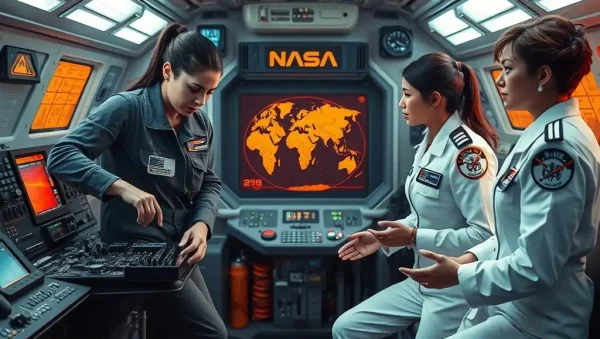
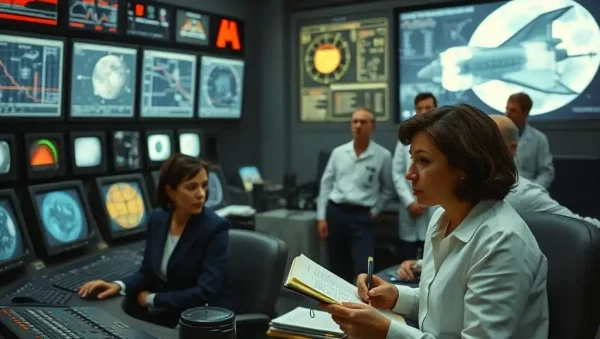
This subcategory chronicles women who designed, planned, or executed historic space missions—from the Mercury and Apollo programs to the Space Shuttle and Artemis. Readers will learn about mission control leaders, payload specialists, and flight directors who ensured orbital success. Expect behind-the-scenes accounts of critical decisions, emergency problem-solving, and the collaborative spirit that pushed humanity beyond Earth’s atmosphere, often despite institutional exclusion.
🛠️ Women in Aerospace Engineering
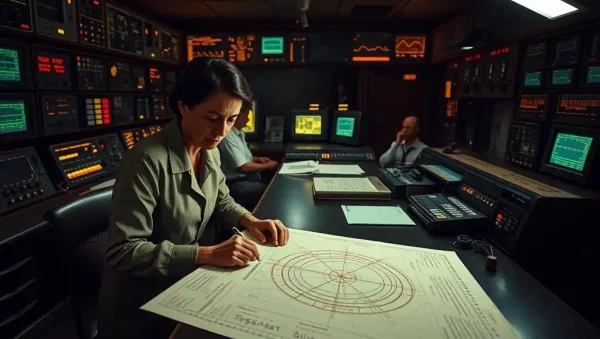
Here, we spotlight the engineers who turned sketches into spacecraft, solving challenges in propulsion, materials, and aerodynamics. You’ll discover pioneers like the “hidden computers” who calculated reentry trajectories and modern designers of reusable rockets. This section emphasizes the rigorous mathematics and innovative thinking required to make space travel safe—and how these women’s technical expertise was frequently downplayed or credited to male colleagues.
🌌 21st Century Women in Space Science & Astronomy
Focusing on contemporary breakthroughs, this category covers current researchers using the James Webb Telescope, Mars rovers, and gravitational wave detectors. Readers will find profiles of women leading dark matter surveys, exoplanet discovery teams, and black hole imaging projects like the Event Horizon Telescope. Expect insights into modern mentorship networks, funding challenges, and the growing visibility of female scientists in mainstream media and space agencies.
👩🚀 Women Astronauts & Cosmonauts
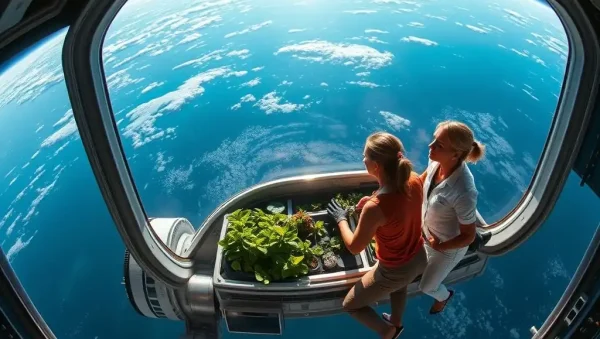
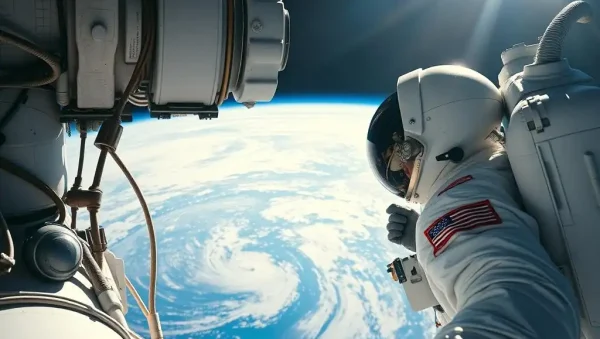
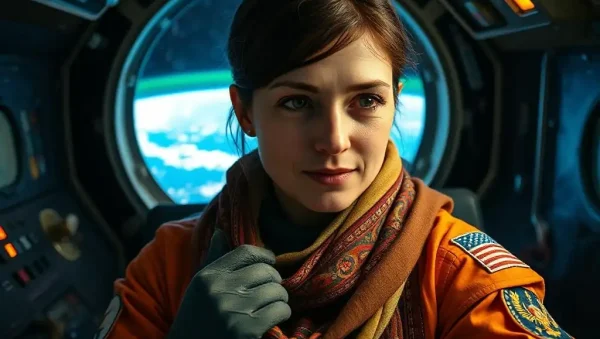
Dive into the personal and professional journeys of every woman who has flown to space, from Valentina Tereshkova’s 1963 Vostok 6 flight to the latest SpaceX Crew missions. This subcategory includes mission logs, training regimens, and the physical and psychological tolls of spaceflight. It also addresses the unique challenges—like spacesuit sizing and hygiene protocols—that female astronauts overcame to normalize their presence in orbit and on the International Space Station.
🔭 Women in Astrophysics
This section delves into theoretical and observational astrophysicists who revolutionized our understanding of stars, galaxies, and cosmic radiation. Learn about Cecilia Payne-Gaposchkin’s stellar composition work or Vera Rubin’s dark matter evidence. We also cover modern researchers studying neutron star collisions and cosmic inflation, emphasizing how these women combined mathematical brilliance with perseverance in a field historically dominated by men.
🌍 Women in Planetary Science
Here, readers explore scientists who study moons, planets, and asteroid belts—from geologists interpreting Martian terrain to atmospheric chemists analyzing Venus’s clouds. Expect stories of women involved in NASA’s Voyager, Cassini, and Perseverance missions, as well as laboratory researchers analyzing meteorites. The subcategory highlights fieldwork on Earth’s analogs (like Antarctic craters) and the growing role of women in planetary defense and astrobiology.
🛰️ Mid-Late 20th Century Women in Space Exploration (1950-2000)
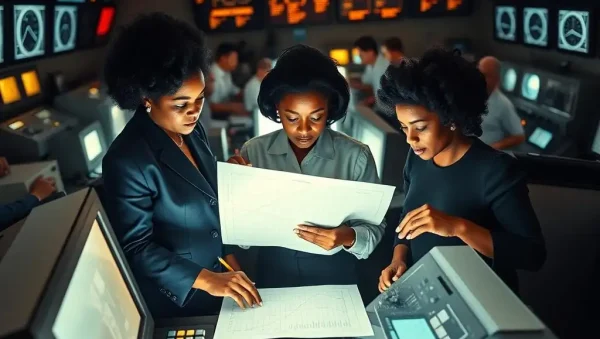
This historical window covers the Space Race, Cold War science, and the first space shuttle era. Readers will find biographies of women like Katherine Johnson (orbital mechanics) and Sally Ride (first American woman in space). The section emphasizes the intersection of sexism and segregation, showing how women of color faced double barriers while still delivering calculations that made missions successful. It also celebrates the first female spacewalkers and station commanders.
🌠 Early 20th Century Women in Space Science (1900-1950)
Before satellites existed, these women pioneered rocket theory, astronomical photometry, and solar physics. This subcategory profiles pioneers like Henrietta Swan Leavitt (Cepheid variables) and Yvonne Choquet-Bruhat (relativity mathematics). Expect discussions on how women used observatory clerical roles to gain access, and how their work on stellar classification and orbital dynamics laid essential groundwork for later spaceflight. Many published under initials or male pseudonyms.
🌟 Early Women in Astronomy (Pre-18th Century)
Travel back to a time when astronomy was linked to navigation, calendar-making, and mythology. This section covers figures like Hypatia of Alexandria (mathematician-astronomer) and the anonymous Babylonian and Chinese women who recorded eclipses. Readers will learn about women who built observatories in Islamic empires, tracked comets in Renaissance courts, and defended heliocentrism despite religious persecution. Their tools were often simple, but their observations shaped centuries of science.
📜 18th & 19th Century Women in Astronomy
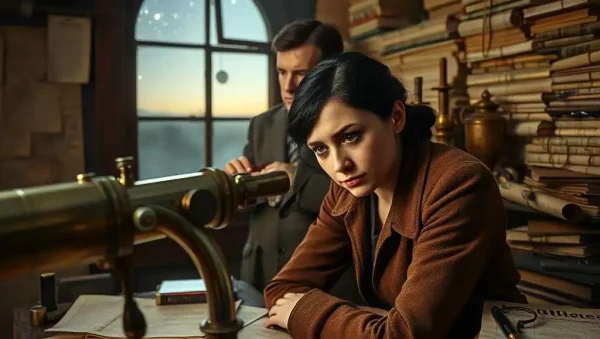
This era saw the rise of systematic cataloging, who discovered comets and nebulae, and calculated planetary orbits. Explore the lives of Caroline Herschel (first professional female astronomer), Maria Mitchell (first American woman to find a comet), and Mary Somerville (physics writer). The subcategory underscores how women used family connections and scientific salons to gain legitimacy, while also addressing their exclusion from universities and professional societies.
Frequently Asked Questions
Who was the first woman in space?
Valentina Tereshkova, a Soviet cosmonaut, became the first woman in space on June 16, 1963, aboard Vostok 6. She completed 48 orbits over nearly three days. Tereshkova was selected from over 400 applicants and remains the only woman to have flown solo in space. Her mission proved that women could endure spaceflight’s physical demands.
What did Katherine Johnson contribute to NASA?
Johnson calculated the flight trajectories for Project Mercury and the Apollo 11 moon landing. Her precise math ensured John Glenn’s orbital capsule reentry and later safe moon-bound paths. She also verified computer calculations, working at NASA from 1953-1986. Her work was vital, yet she faced segregation and was initially unrecognized until the 2016 film “Hidden Figures.”
Why was Cecilia Payne-Gaposchkin’s discovery controversial?
In 1925, Payne-Gaposchkin’s doctoral thesis showed that stars are primarily composed of hydrogen and helium, not elements like Earth. Male astronomers, including her advisor, dismissed her conclusion because it contradicted the prevailing belief that stars mirrored Earth’s composition. However, later observations confirmed she was correct, revolutionizing stellar physics—yet she only received full professorship decades later at Harvard.
Are there still gender barriers in astronomy today?
Yes, though improved, barriers persist. Women hold about 25% of senior astronomy faculty positions globally and face systemic biases in telescope-time allocations, funding, and publication. Harassment cases have publicly surfaced, prompting initiatives like the American Astronomical Society’s climate surveys. However, female students now often outnumber men in undergraduate astronomy programs, and mentorship networks are actively addressing retention challenges.
How can I find biographies of lesser-known women in space science?
Start with our site’s searchable database, which indexes by era and field. Also consult academic archives like the American Institute of Physics’ “Women in Physics” oral histories. Books such as “The Glass Universe” by Dava Sobel and “Rise of the Rocket Girls” by Nathalia Holt provide detailed narratives. For modern scientists, follow NASA’s “Women in STEM” profiles and university faculty pages, which often highlight pioneering female researchers.