
From Lab Coats to Launch Pads: Women Scientists Transitioning to Astronaut Roles (1970s1990s)

Welcome to WomenInScienceHistory.com, where we unearth the untold stories of remarkable women who shaped the world of science. Ever wondered how early women scientists transitioned from the lab to the cosmos? Dive into our latest article, " From Lab Coats to Launch Pads: Women Scientists Transitioning to Astronaut Roles (1970s-1990s)," and discover the pivotal role they played in the early space program. What groundbreaking skills did these women bring to the table, and what obstacles did they overcome to reach for the stars? Read on to find out!
- Introduction: Pioneering Women Astronauts in the Early Space Program
- Breaking Barriers: The Selection and Training of the First Women Astronauts
- The First Flights: Women in Space and Their Scientific Missions
- Scientific Contributions of Women Astronauts: Beyond the Headlines
- The 1990s: Continued Progress and Evolving Roles for Women in Space
- The Impact and Legacy: Inspiring Future Generations of Women in STEM
- Conclusion: Celebrating the Achievements of Women Scientists in the Early Space Program
-
Frequently Asked Questions
- What were some of the initial barriers that women scientists faced when trying to become astronauts in the early space program?
- How did the selection criteria for astronauts change between the 1970s and 1990s, allowing more women scientists to be considered for space missions?
- Which scientific fields were women astronauts often trained in, and how did their scientific backgrounds contribute to space exploration?
- Can you name some prominent women scientists who became astronauts in the early space program and what were their key contributions?
- How did public perception and media coverage of women astronauts in the early space program impact the role of women in science and technology?
- Final Reflection: Reaching for the Stars - A Legacy of Pioneering Women
- Launch Your Own Orbit: Take the Next Giant Leap!
Introduction: Pioneering Women Astronauts in the Early Space Program
Highlighting the Underrepresented: Women's Contributions to Space Exploration
For too long, the narrative of space exploration has predominantly centered on male figures, often overlooking the profound and diverse contributions of women. While the daring exploits of male test pilots became household tales, the equally significant scientific acumen and groundbreaking work of women in the field remained largely in the shadows. This article aims to illuminate the vital role women played, particularly those who transitioned from rigorous scientific careers to become pioneering women astronauts in the early space program.
These women were not merely passengers; they were highly educated scientists, engineers, and physicians who brought invaluable expertise to the burgeoning Space Shuttle era. Their journey from the laboratory and research institutions to the launch pad was a testament to their intellect, resilience, and unwavering dedication to advancing human knowledge, fundamentally shaping the trajectory of space science and exploration.
Setting the Stage: The Context of the 1970s and 1980s in Space Science
The post-Apollo era marked a significant shift in NASA's focus, moving from lunar landings to the development of a reusable spacecraft system: the Space Shuttle. This new phase of space exploration necessitated a different kind of astronaut – not just military test pilots, but also scientists and engineers capable of operating complex payloads and conducting intricate experiments in orbit. This evolution opened an unprecedented door for individuals with advanced scientific backgrounds.
In 1978, NASA selected its first class of Space Shuttle astronauts, notably including six women. This historic decision fundamentally altered the demographic of the astronaut corps, ushering in an era where scientific expertise was paramount. These pioneering women astronauts, with their diverse academic credentials, were poised to redefine what it meant to be an astronaut and how scientific research could be integrated into space missions.
Breaking Barriers: The Selection and Training of the First Women Astronauts
From Academia to Orbit: The Scientific Backgrounds of Early Women Astronauts
The selection criteria for the Space Shuttle program emphasized academic excellence and specialized scientific or engineering skills. The six women chosen in the 1978 class exemplified this shift, possessing impressive credentials across various scientific disciplines. Sally Ride, for instance, held a Ph.D. in physics; Judith Resnik, an electrical engineering Ph.D.; Anna Lee Fisher, an M.D. with a specialization in emergency medicine; Shannon Lucid, a Ph.D. in biochemistry; Margaret Rhea Seddon, an M.D. ; and Kathryn Sullivan, a Ph.D. in geology.
Their rigorous academic training directly prepared them for the complex roles of mission specialists. Whether it was conducting microgravity experiments, operating the Space Shuttle's robotic arm, or monitoring life support systems, their scientific backgrounds were indispensable. These early women astronauts demonstrated that a deep understanding of scientific principles was not just an asset but a necessity for the evolving demands of spaceflight.
Overcoming Obstacles: Challenges Faced by Women Entering a Male-Dominated Field
Despite their undeniable qualifications, these pioneering women faced significant societal and institutional hurdles. Space exploration had historically been a male-dominated domain, and the idea of women in such high-profile, high-stakes roles was a novel concept for many. They encountered skepticism, implicit biases, and even practical challenges, such as the initial lack of appropriately sized flight suits or private facilities on early Space Shuttle mock-ups.
Beyond the logistical issues, there was an underlying pressure to constantly prove their competence and resilience. They underwent the same grueling physical and psychological training as their male counterparts, often feeling the need to exceed expectations to dispel any lingering doubts about their capabilities. Their success in navigating these challenges not only secured their place in the astronaut corps but also paved the way for future generations of women in the space program.
The Mercury 13 and its Lasting Impact on Gender Equality in Space
The story of women in space cannot be told without acknowledging the Mercury 13, a group of thirteen American women who, in the early 1960s, secretly underwent the same physiological tests as the original Mercury Seven astronauts. Despite passing these demanding tests with flying colors, often outperforming their male counterparts in certain areas, they were ultimately denied the opportunity to become astronauts due to prevailing gender biases and political resistance.
While the Mercury 13 never flew, their existence and their struggle had a lasting impact. Their fight for inclusion highlighted the systemic barriers women faced in space exploration and fueled a persistent advocacy for gender equality within NASA. Their legacy served as a poignant reminder of the talent that had been overlooked and provided a historical context for the breakthroughs achieved by the women astronauts of the 1970s and 1980s, demonstrating that the desire and capability of women to explore space had been present for decades.
The First Flights: Women in Space and Their Scientific Missions
Sally Ride: America's First Woman in Space and Her Legacy
On June 18, 1983, Dr. Sally Ride made history aboard Space Shuttle Challenger's STS-7 mission, becoming the first American woman in space. As a physicist, her role as a mission specialist was crucial. She operated the robotic arm (Canadarm) to deploy and retrieve satellites, including the first Shuttle Pallet Satellite (SPAS-01), which performed free-flight scientific experiments. Her meticulous work contributed significantly to the mission's success in demonstrating the Shuttle's capabilities for satellite deployment and retrieval.
Beyond her technical contributions, Sally Ride's flight had an immeasurable cultural impact. She instantly became a national icon and a powerful role model, demonstrating to millions of young girls and women that a career in science and space exploration was indeed attainable. After her two Space Shuttle missions, she continued to advocate for science education, particularly for girls, through her organization, Sally Ride Science, inspiring countless future scientists and engineers.
Judith Resnik: Engineering Expertise and Contributions to Space Shuttle Missions
Dr. Judith Resnik, an electrical engineer with a Ph.D. from the University of Maryland, was another trailblazer among the early women astronauts. She first flew on Space Shuttle Discovery's maiden voyage, STS-41-D, in August 1984. As a mission specialist, she was instrumental in the deployment of three communications satellites and the operation of the Canadarm, showcasing her precision and engineering prowess in orbit.
Resnik's technical expertise was critical to the success of her mission. She was known for her sharp intellect and calm demeanor, even in the face of complex operational challenges. Tragically, she was among the seven crew members lost in the Space Shuttle Challenger disaster on January 28, 1986, during the STS-51-L mission. Her dedication to science and engineering, and her pioneering spirit, remain an enduring part of the legacy of women in the early space program.
Anna Lee Fisher: Emergency Room Physician and Pioneer in Space Medicine
Dr. Anna Lee Fisher, an emergency room physician, became the first mother in space when she flew aboard Space Shuttle Discovery's STS-51-A mission in November 1984. Her medical background was invaluable, as she contributed to the mission's scientific objectives, which included the deployment of two satellites and the daring retrieval of two others that had been placed in incorrect orbits.
Fisher's role extended beyond satellite operations; as a physician, she was keenly interested in the physiological effects of microgravity on the human body. Her insights and observations contributed to the nascent field of space medicine, helping researchers understand how astronauts adapted to and recovered from spaceflight. Her pioneering flight underscored the diverse skill sets that women brought to the astronaut corps, broadening the scope of scientific inquiry possible in orbit.
Scientific Contributions of Women Astronauts: Beyond the Headlines
Conducting Experiments in Orbit: The Role of Women Scientists in Space Research
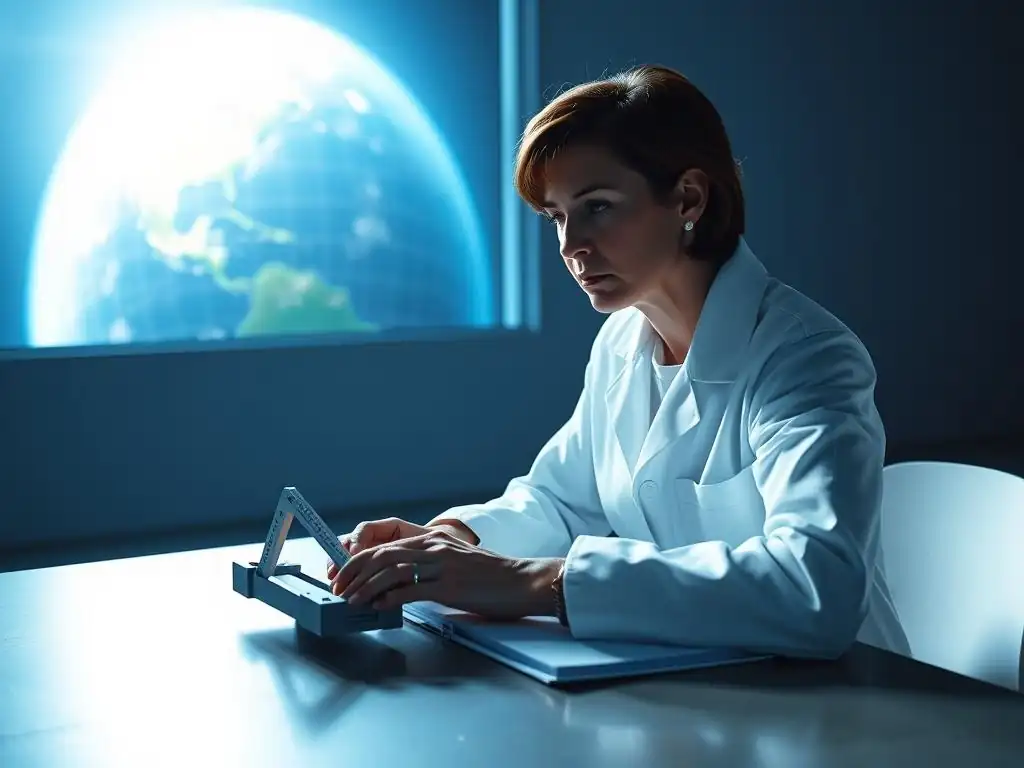
The primary objective of many Space Shuttle missions was to serve as an orbiting laboratory, and women astronauts, with their deep scientific backgrounds, were central to this endeavor. They meticulously conducted a wide array of experiments covering fields such as materials science, fluid physics, Earth observation, and life sciences. Their training allowed them to not only follow procedures but also troubleshoot complex equipment and adapt experiments in real-time as unforeseen conditions arose in microgravity.
For instance, during various Spacelab missions, women like Dr. Shannon Lucid, a biochemist, spent extended periods in orbit dedicated to scientific research. Her five missions, culminating in a then-record 188-day stay on Mir in 1996, were pivotal for understanding long-duration spaceflight. These women were not just operators; they were active researchers, collecting data and providing crucial observations that advanced scientific understanding across multiple disciplines.
Women in Space: Advancing Scientific Knowledge in Various Fields
The diverse scientific expertise of women astronauts significantly broadened the scope of research conducted in space. From Dr. Kathryn Sullivan, a geologist who became the first American woman to perform a spacewalk (EVA) during STS-41-G in 1984 to demonstrate satellite refueling, to Dr. Mae Jemison, a physician and chemical engineer, who flew on STS-47 in 1992 and conducted life sciences experiments on bone cell growth and motion sickness, their contributions spanned a vast scientific spectrum.
These women brought unique perspectives and methodologies to space research. Their ability to integrate theoretical knowledge with practical application in the challenging environment of space led to groundbreaking discoveries and validated numerous scientific hypotheses. They demonstrated that scientific rigor and intellectual curiosity were essential qualities for effective space exploration, moving beyond merely piloting a spacecraft.
Studying the Effects of Microgravity on the Human Body: Research Led by Women Astronauts
Understanding the physiological changes induced by microgravity was, and remains, a critical area of space science, particularly for planning long-duration missions. Women astronauts played a significant role in this research, often serving as both subjects and researchers in experiments designed to study bone density loss, muscle atrophy, cardiovascular changes, and fluid shifts in the human body.
Dr. Anna Lee Fisher's medical background was directly applied to these studies, and subsequent women astronauts like Dr. Ellen Baker (an internal medicine physician who flew on STS-34 in 1989 and STS-50 in 1992, conducting life sciences experiments) and Dr. Susan Helms (an aerospace engineer with a Ph.D. in aeronautics and astronautics, who later became an ISS Expedition crew member, participating in extensive human research) actively participated in collecting vital biomedical data. Their contributions provided invaluable insights into human adaptation to space, directly informing countermeasures and medical protocols for future space travelers.
The 1990s: Continued Progress and Evolving Roles for Women in Space
Increasing Representation: More Women Joining the Astronaut Corps
The 1990s witnessed a notable increase in the representation of women within the astronaut corps, building upon the foundation laid by the pioneering women astronauts of the 1970s and 1980s. NASA's astronaut classes throughout this decade consistently included a higher proportion of women, reflecting a growing recognition of their capabilities and the agency's commitment to diversity. By the end of the 1990s, over 20 American women had flown in space, a significant leap from the handful who flew in the preceding decade.
This growing number of women not only diversified the astronaut ranks but also brought an even broader array of scientific and technical expertise to the Space Shuttle program. The selection process became more inclusive, emphasizing advanced degrees and specialized skills, which naturally favored many highly qualified women who had excelled in STEM fields.
Expanding Research Opportunities: Women Astronauts Leading Complex Scientific Missions
As the Space Shuttle program matured, so did the complexity and duration of its scientific missions, particularly with the advent of dedicated Spacelab modules. Women astronauts were increasingly assigned to these extended research flights, often taking on leadership roles as payload commanders or mission specialists responsible for intricate scientific operations. Their proven track record of precision, problem-solving, and scientific acumen made them ideal candidates for these demanding assignments.
Missions such as STS-50 in 1992, a U.S. Microgravity Laboratory (USML-1) flight, saw women astronauts like Dr. Ellen Baker conducting extensive materials science and fluid physics experiments. Their involvement in these specialized missions underscored their critical role in advancing fundamental scientific knowledge in microgravity, moving beyond initial demonstrations to sustained, in-depth research.
Dr. Ellen Ochoa's Contributions to STS-56: Atmospheric Research and Technology Development
Dr. Ellen Ochoa, an electrical engineer with a Ph.D. from Stanford University, made history in April 1993 aboard STS-56, becoming the first Hispanic woman in space. Her scientific contributions were significant, particularly in the realm of atmospheric research. As a mission specialist, she operated the Shuttle's robotic arm to deploy and retrieve the Spartan 201 satellite, which studied the Sun's corona. More critically, she served as the payload commander for the Atmospheric Laboratory for Applications and Science (ATLAS-2) payload.
During the STS-56 mission, Ochoa was responsible for conducting extensive research on the Earth's atmosphere, solar radiation, and space physics, using a suite of instruments on ATLAS-2. Her expertise in optical systems and signal processing, stemming from her pre-NASA research as an inventor, was directly applied to these experiments. Her work not only advanced our understanding of Earth's climate and its interaction with the Sun but also showcased how women astronauts were at the forefront of both fundamental scientific inquiry and technological development crucial for future space missions.
The Impact and Legacy: Inspiring Future Generations of Women in STEM
Role Models in Space: The Influence of Early Women Astronauts on Young Women
The visibility of women astronauts in the 1970s, 80s, and 90s had a profound and transformative impact on young women and girls globally. Seeing Sally Ride, Judith Resnik, Anna Lee Fisher, and others successfully navigate the challenges of spaceflight and excel in highly technical roles shattered conventional stereotypes about gender roles in science and engineering. These women became tangible symbols of possibility, demonstrating that careers in traditionally male-dominated fields were not only accessible but also incredibly rewarding.
Their stories permeated popular culture, inspiring countless students to pursue education in STEM (Science, Technology, Engineering, and Mathematics). Their existence as pioneering women astronauts provided concrete examples for aspiring scientists, engineers, and explorers, showing that dreams of reaching for the stars were not limited by gender.
Paving the Way: How These Women Shaped the Future of Space Exploration
The achievements of these early women astronauts were instrumental in legitimizing the inclusion of women in all aspects of space exploration. Their successful missions, significant scientific contributions, and unwavering professionalism proved unequivocally that gender was irrelevant to competence in space. They demonstrated the indispensable value of diverse perspectives and skill sets in complex endeavors like spaceflight, directly contributing to the evolution of astronaut selection criteria and mission planning.
Their pioneering efforts laid the groundwork for the increasingly diverse astronaut corps we see today, including women who have commanded the International Space Station (ISS) and are slated to be part of future lunar and Martian missions. Without the initial breakthroughs by these women scientists transitioning to astronaut roles, the future of human space exploration would undoubtedly look very different.
Addressing Gender Imbalance: The Ongoing Fight for Equality in Space Science
While significant progress has been made, the journey towards full gender equality in space science and STEM fields continues. Despite the inspiring legacy of the early women astronauts, women remain underrepresented in many senior scientific and leadership roles. The challenges of implicit bias, access to opportunities, and work-life balance persist, requiring ongoing advocacy and systemic change.
The stories of these pioneering women astronauts serve as a powerful reminder of what is possible when barriers are broken. Their contributions highlight the importance of actively promoting diversity and inclusion to harness the full intellectual potential of humanity for future scientific breakthroughs and explorations. Recognizing their groundbreaking work is crucial not just for historical accuracy, but also for fueling the ongoing fight for true equality in space science.
Conclusion: Celebrating the Achievements of Women Scientists in the Early Space Program
Recognizing the Groundbreaking Contributions of Women Astronauts
The period from the 1970s to the 1990s marked a pivotal era for women in space exploration. It was a time when highly qualified women scientists, engineers, and physicians shattered ceilings, transitioning from their demanding scientific careers to become pioneering astronauts. Their journeys from lab coats to launch pads were not just personal triumphs but collective leaps forward for gender equality in science and technology. These women astronauts, through their intelligence, resilience, and dedicated scientific work in orbit, fundamentally reshaped the perception of who could go to space and what they could achieve there.
Their contributions extended far beyond merely being present in space. They meticulously conducted experiments, advanced our understanding of microgravity's effects, and contributed critical data to various scientific disciplines. Their groundbreaking efforts as women astronauts in the early space program demonstrated the invaluable synergy between scientific expertise and the challenges of spaceflight, proving that diversity in thought and background is essential for scientific progress.
Looking Forward: The Future of Women in Space Science and Exploration
The legacy of these early women astronauts continues to resonate powerfully. Their courage and scientific acumen paved the way for subsequent generations of women to join the astronaut corps, occupy leadership positions, and contribute to long-duration missions aboard the International Space Station. Today, women are at the forefront of new endeavors, including the Artemis program, which aims to land the first woman on the Moon.
As humanity looks towards future deep-space missions to Mars and beyond, the scientific contributions and leadership of women will be more critical than ever. The foundation laid by the women astronauts of the 1970s-1990s ensures that the future of space science and exploration will be one where talent, regardless of gender, is celebrated and fully utilized for the benefit of all.
Frequently Asked Questions
What were some of the initial barriers that women scientists faced when trying to become astronauts in the early space program?
Many women faced gender bias and physical requirements designed for men, often being excluded from consideration due to preconceived notions about their capabilities and suitability for spaceflight. There was also limited access to training opportunities.
How did the selection criteria for astronauts change between the 1970s and 1990s, allowing more women scientists to be considered for space missions?
The selection criteria shifted to prioritize scientific expertise and adaptability over purely physical strength. This change was driven by a growing understanding of the need for diverse skillsets in space, and a growing acceptance of women in scientific roles.
Which scientific fields were women astronauts often trained in, and how did their scientific backgrounds contribute to space exploration?
Common fields included biology, chemistry, and medicine. Their scientific backgrounds were crucial for conducting experiments, analyzing data, and understanding the effects of spaceflight on the human body and the environment, contributing significantly to scientific advancements in space.
Can you name some prominent women scientists who became astronauts in the early space program and what were their key contributions?
Dr. Sally Ride, a physicist, was the first American woman in space. Dr. Mae Jemison, a physician, was the first African American woman in space. Both contributed to science and broke barriers for women in STEM.
How did public perception and media coverage of women astronauts in the early space program impact the role of women in science and technology?
The visibility of women astronauts helped inspire young girls to pursue careers in science and technology. Media coverage challenged gender stereotypes and demonstrated that women could excel in traditionally male-dominated fields, promoting greater inclusivity in STEM.
Final Reflection: Reaching for the Stars - A Legacy of Pioneering Women
The journey of women scientists transitioning to astronaut roles, as explored in this article, resonates powerfully today because it highlights the enduring struggle for equal opportunity in STEM fields and the unwavering pursuit of dreams against societal barriers. Their stories, once relegated to the footnotes of history, now serve as beacons of inspiration, reminding us that progress, though hard-won, is always possible.
This historical shift profoundly impacted the cultural landscape, challenging ingrained perceptions of women's capabilities and paving the way for future generations. Witnessing their courage and resilience underscores the importance of mentorship and advocacy in empowering women to break through glass ceilings. We all have a responsibility to create a world where every girl and woman can reach her full potential.
- Melinda Gates. This quote encapsulates the ongoing need to support and encourage women in STEM, ensuring their contributions are recognized and celebrated.
As we reflect on the remarkable achievements of these early women astronauts, let us be inspired to champion inclusivity and equity in all aspects of our lives. Consider how you can actively support the next generation of female scientists and explorers, fostering an environment where their talents can flourish and their dreams can soar beyond the confines of Earth. Let their legacy ignite a fire within you to challenge the status quo and strive for a future where the sky is truly the limit for everyone.
Launch Your Own Orbit: Take the Next Giant Leap!
Thank you for exploring the inspiring journeys of women scientists who defied gravity and transformed into pioneering astronauts. Now, let's translate that inspiration into action!
Here's how you can continue the journey:
- Share this incredible story with your networks to inspire future generations of women in science and space.
- Delve deeper: Explore our extensive archive on WomenInScienceHistory.com to uncover more unsung heroines who shaped scientific progress.
- Contribute your own knowledge: Do you know of other female scientists turned astronauts? Share their stories in the comments below and enrich our collective history.
What small step will you take today to champion women in science and propel their stories into the spotlight?