
Kalpana Chawla: A Star's Journey from India to NASA's Space Missions (Pre2000)

Welcome to WomenInScienceHistory.com!
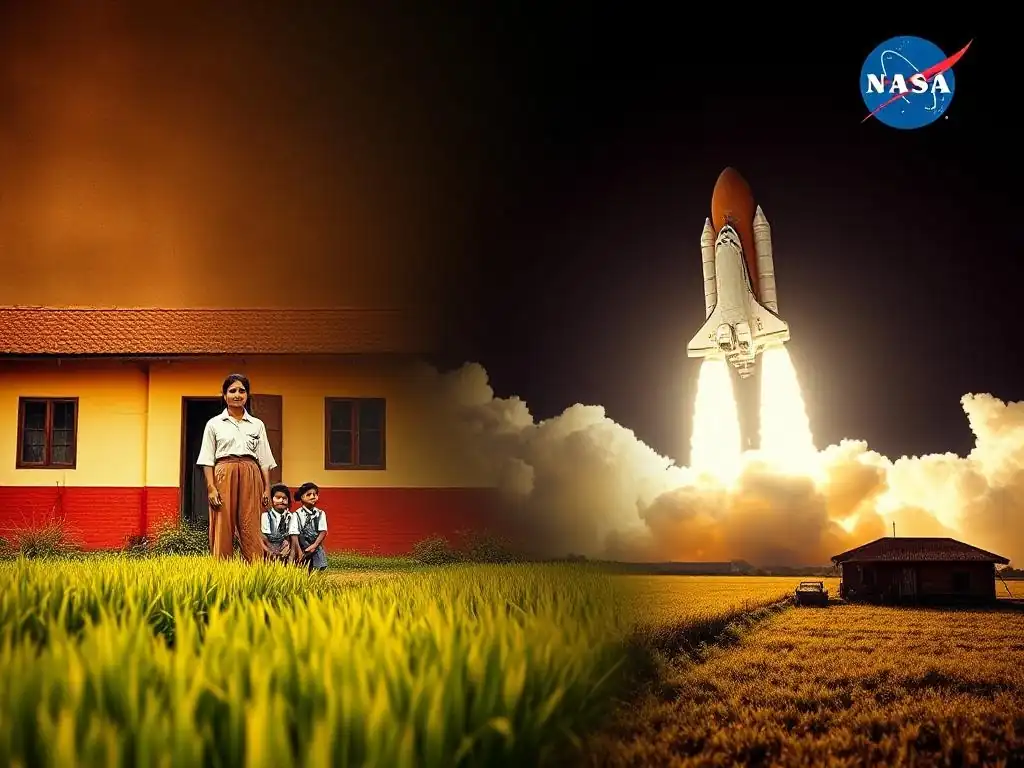
Delve into the extraordinary world of women who defied expectations and shaped the course of scientific history. Ever wondered about the incredible journey of a young girl from India who dared to dream of the stars and ultimately became a NASA astronaut? Prepare to be inspired by our detailed Kalpana Chawla NASA biography, where we trace her early life and the pivotal moments that propelled her towards groundbreaking achievements in space science before the year 2000.
Discover the dedication, resilience, and brilliance that defined her path – a story that's just the beginning of countless untold narratives waiting to be uncovered. Explore more and discover the legacy of women in science!
- Introduction: Celebrating Kalpana Chawla's Pioneering Spirit in Space Science
- Early Life and Education: The Formative Years of an Astronaut
- From Engineer to Astronaut: Chawla's Path to NASA
- Kalpana Chawla's First Space Mission: STS-87 (1997)
- Recognition and Impact: Kalpana Chawla's Legacy Before 2000
- The Significance of Chawla's Work in the Context of Women in Space
- Conclusion: Kalpana Chawla's Enduring Legacy in Space Exploration
-
Frequently Asked Questions
- What is WomenInScienceHistory.com's primary goal?
- Why is Kalpana Chawla's story important to feature on WomenInScienceHistory.com?
- What are some of the challenges faced by women in science, as highlighted on the website?
- What makes Kalpana Chawla's biography unique and inspiring, particularly for pre-2000 achievements?
- Where can I find more information about other pioneering female scientists on WomenInScienceHistory.com?
- Final Reflection: Reaching for the Stars
- Ignite Your Own Cosmic Dreams
Introduction: Celebrating Kalpana Chawla's Pioneering Spirit in Space Science
Remembering a Trailblazing Astronaut
Kalpana Chawla stands as an iconic figure in the annals of space exploration, celebrated as the first Indian-born woman to venture into space. Her journey from a small town in India to the esteemed ranks of NASA astronauts is a testament to her extraordinary intellect, unwavering determination, and pioneering spirit. She broke significant barriers, not only as an accomplished engineer and scientist but also as a symbol of what women can achieve in highly technical and demanding fields. Her story serves as a crucial chapter in the broader narrative of women's contributions to science and engineering.
Her remarkable career at NASA, culminating in her first space mission prior to the turn of the millennium, marked a pivotal moment for both India and the global scientific community. This Kalpana Chawla NASA biography highlights her early life, rigorous education, and the demanding path she navigated to become a mission specialist on the Space Shuttle Columbia, inspiring countless individuals across continents to pursue their scientific aspirations.
Kalpana Chawla: A Symbol of Indian Women in Space Exploration
For millions in India and around the world, Kalpana Chawla became more than just an astronaut; she embodied the aspirations and potential of Indian women in science and technology. Her success resonated deeply, offering a powerful counter-narrative to traditional societal expectations and demonstrating that geographic or gender boundaries need not limit one's ambitions. She proved that dedication and expertise could open doors to the most elite scientific endeavors.
Her presence in space, particularly as an Indian woman, elevated the national pride and sparked a profound interest in space science among the youth. Her journey underscored the importance of access to quality education and the transformative power of pursuing knowledge across borders. Kalpana Chawla's story continues to be a beacon for aspiring female scientists and engineers, solidifying her legacy as a formidable symbol of progress and empowerment.
Early Life and Education: The Formative Years of an Astronaut
Kalpana Chawla's Birth and Childhood in Karnal, India
Kalpana Chawla was born on March 17, 1962, in Karnal, a small town in the state of Haryana, India. From an early age, she exhibited a profound curiosity about the world around her, often spending hours observing the night sky and drawing airplanes. Her childhood was marked by a keen intellect and an independent spirit, qualities that would define her future endeavors. She was known for her adventurous nature and her fascination with flight, often sketching aircraft and imagining herself among the stars.
Her primary education at Tagore Baal Niketan School in Karnal nurtured her scientific inclinations. Teachers and family members recognized her exceptional aptitude for mathematics and science, along with a fierce determination to achieve her goals. This foundational period in India instilled in her a deep love for learning and a relentless drive to explore the boundaries of human knowledge, laying the groundwork for her eventual Kalpana Chawla NASA biography.
Aeronautical Engineering Studies at Punjab Engineering College
Following her foundational education, Kalpana Chawla pursued higher studies in a field that was largely male-dominated at the time: engineering. In 1982, she enrolled at Punjab Engineering College (PEC) in Chandigarh, choosing to specialize in Aeronautical Engineering. Her decision to pursue this specific discipline underscored her unwavering passion for aviation and space, setting her apart from many of her peers.
She successfully completed her Bachelor of Engineering degree in Aeronautical Engineering from PEC in 1982. Her time at the college was characterized by diligent study and a commitment to mastering complex engineering principles. This degree was a critical stepping stone, providing her with the fundamental knowledge and analytical skills that would be indispensable for her subsequent academic and professional career, particularly in her pursuit of a Kalpana Chawla NASA biography.
Pursuit of Advanced Degrees in Aerospace Engineering in the United States
Driven by an insatiable thirst for knowledge and a desire to delve deeper into the intricacies of aerospace, Kalpana Chawla made the ambitious decision to move to the United States for her graduate studies. This move in the early 1980s was a significant undertaking for a young woman from India, reflecting her courage and singular focus on her scientific aspirations. She sought out institutions renowned for their advanced research in aerospace engineering.
Her pursuit of advanced degrees in the U.S. was instrumental in shaping her into the highly specialized engineer and scientist that NASA would later seek. These years of intensive academic rigor provided her with the theoretical understanding and practical expertise in complex aerospace systems, preparing her for the extraordinary challenges of space exploration.
Master's Degree from the University of Texas at Arlington
Upon arriving in the United States, Kalpana Chawla enrolled at the University of Texas at Arlington, where she embarked on her Master of Science degree in Aerospace Engineering. She completed her master's studies with distinction, earning her degree in 1984. Her research during this period likely involved advanced topics in fluid dynamics, aircraft structures, or propulsion systems, deepening her understanding of aeronautical principles.
This master's program allowed her to engage with cutting-edge research and collaborate with leading experts in the field. The specialized knowledge she gained here was crucial, providing her with the foundational skills necessary to tackle more complex problems in her subsequent doctoral research and her future career at NASA.
Doctorate from the University of Colorado Boulder
Continuing her academic journey, Kalpana Chawla then moved to the University of Colorado Boulder, where she pursued and successfully obtained her Ph.D. in Aerospace Engineering in 1988. Her doctoral research focused on the simulation of complex airflows around aircraft, particularly in the context of vertical/short take-off and landing (V/STOL) concepts. This highly specialized area required advanced computational fluid dynamics (CFD) skills and a deep understanding of aerodynamics.
Her Ph.D. work was highly regarded, demonstrating her exceptional analytical abilities and her capacity for independent, rigorous scientific inquiry. This advanced degree solidified her expertise, making her a highly sought-after professional in the aerospace industry and ultimately paving her way to joining NASA.
From Engineer to Astronaut: Chawla's Path to NASA
Kalpana Chawla's Engineering Career at NASA Ames Research Center
Immediately after completing her Ph.D. in 1988, Kalpana Chawla joined NASA Ames Research Center in California. Her initial role involved performing computational fluid dynamics (CFD) research on complex aircraft configurations. Specifically, she focused on developing and implementing an efficient technique for analyzing the dynamics of aircraft, a crucial area for improving flight safety and performance.
During her tenure at Ames, she also worked on mapping flow solvers to parallel processing computers, optimizing the computational efficiency of complex simulations. Her contributions to projects like the Onera, NASA, and Duke University (ONERA/NASA/DU) research on the unsteady aerodynamics of the XV-15 tilt-rotor aircraft demonstrated her expertise in cutting-edge aerospace engineering. This period was fundamental in establishing her credentials and her eventual Kalpana Chawla NASA biography.
Selection and Training as a NASA Astronaut Candidate
Kalpana Chawla's aspirations extended beyond engineering research; she dreamed of flying in space. In 1994, she applied to NASA's astronaut corps, a highly competitive process that attracts thousands of applicants from diverse scientific and engineering backgrounds. Out of over 2,900 applicants, she was one of only 19 individuals selected as an astronaut candidate in December 1994, as part of Astronaut Group 15.
Her rigorous training began in March 1995 at the Johnson Space Center in Houston, Texas. This intensive year-long program included physical training, scientific instruction, technical briefings, and extensive preparation for spaceflight operations. She learned about shuttle systems, practiced spacewalks in underwater facilities, and underwent survival training, all designed to prepare her for the demanding environment of space.
Initial Assignments and Contributions to NASA's Space Shuttle Program
Upon completing her astronaut candidate training in 1995, Kalpana Chawla was assigned to the Astronaut Office's EVA/Robotics and Computer Branches. In these roles, she played a vital part in the ongoing development and operational readiness of the Space Shuttle Program. Her engineering background proved invaluable in these assignments.
She was responsible for developing and testing robotic arm software, a critical component for various shuttle missions involving payload deployment and retrieval. Her contributions also extended to verifying shuttle flight control software in the Shuttle Avionics Integration Laboratory (SAIL). These initial assignments were crucial for her hands-on understanding of shuttle systems and operations, directly preparing her for her first spaceflight.
Kalpana Chawla's First Space Mission: STS-87 (1997)
Preparing for the STS-87 Mission: Research and Training
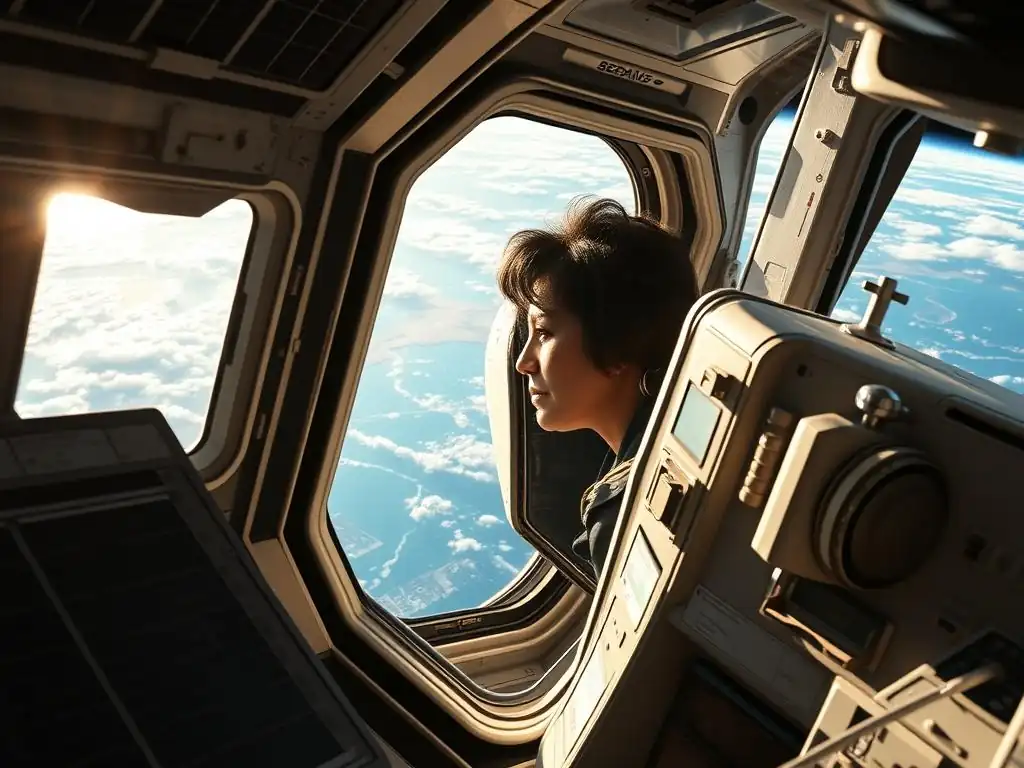
In 1996, Kalpana Chawla received her first flight assignment as a mission specialist on STS-87, a Space Shuttle Columbia mission. The preparation for this mission was incredibly intense, involving detailed study of the scientific objectives, payload operations, and emergency procedures. She underwent extensive training specific to her role, which included mastering the operation of the robotic arm and understanding the intricacies of the various experiments she would be conducting in orbit.
Her training also involved numerous simulations of mission scenarios, including potential malfunctions and contingencies, ensuring she was prepared for any eventuality. This period of focused preparation was essential for her to execute her complex duties effectively, marking a significant milestone in her Kalpana Chawla NASA biography.
The STS-87 Mission: Objectives and Experiments Conducted
The STS-87 mission, launched on November 19, 1997, aboard the Space Shuttle Columbia, was primarily dedicated to solar observation and microgravity research. Its main objective was to study the Sun's outer atmospheric layers, specifically the solar corona, and to understand how changes in the Sun's output affect Earth's climate. The mission also carried experiments focused on materials science, combustion, and life sciences in a microgravity environment.
A key component of the mission was the deployment and retrieval of the Spartan-201 free-flying satellite, designed to conduct ultraviolet spectroscopy of the solar corona. Additionally, the U.S. Microgravity Payload (USMP-4) was carried to conduct experiments on materials processing and fluid physics, pushing the boundaries of scientific understanding in space.
Kalpana Chawla's Role and Responsibilities During STS-87
As a mission specialist on STS-87, Kalpana Chawla's primary responsibilities were extensive and critical to the mission's success. She was the prime operator of the Space Shuttle's robotic arm (Canadarm), tasked with deploying and subsequently retrieving the Spartan-201 satellite. This delicate operation required immense precision and skill.
Beyond robotic arm operations, she also served as the flight engineer during the mission, monitoring shuttle systems and assisting the commander and pilot. She conducted various microgravity experiments, meticulously collecting data and ensuring the scientific objectives were met. Her proactive engagement and technical proficiency were vital throughout the 15-day mission.
Challenges and Triumphs of the STS-87 Mission
The STS-87 mission encountered a significant challenge early on when the Spartan-201 satellite, after its deployment, failed to activate its thrusters, preventing its proper positioning for solar observations. This anomaly necessitated an unscheduled spacewalk by her crewmates, Winston Scott and Takao Doi, to manually capture and secure the satellite. Kalpana Chawla played a crucial role in coordinating the robotic arm operations for this unplanned retrieval, demonstrating her ability to perform under pressure.
Despite this initial setback, the mission was ultimately deemed a success. The crew, including Chawla, demonstrated remarkable adaptability and teamwork in overcoming the anomaly. The remaining scientific objectives were largely accomplished, and the mission provided valuable insights into solar physics and microgravity. Kalpana Chawla successfully logged over 372 hours in space during STS-87, equivalent to 15 days, 16 hours, and 34 minutes, marking a triumphant first step in her space exploration career.
Recognition and Impact: Kalpana Chawla's Legacy Before 2000
Awards and Accolades Received for Space Exploration Achievements
For her accomplishments on STS-87 and her broader contributions to NASA, Kalpana Chawla received significant recognition prior to the year 2000. She was awarded the NASA Space Flight Medal for her successful completion of the STS-87 mission, a standard commendation for astronauts who complete a spaceflight. This medal acknowledged her critical role and performance during the mission, including her adept handling of the robotic arm and her contributions to the scientific experiments.
Beyond formal awards, her technical expertise and dedication were highly valued within NASA. Her meticulous work and problem-solving skills earned her the respect and admiration of her colleagues and superiors, establishing her as a highly capable and promising astronaut within the agency. This internal recognition was a testament to her profound impact on the space program even in her early career.
Kalpana Chawla's Influence on Aspiring Female Scientists and Engineers
Kalpana Chawla's journey from Karnal, India, to the Space Shuttle Columbia had an immediate and profound influence on aspiring female scientists and engineers, particularly in India. Her achievement resonated as a powerful message that gender was not a barrier to pursuing the most ambitious scientific and technical careers. Her Kalpana Chawla NASA biography became a living example of breaking the glass ceiling in a traditionally male-dominated field.
Her visibility as an astronaut inspired countless girls and young women to consider futures in STEM (Science, Technology, Engineering, and Mathematics) fields. She demonstrated that with dedication, hard work, and a passion for learning, one could reach the pinnacle of scientific endeavor, regardless of their background or origin. Her story ignited dreams and broadened horizons for an entire generation.
Inspiring Future Generations: Kalpana Chawla's Impact on Indian Youth
In India, Kalpana Chawla's story became a source of immense national pride and a powerful narrative for motivating the youth. Her successful space mission was widely celebrated across the country, with schools, colleges, and media outlets highlighting her remarkable achievements. She became a household name, synonymous with aspiration and excellence in science.
Her impact transcended mere inspiration; it translated into tangible encouragement for students to pursue scientific education. Universities and educational institutions often cited her as an example, fostering a greater interest in space science, aeronautics, and engineering among young Indians. Kalpana Chawla's pioneering spirit truly left an indelible mark on the educational and career aspirations of future generations in India.
The Significance of Chawla's Work in the Context of Women in Space
Overcoming Gender Barriers in STEM Fields
Kalpana Chawla's career path is a remarkable illustration of overcoming significant gender barriers that were prevalent in STEM fields throughout the late 20th century. When she pursued her engineering degrees in the 1980s, women were severely underrepresented in disciplines like aeronautical and aerospace engineering. Her decision to enter and excel in these demanding fields challenged prevailing societal norms and expectations.
Her journey to becoming a NASA astronaut further highlighted her tenacity in breaking through these long-standing barriers. The astronaut corps, while becoming more diverse, still had a relatively small number of women when she was selected in 1994. Her presence in this elite group demonstrated that capability, intellect, and dedication superseded gender, paving the way for more women to envision themselves in similar roles.
Kalpana Chawla: A Role Model for Women in Aerospace
As the first Indian-born woman in space, Kalpana Chawla immediately became an influential role model for women worldwide, particularly those aspiring to careers in aerospace. Her Kalpana Chawla NASA biography showcased that it was possible to navigate a highly technical and competitive domain and reach its highest echelons. She embodied the qualities of perseverance, intellectual curiosity, and courage that are essential for success in space exploration.
Her public profile as an astronaut helped to normalize the image of women in highly technical and demanding roles, challenging traditional stereotypes. She demonstrated that women possess the intellectual rigor, physical endurance, and emotional resilience required for spaceflight, inspiring a new generation of female engineers, scientists, and astronauts to pursue their dreams without reservation.
Gender Dynamics in Late 20th Century Space Exploration
By the late 20th century, the landscape of space exploration was slowly diversifying, but gender dynamics still presented significant challenges for women. While Sally Ride had become the first American woman in space in 1983, the number of female astronauts remained a small percentage of the total corps. Kalpana Chawla's selection in 1994 and her subsequent flight in 1997 contributed significantly to increasing female representation in human spaceflight.
Her presence on the Space Shuttle Columbia helped to further shift the perception of who could be an astronaut, moving beyond the traditional mold. Her work contributed to a more inclusive environment within NASA and the broader aerospace industry, demonstrating that women were not only capable but also indispensable to the future of space exploration. Her pioneering work helped to lay the groundwork for greater gender equity in the 21st century.
Conclusion: Kalpana Chawla's Enduring Legacy in Space Exploration
Remembering Kalpana Chawla's Contributions to NASA and Space Science
Kalpana Chawla's contributions to NASA and the field of space science, particularly those achieved prior to 2000, are deeply significant. Her journey from a distinguished aerospace engineer at NASA Ames Research Center to a highly skilled mission specialist on STS-87 showcased her multifaceted talents. She played a pivotal role in advanced computational fluid dynamics research and meticulously performed her duties as a robotic arm operator and flight engineer during her first space mission.
Her work on STS-87, including her instrumental role in the retrieval of the Spartan-201 satellite and her execution of various microgravity experiments, underscored her technical prowess and dedication. This Kalpana Chawla NASA biography highlights that her impact extended far beyond simply flying in space; it encompassed rigorous scientific inquiry and engineering innovation that advanced NASA's objectives and contributed to our understanding of the universe.
A Lasting Inspiration for Women in Science and Engineering
Kalpana Chawla remains an enduring symbol of inspiration for women in science and engineering across the globe. Her personal narrative of perseverance, intellectual curiosity, and breaking societal barriers continues to motivate countless individuals to pursue their passions in STEM fields. Her story is a powerful reminder that dreams, no matter how ambitious, can be realized through hard work and unwavering commitment.
Her legacy has fostered a greater appreciation for diversity and inclusion in scientific endeavors, encouraging institutions to create more equitable opportunities for women. She demonstrated that gender is no impediment to achieving excellence in the most demanding scientific and technical professions, leaving an indelible mark on the landscape of women's contributions to space exploration.
Acknowledging Future Endeavors and Pre-2000 Achievements.
Even before the turn of the millennium, Kalpana Chawla's career trajectory at NASA was clearly on an upward path, with her exceptional performance on STS-87 solidifying her reputation as a highly capable astronaut. Her pre-2000 achievements, including her advanced engineering degrees, her impactful research at NASA Ames, and her successful inaugural spaceflight, had already cemented her place as a significant figure in space history.
Her dedication to space exploration and her pioneering spirit laid the groundwork for future contributions, underscoring the immense potential she held. This Kalpana Chawla NASA biography celebrates her pivotal role in late 20th-century space exploration, recognizing that her accomplishments before 2000 alone represent a remarkable chapter in the narrative of women in science and a lasting testament to human endeavor.
Frequently Asked Questions
What is WomenInScienceHistory.com's primary goal?
The site aims to celebrate and highlight the contributions of women to science throughout history. It focuses on biographies, groundbreaking work, and the challenges faced by female scientists in male-dominated fields.
Why is Kalpana Chawla's story important to feature on WomenInScienceHistory.com?
Kalpana Chawla's journey represents a significant achievement for women in STEM, especially in the field of aerospace. Her story is inspirational and demonstrates the impact women can have in NASA space missions.
What are some of the challenges faced by women in science, as highlighted on the website?
The website discusses the challenges women faced due to gender biases and limited opportunities in male-dominated arenas. These barriers often hindered their access to education, resources, and recognition for their scientific contributions.
What makes Kalpana Chawla's biography unique and inspiring, particularly for pre-2000 achievements?
Chawla's story is exceptional because she overcame numerous obstacles to become the first woman of Indian origin in space before the year 2000. Her dedication and accomplishments broke barriers and inspired many in the field of space exploration.
Where can I find more information about other pioneering female scientists on WomenInScienceHistory.com?
The website features biographies and discussions on the work of various pioneering female scientists across different scientific fields. You can explore the site's navigation or search function to discover more about these remarkable women.
Final Reflection: Reaching for the Stars
The story of Kalpana Chawla, as we've explored, is more than just a biography; it's a testament to the power of dreams and the unwavering pursuit of excellence. Her journey from a small town in India to the vast expanse of space continues to resonate deeply today, inspiring countless individuals to break barriers and challenge conventional limitations in the fields of science, technology, engineering, and mathematics.
Kalpana's influence extends far beyond the technical achievements of her NASA missions. Her legacy is a powerful symbol of hope and possibility, particularly for young women and individuals from underrepresented backgrounds who aspire to careers in STEM. The best thing about being a woman is the opportunity to work in any field you choose. I think women bring a lot of different perspectives to the table.
This quote, often attributed to her, encapsulates her belief in the transformative power of diversity and inclusion.
As we reflect on Kalpana Chawla's remarkable life, let us remember that the sky is not the limit when there are footprints on the moon. Let her story ignite within you a passion for your own aspirations, a courage to overcome obstacles, and a commitment to paving the way for future generations to reach for the stars. What dreams will you dare to pursue?
Ignite Your Own Cosmic Dreams
Thank you for exploring Kalpana Chawla's inspiring journey with us! We hope her story has ignited a spark of curiosity and ambition within you. Now, take a leap and explore your own potential:
- Boldly explore STEM fields: Enroll in an introductory course related to space science, engineering, or mathematics. This is your first step towards reaching for the stars.
- Share Kalpana's legacy: Encourage younger generations, especially girls, to dream big by sharing this story.
- Connect with fellow stargazers: Join an online forum or community dedicated to space exploration and women in science to fuel your passion.
What small step will you take today to launch your own incredible journey?