Discover the Untold Stories of 18th & 19th Century Women in Astronomy 🔭
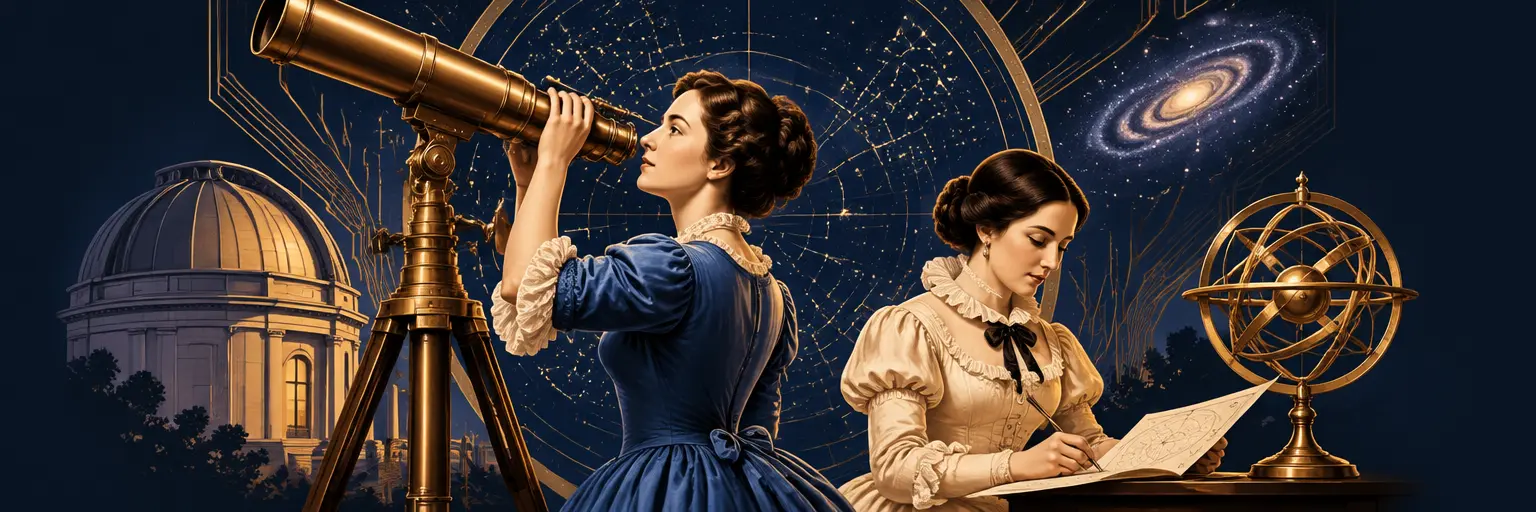
Welcome to our dedicated subcategory on 18th & 19th Century Women in Astronomy, part of WomenInScienceHistory.com. Here, we unearth the remarkable contributions of female stargazers, mathematicians, and comet hunters who defied societal norms to map the heavens. From calculating planetary orbits to discovering galaxies, these pioneers shaped modern astronomy despite limited access to education and observatories. Dive into their inspiring journeys, the tools they used, and the legacy they left for future generations of women in space science.
🔍 Trailblazing Observers and Their Night Sky Discoveries
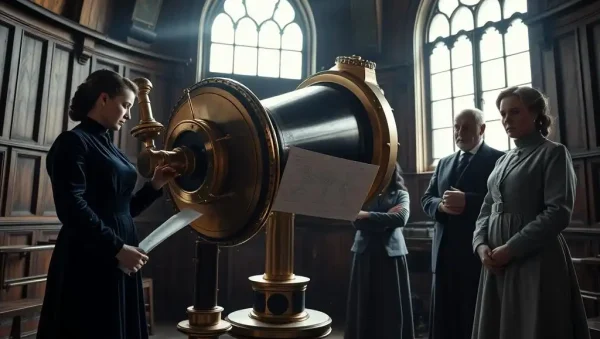
In this section, you’ll meet women like Caroline Herschel, who discovered eight comets and became the first female paid scientist, and Maria Mitchell, the first American woman to find a comet using a telescope. These observers meticulously recorded star positions, nebulae, and celestial events, often working from home rooftops or borrowed instruments. Their detailed catalogs helped refine astronomical mapping and inspired a culture of amateur female observation in Britain and America.
Expect vivid accounts of their nightly routines, the challenges of cold weather and poor equipment, and how their discoveries were received by male-dominated scientific societies. We highlight their persistence in gaining recognition, such as Herschel’s Royal Astronomical Society gold medal in 1828, proving that methodical observation could overcome institutional barriers. This subcategory emphasizes the practical skills and sheer determination that defined these pioneering women.
🧮 Mathematical Minds Behind the Orbits
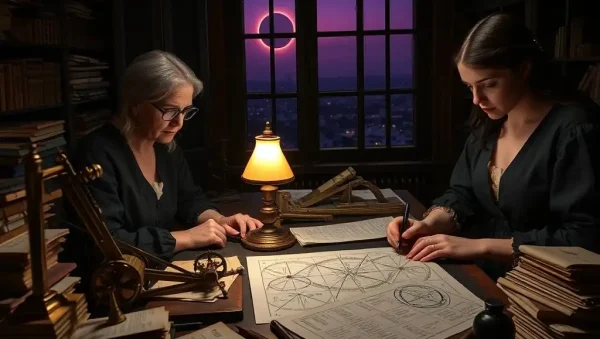
Many 18th and 19th century women contributed not as observers but as calculators, performing complex astronomical computations. Figures like Mary Somerville, who translated Laplace’s celestial mechanics, and the female computers at Harvard College Observatory, including Williamina Fleming, processed vast datasets to predict planetary positions and classify stellar spectra. Their work was essential for navigation, timekeeping, and understanding gravitational forces.
Here, you’ll learn how these women mastered algebra, trigonometry, and calculus without formal university access, often teaching themselves through borrowed textbooks. We explore their roles in producing almanacs and star catalogs that underpinned maritime exploration and industrial-era science. The narrative underscores how their mathematical rigor laid groundwork for later astrophysics, demonstrating that intellectual contributions were as vital as telescopic sightings.
📜 Overcoming Social Barriers and Educational Limits
This facet examines the societal constraints these women faced, from prohibitions on university attendance to exclusion from professional societies. Women like Elizabeth Brown, a solar observer, had to beg for access to observatories, while others relied on male relatives or patrons to publish their research. Analyze how class, marriage, and religious expectations shaped their scientific paths, often forcing them into unpaid or low-status assistant roles.
We also spotlight advocacy efforts, such as Caroline Herschel’s petition to the Royal Society and Maria Mitchell’s founding of the Association for the Advancement of Women. Through letters, memoirs, and press clippings, you’ll see how these women negotiated credibility in a world that doubted their intellect. This subcategory provides a nuanced view of gender bias, resilience, and the slow crack in the glass ceiling of science.
🔬 Pioneering Techniques and Instrumentation
Discover the specialized methods these women developed, from quadrant measurements to photographic plate analysis. For instance, Margaret Huggins collaborated with her husband to pioneer stellar spectroscopy, capturing the chemical composition of stars. Others, like Agnes Mary Clerke, synthesized global research into comprehensive histories of astronomy, making complex theories accessible to wider audiences. Their technical innovations often predated mainstream adoption.
We explore how they adapted existing tools—using pocket chronometers, portable telescopes, and later, early cameras and spectroscopes—to overcome resource scarcity. You’ll find detailed explanations of their observational protocols, including how they minimized errors in data collection. This section celebrates their ingenuity, showing that lack of formal training never prevented them from producing precise, credible scientific work that informed later discoveries.
🌌 Lasting Legacy and Modern Recognition
Finally, examine how these 18th and 19th century women influenced subsequent generations, from the Harvard Computers to today’s female astrophysicists. Institutions like the Maria Mitchell Association and the Caroline Herschel Memorial fund honor their names, while their methods appear in modern citizen science projects. Their stories also fuel ongoing debates about historical erasure and the importance of inclusive narratives in STEM education.
Expect reflections on how contemporary initiatives, such as naming lunar craters after them or digitizing their notebooks, keep their contributions visible. We also discuss their role as symbolic pioneers, inspiring girls to pursue astronomy despite persistent stereotypes. This closing section ties their struggles and successes to current efforts, reinforcing that the fight for women’s recognition in science is far from over but rooted in resilient foundations.
Frequently Asked Questions
Who was the first professional woman astronomer in the 18th century?
Caroline Herschel is widely regarded as the first professional woman astronomer, hired in 1787 as an assistant to her brother William, with a salary from King George III. She discovered eight comets and a nebula, and her meticulous star catalogs earned her a gold medal from the Royal Astronomical Society in 1828.
What were the main obstacles for women in astronomy during this era?
Women faced exclusion from universities, observatories, and scientific societies, along with social expectations prioritizing marriage and family. They lacked access to advanced instruments and often worked as unpaid assistants. Many had to self-teach mathematics and rely on male relatives to present their findings, limiting their professional recognition and pay.
How did Maria Mitchell contribute to astronomy?
Maria Mitchell discovered a comet in 1847, winning a gold medal from the King of Denmark. She became the first female professor of astronomy at Vassar College and championed women’s education, training many students. Her work on sunspots and eclipses, plus advocacy for equal science opportunities, made her a pioneering figure in American astronomy.
What role did women play in the Harvard Observatory’s early work?
Women like Williamina Fleming, Annie Jump Cannon, and Henrietta Leavitt worked as “computers” at Harvard Observatory in the late 19th century, analyzing photographic plates. They classified stellar spectra, discovered variable stars, and developed the magnitude scale, but were paid less than men and initially denied credit for their findings.
How are these women remembered today?
Many have lunar craters, asteroids, and awards named after them, such as the Maria Mitchell Observatory and the Herschel Medal. Digitized archives, biographies, and exhibitions celebrate their work, while modern projects like NASA’s “Women in Astronomy” honors ensure their stories inspire new generations in space science.