
Katherine Johnson: The Human Computer Who Guided Astronauts Through Peril and Triumph

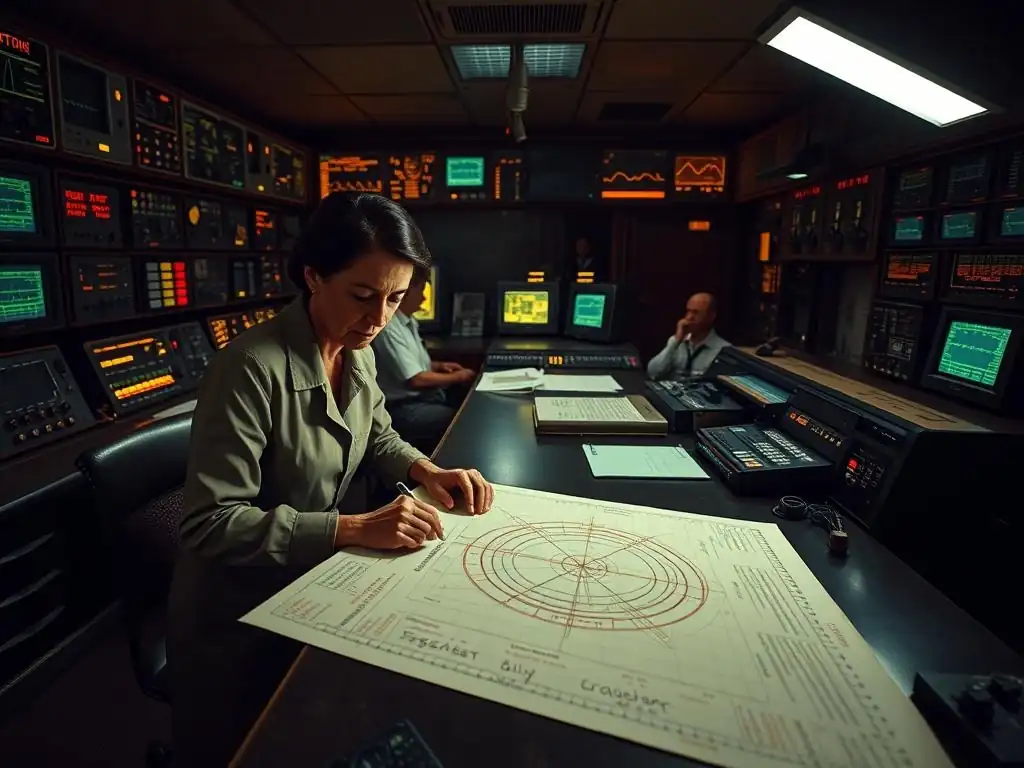
Welcome to WomenInScienceHistory.com, where we unearth the captivating stories of women who shaped the world of science! Prepare to be inspired by their brilliance and resilience. Ever wondered how astronauts navigated the vast expanse of space during the early days of space exploration? Dive into the extraordinary life of Katherine Johnson, the "human computer" whose meticulous calculations of space trajectories were absolutely vital to the success of NASA's missions. Discover her pivotal role and the challenges she overcame in a field dominated by men. This is just the beginning – explore with us!
- Introduction: Honoring Katherine Johnson's Legacy in Space Exploration
- Early Life and Education: The Genesis of a Mathematical Prodigy
- Katherine Johnson at NASA: From Human Computer to Crucial Asset
- Key Contributions to Project Mercury and Beyond
- Apollo Missions: Navigating Lunar Trajectories with Katherine Johnson's Expertise
- Overcoming Challenges and Breaking Barriers in a Male-Dominated Field
- Recognition and Awards: Honoring Katherine Johnson's Achievements
- Katherine Johnson's Calculating Space Trajectories: A Summary of Her Impact
-
Frequently Asked Questions
- What was Katherine Johnson's primary role at NASA?
- What made Katherine Johnson's work so critical to the success of space missions?
- What challenges did Katherine Johnson face as a woman and an African American in the field of science?
- How did Katherine Johnson contribute to the Mercury and Apollo programs?
- Why is it important to remember and celebrate the contributions of women like Katherine Johnson to the history of science?
- Final Reflection: The Enduring Legacy of Calculation
- Unveil Your Inner Pioneer!
Introduction: Honoring Katherine Johnson's Legacy in Space Exploration
Women in Space Missions & Programs: A Look at Pioneering Figures
The annals of space exploration are often dominated by the stories of astronauts and male engineers, yet countless women have made indispensable contributions to humanity's journey beyond Earth. From the early days of rocketry to complex deep-space missions, women have served as mathematicians, engineers, scientists, and technicians, often working behind the scenes in a male-dominated environment. Their intellectual prowess and unwavering dedication were crucial in overcoming the immense technical and logistical challenges inherent in spaceflight.
These pioneering figures, often overlooked in historical narratives, pushed the boundaries of what was thought possible, demonstrating exceptional skill and resilience. Their work not only advanced scientific understanding but also paved the way for future generations of women to pursue careers in STEM. Understanding their stories is vital to fully appreciating the collective effort that propelled humanity into the cosmos.
Katherine Johnson: A Name Synonymous with NASA's Success
Among these extraordinary women, Katherine Johnson stands out as a towering figure whose unparalleled mathematical abilities were directly responsible for some of NASA's most critical early successes. Known as a "human computer," her work was foundational to the United States' efforts in the Space Race, ensuring the accuracy and safety of groundbreaking missions. Her name has become synonymous with precision, intelligence, and the quiet heroism of those who performed the demanding calculations that literally launched astronauts into space.
Johnson's contributions extended far beyond mere number-crunching; she possessed a profound understanding of orbital mechanics and the intricate physics of spaceflight. Her analytical mind and meticulous approach provided the bedrock upon which the nascent American space program built its triumphs, making her an indispensable asset whose legacy continues to inspire.
Early Life and Education: The Genesis of a Mathematical Prodigy
Katherine Johnson's Early Aptitude for Mathematics
Katherine Johnson, born Creola Katherine Coleman on August 26, 1918, in White Sulphur Springs, West Virginia, displayed an extraordinary aptitude for mathematics from a very young age. Her innate curiosity and exceptional numerical skills were evident even in childhood, allowing her to count everything she saw. She absorbed complex mathematical concepts with remarkable ease, often skipping grades due to her advanced intellect.
By the age of 10, Katherine had already completed the eighth grade, a significant achievement especially considering the limited educational opportunities available to African Americans in her hometown during that era. Her family, recognizing her prodigious talent, prioritized her education, moving 125 miles to Institute, West Virginia, to ensure she could attend high school on the campus of West Virginia State College, which offered courses for Black students.
Overcoming Segregation: Katherine Johnson's Educational Journey
Katherine's educational journey was marked by the pervasive racial segregation of the Jim Crow South. Despite these systemic barriers, her family's dedication and her own brilliance allowed her to overcome significant obstacles. At just 14 years old, she enrolled at West Virginia State College, a historically Black institution, where she quickly distinguished herself in her studies.
Her academic prowess caught the attention of several professors, most notably Dr. William W. Schieffelin Claytor, the third African American to earn a Ph.D. in mathematics in the United States. Claytor mentored Johnson, creating specific math courses just for her and encouraging her to pursue a career as a research mathematician, a highly unusual aspiration for a Black woman at the time.
Earning a Degree in Mathematics: Setting the Stage for a NASA Career
By 1937, at the remarkably young age of 18, Katherine Johnson graduated summa cum laude from West Virginia State College with degrees in mathematics and French. Her exceptional academic performance laid a robust foundation for her future groundbreaking work. After graduation, she briefly worked as a teacher in a Black public school in Marion, Virginia, a common career path for educated Black women during that period.
However, her ambition for a research career persisted. In 1939, she became one of the first three African American students, and the only woman, to integrate West Virginia University's graduate school, pursuing a master's degree in mathematics. Though she left after one session to start a family, her early education and unwavering passion for numbers ultimately set the stage for her pivotal role at what would become NASA.
Katherine Johnson at NASA: From Human Computer to Crucial Asset
Joining NASA's Langley Research Center: The West Area Computing Section
In 1953, Katherine Johnson joined the National Advisory Committee for Aeronautics (NACA), the precursor to NASA, at its Langley Research Center in Hampton, Virginia. She was assigned to the West Area Computing section, a segregated unit composed entirely of African American women mathematicians. These highly skilled individuals were known as "human computers," responsible for performing complex manual calculations for the agency's research projects.
The West Area Computers played a vital role in the early days of aeronautical and space research, meticulously analyzing reams of data from flight tests. They used slide rules, mechanical calculators, and their keen intellect to solve intricate mathematical problems, providing essential data that engineers relied upon for aircraft design and, subsequently, for spaceflight.
Calculating Space Trajectories: Katherine Johnson's Essential Role
Johnson's extraordinary analytical skills quickly distinguished her within the computing section. Unlike many of her peers who focused on specific data points, she possessed an uncanny ability to understand the broader context of the numbers she was working with, asking "why" and "how" the calculations related to the overall mission. This deeper comprehension allowed her to transition from general aeronautical calculations to the highly specialized field of space trajectories.
Her role became truly essential when the agency shifted its focus to space exploration. It was Katherine Johnson calculating space trajectories for the earliest American space missions, determining launch windows, flight paths, and splashdown locations with unparalleled accuracy. Her work was foundational to the success and safety of Project Mercury, the United States' first human spaceflight program.
Verifying Computer Calculations: Ensuring Accuracy in Early Space Missions
As electronic computers began to be introduced at NASA in the late 1950s, there was a critical need to verify their output. These early machines were powerful but new, and engineers often harbored a degree of skepticism about their reliability, especially when human lives were at stake. This created a unique and crucial role for Katherine Johnson.
Her reputation for precision and her deep understanding of orbital mechanics meant that her manual calculations were trusted implicitly. She was frequently tasked with double-checking the trajectories computed by the nascent IBM machines. This human verification process was not merely a formality; it was a testament to the absolute confidence placed in her ability to ensure the accuracy required for the success and safety of America's pioneering space missions.
Key Contributions to Project Mercury and Beyond
Calculating Alan Shepard's Flight Path: A Crucial Contribution to Project Mercury
Katherine Johnson's pivotal contributions to Project Mercury began with her direct involvement in calculating the flight path for Alan Shepard's historic suborbital mission aboard Freedom 7 in May 1961. This was America's first human spaceflight, a monumental undertaking that required absolute precision in every calculation. Johnson meticulously determined the trajectory for launch, the apex of the flight, and the exact splashdown point in the Atlantic Ocean.
Her calculations considered numerous variables, including the Earth's rotation, gravitational forces, and the rocket's velocity. The success of Shepard's 15-minute flight, which saw him reach an altitude of 116 miles and travel 302 miles downrange, was a direct testament to the accuracy of her work, instilling confidence in the nascent space program's ability to achieve its ambitious goals.
Project Mercury Trajectories: Katherine Johnson's Precision
Beyond Shepard's flight, Katherine Johnson's expertise was continuously applied to all Project Mercury trajectories. She became an integral part of the Space Task Group, a team of male engineers and mathematicians, where her insights were highly valued. Her ability to visualize complex geometric problems in four dimensions—three spatial dimensions plus time—allowed her to devise precise flight plans that accounted for every possible variable.
The success of the Mercury program, which aimed to put an American in orbit, relied heavily on the faultless calculations provided by Johnson and her colleagues. Her work on Katherine Johnson calculating space trajectories for these missions involved not just the initial launch but also potential abort scenarios and the complex re-entry angles required for safe return, demonstrating her comprehensive grasp of mission dynamics.
Calculating Trajectories for John Glenn's Orbit: A Moment of Truth
Perhaps Katherine Johnson's most famous and dramatic contribution came in 1962, during the preparations for John Glenn's Friendship 7 mission, which aimed to make him the first American to orbit the Earth. As the mission approached, concerns arose about the reliability of the newly installed electronic computers, specifically the IBM 7090, which was programmed to calculate the orbital trajectory.
Astronaut John Glenn himself expressed reservations about relying solely on the machine's output. He famously declared that if Katherine Johnson, the "girl" (as women computers were often referred to), verified the numbers, he would be ready to fly. This direct request underscored the immense trust placed in her mathematical acumen over the cutting-edge technology of the day.
John Glenn's Trust in Katherine Johnson's Calculations
For days leading up to the launch, Katherine Johnson worked tirelessly, manually re-calculating the entire orbital trajectory for John Glenn's mission using a desktop mechanical calculator. Her calculations included launch times, orbital insertion points, potential abort paths, and precise landing coordinates in the Atlantic Ocean. This meticulous human verification process was critical.
When Johnson confirmed that her numbers matched those generated by the IBM computer, Glenn felt confident enough to proceed with the flight. His successful three-orbit journey around Earth on February 20, 1962, marked a pivotal moment in the Space Race and firmly established the reliability of both electronic computers and, more importantly, Katherine Johnson's indispensable expertise. Her manual computation of flight paths was not just a backup; it was the ultimate assurance.
Calculating the Apollo 11 Lunar Trajectory: A Pivotal Role in the Moon Landing
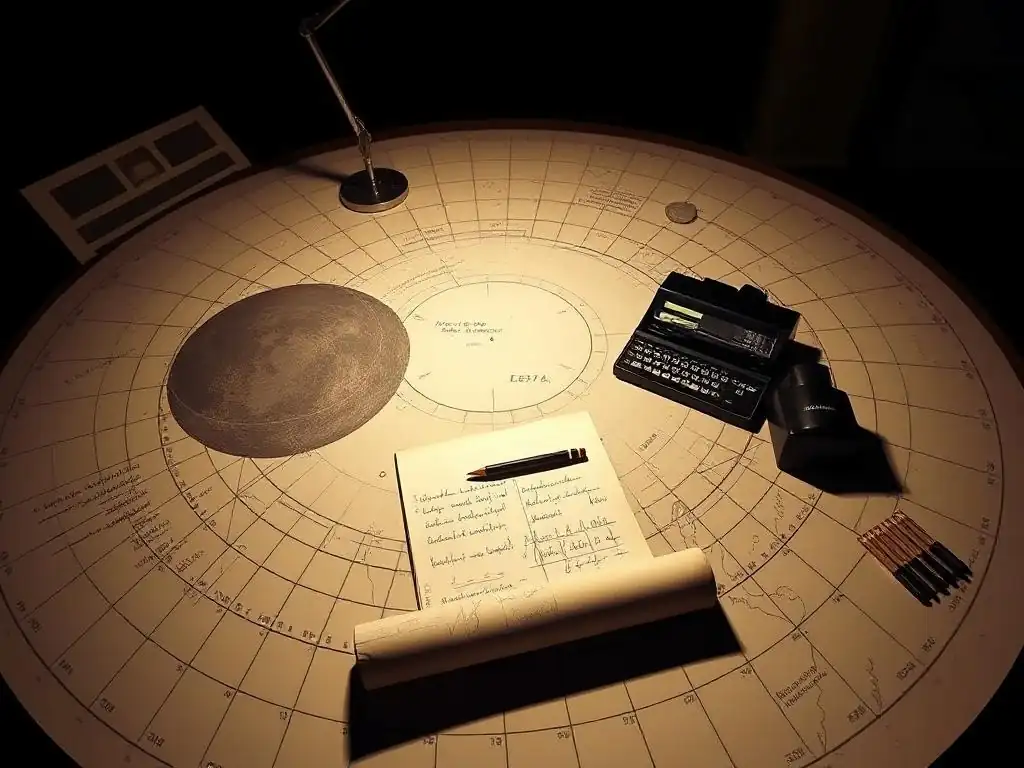
Katherine Johnson's mathematical genius was not confined to Project Mercury; her expertise was equally crucial to the ambitious Apollo program, which aimed to land humans on the Moon. She played a pivotal role in calculating the trajectory for the Apollo 11 mission in 1969, a feat that remains one of humanity's greatest achievements. Her work involved determining the precise launch windows, the complex translunar injection burn, and the intricate path for the lunar module's descent to the Moon's surface.
The margin for error on a lunar mission was infinitesimally small, requiring calculations that accounted for the gravitational pull of both Earth and the Moon, as well as the relative velocities of the spacecraft. Johnson’s contributions ensured that the Apollo 11 crew, Neil Armstrong, Buzz Aldrin, and Michael Collins, were on the correct course for their historic journey.
Ensuring Safe Return to Earth: Katherine Johnson's Impact on Apollo Missions
Beyond the outbound journey to the Moon, Katherine Johnson's calculations were equally vital for the safe return of the Apollo astronauts to Earth. She worked on the trajectories for the command module's re-entry into Earth's atmosphere, a process that demanded extreme precision to ensure a controlled descent and splashdown. This included determining the optimal re-entry angle to prevent the spacecraft from either burning up or skipping off the atmosphere.
Her analytical rigor in Katherine Johnson calculating space trajectories for return paths, including contingency plans for abort scenarios, provided a critical safety net for the astronauts. Her work significantly mitigated the immense risks inherent in lunar travel, directly contributing to the successful completion of multiple Apollo missions and the safe return of all the astronauts.
Contributions to the Space Shuttle Program: Expanding Her Impact
Even after the triumphs of Mercury and Apollo, Katherine Johnson continued to contribute her mathematical prowess to NASA's evolving space programs. Her expertise extended to the early phases of the Space Shuttle Program, which aimed to create a reusable spacecraft system for routine access to space. She helped lay the groundwork for the complex calculations required for shuttle launches, orbital maneuvers, and re-entries.
Her foundational understanding of orbital mechanics and her ability to adapt to new technological challenges ensured her continued relevance in an agency constantly pushing the boundaries of engineering and exploration. Johnson's impact spanned multiple generations of spaceflight, demonstrating her enduring influence on American space endeavors until her retirement in 1986 after a distinguished 33-year career.
Overcoming Challenges and Breaking Barriers in a Male-Dominated Field
Facing Gender and Racial Discrimination at NASA
Throughout her career at NACA and later NASA, Katherine Johnson faced significant challenges due to the prevailing gender and racial discrimination of the era. As an African American woman, she worked in a segregated office environment, initially using separate restrooms and dining facilities. Despite her exceptional intellect and crucial contributions, she was often excluded from important meetings and technical discussions that were considered "for men only."
These discriminatory practices were deeply ingrained in society and within the institutional culture of the time. Johnson, however, refused to be deterred. She consistently pushed the boundaries of her assigned role, insisting on attending briefings and asking the pointed questions necessary to fully understand the context of her calculations.
Proving Her Expertise: Earning Respect Through Exceptional Work
Katherine Johnson's strategy for overcoming discrimination was simple yet profoundly effective: her undeniable expertise. She proved her capabilities through consistently accurate and indispensable work, allowing her brilliance to transcend the prejudices she encountered. When engineers struggled with complex problems, they learned to rely on her unique ability to provide solutions.
Her insistence on being present in discussions and her willingness to challenge assumptions, combined with her impeccable track record, gradually earned her the respect of her male colleagues. The famous anecdote of John Glenn requesting her specific verification of the computer's calculations stands as a testament to how her individual merit ultimately broke down barriers and established her as an indispensable asset, regardless of her gender or race.
Inspiring Future Generations of Women in STEM
Katherine Johnson's story is a powerful testament to perseverance, intellect, and the ability to overcome adversity. Her legacy extends far beyond her mathematical contributions to spaceflight; she became an inspiring figure for countless individuals, particularly young women and minorities, considering careers in science, technology, engineering, and mathematics (STEM). Her life demonstrated that talent and dedication can thrive even in the face of systemic challenges.
By breaking barriers and achieving unparalleled success in a field historically dominated by white men, Johnson opened doors and shattered stereotypes. Her narrative continues to motivate future generations to pursue their passions, reminding them that their potential is limitless, regardless of their background or the obstacles they may face.
Recognition and Awards: Honoring Katherine Johnson's Achievements
Presidential Medal of Freedom: Acknowledging Her Contributions
For decades, Katherine Johnson's critical contributions to the American space program remained largely unsung outside of NASA. However, in 2015, her extraordinary work received its most prominent national recognition when President Barack Obama awarded her the Presidential Medal of Freedom, the highest civilian honor in the United States. This award acknowledged her pioneering efforts and her pivotal role in the early days of space exploration.
The ceremony brought her story to a wider public audience, highlighting her remarkable intellect and the challenges she overcame. President Obama praised her as a "pioneer in American space history" and a "role model for generations of young people." This recognition was a long-overdue tribute to a woman whose calculations quite literally helped launch America into space.
NASA Awards and Recognition: Celebrating Her Longstanding Service
Beyond the Presidential Medal of Freedom, Katherine Johnson received numerous other accolades throughout her career and in her later years from NASA and other institutions. In 1986, upon her retirement, she received the Langley Research Center Special Achievement Award, one of many internal recognitions for her outstanding contributions. She was also honored with five NASA Group Achievement Awards, acknowledging her integral role in teams that achieved significant milestones.
In 2017, NASA dedicated a new 40,000-square-foot computational research facility at its Langley Research Center in her honor, naming it the "Katherine G. Johnson Computational Research Facility." This permanent tribute stands as a testament to her enduring legacy and the foundational importance of her mathematical work to the agency's mission.
Legacy and Impact: Katherine Johnson's Enduring Influence on Space Exploration
Katherine Johnson passed away on February 24, 2020, at the age of 101, leaving behind an indelible legacy that continues to shape our understanding of space exploration and the role of unsung heroes. Her work laid the groundwork for future missions, demonstrating the power of precise mathematical calculation in navigating the complexities of space. Her calculations for orbital mechanics, launch windows, and re-entry trajectories remain fundamental principles in aerospace engineering.
Her story, popularized by the book and film "Hidden Figures," brought to light the contributions of not just Johnson but also other African American women mathematicians at NASA. Her enduring influence on space exploration is evident in every successful launch and return, a silent testament to the "human computer" who guided astronauts through peril and triumph.
Katherine Johnson's Calculating Space Trajectories: A Summary of Her Impact
The Human Computer's Lasting Contribution to Space Travel
Katherine Johnson's role as a "human computer" at NASA was nothing short of revolutionary. In an era before advanced electronic systems were fully trusted, her manual and highly accurate calculations of flight paths were the backbone of America's earliest space endeavors. From the suborbital flight of Alan Shepard to the complex lunar trajectories of the Apollo missions, her precision in Katherine Johnson calculating space trajectories directly determined the success and safety of these historic journeys.
Her ability to translate theoretical physics into practical, actionable numbers for engineers and astronauts made her an indispensable asset. She did not just perform calculations; she understood the physics behind them, often asking the pivotal questions that ensured comprehensive and reliable solutions for unprecedented challenges in space travel.
Inspiring Future Generations of Women in Space Science & Astronomy
Beyond her technical achievements, Katherine Johnson's life serves as a powerful source of inspiration, particularly for women and minorities aspiring to careers in space science and astronomy. Her story illuminates the often-overlooked contributions of women in STEM and highlights the importance of intellectual curiosity, persistence, and self-belief in overcoming societal barriers.
Her journey from a segregated classroom to the forefront of space exploration demonstrates that talent knows no boundaries of race or gender. She remains a beacon, encouraging young minds to pursue their passions in mathematics and science, reminding them that they too can make groundbreaking contributions to humanity's understanding of the cosmos.
Remembering Katherine Johnson: A True Pioneer
Katherine Johnson is rightfully remembered as a true pioneer whose unwavering dedication to mathematical accuracy propelled humanity into space. Her profound impact on Project Mercury, the Apollo program, and even the Space Shuttle program underscores her critical role in shaping the course of American space history. She was more than a calculator; she was a visionary who could see the numbers unfold into the intricate dance of orbital mechanics.
Her legacy is not just one of equations and trajectories, but one of resilience, excellence, and breaking down barriers. Remembering Katherine Johnson means honoring the intellectual might and quiet determination of a woman who helped us reach for the stars, one precise calculation at a time.
Frequently Asked Questions
What was Katherine Johnson's primary role at NASA?
Katherine Johnson was a human computer at NASA, meaning she performed complex mathematical calculations by hand. Her primary role involved calculating trajectories, launch windows, and emergency return paths for manned spaceflights.
What made Katherine Johnson's work so critical to the success of space missions?
Johnson's calculations were exceptionally accurate and reliable. Her independent verification of computer calculations built trust and ensured the safety of astronauts, especially during critical missions.
What challenges did Katherine Johnson face as a woman and an African American in the field of science?
Katherine Johnson faced significant discrimination and segregation due to her gender and race. She and other African American women were often excluded from meetings and had to fight for equal recognition.
How did Katherine Johnson contribute to the Mercury and Apollo programs?
She performed crucial calculations for both programs. For the Mercury program, she verified the calculations made by the IBM computers, and for Apollo 11, she calculated the trajectory for the mission to the moon.
Why is it important to remember and celebrate the contributions of women like Katherine Johnson to the history of science?
Highlighting their stories helps to correct historical omissions and gives credit where it is due. It also inspires future generations, especially young women, to pursue careers in STEM fields.
Final Reflection: The Enduring Legacy of Calculation
The story of Katherine Johnson, the "human computer" who calculated space trajectories, resonates profoundly today because it reminds us that human intellect and perseverance are indispensable, even in the age of advanced technology. Her contributions to NASA's early space missions were not merely calculations; they were acts of courage and determination that shattered barriers and propelled humanity towards the stars.
Katherine Johnson's story has profoundly influenced our understanding of the unsung heroes behind scientific advancements. Her dedication serves as a powerful reminder that talent knows no boundaries and that representation matters in STEM fields. Sometimes I would get up in the middle of the night and start solving problems because I couldn't leave it alone until morning.
This quote encapsulates her relentless pursuit of accuracy and her unwavering commitment to the mission, a spirit that continues to inspire generations.
As we look to the future, let us remember Katherine Johnson's legacy and strive to create a world where every individual, regardless of background, has the opportunity to contribute their unique talents to solving the challenges of tomorrow. Let us honor her memory by championing diversity in STEM, fostering a culture of inclusivity, and encouraging the next generation of "human computers" to reach for the stars.
Unveil Your Inner Pioneer!
Thank you for exploring the incredible story of Katherine Johnson with us! We hope her dedication and brilliance have inspired you. Now, it's your turn to take action and celebrate the power of women in STEM.
- Dive deeper into the world of mathematics and explore online courses or workshops to enhance your problem-solving skills.
- Share Katherine Johnson's inspiring story with your friends and family to ignite their passion for science.
- Consider donating to organizations that support STEM education for girls and underrepresented communities.
What small step will you take today to honor Katherine Johnson's legacy and contribute to a future where every mind can shine?