Women in Space Exploration: Breaking Barriers from 1950 to 2000
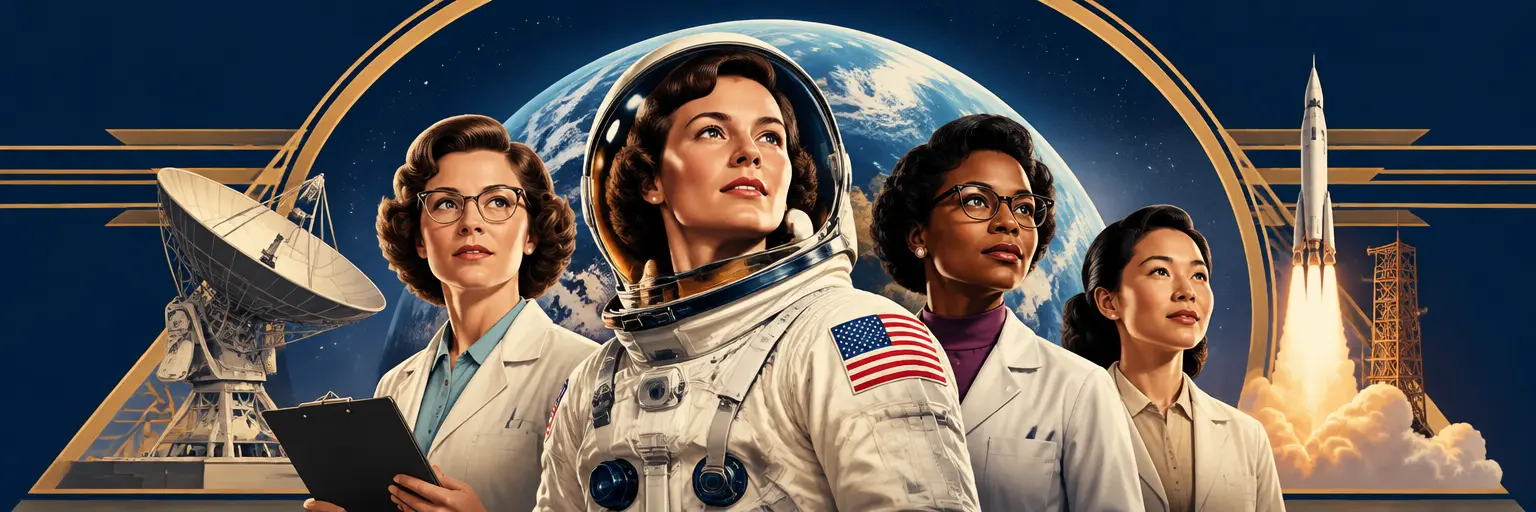
The mid-late 20th century marked a pivotal era when women began challenging the final frontier, moving from Earth-bound scientific roles to becoming astronauts, engineers, and mission specialists. This subcategory of Space Science & Astronomy explores the courageous women who navigated political, social, and technical hurdles to secure their place in space history. From early Cold War pioneers to the Shuttle era's trailblazers, these narratives reveal how female scientists and pilots transformed the aerospace industry. Discover their biographies, mission contributions, and the cultural shifts they inspired—content crafted to honor their legacy while enriching your understanding of space exploration's inclusive future.
🚀 Early Soviet Pioneers: The First Women in Orbit
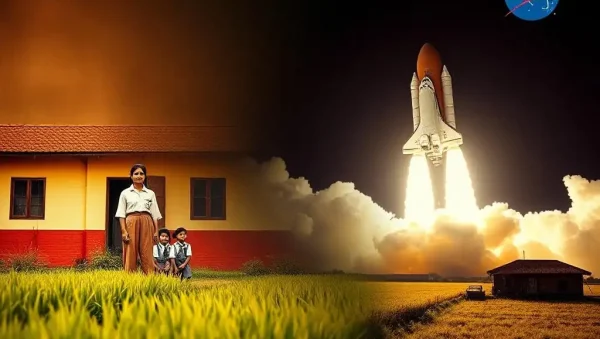
In the 1960s, the Soviet space program unexpectedly led the way for women, with Valentina Tereshkova becoming the first woman in space in 1963 aboard Vostok 6. Her mission, though brief, proved that women could endure the physical and psychological rigors of spaceflight. Yet, behind Tereshkova's celebrated flight were lesser-known figures like Yelena Serova, who trained but never flew until decades later. This section documents the Soviet training regimens, the gender politics of the era, and how Tereshkova's flight inspired a generation of female cosmonauts and Soviet scientists to pursue aerospace careers despite systemic exclusion.
Readers will expect detailed timelines, primary-source quotes from mission transcripts, and analysis of how Cold War competition influenced the selection of women. We also highlight the long gap between 1963 and the next female spaceflight in 1982 (Svetlana Savitskaya), explaining the political and technological reasons behind this pause. This segment serves as a foundational resource for researchers and enthusiasts interested in the Soviet side of women's space history.
🧑🚀 NASA's First Female Astronauts: The 1978 Class
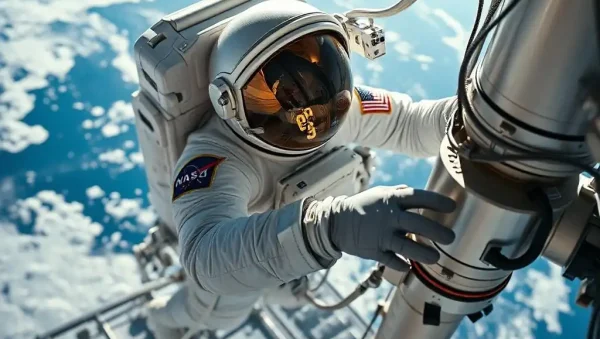
The year 1978 marked a watershed moment for American space exploration when NASA selected its first six female astronauts, including Sally Ride, Judith Resnik, and Kathryn Sullivan. This cohort shattered the "fighter pilot only" stereotype, proving that scientists and engineers could excel as mission specialists. Sally Ride's 1983 flight on Challenger made her the first American woman in space, while Kathryn Sullivan conducted the first U.S. spacewalk by a woman in 1984. This section profiles each of these six pioneers, their individual career paths, and the rigorous training they underwent that was initially designed for male test pilots.
Additionally, we explore the institutional changes—from bathroom facilities to physical fitness standards—that NASA had to adapt. Expect to find oral histories, mission patch descriptions, and the personal sacrifices each woman made. The content also addresses the media scrutiny they faced, illustrating how these astronauts navigated feminity in a hyper-masculine field. This is a must-read for understanding how these pioneers paved the way for future female astronauts in the Shuttle program and beyond.
🛰️ Women Behind the Scenes: Engineers, Physicists, and Mission Control
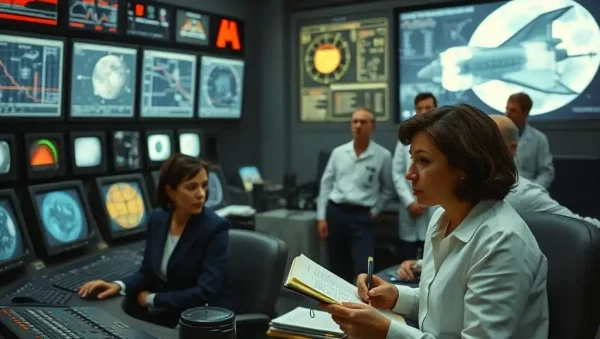
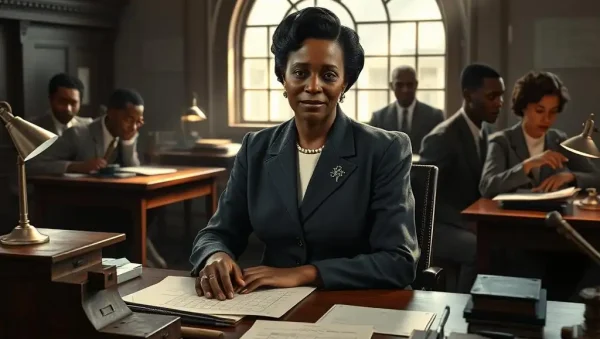
Not all women who contributed to space exploration flew into orbit. This segment honors the ground-breaking work of Katherine Johnson, Mary Jackson, and Dorothy Vaughan at NASA's Langley Research Center, whose computational mathematics were vital to the Mercury and Apollo missions. We also spotlight figures like Diane Prichard, a guidance and navigation engineer for the Space Shuttle, and JoAnn Morgan, the first female launch commentator at Kennedy Space Center. Their contributions from trajectory calculations to thermal protection systems underscore that spaceflight is a team effort.
Readers can expect technical deep-dives into their specific projects, such as Johnson's error-prone trajectory equations for John Glenn's orbital flight. We also discuss how these women faced segregation and gender discrimination while earning respect through sheer competence. This section includes rare archival photos of mission control rooms and testimonies from colleagues. It’s an essential reference for those interested in the unsung heroines who made space travel possible without ever leaving Earth’s atmosphere.
🌌 International Female Astronauts: Beyond America and Russia
The 1980s and 1990s saw women from other nations join the spacefaring community, expanding the narrative beyond the two superpowers. Featuring Roberta Bondar (Canada, 1992), Chiaki Mukai (Japan, 1994), and Françoise Barré-Sinoussi (France, astronaut candidate), this section details how international cooperation on the Shuttle and Mir station opened doors for women globally. We also cover Helen Sharman, the first British astronaut, who flew on Soyuz to Mir in 1991 as a private citizen through the Juno Project. Each profile explains their national training programs and the diplomatic significance of their flights.
Expect comparative analysis of different selection criteria, from scientific expertise to piloting skills. We also touch upon the challenges of non-English speakers in the predominantly U.S.-led Shuttle program. This subsection offers an invaluable global perspective, showing how nations with nascent space programs leveraged female pioneers to showcase technological capability and progressive values. It’s a rich resource for scholars studying the transnational history of spaceflight and gender equality.
🚨 Overcoming Adversity: The Challenger and Columbia Tragedies
Women were at the heart of two of NASA's darkest moments—Christa McAuliffe on Challenger (1986) and Kalpana Chawla on Columbia (2003). This solemn section examines their lives, missions, and the aftermath of these disasters. Christa, a civilian teacher, symbolized the "Teacher in Space" initiative, while Kalpana was a seasoned astronaut on her second flight. We explore how these tragedies impacted female participation in space programs, leading to more rigorous safety protocols and public scrutiny of NASA's culture. The legacy of these women persists through memorials, scholarships, and educational programs.
Readers will find detailed mission profiles, cause-of-accident summaries, and tributes from fellow astronauts. We also discuss the psychological effect on surviving female astronauts like Shannon Lucid, who continued flying after Challenger. This section balances technical debris analysis with humanitarian reflection, ensuring respectful storytelling. It serves as both a cautionary tale and a testament to human resilience, emphasizing that the price of exploration often is paid in courage.
Frequently Asked Questions
Who was the first woman to walk in space?
The first woman to conduct a spacewalk was Soviet cosmonaut Svetlana Savitskaya on July 25, 1984, during the Soyuz T-12 mission. She spent 3 hours and 35 minutes performing welding and cutting experiments outside the Salyut 7 station. This feat came just a few months before American Kathryn Sullivan's first U.S. spacewalk on October 11, 1984.
Why were there no female astronauts until the 1980s?
NASA initially required test-pilot experience, a field open almost exclusively to men. The agency relented after the 1978 selection, when the Space Shuttle’s larger crew capacity permitted mission specialists. The Soviet Union flew Tereshkova in 1963 but did not include women again until 1982 due to leadership changes and technical concerns.
What contribution did Katherine Johnson make to moon landing?
Katherine Johnson calculated the launch windows and critical trajectory equations for Apollo 11’s lunar landing in 1969. Her handwritten calculations verified the computer outputs for the lunar module’s descent, ensuring success. She also worked on the Mercury and Shuttle missions, earning the Presidential Medal of Freedom in 2015.
Did any woman lead a NASA mission control during this era?
Yes, though rare. Pioneering flight director Michelle Brekke became the first female lead flight director for a Shuttle mission in 1992, overseeing the STS-47 mission. However, women more frequently served in roles like spacecraft communicator (CAPCOM) or payload operations, with JoAnn Morgan being the first woman at launch control.
What was the reaction to Sally Ride's flight in 1983?
Public reaction was overwhelmingly positive but also intrusive. Media focused on her marital status, wardrobe preferences, and whether she planned to have children. NASA installed mirrors and redesigned hygiene kits, while engineers famously delivered 100 tampons for a six-day flight—a detail Ride gently corrected, noting proper quantity and disposal methods were the real issues.