
Ada Lovelace & Babbage's Engine: Did the 19th Century See the Genesis of AI?
🌟 Explore how Ada Lovelace AI history and her visionary insights into Babbage’s Engine hint at the dawn of artificial intelligence, showcasing…
Read article
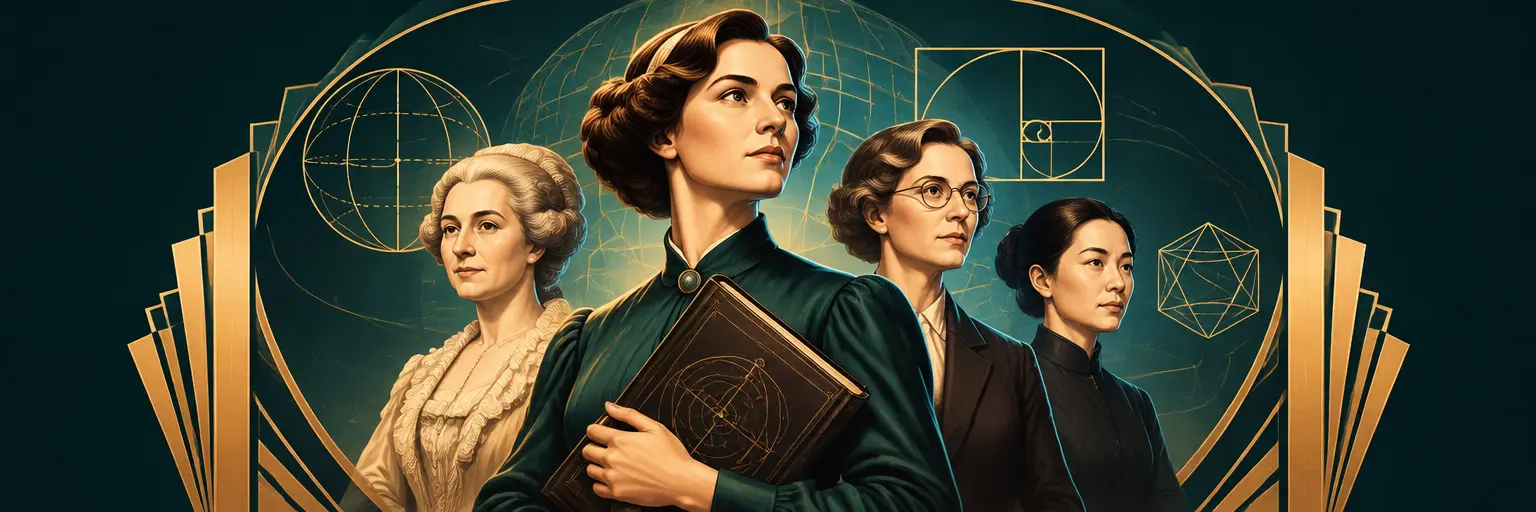
From ancient problem-solvers to modern data pioneers, women have always been at the heart of mathematical discovery—yet their stories are too often left out of the textbooks. Here, we illuminate the brilliant minds who deciphered prime numbers, built the foundations of computing, and reshaped statistics, geometry, and theoretical models against all odds. Explore how these trailblazers broke barriers in pure and applied mathematics, from the 18th century’s analytical geniuses to 21st-century innovators in probability and data science. Let their legacies inspire the next generation of problem-solvers, proving that genius knows no gender. Discover the hidden equations, bold theorems, and relentless perseverance that define women’s indispensable role in the mathematical sciences.
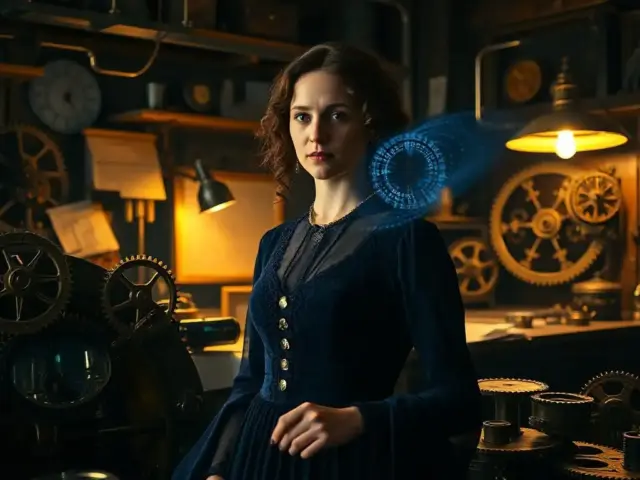
🌟 Explore how Ada Lovelace AI history and her visionary insights into Babbage’s Engine hint at the dawn of artificial intelligence, showcasing…
Read article
🌟 Celebrating Women in math history, "The Matriarchs of Modern Math" highlights pioneering female mathematicians from 1950-2000, showcasing their groundbreaking work, overcoming…
Read article
🌟 Celebrating the Women mathematicians legacy early 20th century, this article explores how Kovalevskaya’s groundbreaking work inspired generations of women in science,…
Read article
🌟 Discover how Ada Lovelace's groundbreaking notes laid the theoretical foundation for modern computing, shaping the history of the Ada Lovelace computing…
Read article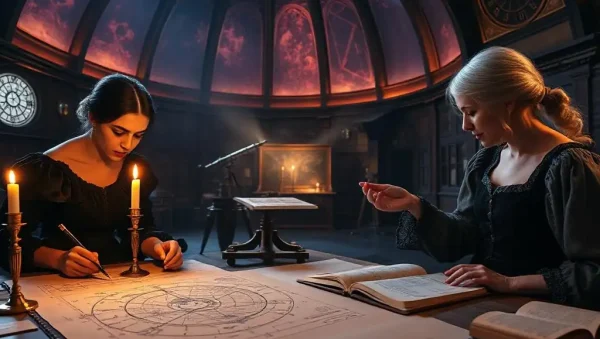
🌟 Discover how women’s contributions to math theories bridge intuition and rigor, transforming the field and inspiring future generations. This article highlights…
Read article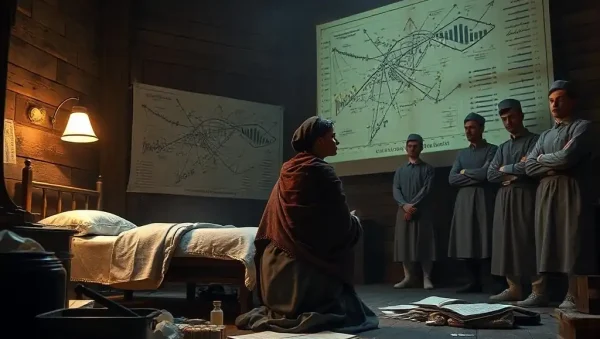
🌟 Discover how Florence Nightingale’s innovative statistical analysis methods revolutionized healthcare, transforming her into "The Lady with the Lamp" and highlighting her…
Read article
🌟 Celebrating women who overcame Women’s mathematical community building challenges, this article honors pioneering female mathematicians who forged inclusive networks against all…
Read article
🌟 Discover the remarkable geometry women’s historical contributions from 1950 to 2000, highlighting female pioneers who shaped this timeless discipline. Their stories…
Read article
🌟 Olga Ladyzhenskaya's groundbreaking work on partial differential equations revolutionized fluid dynamics, highlighting her vital role as a pioneering woman in science.…
Read article
🌟 Celebrating Sophie Germain’s dual legacy, her groundbreaking work in number theory and elasticity revolutionized mathematics and engineering. WomenInScienceHistory.com honors her pioneering…
Read article
✨ Discover the remarkable women whose early math contributions shaped history before 1700, challenging gender norms and inspiring future generations. Women’s early…
Read article
🌟 Women mathematicians early chaos theory revolutionized understanding of unpredictable systems, paving the way for modern science. Their groundbreaking insights in the…
Read articleExplore the remarkable contributions of women to mathematics throughout history, from ancient pioneers to modern innovators. This category highlights the brilliant minds who shaped algebra, geometry, statistics, and theoretical frameworks despite systemic barriers. Discover biographies, landmark discoveries, and the enduring legacy of female mathematicians who defied convention and expanded human knowledge.
This era saw women like Emmy Noether revolutionize abstract algebra and Mary Cartwright advance chaos theory, often working without formal academic recognition. Readers will uncover how these mathematicians navigated restrictive university policies, contributed to wartime codebreaking, and laid foundations for modern topology and differential equations. Expect detailed narratives of perseverance, groundbreaking publications, and the gradual opening of doctoral programs to women.
Contemporary mathematicians such as Maryam Mirzakhani and Karen Uhlenbeck are redefining fields from hyperbolic geometry to gauge theory, earning the highest honors including Fields Medals and Abel Prizes. This section profiles living pioneers who lead research institutes, mentor next-generation scholars, and advocate for diversity in STEM. Readers will learn about their cutting-edge work in data science, computational mathematics, and collaborative problem-solving that addresses global challenges.
Pure mathematics—the study of abstract structures and patterns—has been profoundly shaped by women like Sophie Germain and Julia Robinson. Here, explore number theory, abstract algebra, and logic through their eyes, understanding how they tackled problems deemed unsolvable. Expect insights into mathematical rigor, elegant proofs, and the philosophical implications of their work, alongside stories of intellectual courage in male-dominated institutions.
This period witnessed trailblazers like Maria Agnesi, who authored the first comprehensive calculus textbook, and Ada Lovelace, the visionary behind the first algorithm. Readers will discover how these women worked within constrained educational systems, often self-taught or tutored privately, to produce seminal contributions to analysis, mechanics, and early computing. The subcategory emphasizes their adaptability, correspondence with leading male scholars, and legacy in classical mathematics.
Florence Nightingale’s pioneering use of statistical graphics and Gertrude Cox’s experimental design transformed applied research. This section covers how women developed sampling techniques, Bayesian inference, and quality control methods that underpin modern healthcare, economics, and social science. Expect biographies of statisticians who overcame discrimination to advise governments, design clinical trials, and establish statistical societies, with practical applications highlighted throughout.
Theoretical contributions—from Emmy Noether’s symmetry theorems to Katherine Johnson’s orbital mechanics—demonstrate how women have advanced fundamental frameworks. This subcategory dives into their work on group theory, game theory, and complex analysis, showing how theoretical insights translated into practical breakthroughs. Readers will gain appreciation for the conceptual leaps these thinkers made, often in isolation, and their impact on subsequent generations of researchers.
Ancient and medieval pioneers like Hypatia and Al-Khwarizmi’s female contemporaries laid early groundwork in geometry and algebra. This section uncovers fragmented historical records to highlight figures such as Theano, who worked on number theory, and Cleopatra the Alchemist, whose methods blended mathematics and philosophy. Expect a journey through Babylonian, Greek, Indian, and Islamic mathematical traditions, showcasing how women preserved and expanded knowledge despite limited archival evidence.
Applied mathematicians like Olga Ladyzhenskaya in fluid dynamics and Grace Hopper in computational mathematics turned theory into tools for engineering, physics, and computer science. This category examines their work in modeling, optimization, and numerical analysis, including wartime contributions like ballistics calculations and early programming languages. Readers will see how these women bridged academia and industry, often pioneering interdisciplinary approaches that solved real-world problems.
From Julia Robinson’s work on Hilbert’s tenth problem to Marjorie Lee Browne’s contributions to differential geometry, this era marked institutional progress. This section profiles women who entered university faculties, founded mathematical journals, and led professional organizations, all while overcoming implicit bias. Expect narratives of collaboration, Cold War-driven research in cryptography and space exploration, and the rise of female role models who inspired the next wave of mathematicians.
Studying women’s history in mathematics corrects historical erasures, provides role models for aspiring mathematicians, and reveals diverse problem-solving approaches. It also highlights systemic barriers that still affect women in STEM today, fostering advocacy for equal opportunities. Understanding these narratives enriches our collective knowledge and ensures that future innovations benefit from all available talent.
Hypatia of Alexandria (c. 370–415 CE) is widely regarded as the first documented female mathematician, known for commentaries on Diophantus and Apollonius. However, earlier women like Theano, associated with Pythagoras, may have contributed to number theory. Historical records are sparse, but Hypatia’s legacy as a teacher and scholar is well-established, making her a foundational figure.
Women mathematicians faced exclusion from universities, denied degrees, and prohibitions on attending lectures. They often worked unpaid, used male pseudonyms, or relied on family connections for education. Even when accomplished, they were barred from professorship, research funding, and professional societies. These barriers forced many to work in isolation, yet their contributions persisted through determination and mentorship.
Maryam Mirzakhani is the only woman to win the Fields Medal, awarded in 2014 for her work on the dynamics of billiard balls and moduli spaces of Riemann surfaces. Her contributions to hyperbolic geometry and complex analysis were groundbreaking, and her achievement inspired many young women globally, though she tragically passed away in 2017.
Explore resources like the Association for Women in Mathematics, biographies on our site, and academic archives such as the Agnes Scott College’s biographies project. Reading primary sources, attending conference talks, and following contemporary mathematicians on social media can also provide fresh perspectives. For academic depth, consider university courses on the history of mathematics that increasingly include complementary narratives.