
Beyond Kovalevskaya: How Her Legacy Fueled Early 20th Century Women Mathematicians


Welcome to WomenInScienceHistory.com!
Delve into the inspiring world of female scientific pioneers. This site is dedicated to uncovering the untold stories of women who shaped the landscape of science. Today, we explore a fascinating chapter in mathematics, focusing on the profound and lasting impact of Sofia Kovalevskaya. Prepare to discover "Beyond Kovalevskaya: How Her Legacy Fueled Early 20th Century Women Mathematicians", and unravel how her groundbreaking work paved the way for a new generation of brilliant minds. What drove these women to excel in a field often closed to them? Let's find out...
- Beyond Kovalevskaya: Shaping the Landscape for Early 20th Century Women Mathematicians
- The Pre-1900 Landscape: Challenges Faced by Aspiring Women Mathematicians
- Kovalevskaya's Breakthrough: A Beacon of Hope
- Early 20th Century: A Flourishing of Women Mathematicians
- The Legacy of Kovalevskaya: How Her Work Paved the Way
- Specific Examples of Kovalevskaya's Influence on Early 20th Century Mathematicians
- The Continued Struggle for Recognition and Equality
- Celebrating the Achievements of Early 20th Century Women in Mathematics
- Conclusion: The Enduring Legacy of Women Mathematicians in the Early 20th Century
-
Frequently Asked Questions
- What was Sofia Kovalevskaya's primary impact on women in mathematics, particularly in the early 20th century?
- What were some of the specific challenges women mathematicians faced in the early 20th century?
- How did the "WomenInScienceHistory.com" platform contribute to understanding the legacy of early 20th-century women mathematicians?
- Besides Sofia Kovalevskaya, can you name another prominent woman mathematician from the early 20th century?
- Why is it important to remember and celebrate the legacy of women mathematicians from the early 20th century?
- Final Reflection: Igniting the Flame of Mathematical Ambition
- Uncover Your Inner Mathematician!
Beyond Kovalevskaya: Shaping the Landscape for Early 20th Century Women Mathematicians
Introduction: Sofia Kovalevskaya's Enduring Impact on Women in Mathematics
Sofia Kovalevskaya stands as an unparalleled figure in the history of mathematics, a pioneering force whose intellectual brilliance shattered the rigid gender norms of the 19th century. Her groundbreaking achievements, from earning a doctorate to securing a professorship, created a ripple effect that extended far beyond her lifetime. This article explores how Kovalevskaya's extraordinary journey and the women mathematicians legacy early 20th century built upon her initial breakthroughs, profoundly influencing the academic and professional landscape for subsequent generations of female scholars.
Her success provided tangible proof that women were not only capable of excelling in the most rigorous intellectual pursuits but could also achieve professional recognition in a field historically dominated by men. This foundational impact paved the way for the remarkable flourishing of early 20th century women mathematicians, who, inspired by her example, pushed the boundaries of mathematical thought and contributed significantly to various disciplines.
The Pre-1900 Landscape: Challenges Faced by Aspiring Women Mathematicians
Societal Barriers and Limited Educational Opportunities
Before the turn of the 20th century, the landscape for aspiring women mathematicians was profoundly restrictive. Societal norms dictated that a woman's place was primarily in the domestic sphere, and intellectual pursuits, especially in rigorous fields like mathematics, were often deemed unsuitable or even detrimental to their health and femininity. Universities, the traditional bastions of higher learning and research, largely excluded women from admission, particularly from degree-granting programs.
For instance, while some institutions like the University of Zurich began admitting women in the mid-19th century, major European universities such as Cambridge and Oxford, though eventually allowing women to attend lectures, did not grant full degrees to women until well into the 20th century (Cambridge in 1948, Oxford in 1920). This systemic exclusion meant that even the most brilliant female minds struggled to acquire the formal education and credentials necessary for a career in mathematics.
Furthermore, the few women who managed to pursue advanced studies often did so through informal channels, private tutoring, or by attending lectures unofficially. They faced immense social pressure, skepticism from male peers and professors, and a severe lack of financial support or institutional backing.
The absence of established career paths, research opportunities, and professional networks meant that even if a woman overcame the educational hurdles, her chances of securing a meaningful position in academia or research were exceptionally slim. This challenging environment underscores the magnitude of Kovalevskaya's achievements and the profound impact she had on the women mathematicians legacy early 20th century.
Overcoming Obstacles: Early Examples of Female Mathematical Success
Despite these formidable barriers, a handful of determined women managed to make significant contributions to mathematics and related fields before the 20th century, setting crucial precedents. One notable example is Mary Somerville (1780–1872), a Scottish polymath and science writer who, through self-education, became highly respected for her clear and comprehensive translations and popularizations of complex mathematical and astronomical works, including Laplace's Mécanique Céleste.
Her work, though not original research in the academic sense, played a vital role in making advanced scientific concepts accessible and earned her recognition from institutions like the Royal Astronomical Society, which elected her as one of its first two female honorary members in 1835.
Another inspiring figure was Ada Lovelace (1815–1852), daughter of Lord Byron, who collaborated with Charles Babbage on his Analytical Engine. Her extensive notes on the machine included what is widely considered the first algorithm intended to be carried out by a machine, making her a visionary in the nascent field of computer programming.
These women, alongside others like Sophie Germain (1776–1831), who made significant contributions to elasticity theory and number theory despite being self-taught and often publishing under a male pseudonym, demonstrated the inherent intellectual capacity of women. Their individual successes, achieved against overwhelming odds, provided a crucial, albeit limited, foundation upon which the women mathematicians legacy early 20th century would eventually build, fueled by the more direct inspiration of Sofia Kovalevskaya.
Kovalevskaya's Breakthrough: A Beacon of Hope
The Significance of Kovalevskaya's Achievements in Mathematics
Sofia Kovalevskaya's achievements were nothing short of revolutionary for her time, marking a pivotal moment in the history of women in mathematics. Born in Russia in 1850, she defied societal expectations by pursuing advanced studies in mathematics in an era when universities were largely closed to women. After studying privately with Karl Weierstrass in Berlin, she earned her Ph.D. in absentia from the University of Göttingen in 1874, an unprecedented feat for a woman.
Her dissertation, On the Theory of Partial Differential Equations, was a work of such profound originality and rigor that it earned her the highest possible distinction. This academic credential, obtained from a leading European university, instantly elevated her status and demonstrated beyond doubt that a woman could achieve the pinnacle of mathematical scholarship.
Her most significant professional breakthrough came in 1884 when she was appointed Professor of Mathematics at Stockholm University, becoming the first woman in modern Europe to hold such a distinguished academic position. Here, she conducted groundbreaking research, notably her work on the rotation of a rigid body about a fixed point, for which she won the prestigious Prix Bordin of the French Academy of Sciences in 1888.
This prize, awarded for a problem in mechanics, not only recognized her exceptional mathematical prowess but also brought her international acclaim, further solidifying her reputation as a world-class mathematician. Her ability to secure a doctorate and a professorship in a male-dominated field provided concrete evidence of women's intellectual capabilities and professional potential, thereby strengthening the burgeoning women mathematicians legacy early 20th century.
Kovalevskaya as a Role Model: Inspiring a New Generation
Sofia Kovalevskaya's life and career served as an undeniable beacon of hope and inspiration for countless aspiring women mathematicians who followed. Her very existence as a successful, recognized academic shattered the prevailing stereotypes that relegated women to lesser intellectual roles. Her story, widely publicized in academic and social circles, offered a powerful counter-narrative to the prevailing skepticism about women's intellectual capacity.
For young women contemplating careers in science, Kovalevskaya was living proof that such a path, though arduous, was not impossible. Her pioneering spirit demonstrated that with exceptional talent and unwavering determination, the seemingly insurmountable barriers of the era could indeed be overcome.
Her influence was not merely symbolic; it had a tangible impact on the aspirations and opportunities for the women mathematicians legacy early 20th century. Her success encouraged some universities and academic departments to reconsider their exclusionary policies, albeit slowly. It also emboldened families to support their daughters' intellectual ambitions and provided a framework for what female academic success could look like.
Students like Grace Chisholm Young, who pursued her doctorate in Göttingen just a few years after Kovalevskaya, consciously or unconsciously walked in her footsteps, benefiting from the slight opening of doors that Kovalevskaya had so forcefully pushed. The image of a woman holding a professorship at a major European university provided a powerful, tangible goal that had been unimaginable for previous generations, thereby galvanizing a new wave of female scholars.
Early 20th Century: A Flourishing of Women Mathematicians
The Rise of Women's Colleges and Increased Access to Education
The early 20th century witnessed a significant, albeit gradual, shift in educational opportunities for women, laying crucial groundwork for the women mathematicians legacy early 20th. The establishment and growth of women's colleges in both the United States and the United Kingdom played a pivotal role in this transformation.
Institutions like Bryn Mawr College (founded 1885) in the U.S. and Girton College (1869) and Newnham College (1871) at Cambridge University in the U.K. were specifically designed to provide women with a rigorous education comparable to that offered to men. These colleges often hired highly qualified female faculty, some of whom were themselves pioneering women mathematicians, creating supportive academic environments where female students could thrive without the overt biases present in co-educational institutions.
Beyond these dedicated women's colleges, some co-educational universities slowly began to open their doors more widely to women, particularly for postgraduate studies. The University of Göttingen in Germany, for example, which had awarded Kovalevskaya her doctorate, became a magnet for female students seeking advanced degrees in mathematics and physics, drawing talent from across Europe and America.
While full integration and equality were still decades away, this period saw a notable increase in the number of women attending universities, earning degrees, and even pursuing doctoral studies. This expanded access to higher education was a fundamental factor enabling the emergence of a new generation of early 20th century women mathematicians who would make lasting contributions to the field.
Key Figures: Profiles of Pioneering Women Mathematicians of the Early 1900s
The early 20th century was a period of remarkable growth for the women mathematicians legacy early 20th, producing several figures whose contributions reshaped various mathematical fields. These women, often building upon the path forged by Kovalevskaya, navigated persistent biases to achieve significant academic and research milestones. Their stories are integral to understanding the evolving role of women in science.
Emmy Noether: Revolutionizing Abstract Algebra
Emmy Noether (1882–1935) stands as one of the most influential women mathematicians of all time, fundamentally transforming abstract algebra. Born in Erlangen, Germany, she initially faced immense challenges in gaining academic recognition. Despite her exceptional talent, she was initially only allowed to audit classes and was denied official positions due to her gender.
However, her brilliance was undeniable, and she eventually secured an unofficial, unsalaried position at the University of Göttingen, a world-renowned center for mathematics. It was here that she developed her groundbreaking theories on rings, fields, and algebras, which laid the foundation for modern abstract algebra. Her work on ideal theory, particularly her ascending and descending chain conditions, revolutionized algebraic structures and found applications in number theory, algebraic geometry, and topology.
Noether's most famous contribution outside pure mathematics is Noether's Theorem (1918), which elegantly links symmetries in physics to conservation laws. This theorem proved indispensable for the development of both general relativity and quantum mechanics, demonstrating the profound interplay between mathematics and theoretical physics. Despite her genius, she faced persistent gender and later, political, discrimination.
She was only formally given the title of "extraordinary professor" (a non-tenured position) in 1922 and was forced to flee Germany in 1933 due to the Nazi regime, eventually finding refuge at Bryn Mawr College in the United States. Her intellectual leadership, prolific research, and mentorship of numerous students cemented her position as a cornerstone of the women mathematicians legacy early 20th.
Grace Chisholm Young: Contributions to Mathematical Education and Research
Grace Chisholm Young (1868–1944) was a prominent British woman mathematician whose career spanned the late 19th and early 20th centuries. She was a trailblazer, becoming the first British woman to receive a doctorate in any field from a German university, earning her Ph.D. in mathematics from the University of Göttingen in 1895 – a path remarkably similar to Kovalevskaya's.
Her doctoral work focused on algebraic groups, demonstrating her strong foundational understanding. After her doctorate, she collaborated extensively with her husband, William Henry Young, on a vast range of mathematical topics, often publishing under his name or jointly, reflecting the collaborative and sometimes constrained nature of female academic work at the time.
Her research contributions were primarily in set theory, measure theory, and the theory of functions, particularly real analysis. Together with her husband, she published The Theory of Sets of Points (1906), the first textbook on set theory in English, which became a standard reference for decades. Beyond her significant research output, Grace Chisholm Young was deeply committed to mathematical education.
She also published books for children, like Bimbo and the Frogs (1905), to introduce basic biological and mathematical concepts, showcasing her dedication to making science accessible. Her persistent pursuit of higher education and her substantive contributions to mathematical research and pedagogy solidify her place within the women mathematicians legacy early 20th.
Ruth Moufang: Pioneer in Projective Geometry
Ruth Moufang (1905–1977) was a distinguished German woman mathematician known for her groundbreaking work in projective geometry and non-associative algebraic structures. She received her Ph.D. from the University of Frankfurt in 1931 under the supervision of Max Dehn, one of the pioneers of combinatorial topology. Her doctoral thesis explored the foundations of projective geometry, a field that examines properties of geometric figures that are invariant under projection.
Moufang's research focused on the study of non-desarguesian projective planes, which are geometric structures where Desargues's Theorem does not hold. Her work led to the discovery of "Moufang planes" and the introduction of Moufang loops, specific types of non-associative algebraic structures that bear her name.
Despite her significant contributions, Moufang faced challenges during the Nazi era in Germany, finding it difficult to secure an academic position. She transitioned to industrial research, working as a physicist for the German armaments industry during World War II, a common fate for many academics, especially women, during that tumultuous period. After the war, she returned to academia, eventually becoming a professor at the University of Frankfurt in 1957. Her precise and insightful work on the foundations of geometry and algebra significantly enriched the mathematical landscape, contributing distinctly to the women mathematicians legacy early 20th.
Anna Johnson Pell Wheeler: Group Theory and Integral Equations
Anna Johnson Pell Wheeler (1883–1966) was a prominent American woman mathematician who made significant contributions to the fields of linear integral equations and functional analysis. Born in Iowa, she earned her Ph.D. from the University of Chicago in 1910 under the supervision of E. H. Moore. Her doctoral research focused on the theory of integral equations, a topic of great importance in the early 20th century due to its applications in physics and engineering. She was particularly known for her work on quadratic forms in infinitely many variables and the spectral theory of symmetric operators.
Wheeler's career was marked by a persistent struggle against the prevailing anti-nepotism rules in academia, which often prevented married women from holding positions at the same institution as their husbands. Despite these obstacles, she held faculty positions at Bryn Mawr College and Mount Holyoke College, where she was a respected teacher and researcher.
Notably, she was the first woman to deliver a major invited address at the International Congress of Mathematicians, presenting "The Status of Quadratic Forms in Infinitely Many Variables" at the 1928 congress in Bologna. Her resilience in the face of institutional barriers and her substantial mathematical output underscore her vital role in the women mathematicians legacy early 20th.
The Legacy of Kovalevskaya: How Her Work Paved the Way
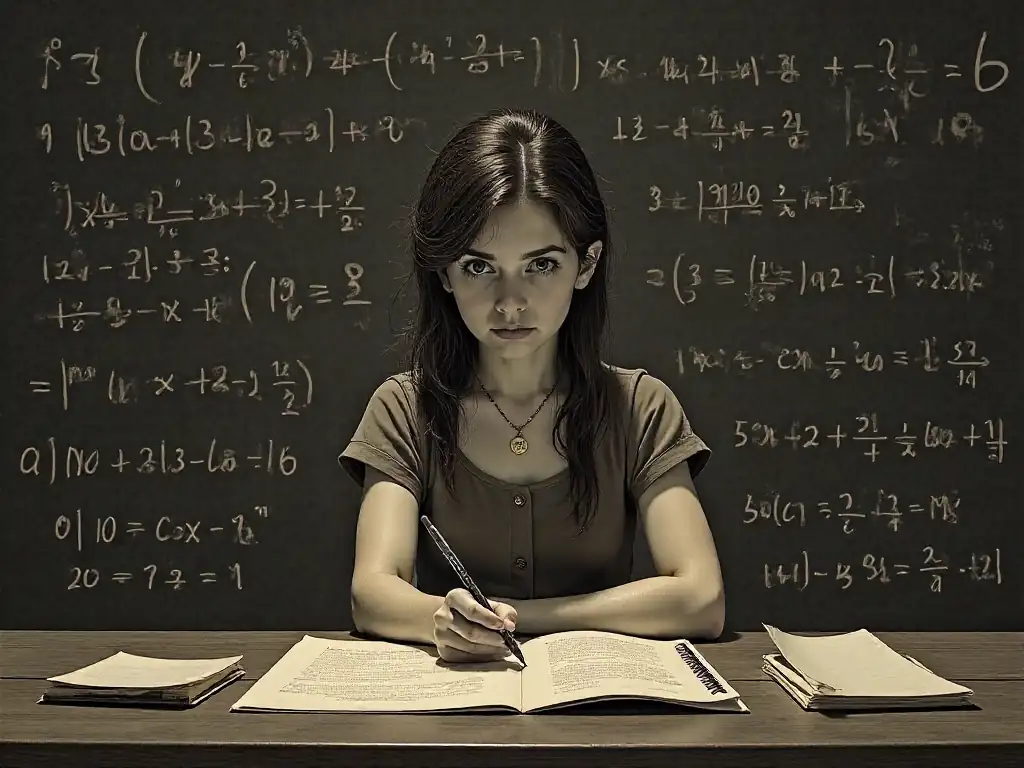
Breaking Down Gender Barriers in Academia
Sofia Kovalevskaya's singular achievement in securing a professorship at Stockholm University was a pivotal moment in the history of academic gender equality. Before her, the idea of a woman holding a full professorial chair in mathematics at a major European university was almost unthinkable. Her success provided a tangible, irrefutable example that shattered the prevailing belief systems that deemed women intellectually inferior or incapable of rigorous academic work. This visible triumph, which garnered international attention, began to erode the deeply entrenched gender barriers that had historically excluded women from higher education and professional scientific careers.
Kovalevskaya's precedent, while not immediately opening all doors, created crucial cracks in the edifice of academic exclusivity. It provided a powerful argument for reformers and progressive academics who advocated for greater inclusion of women.
The knowledge that a woman had not only earned a doctorate but also held a respected professorial position made it harder for institutions to justify outright bans or discriminatory practices. This fundamental shift in perception and possibility was instrumental in paving the way for the women mathematicians legacy early 20th, as institutions began to cautiously admit more female students and, eventually, offer them faculty positions, albeit often in a limited capacity.
Encouraging Mathematical Research and Collaboration Among Women
Beyond breaking down institutional barriers, Kovalevskaya's legacy also fostered an environment that subtly encouraged mathematical research and collaboration among women. Her success demonstrated that a professional life in mathematics was indeed attainable, inspiring female students to pursue advanced degrees and engage in original research. While formal networks for women mathematicians were still nascent in the early 20th century, Kovalevskaya's example implicitly highlighted the importance of intellectual exchange and mentorship. Her own relationships with mentors like Karl Weierstrass and her interactions with academic peers demonstrated the collaborative nature of advanced mathematics.
Inspired by her path, future women mathematicians in the early 20th century often sought out environments where they could find intellectual camaraderie and support. The nascent women's colleges, for instance, became hubs where female faculty and students could collaborate and develop their research interests.
Although direct, widespread collaboration among female mathematicians was limited by geographical dispersion and academic isolation, Kovalevskaya's existence as a successful female mathematician provided a shared point of reference and a collective aspiration. Her pioneering journey contributed to a growing awareness that women could not only participate in mathematics but also lead and contribute to its advancement, thereby enriching the women mathematicians legacy early 20th.
Specific Examples of Kovalevskaya's Influence on Early 20th Century Mathematicians
Example 1: Emmy Noether's Algebraic Invariant Theory
While Emmy Noether did not directly study under Kovalevskaya, the ground Kovalevskaya broke significantly influenced the environment that allowed Noether to flourish, establishing a critical part of the women mathematicians legacy early 20th. Kovalevskaya's professorship at Stockholm University in the late 19th century created an undeniable precedent for female academic excellence in Europe, particularly in Germanic academic circles that often looked to Göttingen for leadership. This precedent made it incrementally more plausible for institutions like Göttingen to eventually accept, albeit grudgingly, a woman of Noether's caliber into their ranks, even if official recognition was slow.
Noether's initial struggles to gain an official position, despite her immense talent and the support of figures like David Hilbert, highlight the persistent barriers. However, Kovalevskaya's prior success meant that the idea of a female mathematician of such stature was no longer entirely unprecedented, providing a subtle but important psychological and institutional shift.
Noether's work on algebraic invariant theory, which formed a cornerstone of her early research, exemplifies a deep intellectual rigor and originality that echoed Kovalevskaya's own contributions to mathematical analysis and mechanics. Both women tackled complex, foundational problems in their respective fields, pushing the boundaries of existing knowledge.
Noether's ability to establish a thriving research school at Göttingen, mentoring numerous students who went on to become significant mathematicians, was a direct testament to the expanded opportunities for female intellectual leadership that Kovalevskaya's pioneering career had helped to create. This demonstrated the burgeoning women mathematicians legacy early 20th and its capacity for fostering new talent.
Example 2: Grace Chisholm Young's Focus on Mathematical Education
Grace Chisholm Young's career provides a more direct, albeit perhaps not explicitly stated, link to Kovalevskaya's influence, particularly concerning the women mathematicians legacy early 20th. Young, like Kovalevskaya, chose to pursue her doctoral studies at the University of Göttingen, a leading European mathematical center that had already demonstrated a willingness to grant degrees to women, thanks in large part to Kovalevskaya's earlier achievement.
Young's decision to pursue a Ph.D. in mathematics in Germany, a path then largely inaccessible to women in her native Britain, mirrored Kovalevskaya's own journey and demonstrated a recognition that such opportunities existed abroad. This shared trajectory reinforced the idea that women could and should seek the highest levels of mathematical training.
Furthermore, Young's subsequent dedication to mathematical education, including authoring textbooks and educational materials, reflects a desire to disseminate knowledge and make mathematics accessible, much as Kovalevskaya's public lectures and writings aimed to engage a broader audience. While Kovalevskaya focused on advanced research and public lectures, Young's efforts, including her children's book Bimbo and the Frogs, show a commitment to cultivating mathematical understanding from a young age, ensuring the future growth of the field.
This commitment to both rigorous research and broader educational outreach contributed significantly to the evolving women mathematicians legacy early 20th, ensuring that the foundational work of pioneers like Kovalevskaya would inspire future generations.
Example 3: The Growth of Women's Mathematical Societies
While Sofia Kovalevskaya's era predated the formal establishment of many dedicated women's mathematical societies, her existence and success were fundamental to the intellectual climate that eventually fostered their growth, shaping the women mathematicians legacy early 20th. Her achievements demonstrated the presence of highly capable women in mathematics, creating a strong argument for the need for specialized communities and support networks. Before Kovalevskaya, the idea of a collective of female mathematicians might have seemed too small or irrelevant to warrant formal organization. Her prominence, however, highlighted that there was indeed a growing, albeit scattered, population of women pursuing advanced mathematics.
In the early 20th century, as more women gained access to higher education, the need for these networks became increasingly apparent. Although the Association for Women in Mathematics (AWM) was founded much later (in 1971), the seeds of such organizations were sown in earlier informal gatherings and the increasing presence of women at professional conferences like the American Mathematical Society meetings.
These early interactions, often facilitated by women's colleges or progressive university departments, allowed early 20th century women mathematicians to share research, discuss challenges, and support one another. Kovalevskaya's singular achievement provided a foundational inspiration, showing that women could not only excel individually but also, by extension, benefit from and contribute to a collective intellectual community, thereby strengthening the collective women mathematicians legacy early 20th.
The Continued Struggle for Recognition and Equality
Persistent Gender Bias in the Mathematical Community
Despite the significant strides made by Sofia Kovalevskaya and the growing number of women mathematicians in the early 20th century, the mathematical community continued to grapple with pervasive gender bias. While more women were admitted to universities and even earned doctorates, securing tenured faculty positions or prominent research roles remained exceptionally challenging.
Many highly qualified female mathematicians were relegated to teaching positions at women's colleges or held lower-ranking, non-tenured roles at co-educational universities, often with lower salaries and fewer research opportunities than their male counterparts. For example, even Emmy Noether, arguably one of the most influential mathematicians of the 20th century, struggled for years to gain an official, salaried position at Göttingen, finally receiving a non-tenured "extraordinary professor" title in 1922, a full decade after completing her habilitation.
Furthermore, women often faced subtle and overt discrimination in publication, conference invitations, and access to influential networks. Their work was sometimes undervalued or attributed to male collaborators, and they frequently encountered skepticism regarding their intellectual capacity. The "old boy's network" remained deeply entrenched, making it difficult for women to break into the inner circles of mathematical research and leadership. This persistent bias meant that the women mathematicians legacy early 20th was built not only on intellectual brilliance but also on extraordinary resilience in the face of systemic disadvantages, highlighting that the fight for full equality was far from over.
The Importance of Mentorship and Support Networks for Women
In the face of persistent gender bias, the importance of mentorship and support networks for women mathematicians in the early 20th century became increasingly critical. Given the limited number of female professors and researchers, finding female mentors was often challenging. Consequently, many aspiring women mathematicians relied on progressive male mentors, such as David Hilbert who championed Emmy Noether's cause at Göttingen, or on informal networks with female peers. These relationships provided crucial academic guidance, emotional support, and advocacy in environments that could be isolating and hostile.
As the 20th century progressed, and more women entered the field, nascent formal and informal support networks began to emerge. Women faculty at colleges like Bryn Mawr or Wellesley often became mentors for their students, providing role models and guidance on navigating academic careers.
While not as formalized as later organizations, these early connections were vital for sharing strategies, validating experiences, and fostering a sense of community among early 20th century women mathematicians. These networks helped to mitigate the effects of isolation and discrimination, ensuring that the burgeoning women mathematicians legacy early 20th could continue to grow and thrive despite ongoing systemic challenges.
Celebrating the Achievements of Early 20th Century Women in Mathematics
Recognizing Their Contributions to Various Fields
The women mathematicians legacy early 20th is a testament to the profound and diverse contributions made by female scholars across numerous mathematical fields. Despite facing significant obstacles, these women pushed the boundaries of knowledge, leaving an indelible mark on disciplines ranging from abstract algebra to functional analysis and geometry. Emmy Noether's revolutionary work on ideal theory and her fundamental theorem linking symmetries and conservation laws transformed modern algebra and theoretical physics, impacting generations of scientists. Grace Chisholm Young's rigorous contributions to set theory and measure theory, alongside her dedication to mathematical education, helped solidify foundational concepts and disseminate knowledge.
Ruth Moufang's pioneering research in projective geometry led to the discovery of new algebraic structures, while Anna Johnson Pell Wheeler's work on integral equations and functional analysis significantly advanced the understanding of infinite-dimensional spaces. Beyond these prominent figures, countless other early 20th century women mathematicians contributed as educators, researchers, and pioneers in emerging computational fields, often in less visible roles.
Recognizing their intellectual prowess and their resilience in overcoming societal barriers is crucial for a complete understanding of mathematical history. Their collective achievements demonstrate that intellectual talent knows no gender, and their work forms an indispensable part of the fabric of modern mathematics.
Ensuring Their Stories are Told and Remembered
To fully appreciate the women mathematicians legacy early 20th, it is imperative to actively ensure that their stories are told, celebrated, and integrated into the broader narrative of scientific progress. For too long, the contributions of women in mathematics have been overlooked, minimized, or relegated to footnotes in historical accounts.
This historical erasure not only does a disservice to the pioneering individuals themselves but also deprives future generations of inspiring role models and a more accurate understanding of how scientific knowledge has developed. By highlighting the challenges these women faced and the triumphs they achieved, we can better understand the true nature of scientific progress, which often involves overcoming social as well as intellectual hurdles.
Platforms like Women in Science History play a critical role in bringing these narratives to the forefront, ensuring that the names and achievements of figures like Kovalevskaya, Noether, Young, Moufang, and Wheeler become as familiar as their male counterparts. Remembering their struggles and celebrating their successes provides vital context for understanding the ongoing pursuit of gender equality in STEM fields.
It also inspires young girls and women today to pursue their own intellectual passions, knowing that they stand on the shoulders of giants who meticulously built the women mathematicians legacy early 20th, paving the way for greater inclusion and recognition in the scientific community.
Conclusion: The Enduring Legacy of Women Mathematicians in the Early 20th Century
Looking Ahead: The Continued Pursuit of Gender Equality in Mathematics
The women mathematicians legacy early 20th century stands as a powerful testament to remarkable intellectual resilience and groundbreaking achievement in the face of profound adversity. The journey from Sofia Kovalevskaya's solitary triumph to the emergence of a burgeoning cohort of female mathematicians in the early 1900s was a monumental step forward. However, this period also underscored that the fight for full gender equality in mathematics was far from over. Even as more women gained access to education, systemic biases in hiring, promotion, and recognition persisted for decades, highlighting the deep-seated nature of institutional discrimination.
Looking ahead, the ongoing pursuit of gender equality in mathematics demands continued vigilance and proactive efforts. This includes addressing unconscious biases, promoting inclusive academic cultures, ensuring equitable opportunities for research and leadership, and providing robust mentorship and support networks for women at all career stages. The historical struggles and triumphs of early 20th century women mathematicians serve as a powerful reminder that progress, while often slow, is achievable through dedication and collective action. Their experiences illuminate the path forward, emphasizing the importance of dismantling remaining barriers to ensure that talent and potential are recognized and nurtured, regardless of gender.
Honoring the Pioneers: Remembering Kovalevskaya and Her Successors
To truly honor the women mathematicians legacy early 20th, it is essential to remember and celebrate the pioneering figures who shaped this transformative era. Sofia Kovalevskaya, with her unprecedented doctorate and professorship, ignited the flame of possibility. Her courage and intellectual brilliance provided the foundational inspiration that enabled subsequent generations of women to envision and pursue careers in mathematics. Following in her footsteps, trailblazers like Emmy Noether, Grace Chisholm Young, Ruth Moufang, and Anna Johnson Pell Wheeler, among many others, expanded the boundaries of mathematical knowledge and proved, beyond doubt, the immense intellectual capacity of women.
Their stories are not merely historical footnotes; they are narratives of perseverance, innovation, and profound impact on the scientific landscape. By continually highlighting their achievements, we reinforce the understanding that mathematics has always been enriched by diverse perspectives and talents. Remembering Kovalevskaya and her remarkable successors ensures that their hard-won victories and intellectual contributions are not forgotten. This ongoing recognition is vital not only for a complete and accurate understanding of mathematical history but also for inspiring future generations of women mathematicians to continue pushing the frontiers of knowledge and striving for a truly equitable and inclusive scientific world.
Frequently Asked Questions
What was Sofia Kovalevskaya's primary impact on women in mathematics, particularly in the early 20th century?
Kovalevskaya's success served as a powerful inspiration and a proof of concept. She demonstrated that women could excel in high-level mathematics, paving the way for others.
What were some of the specific challenges women mathematicians faced in the early 20th century?
They encountered significant gender bias in academia, including limited access to education and difficulty securing faculty positions. This made it hard to conduct and publish research.
How did the "WomenInScienceHistory.com" platform contribute to understanding the legacy of early 20th-century women mathematicians?
The platform highlights their individual biographies and groundbreaking research, shedding light on their often-overlooked contributions to mathematics. It provides a crucial historical record.
Besides Sofia Kovalevskaya, can you name another prominent woman mathematician from the early 20th century?
While "WomenInScienceHistory.com" would provide a more extensive list, Emmy Noether stands out. She made fundamental contributions to abstract algebra and theoretical physics.
Why is it important to remember and celebrate the legacy of women mathematicians from the early 20th century?
Recognizing their achievements combats the historical underrepresentation of women in STEM. It also inspires future generations by showcasing their remarkable accomplishments against considerable odds.
Final Reflection: Igniting the Flame of Mathematical Ambition
The journey through Sofia Kovalevskaya's life and the subsequent rise of women mathematicians in the early 20th century reveals a powerful truth: representation and opportunity are not just abstract ideals, but essential catalysts for progress. The stories we've explored demonstrate how Kovalevskaya's groundbreaking achievements served as a beacon, illuminating the path for generations of women who dared to challenge societal expectations and pursue their passion for mathematics.
Witnessing the ripple effect of Kovalevskaya's influence across the early 20th century is profoundly inspiring. It underscores the vital role of mentorship and visibility in empowering marginalized groups. The courage and brilliance of these women, often facing immense obstacles, remind us that potential is universal, but opportunity is not. You must have courage and strength and a certain doggedness to go on, even when people are saying you can't do it.
- Freeman Dyson, reflecting on the challenges faced by female scientists.
As we close this exploration, let us not simply admire the achievements of these remarkable women, but actively strive to create a world where their struggles are relics of the past. Let us champion inclusivity in STEM fields, ensuring that every aspiring mathematician, regardless of gender, has the opportunity to contribute their unique talents to the advancement of knowledge. Consider how you can support the next generation of brilliant minds and help build a future where mathematical excellence knows no boundaries.
Uncover Your Inner Mathematician!
Thank you for exploring the inspiring journey of Sofia Kovalevskaya and her profound impact! Now, let's translate that inspiration into action and continue to empower the future of women in mathematics.
- Delve deeper into the work of a 20th-century woman mathematician mentioned in the article, and share your findings with a friend!
- Explore the WomenInScienceHistory.com website to discover more unsung heroes in STEM.
- Consider supporting organizations that promote girls' and women's involvement in mathematics education and research.
What small step will you take today to carry on Kovalevskaya's legacy?