Indigenous Women & Environmental Knowledge: Guardians of Timeless Wisdom
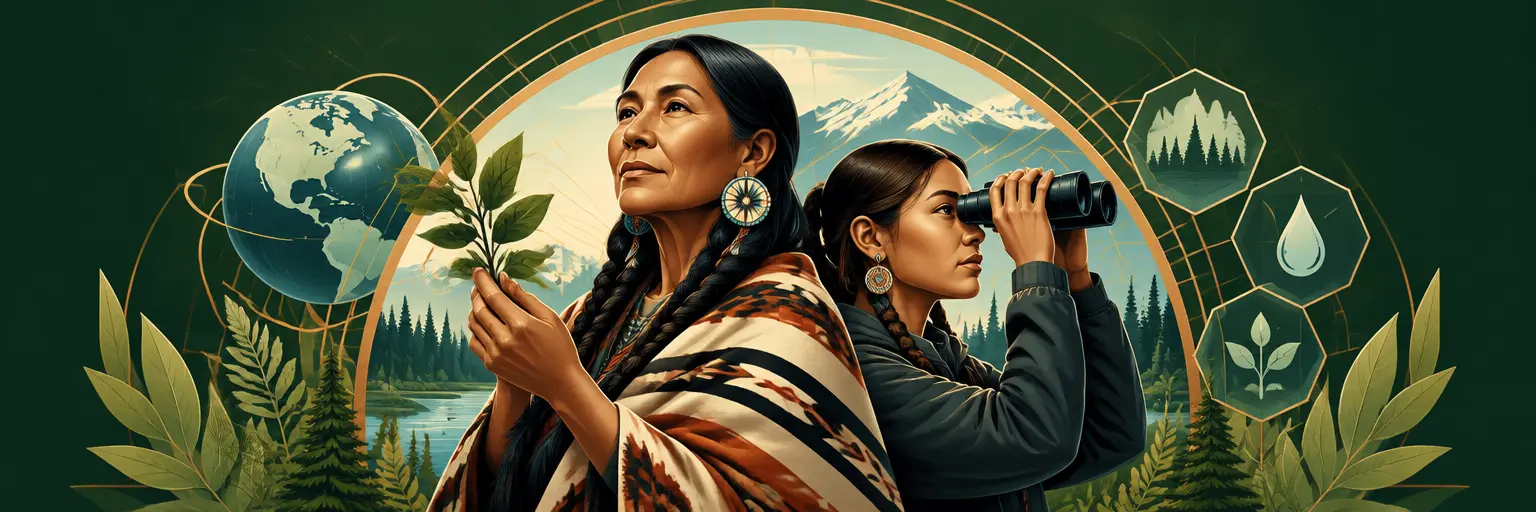
Indigenous women have long served as stewards of the environment, holding deep ecological knowledge passed down through generations. This subcategory on WomenInScienceHistory.com highlights their invaluable contributions to environmental science, from sustainable land management to biodiversity conservation. By exploring their stories, you’ll discover how these women merged traditional practices with modern scientific understanding, often overcoming colonial and patriarchal barriers. Their legacy is not just historical but a living blueprint for addressing today’s climate challenges, offering actionable insights into resilience, reciprocity, and respect for nature.
🌿 Traditional Ecological Knowledge (TEK) as a Scientific Foundation
Indigenous women have historically developed sophisticated TEK systems that predate modern ecology by centuries. Their observations of plant cycles, animal behaviors, and weather patterns informed sustainable hunting, farming, and medicine. For example, women like Winona LaDuke (Anishinaabe) blended TEK with policy advocacy, while Katrina Phillips documented how Native women’s crop rotation methods enriched soil health. This section explores how TEK was systematically collected and tested, often aligning with scientific methodologies yet offering holistic, place-based nuances that mainstream science initially dismissed.
Readers will learn how TEK is not mere folklore but a rigorous, adaptive knowledge system. We profile women who translated these practices into formal research, such as Marie Wilcox (Wukchumni), who created a dictionary to preserve her tribe’s ecological vocabulary. By examining case studies from the Amazon to the Arctic, you’ll see how indigenous women’s expertise informs modern conservation science, from fire management to water purification. Their work challenges the binary of “traditional vs. scientific,” proving that both are essential for planetary health.
🌍 Pioneering Indigenous Women in Environmental Research
This section celebrates trailblazers like Katsi Cook (Mohawk), a midwife and environmental health researcher who linked chemical contamination in rivers to reproductive health issues in her community. Another notable figure is Mikaela Jolley (Mi’kmaq), who uses GIS mapping to document indigenous land rights. We also highlight Robin Wall Kimmerer (Potawatomi), a botanist and author of Braiding Sweetgrass, who merges scientific observation with indigenous philosophy in academia. These women not only advanced environmental science but also fought for data sovereignty, ensuring research benefited their communities first.
Expect detailed biographies that contextualize their challenges, such as securing funding or gaining academic recognition. For instance, Cook’s work faced pushback from public health institutions yet laid groundwork for community-based participatory research. We analyze their methodologies—like Kimmerer’s use of “reciprocal relationships” in ecology—and how these approaches are now being adopted by mainstream environmental agencies. Through their stories, we underscore that indigenous women are not subjects of study but lead researchers, policy-makers, and innovators.
🌾 Land Stewardship and Climate Resilience Strategies
Indigenous women have developed climate resilience techniques that are increasingly vital in today’s warming world. This includes agroforestry, controlled burning, and water harvesting methods that maintain ecosystem balance. For example, Hindou Oumarou Ibrahim (Chad) uses 3D mapping to help her nomadic community adapt to changing rainfall patterns, blending ancestral knowledge with satellite data. Similarly, Nemonte Nenquimo (Ecuador) led a landmark lawsuit protecting 500,000 acres of Amazon rainforest using oral history as evidence. Their approaches prioritize long-term sustainability over short-term extraction.
Readers will find practical examples of how these strategies are applied, from seed-saving networks that preserve genetic diversity to community-managed marine protected areas. We link these practices to global policy frameworks, like the UN’s REDD+ program, showing how indigenous women’s leadership is crucial for meeting climate targets. Through interviews and project case studies, you’ll see how these women are not passive victims of climate change but proactive innovators, turning ancestral wisdom into scalable solutions for food security, disaster risk reduction, and carbon sequestration.
📚 Challenges and Triumphs in Scientific Institutions
Despite their expertise, indigenous women often face exclusion from formal scientific spaces, from biased peer review processes to lack of access to higher education. We explore how figures like Nicole Heller (Cherokee) navigated these barriers, earning a PhD in ecology while advocating for culturally responsive curricula. This section also covers systemic issues, such as the erasure of indigenous women’s names from collaborative papers or the misattribution of their knowledge. However, we highlight institutional shifts, like the rise of Indigenous Studies programs and partnerships with tribal colleges, that are slowly opening doors.
Expect a balanced narrative of setbacks and victories. For instance, Diana Leane (Yurok) faced rejection from a federal agency but later became a lead consultant on dam removal, restoring salmon habitats. We examine funding disparities—indigenous women receive less than 1% of environmental research grants—and the grassroots networks they built to overcome this. This section also discusses ethical protocols, like free prior informed consent, that are redefining how research is conducted with indigenous communities. It’s a candid look at how science must evolve to truly include diverse voices.
🌱 Modern Applications and Global Impact
Indigenous women’s environmental knowledge is now influencing global movements, from regenerative agriculture to biodiversity treaties. We spotlight how Cathy Ezrailson (Lakota) integrates TEK into K-12 STEM curricula, and how Kanahus Manuel (Secwépemc) uses social media to amplify indigenous-led conservation. This section connects their work to international initiatives like the Women’s Earth Alliance and the Indigenous Women’s Biodiversity Network. We also analyze how their knowledge has informed crisis responses, such as fire management in Australia and pest control in Africa, proving its universal relevance.
Readers will gain insights into emerging roles, like eco-feminist science communicators who bridge indigenous worldviews with data-driven policy. Through detailed examples, we show how these women are not confined to history but are shaping future research agendas, funding priorities, and community-based adaptation plans. We also discuss the digital preservation of TEK through platforms like “Local Contexts,” which empowers communities to manage their own data. This section ends by inviting readers to see themselves as allies, supporting indigenous women’s leadership in creating a more just and sustainable planet.
Frequently Asked Questions
What is traditional ecological knowledge (TEK) in environmental science?
TEK is a cumulative body of knowledge, practices, and beliefs about the relationships between living beings and their environment, developed over generations. It is empirically tested and often integrates ethical, spiritual, and practical dimensions. Indigenous women have been central to its transmission, especially in land management, medicine, and seasonal forecasting. TEK is now recognized by institutions like the IPCC as vital for climate adaptation.
How did indigenous women overcome barriers to entering scientific fields?
Many navigated systemic exclusion by building community networks, creating their own research protocols, and pursuing interdisciplinary studies. Some used advocacy and litigation to secure land rights, which enabled research. Others leveraged digital tools for documentation. Their perseverance is documented in biographies on this site, showing mentorship, self-publishing, and alliances with sympathetic non-indigenous scientists as key strategies.
Are indigenous women’s environmental practices relevant to modern climate change?
Absolutely. Their practices—such as controlled burns, polyculture farming, and rotational grazing—are proven to enhance ecosystem resilience. For instance, indigenous fire stewardship reduces catastrophic wildfire risk, and traditional water management fosters drought resistance. These methods are increasingly integrated into climate adaptation strategies globally, and indigenous women lead many of these initiatives, from the Arctic to the tropics.
What challenges do indigenous women face in documenting their knowledge?
Challenges include biopiracy, lack of legal recognition for intellectual property, and the risk of cultural appropriation. Additionally, academic publishing often demands Western formats, marginalizing oral traditions. However, new frameworks like the CARE principles (Collective benefit, Authority to control, Responsibility, Ethics) are emerging to protect indigenous data. Women are also creating their own archives, ensuring control over how knowledge is shared.
How can I support indigenous women in environmental science today?
You can support by reading and citing their work, donating to indigenous-led organizations, and advocating for inclusive science policies. In collaborations, ensure equitable partnerships that include benefit-sharing and co-authorship. Amplify their voices by attending their talks, sharing their projects on social media, and pushing museums and journals to credit TEK sources. Small actions, like buying from indigenous-owned businesses, also contribute.