19th Century Women in Environmental Science & Conservation
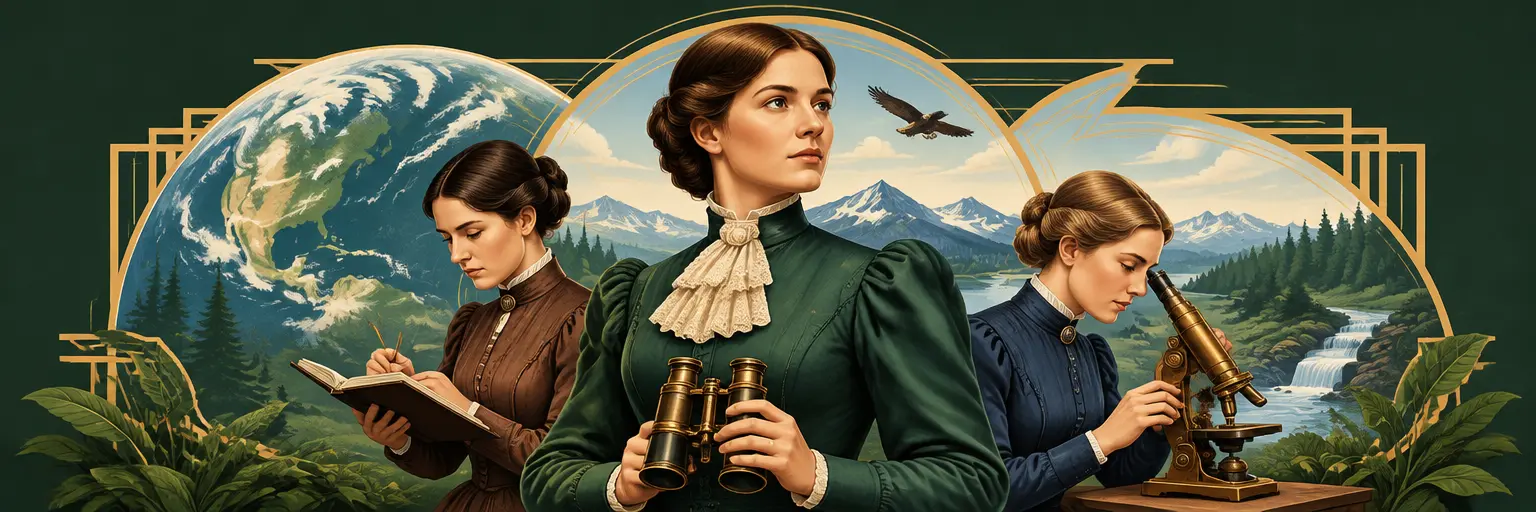
Step back into the 1800s, a transformative era when the seeds of modern environmentalism were sown—often by women whose names history nearly forgot. This subcategory on WomenInScienceHistory.com illuminates the pioneering female naturalists, botanists, and conservation advocates who studied ecosystems, documented species, and campaigned for wilderness protection before the term “environmental science” even existed. From Victorian-era botanical illustrators to early wildlife protectors, these women defied societal constraints to observe, record, and preserve the natural world. Discover their fieldwork, their writings, and the profound legacy that shaped today’s environmental movement—all while navigating a world that rarely acknowledged their expertise.
🌿 Trailblazing Field Researchers and Their Methods
In an age when women were often confined to domestic spheres, a bold few ventured into forests, coasts, and mountains to conduct systematic observations. Figures like Mary Anning, the fossil hunter, and Jeanne Baret, the first woman to circumnavigate the globe as a botanist, demonstrated rigorous field techniques. They kept meticulous journals, collected specimens, and forwarded data to male peers—sometimes under pseudonyms. Their methods laid groundwork for ecological monitoring, taxonomy, and biogeography, proving that empirical science could flourish beyond university walls. Expect detailed narratives of how these women navigated dangerous terrains, managed limited funding, and overcame institutional exclusion to produce credible, lasting data.
Each biography here reveals not just scientific achievement but survival strategies: wearing men’s clothing to join expeditions, using female-only networks for specimen exchange, or publishing through male relatives to gain credibility. We explore how their field notebooks, watercolors, and herbarium sheets became primary sources still referenced by modern researchers. By examining these methods, readers gain insight into how 19th-century women transformed observational practice into conservation action, influencing policy and public opinion long before professional ecology existed. This section emphasizes the practical, hands-on foundations of environmental science as shaped by women’s perseverance.
🌍 Early Conservation Advocacy and Activism
Long before Earth Day, women like Harriet Hemenway and Mabel Osgood Wright led grassroots campaigns to protect bird habitats and combat plume hunting—a practice driving species to extinction. Their activism merged local birdwatching clubs, consumer boycotts, and legislative lobbying, resulting in the founding of the Massachusetts Audubon Society and national wildlife refuges. This subsection profiles how women used their social influence, writing skills, and moral authority to shift public sentiment toward stewardship. Expect analyses of pamphlets, letters to newspapers, and fund-raising events that created early conservation networks linking science with civic responsibility.
These advocates often employed citizen science, organizing thousands of volunteers to document bird populations and nesting patterns, creating datasets that proved critical for protective laws. Their approach was holistic: they argued that environmental destruction harmed human health, cultural heritage, and future generations. We delve into their strategies for overcoming resistance from industrialists and even scientists who dismissed their concerns as sentimental. By highlighting these campaigns, the section shows how 19th-century women’s advocacy laid the organizational and rhetorical foundations for the modern environmental justice movement—emphasizing that conservation was always a social, not just scientific, endeavor.
📚 Botanical Pioneers and Systematic Classification
Botany was considered “acceptable” for 19th-century women, yet they used this niche to achieve scientific rigor. Figures like Elizabeth Gertrude Britton, who specialized in mosses (bryology), and Alice Eastwood, a curator at the California Academy of Sciences, developed extensive herbaria and produced monographs that refined taxonomic classifications. They pioneered techniques in specimen preservation, illustration, and comparative anatomy. This section profiles their exhaustive lab work, field collections, and collaborations with male botanists, demonstrating how they advanced systematic botany while training a generation of female assistants. Readers will uncover the specific genera they described, the institutions they built, and the scientific publications they edited.
Their contributions extended beyond naming species—they developed ecological concepts like plant zonation and habitat preferences, which influenced later conservation planning. The narratives emphasize their roles as educators, writing accessible field guides that encouraged public interest in native flora. We also examine their struggles for professional recognition, as many received credit only posthumously or had male colleagues claim their discoveries. By chronicling these botanical pioneers, the subcategory reveals how taxonomy served as a gateway for women to enter broader environmental sciences, establishing methodologies still used in biodiversity assessment today.
🦉 Wildlife Protectors and Habitat Pioneers
Conservation history often credits figures like John Muir, but women were equally instrumental in preserving natural habitats. Mary Treat, who corresponded with Charles Darwin, conducted pioneering studies on insectivorous plants and animal behavior, influencing ecological theory. Catherine Wolley and Gene Stratton-Porter combined photography and writing to document wetland ecosystems, advocating for their protection. This section highlights their roles in establishing bird sanctuaries, setting aside natural areas, and creating public awareness through best-selling books. Expect detailed accounts of their conflicts with hunters, developers, and even scientific establishment, demonstrating their capacity to translate ecological knowledge into effective political advocacy.
These women often used artistic media—painting, photography, and literary description—to render landscape value visible, arguing for its preservation on aesthetic and ethical grounds. Their work predated and inspired the modern refuge system, national parks, and environmental education programs. We explore their relationships with indigenous communities, whose knowledge they incorporated into conservation practices, albeit sometimes in paternalistic ways. By analyzing their successes and limitations, this section provides a nuanced view of how 19th-century gender roles both constrained and creatively enabled wildlife protection, offering lessons for contemporary conservation strategies that prioritize local stewardship.
📖 Legacy, Recognition, and Modern Relevance
The legacies of these women are complex: many received honorifics only decades later, while others were erased from institutional histories. This section examines modern reassessments, including reinterpretations of their data using contemporary ecological models and the restoration of their names to named species and habitats. We trace how their methods—like community-based monitoring, long-term observation, and interdisciplinary outreach—foreshadowed current citizen science and socio-ecological research frameworks. Readers will also find guidance on archival resources, museum collections, and digital projects that preserve their work and make it accessible for new research.
Critically, this section connects their struggles to ongoing challenges for women in environmental fields, such as unequal funding, undercitation, and fieldwork safety. By analyzing historical patterns, we identify institutional reforms that would better support diverse voices in conservation. The narratives inspire by showing that even under systemic oppression, women produced science of enduring value and advocated for ecosystems still vital today. This is not merely historical trivia—it’s a call to reconsider who counts as a founder of environmental science and to ensure that contemporary movements incorporate these pioneering methods and perspectives.
Frequently Asked Questions
Who was the most influential 19th-century woman in environmental science?
There’s no single answer, but Elizabeth Gertrude Britton stands out for her taxonomic work on mosses and her role in founding the New York Botanical Garden’s bryological collection. Mary Anning also shaped paleoecology through fossil discoveries. Influence can be measured by taxonomic contributions, activism outcomes, or mentorship; each woman listed here had unique lasting impact.
Did 19th-century women have access to formal scientific education?
Most did not. University degrees were largely barred, but women attended public lectures, joined natural history societies, and engaged in self-directed study. Some, like Alice Eastwood, gained expertise through apprenticeships or museum work. Access was highly class- and region-dependent, yet they often achieved expertise exceeding that of formally trained men.
What role did scientific illustration play in their work?
Illustration was both a necessity and a creative tool. Women like Jeanne Baret and Gene Stratton-Porter used drawings and photographs to document species accurately when photography was primitive and to persuade audiences emotionally. Their illustrations often accompanied scientific papers, serving as crucial evidence for new species descriptions.
How did they overcome the lack of institutional support?
They built private networks—correspondence circles, local clubs, and family collaborations—to share data and resources. Many self-funded expeditions through writing and lecture tours. Some used male pseudonyms to publish, while others secured patronage from wealthy sponsors. Their flexibility and persistence were key to circumventing exclusionary institutions.
Are their contributions recognized in modern conservation policy?
Increasingly, yes. Modern databases like the Biodiversity Heritage Library now digitize their works, and some species named after them are protected. However, many historical records still credit male collaborators. Ongoing scholarship actively corrects these biases, ensuring their ecological insights inform climate adaptation and habitat restoration practices.