
Restoring Balance: Indigenous Women's Sacred Practices for Ecological Harmony


Welcome to WomenInScienceHistory.com!
Dive into the often-untold stories of remarkable women who've shaped the scientific landscape. Today, we explore the vital role of Indigenous women and their profound impact on ecological restoration. But how are ancient traditions and modern science intertwining to heal our planet? Discover the powerful connection between sacred practices and environmental harmony in our featured article, and uncover the inspiring legacy of women leading the way towards a sustainable future.
Introduction: Honoring Indigenous Women's Role in Ecological Stewardship
Across diverse landscapes and cultures, Indigenous women have historically served as the primary guardians of the Earth, embodying a profound connection to land, water, and all living beings. Their roles as healers, knowledge keepers, and cultivators have placed them at the forefront of ecological stewardship, deeply integrating spiritual practices with sustainable living. This inherent wisdom, passed down through generations, forms the bedrock of Indigenous women's ecological restoration efforts, offering vital lessons for a world grappling with environmental crises.
The narratives of these pioneering women often remain untold in mainstream scientific discourse, yet their contributions to biodiversity conservation, sustainable resource management, and ecosystem healing are immeasurable. This article aims to illuminate the sacred practices and invaluable knowledge held by Indigenous women, demonstrating how their traditional approaches are not only effective but also essential for fostering true ecological harmony and inspiring future generations in the critical work of environmental restoration.
- What is ecological restoration and why is it important?
- How do Indigenous women's sacred practices contribute to ecological restoration?
- What are some examples of how Indigenous women have used their knowledge for ecological restoration?
- What challenges do Indigenous women face in leading ecological restoration efforts?
- Why is it important to highlight the contributions of Indigenous women in science and ecological restoration?
The Deep Connection: Indigenous Women and Environmental Knowledge
Understanding the Intertwined Relationship: Women, Land, and Spirituality
For many Indigenous cultures, the land is not merely a resource to be exploited, but a living relative, a sacred entity that sustains life and identity. This holistic worldview fundamentally shapes the relationship between Indigenous women and their environment, viewing themselves as integral parts of the ecosystem rather than separate from it. Women often hold specific roles as keepers of traditional seeds, cultivators of medicinal plants, and ceremonial leaders, reinforcing their deep, reciprocal connection to the land and its spiritual essence.
This profound relationship is often articulated through creation stories, ceremonies, and daily practices that emphasize reciprocity, respect, and responsibility towards Mother Earth. For instance, among the Haudenosaunee, the "Three Sisters" (corn, beans, and squash) are seen as gifts from the Creator, tended with gratitude and respect, embodying the interconnectedness of life. Indigenous women, as primary caretakers of these agricultural systems, ensure the spiritual and physical well-being of their communities through mindful interaction with the land, making their efforts central to Indigenous women ecological restoration.
Traditional Ecological Knowledge (TEK) Held by Indigenous Women: A Legacy of Sustainability
Traditional Ecological Knowledge (TEK) encompasses the cumulative body of knowledge, practices, and beliefs about the relationship of living beings (including humans) with their environment, which is adaptively evolved and handed down through generations by cultural transmission. Indigenous women are often the primary custodians of specific TEK related to plant biodiversity, medicinal properties, sustainable harvesting techniques, and the intricate cycles of local ecosystems. This knowledge is not static; it is dynamic, evolving through observation, experimentation, and adaptation over thousands of years.
For example, many Indigenous women possess deep knowledge of forest management, including practices like selective harvesting, promoting specific plant growth, and even traditional fire management (prescribed burning) to enhance forest health and prevent catastrophic wildfires. This expertise allows for the sustainable use of resources, ensuring their availability for future generations, and forms the core of effective Indigenous women's ecological restoration strategies. Their understanding of ecosystem resilience and interconnectedness far predates modern ecological science.
The Impact of Colonization on Indigenous Women's Environmental Practices
The arrival of colonial powers brought devastating disruptions to Indigenous societies, fundamentally altering their relationship with the land and profoundly impacting Indigenous women's environmental practices. Policies of land dispossession, forced relocation, and resource extraction (such as mining, logging, and large-scale agriculture) severed deep-rooted connections to ancestral territories. This loss of land meant the loss of access to traditional foods, medicines, and ceremonial sites, directly undermining Indigenous women's roles as environmental stewards.
Furthermore, colonial attempts to impose patriarchal structures often marginalized the leadership roles of Indigenous women within their communities, diminishing their authority in environmental decision-making. The imposition of Western scientific paradigms frequently devalued or ignored TEK, creating a systemic barrier to the recognition and implementation of Indigenous women ecological restoration efforts. Despite these immense challenges, Indigenous women have persistently resisted, retaining and revitalizing their knowledge and practices, often at great personal risk.
Sacred Practices for Ecological Restoration: A Framework for Healing
Rituals and Ceremonies: Honoring the Spirits of Nature
For many Indigenous communities, ecological restoration is not merely a technical endeavor but a deeply spiritual process of healing and reconciliation with the Earth. Rituals and ceremonies are integral to this framework, serving to reinforce gratitude, respect, and reciprocity towards the natural world. These practices often precede, accompany, and follow practical restoration work, ensuring that actions are aligned with spiritual principles and guided by ancestral wisdom.
Examples include planting ceremonies that bless the seeds and the soil, water blessing ceremonies that honor the life-giving essence of rivers and springs, and seasonal harvest festivals that express thanks for nature's bounty. Among the Karuk people of Northern California, traditional ceremonies, such as the "World Renewal" dances, are directly linked to the health of the salmon runs and the overall ecosystem, reinforcing the belief that human spiritual well-being is inseparable from the health of the land. These rituals create a collective intention for healing and imbue Indigenous women ecological restoration efforts with profound meaning.
Traditional Farming Techniques: Sustainable Agriculture Rooted in Ancestral Wisdom
Indigenous women have long been innovators and keepers of sustainable agricultural systems that promote biodiversity, soil health, and food security. These traditional farming techniques stand in stark contrast to industrial agriculture, relying on ecological principles rather than synthetic inputs. A prime example is the "Three Sisters" method (corn, beans, and squash) practiced by numerous Indigenous peoples across North America. This intercropping system provides mutual benefits: corn offers a stalk for beans to climb, beans fix nitrogen in the soil, and squash leaves shade the ground, retaining moisture and suppressing weeds.
Beyond polyculture, traditional methods include terracing to prevent erosion on sloped lands, sophisticated irrigation systems that minimize water waste, and the careful selection and saving of heirloom seeds adapted to local conditions. Indigenous women, as primary seed keepers, ensure the genetic diversity and resilience of food crops, safeguarding food sovereignty and acting as vital agents of Indigenous women's ecological restoration through sustainable food systems. Their practices demonstrate a deep understanding of natural cycles and ecological balance.
Water Stewardship: Protecting and Preserving Sacred Water Sources
Water is revered as the first medicine and the source of all life in many Indigenous cultures, and Indigenous women often lead the charge in its protection and preservation. This stewardship extends beyond mere conservation to encompass a spiritual responsibility to ensure the purity and abundance of water for future generations. Traditional practices include careful watershed management, understanding the interconnectedness of rivers, lakes, and groundwater, and advocating against pollution and unsustainable diversion.
For instance, the Anishinaabekwe (Ojibwe women) of the Great Lakes region have long engaged in water walks and ceremonies to raise awareness about water pollution and protect these vital freshwater sources. Their understanding of water cycles and traditional filtration methods often provides valuable insights for contemporary water management challenges. The leadership of Indigenous women in water protection movements globally underscores their commitment to holistic ecological restoration, recognizing that healthy water is fundamental to all life.
Case Studies: Indigenous Women Leading Ecological Restoration Initiatives
Case Study 1: Klamath River Restoration Led by Yurok Women
The Problem: Damming and Diversion Impacting Salmon Populations
For over a century, four hydroelectric dams on the Klamath River in Northern California profoundly disrupted the ancestral lands and livelihoods of the Yurok Tribe. These dams – Iron Gate, Copco 1, Copco 2, and Boyle – blocked crucial salmon migration routes, altered water temperatures, and degraded water quality, leading to a catastrophic decline in salmon populations. Before the dams, historical records suggest annual salmon runs of over one million fish; by the early 21st century, these numbers dwindled to mere tens of thousands, decimating the Yurok's primary food source and cultural keystone.
The altered river flow also exacerbated toxic algae blooms, posing health risks to humans and wildlife. This ecological devastation directly impacted the Yurok people, whose culture, economy, and spiritual practices are inextricably linked to the salmon. The decline of the salmon was not just an environmental crisis but a profound cultural and existential threat, necessitating urgent Indigenous women ecological restoration efforts.
The Solution: Traditional Ceremonies, Advocacy, and Collaborative River Management
Yurok women have been at the forefront of the decades-long struggle to restore the Klamath River, drawing on both traditional wisdom and modern advocacy. Through ceremonies like the "Brush Dance" and "White Deerskin Dance," which traditionally ensure the health of the world, Yurok women reaffirmed their spiritual connection to the river and galvanized community action. They organized protests, participated in legal battles, and engaged in persistent negotiations with dam owners, government agencies, and environmental groups.
Crucially, they shared their Traditional Ecological Knowledge about salmon behavior, river flow, and ecosystem health, providing invaluable data and perspectives that complemented scientific studies. Their advocacy highlighted the cultural imperative of dam removal, framing it not just as an environmental issue but as a matter of Indigenous rights and cultural survival. This sustained pressure, rooted in their sacred practices and unwavering commitment, ultimately led to a landmark agreement.
The Results: Increased Salmon Runs, Improved Water Quality, and Strengthened Cultural Practices
In 2022, the four hydroelectric dams began the process of deconstruction, with full removal projected by late 2024. This monumental achievement, largely driven by Indigenous leadership, is set to be the largest dam removal project in U.S. history. Early post-removal observations already indicate positive changes, with native vegetation beginning to return to previously submerged areas. Scientists project a significant rebound in salmon populations, potentially increasing by tens of thousands in the coming years as habitat opens up and water quality improves.
The success of the Klamath dam removal is not just an ecological victory but a profound cultural restoration for the Yurok people. It revitalizes their traditional fishing practices, ceremonies, and language, which are intrinsically tied to the salmon. This case stands as a powerful testament to the effectiveness of Indigenous women ecological restoration, demonstrating how persistent advocacy, spiritual guidance, and TEK can lead to transformative environmental healing.
Case Study 2: Reforestation Efforts by Kayapó Women in the Amazon
The Problem: Deforestation and Land Degradation Due to Logging and Agriculture
The Amazon rainforest, a global biodiversity hotspot, faces relentless threats from illegal logging, cattle ranching, and agricultural expansion, particularly soy cultivation. Within the vast Indigenous territories of the Kayapó people in Brazil, these external pressures have led to significant deforestation and land degradation, disrupting vital ecological processes and threatening the Kayapó's traditional way of life. Large swaths of forest have been cleared, resulting in severe soil erosion, loss of unique plant and animal species, and altered rainfall patterns.
This destruction directly impacts Kayapó women, who rely on the forest for traditional medicines, food sources, and materials for crafts. The degradation of their ancestral lands undermines their cultural practices and economic well-being, making proactive Indigenous women ecological restoration efforts critically important for their survival and the health of the Amazon.
The Solution: Traditional Seed Collection, Planting Techniques, and Agroforestry Systems
In response to the escalating deforestation, Kayapó women have taken a leading role in extensive reforestation efforts, drawing upon their profound traditional ecological knowledge. They meticulously collect seeds from native trees and plants within healthy forest areas, ensuring genetic diversity and local adaptation. Their planting techniques are highly sophisticated, often involving specific knowledge of soil types, light requirements, and the beneficial interactions between different plant species, effectively recreating the complex structure of the rainforest.
Key to their approach is the implementation of agroforestry systems, which integrate traditional food crops like manioc and sweet potatoes with native tree species. These systems mimic the natural forest structure, creating biodiverse and productive landscapes that provide food security while simultaneously restoring the ecological balance of the degraded areas. This holistic approach showcases the power of Indigenous women ecological restoration.
The Results: Increased Biodiversity, Carbon Sequestration, and Improved Soil Health
The reforestation initiatives led by Kayapó women have yielded remarkable results. Thousands of hectares of degraded land within their territories have been successfully reforested, leading to a measurable increase in biodiversity. Studies conducted in partnership with environmental organizations have documented the return of various bird species, insects, and small mammals to these restored areas. The growing trees are actively sequestering carbon dioxide from the atmosphere, contributing significantly to global climate change mitigation efforts.
Furthermore, the agroforestry systems have improved soil health, reducing erosion and enhancing nutrient cycling, which in turn supports more resilient ecosystems. These efforts not only restore the natural environment but also strengthen the Kayapó's food sovereignty and cultural resilience, empowering women as critical leaders in environmental protection and demonstrating the profound impact of Indigenous women's ecological restoration on a global scale.
The Science Behind the Sacred: Validating Indigenous Women's Ecological Knowledge
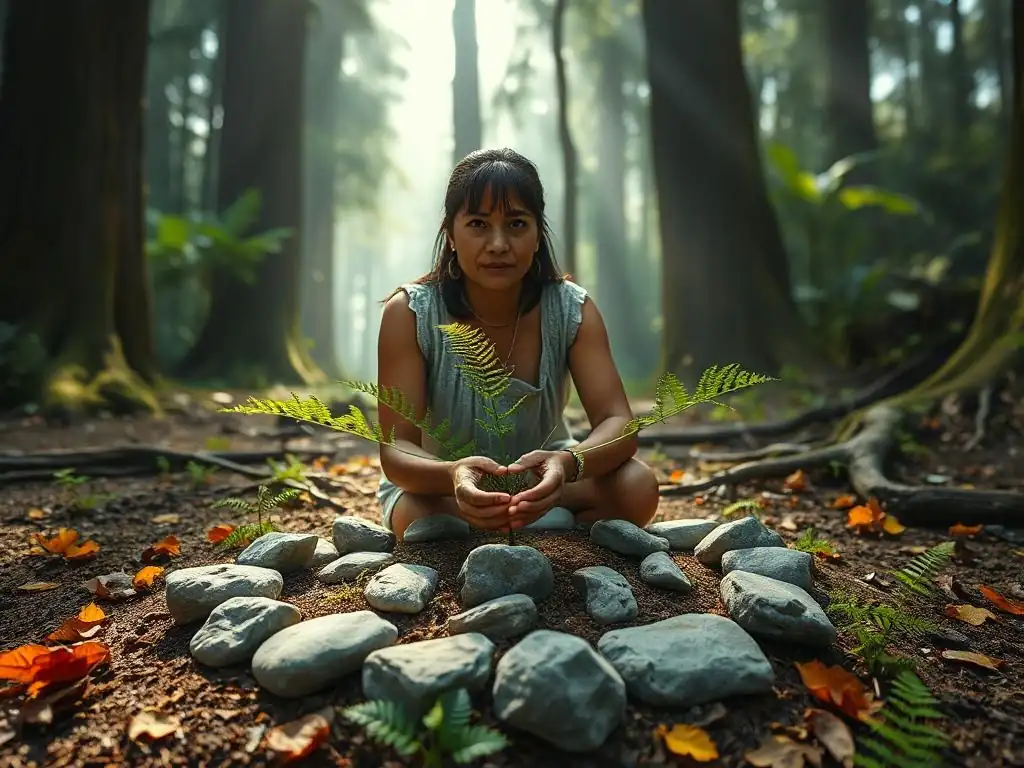
Bridging Traditional Knowledge and Modern Science: Collaborative Research
In recent decades, there has been a growing recognition within the Western scientific community of the profound value of Traditional Ecological Knowledge (TEK) held by Indigenous peoples, particularly by Indigenous women. This shift has led to an increase in collaborative research projects where Indigenous knowledge guides scientific inquiry, leading to more comprehensive and effective ecological solutions. For instance, studies on sustainable resource management in the Arctic have incorporated Inuit women's intricate understanding of sea ice dynamics and marine mammal behavior, providing crucial data for climate change adaptation models that Western science alone might overlook.
Such collaborations often involve Indigenous women leading research teams, sharing their multi-generational observations on plant phenology, animal migrations, and weather patterns. This bridging of knowledge systems enhances both scientific understanding and the efficacy of Indigenous women ecological restoration initiatives. It moves beyond simply "extracting" Indigenous knowledge to fostering true partnerships based on mutual respect and shared goals for environmental well-being.
Documenting the Effectiveness of Indigenous Practices in Ecological Restoration
Scientific studies are increasingly providing empirical validation for the effectiveness of Indigenous practices in ecological restoration. For example, research on traditional prescribed burning practices, long maintained by Indigenous communities in regions like California and Australia, has demonstrated their effectiveness in reducing wildfire intensity, promoting biodiversity, and enhancing forest health, often outperforming conventional fire suppression methods. Data shows that lands managed with traditional burning techniques often exhibit greater resilience and biodiversity compared to areas without such management.
Similarly, studies comparing biodiversity in Indigenous-managed territories versus state-protected areas have frequently found higher levels of biodiversity and ecosystem health in Indigenous-managed lands. This evidence underscores that Indigenous women's ecological restoration strategies are not only culturally significant but also scientifically sound and highly effective. Documenting these successes is crucial for advocating for greater support and integration of Indigenous-led conservation efforts.
The Importance of Respecting Indigenous Intellectual Property Rights
As the value of Indigenous knowledge gains recognition, the ethical imperative to respect and protect Indigenous Intellectual Property Rights (IPR) becomes paramount. Indigenous knowledge, including TEK crucial for Indigenous women ecological restoration, is often collectively owned and intrinsically linked to cultural identity and survival. Without proper protocols, there is a risk of exploitation, appropriation, or commercialization of this knowledge without the free, prior, and informed consent (FPIC) of Indigenous communities.
International frameworks like the United Nations Declaration on the Rights of Indigenous Peoples (UNDRIP) affirm Indigenous peoples' rights to maintain, control, protect, and develop their cultural heritage and traditional knowledge. For any research or project involving Indigenous knowledge, particularly from Indigenous women, it is essential to establish clear benefit-sharing agreements that ensure equitable recognition, compensation, and control. This ensures that the benefits derived from their wisdom contribute directly back to the communities and support their ongoing Indigenous women ecological restoration efforts.
Challenges and Opportunities: Supporting Indigenous Women's Environmental Leadership
Overcoming Systemic Barriers: Addressing Environmental Racism and Inequality
Indigenous women leading ecological restoration initiatives often face formidable systemic barriers rooted in environmental racism and historical inequalities. They are disproportionately impacted by pollution, resource extraction, and climate change, yet frequently marginalized from decision-making processes. For example, Indigenous communities are often located near industrial sites or resource extraction zones, leading to higher rates of health issues linked to environmental contamination.
Furthermore, Indigenous women environmental defenders face significant risks, including violence and criminalization, for protecting their lands and waters. A report by Global Witness noted that Indigenous peoples consistently represent a large percentage of environmental defenders killed globally, with women facing additional gender-specific threats. Addressing these systemic injustices requires dismantling colonial structures, ensuring land rights, and implementing policies that protect and empower Indigenous women, recognizing their vital role in Indigenous women ecological restoration.
Empowering Indigenous Women Through Education and Training
Despite the challenges, there are growing opportunities to empower Indigenous women through culturally relevant education and training programs. These initiatives aim to strengthen their leadership capacities, enhance technical skills for ecological restoration, and provide platforms for knowledge exchange. Such programs often blend traditional knowledge with modern scientific methods, creating a holistic approach to environmental management.
For instance, workshops on grant writing, project management, and advocacy skills can equip Indigenous women with the tools to secure funding and influence policy for their restoration projects. Simultaneously, initiatives that facilitate intergenerational knowledge transfer within communities ensure that traditional ecological wisdom continues to be passed down. By supporting Indigenous women's access to both ancestral knowledge and contemporary skills, their capacity to lead effective Indigenous women ecological restoration efforts is significantly enhanced.
Fostering Collaboration: Building Partnerships for Effective Ecological Restoration
Effective ecological restoration on a larger scale often requires collaboration, and fostering equitable partnerships between Indigenous communities, governments, non-governmental organizations, and academic institutions presents a crucial opportunity. These collaborations should be built on principles of mutual respect, trust, and shared decision-making, ensuring that Indigenous voices and priorities are centered. Models of co-management for protected areas or watersheds, where Indigenous and non-Indigenous entities share responsibility and authority, have shown promise.
For example, partnerships that provide technical support or funding while respecting Indigenous sovereignty and leadership can amplify the impact of Indigenous women ecological restoration projects. Such collaborations can leverage diverse resources and expertise, enabling Indigenous-led initiatives to scale up and achieve broader environmental benefits, from reforestation to water quality improvement across larger geographical areas.
The Future of Ecological Harmony: Learning from Indigenous Women's Wisdom
Reclaiming Traditional Practices: A Path Towards Sustainable Living
The global environmental crisis necessitates a paradigm shift towards more sustainable ways of living, and reclaiming traditional practices offers a powerful path forward. Indigenous women are leading this resurgence, demonstrating how ancestral knowledge can guide contemporary solutions for sustainable resource management, food production, and community resilience. This reclamation is not simply about historical preservation; it is a dynamic process of adaptation and innovation, integrating ancient wisdom with current realities.
For instance, the resurgence of traditional food systems, often led by Indigenous women, promotes biodiversity, reduces reliance on industrial agriculture, and strengthens local economies. These practices offer blueprints for societies seeking to reduce their ecological footprint and live in greater harmony with nature. Embracing these traditional approaches, particularly those championed by Indigenous women, is fundamental to a more sustainable future for all.
Integrating Indigenous Knowledge into Environmental Policy and Management
For too long, environmental policies and management strategies have largely overlooked or dismissed Indigenous knowledge systems. However, there is a growing imperative to integrate Indigenous knowledge into mainstream environmental governance, recognizing its scientific validity and practical effectiveness. This involves more than just consultation; it means genuine co-creation of policies and management plans that reflect Indigenous worldviews and priorities.
Examples include integrating Indigenous fire management techniques into national forest policies, incorporating traditional water stewardship practices into watershed management plans, and drawing on Indigenous climate observations for adaptation strategies. The leadership of Indigenous women in these policy dialogues is crucial, ensuring that the unique perspectives and knowledge of women, often overlooked even within Indigenous governance structures, are fully represented in shaping environmental policy for effective Indigenous women ecological restoration.
Inspiring Future Generations: Passing on the Legacy of Ecological Stewardship
The continuity of Indigenous women's ecological restoration efforts hinges on the successful transmission of knowledge and values to future generations. Indigenous women actively work to ensure that their children and grandchildren understand their responsibilities to the land, teaching them through storytelling, hands-on learning, and ceremonial participation. This intergenerational learning is vital for maintaining cultural identity and ensuring the long-term health of ecosystems.
By sharing their wisdom and leadership, Indigenous women serve as powerful role models, inspiring young people to embrace their heritage and become active stewards of the environment. Their dedication ensures that the legacy of ecological harmony and sustainable living continues to flourish, empowering the next generation to carry forward the critical work of Indigenous women ecological restoration.
Conclusion: Recognizing and Celebrating Indigenous Women as Guardians of the Earth
The profound contributions of Indigenous women to ecological restoration are undeniable, weaving together spiritual reverence, traditional knowledge, and tireless advocacy. Their sacred practices offer a holistic framework for healing the Earth, demonstrating that true environmental recovery requires not only scientific understanding but also a deep, reciprocal relationship with the natural world. From the successful restoration of the Klamath River to the reforestation efforts in the Amazon, Indigenous women are leading powerful movements that are vital for both local ecosystems and global climate resilience.
Recognizing and celebrating Indigenous women as indispensable guardians of the Earth is more than an act of acknowledgment; it is a crucial step towards a sustainable future. Their wisdom, resilience, and unwavering commitment provide invaluable lessons for all, reminding us that by honoring the knowledge and leadership of Indigenous women, we can restore balance to our planet and foster a truly harmonious relationship with Mother Earth.
Frequently Asked Questions
What is ecological restoration and why is it important?
Ecological restoration involves actively assisting the recovery of a degraded, damaged, or destroyed ecosystem. It's crucial for biodiversity conservation and mitigating climate change.
How do Indigenous women's sacred practices contribute to ecological restoration?
These practices often encompass a deep understanding of local ecosystems and sustainable resource management. They are rooted in a respectful relationship with nature and prioritize long-term balance.
What are some examples of how Indigenous women have used their knowledge for ecological restoration?
Examples include traditional fire management, seed saving for native plant propagation, and water management techniques based on ancestral knowledge passed down through generations.
What challenges do Indigenous women face in leading ecological restoration efforts?
They often face lack of recognition from mainstream science, limited access to funding and resources, and the need to reclaim traditional knowledge lost due to colonization.
Why is it important to highlight the contributions of Indigenous women in science and ecological restoration?
It is crucial to decolonize science and acknowledge the value of diverse knowledge systems. Recognizing their contributions helps promote environmental justice and inspire future generations.
Final Reflection: Weaving a Future of Harmony
The threads of Indigenous women's sacred practices, so carefully examined throughout this article, are not relics of the past, but rather vital strands in the tapestry of our planet's future. The urgent need for ecological restoration demands that we not only acknowledge, but actively integrate, the wisdom and stewardship of those who have maintained a deep connection with the Earth for generations.
The enduring power of these practices lies in their holistic approach, recognizing the interconnectedness of all living things. Personally, witnessing the resilience and unwavering commitment of Indigenous women to protecting their ancestral lands has been profoundly inspiring, reinforcing the belief that true ecological restoration must be rooted in respect and reciprocity. We do not inherit the Earth from our ancestors; we borrow it from our children.
This ancient proverb encapsulates the essence of Indigenous stewardship, a perspective that is desperately needed in our modern world.
Let us all, then, take a moment to reflect on the lessons shared within these pages. How can we, in our own lives and communities, honor the sacredness of the Earth and support the vital work of Indigenous women in ecological restoration? Let us strive to become active participants in weaving a future where ecological harmony and cultural preservation thrive together, ensuring a sustainable and just world for generations to come.
Embrace Earth's Wisdom: Reconnect & Revitalize!
Thank you for delving into the powerful practices of Indigenous women and their vital role in ecological harmony. Now, let’s translate this inspiration into action and become stewards of our planet.
- Commit to supporting Indigenous-led conservation efforts in your local area or globally. Research organizations and initiatives that directly empower Indigenous communities to protect their ancestral lands and traditional ecological knowledge.
- Explore incorporating elements of Indigenous wisdom into your daily life. Reflect on ways to reduce your environmental impact and live more sustainably, learning from traditional practices.
- Share this article with your network and spark conversations about the importance of recognizing and amplifying the voices of Indigenous women in environmental stewardship.
What small but meaningful step will you take today to honor the Earth and support Indigenous wisdom?