Ynes Mexia: How a Late Bloomer Became One of Botany's Most Prolific Collectors
🌺 Discover how Ynes Mexia, a remarkable Ynes Mexia botany collector, transformed her late start into a prolific career, breaking barriers in…
Read article
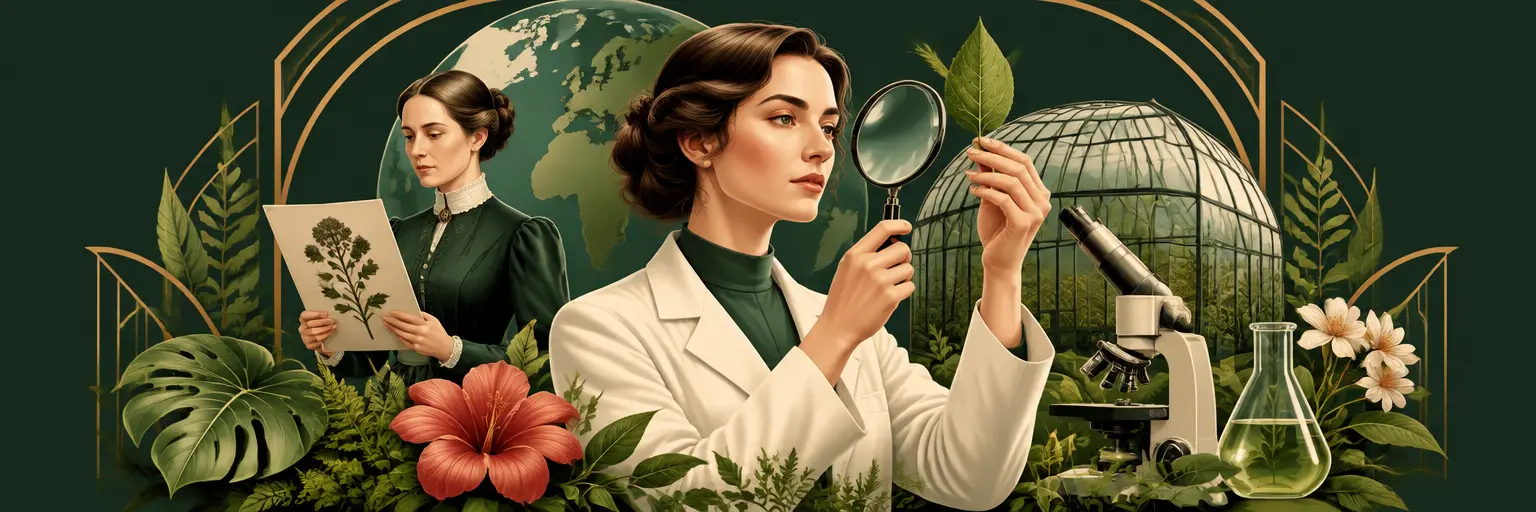
Discover the untold stories of remarkable women in botany who transformed our understanding of the natural world. From pioneering plant hunters to groundbreaking geneticists, these trailblazing female scientists defied societal norms to catalog, classify, and conserve Earth’s botanical treasures. Their meticulous research laid the foundations for modern ecology, agriculture, and medicine—yet their names often remain in the shadows of their male counterparts. At WomenInScienceHistory.com, we celebrate these hidden figures of environmental science, exploring how their passion for flora overcame barriers of gender, class, and geography. Delve into the lives of botanists who braved remote jungles, challenged colonial narratives, and revolutionized our grasp of plant evolution. Whether it’s unraveling the secrets of photosynthesis or preserving endangered species, these women’s legacies continue to shape sustainable futures. Join us in honoring their resilience, curiosity, and unparalleled contributions to the green sciences—because every leaf has a story, and these women wrote some of the most inspiring chapters.
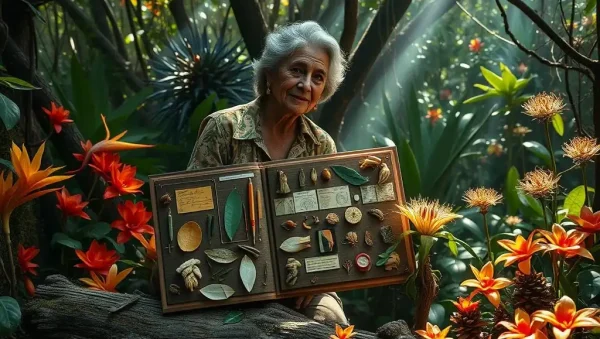
🌺 Discover how Ynes Mexia, a remarkable Ynes Mexia botany collector, transformed her late start into a prolific career, breaking barriers in…
Read article
🌸 Celebrating women botanical illustration history details, this article honors pioneering women artists who intricately captured nature’s beauty. Their blend of art…
Read article
🌱 Beatrix Potter, renowned for her beloved children's stories, also made significant contributions to mycology. Her quest for mycological recognition highlights her…
Read article
🌱 Celebrating WomenInScienceHistory.com, discover how women's botany historical contributions continue to influence science today. Their pioneering work, often overlooked, has paved the…
Read article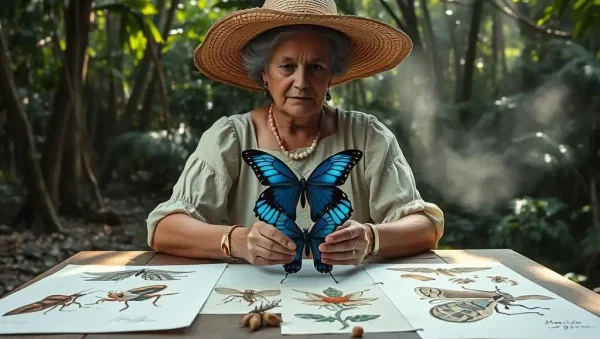
🌸 Celebrating Maria Sibylla Merian, a trailblazing artist whose insect art unveiled the complex ecosystems of plants and insects, inspiring generations and…
Read articleWelcome to the Women in Botany subcategory, a dedicated space within our Environmental Science section at WomenInScienceHistory.com. Here, we delve into the remarkable lives and achievements of the female botanists who transformed our understanding of plant life, ecology, and environmental conservation. From Victorian-era explorers who risked everything to classify exotic flora to modern-day molecular biologists unlocking the secrets of plant genetics, these women defied societal norms and scientific barriers. This collection highlights their groundbreaking research, the systemic challenges they overcame, and their enduring influence on environmental science, providing rich, searchable content for students, researchers, and history enthusiasts alike.
This section shines a spotlight on the fearless women who traveled the globe to document and preserve plant biodiversity. Figures like Marianne North, who painted over 800 species across six continents, and Ynés Mexía, a Mexican-American botanist who collected over 150,000 plant specimens in the early 20th century, are featured in detail. Their expeditions were often perilous, yet their herbarium specimens and detailed field notes remain invaluable for modern climate change research and conservation biology. Expect in-depth biographies, maps of their routes, and insights into how their collections shaped taxonomic classifications we still use today.
Readers will also discover lesser-known explorers such as Anna Atkins, who pioneered botanical photography, and Jeanne Baret, who disguised herself as a man to circumnavigate the globe. These narratives emphasize not only their scientific contributions but also the inventive strategies they employed to bypass restrictions on women’s participation in field science. By profiling these adventurers, we aim to illustrate that botanical exploration was never exclusively a male pursuit, and that their determined fieldwork laid the groundwork for contemporary ethnobotany and ecosystem studies.
Dive into the laboratory achievements of women like Barbara McClintock, whose discovery of “jumping genes” in maize revolutionized genetics, and Katharina von Wistinghausen, who expanded our knowledge of plant cell development. This segment explains complex concepts such as chromosomal crossover, transposition, and meiotic segregation in accessible language, linking each breakthrough to the specific women who made it. You’ll also find timelines of their key publications, experiment diagrams, and explanations of how their findings are applied in modern crop engineering and sustainable agriculture.
Furthermore, we highlight researchers like Edith Rebecca Saunders, a pioneer in plant genetics who co-founded the field of Mendelian inheritance, and Elizabeth F. Jones, who studied plant cytogenetics in wheat. Their work on heredity and chromosome behavior not only advanced basic science but also enabled future breakthroughs in hybrid crop development and pest resistance. Through detailed case studies and primary source excerpts, this section demonstrates how female botanists have been central to the genetic revolution, often without receiving proportional credit in historical narratives.
Here, we celebrate the women who linked botany to environmental policy and conservation long before the term “ecology” became mainstream. Focus on figures like Ruth Patrick, a pioneer of freshwater ecology who used diatom communities to assess river pollution, and Rachel Carson, whose “Silent Spring” (1962) catalysed the global environmental movement. This content explores their methodologies, from quantitative sampling techniques to public advocacy strategies, and contextualizes their work within the broader history of conservation legislation in the 20th century.
Additionally, the section profiles modern conservationists like Inger Andersen and Wangari Maathai, who integrated botanical knowledge with grassroots activism. Maathai’s Green Belt Movement, which has planted over 51 million trees in Kenya, exemplifies how botanical science can drive social and environmental justice. Expect comparative analyses of their conservation frameworks, discussions on indigenous plant knowledge integration, and practical lessons for today’s environmental scientists. We aim to show that the bridge between rigorous botanical research and effective ecological stewardship has often been built by women.
This segment examines the educational and professional hurdles female botanists faced within universities, herbaria, and professional societies. Learn how women like Elizabeth Gertrude Britton, co-founder of the New York Botanical Garden, navigated male-dominated institutions to secure funding and lab space, and how Agnes Arber used private study to become one of the 20th century’s most influential morphologists despite being barred from formal academic posts. We present archival evidence, including exclusionary policies, limited scholarship opportunities, and gender-based wage gaps, to frame their resilience.
Institutional breakthroughs are also documented, such as the founding of the American Society of Plant Taxonomists’ Women’s Committee and the election of Ethel Sargant as president of the Botanical Society of the British Isles. We trace the evolution of female representation in top-tier journals, from only 2% of papers in the 1930s to over 40% today, using data visualizations. This analysis helps readers appreciate both the systemic prejudice that once prevailed and the incremental, often hard-won victories that paved the way for current female researchers in plant sciences.
Our final body section focuses on women botanists from non-Western regions whose work has preserved indigenous plant knowledge and fostered global collaboration. Profiles include Janaki Ammal, an Indian cytogeneticist who developed high-yielding sugarcane varieties and founded the Palode Botanical Garden, and Zamineh Poursaid, who catalogued medicinal plants across the Middle East. We emphasize collaborative projects, such as the KEEP (Knowledge Exchange for Ethnobotany Program), where female researchers partner with local communities to document traditional uses of flora before they are lost.
Also spotlighted are figures like María Sibylla Merian’s modern successors, including Karla Díaz and N’Deye Fatou Ngom, who merge ethnobotany with climate adaptation strategies. This content explores how these women navigate cultural expectations while championing data sovereignty and equitable benefit-sharing from genetic resources. By broadening the geographic lens, we demonstrate that the field of botany is enriched by diverse perspectives, and that protecting global biodiversity relies on women’s leadership in documenting and honoring indigenous botany.
Often cited is Hildegard of Bingen, a 12th-century abbess who wrote extensively on plant healing properties in her work “Physica.” However, for formal scientific classification, Mary Delany’s intricate paper mosaics in the 1700s and Jeanne Baret’s 18th-century global collections are also landmark candidates. Early contributions were rarely credentialed due to gender restrictions, but these figures’ records remain foundational.
McClintock discovered transposable elements, or “jumping genes,” in maize in the 1940s, showing that genetic elements can move within a genome. This was initially dismissed but later earned her a Nobel Prize in 1983. Her work fundamentally changed plant genetics and gene regulation understanding.
Online archives like the Biodiversity Heritage Library, JSTOR Global Plants, and the New York Botanical Garden’s digital collections offer digitized herbarium sheets, field notebooks, and correspondence. Also, the Women’s Studies Archives at universities like Cambridge and Harvard provide curated collections with searchable indices.
Historiography traditionally prioritized published papers over field logs, and women were frequently unpaid assistants or excluded from authorship. Institutional biases meant their names appeared in footnotes or acknowledgements. Recent scholarship, however, has re-evaluated such archives to correct this imbalance.
The Society for Women in Botany and the Association for Women in Science offer mentorship, grants, and networking. Additionally, programs like the National Geographic Society’s Women in Science Initiative fund fieldwork for early-career female botanists globally.