
Mapping the Unseen: Indigenous Women's Spatial Knowledge and Environmental Navigation

Welcome to WomenInScienceHistory.com!
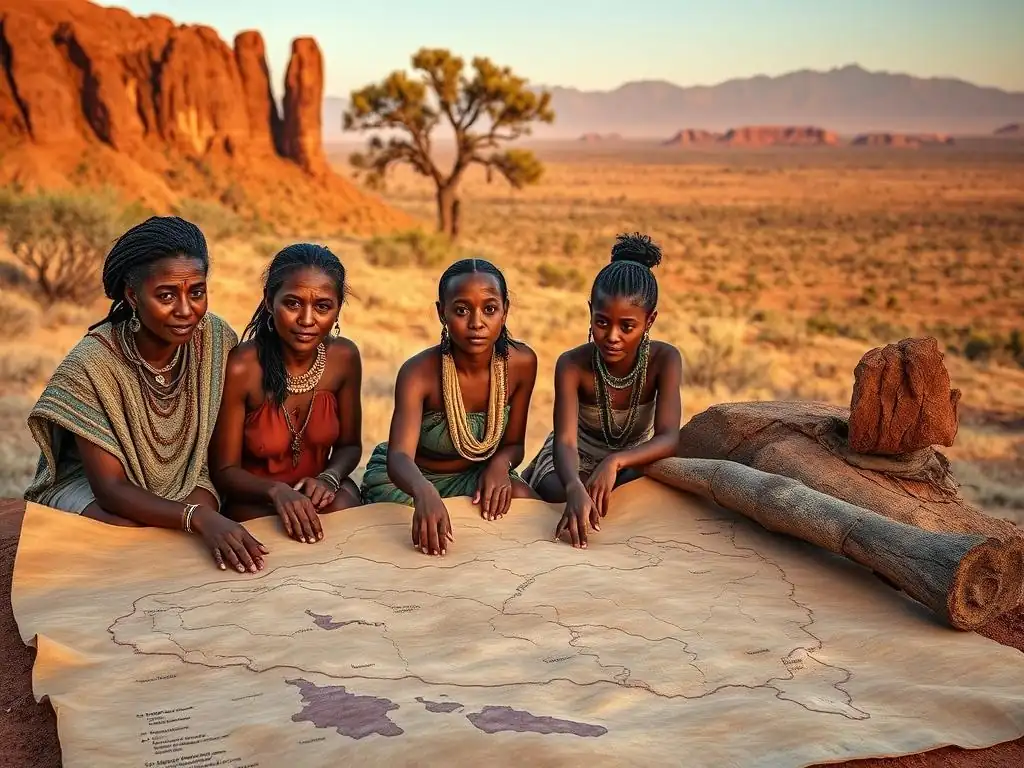
Delve into the fascinating world of science through the lens of remarkable women. This month, we're charting a course into Environmental Science with a captivating exploration of Indigenous women's spatial knowledge and environmental navigation. But how did these women develop such profound understanding, and what can we learn from their ancestral wisdom? Prepare to uncover hidden maps and untold stories, starting with "Mapping the Unseen: Indigenous Women's Spatial Knowledge and Environmental Navigation."
- Introduction: Celebrating Indigenous Women's Contributions to Environmental Science
- The Deep Roots of Indigenous Women's Environmental Navigation
- Case Studies: Indigenous Women's Navigation in Diverse Environments
- The Science Behind Indigenous Women's Spatial Knowledge
- Challenges Faced by Indigenous Women in Preserving Their Navigational Heritage
- The Importance of Preserving and Revitalizing Indigenous Women's Environmental Knowledge
- Indigenous Women's Environmental Navigation: A Legacy for Future Generations
- Conclusion: Acknowledging and Amplifying Indigenous Women's Voices in Environmental Science
-
Frequently Asked Questions
- What is meant by "Indigenous women's spatial knowledge" in the context of environmental navigation?
- How does Indigenous women's environmental navigation differ from Western scientific approaches?
- What challenges have Indigenous women faced in having their environmental knowledge recognized and valued?
- In what ways can modern science benefit from incorporating Indigenous women's environmental navigation knowledge?
- Why is it important to highlight the contributions of Indigenous women to environmental navigation?
- Final Reflection: Honoring Indigenous Wisdom in Environmental Stewardship
- Unearth Your Connection: Advocate for Indigenous Wisdom!
Introduction: Celebrating Indigenous Women's Contributions to Environmental Science
Highlighting the Overlooked Expertise of Indigenous Women
For centuries, Indigenous women have been the unacknowledged cartographers and navigators of their ancestral lands, possessing a profound spatial knowledge that Western science is only beginning to fully appreciate. Their expertise in environmental navigation extends beyond mere directional sense; it encompasses an intricate understanding of ecosystems, weather patterns, resource distribution, and the subtle cues of the natural world. This deep, place-based knowledge, often embedded in daily practices, oral traditions, and ceremonies, has historically been overlooked or dismissed by mainstream scientific frameworks, largely due to colonial biases and a lack of recognition for non-Western forms of knowledge.
This rich tapestry of knowledge, passed down through generations, is critical for the survival and sustainable living of Indigenous communities. From identifying medicinal plants in dense forests to predicting weather changes for safe travel across vast oceans, Indigenous women's contributions to environmental science are foundational, even if they haven't always been labeled as such. Their ability to read the landscape, interpret animal behavior, and understand seasonal shifts represents a sophisticated form of empirical observation and ecological analysis that predates modern scientific methodologies.
Recognizing Female Pioneers in Science
The Women in Science History platform aims to illuminate the often-unseen narratives of women who have shaped scientific understanding. In this spirit, Indigenous women stand as true pioneers in environmental science, their contributions often preceding and, in many ways, surpassing contemporary understandings of sustainability and ecological balance. While they may not have published papers in academic journals or held formal scientific titles, their systematic observation, experimentation, and transmission of knowledge through generations exemplify scientific rigor.
These women faced immense challenges, not only due to gender biases inherent in many societal structures but also from the systemic suppression of Indigenous cultures during colonial eras. Their knowledge systems were devalued, their languages suppressed, and their access to traditional territories often denied. Despite these obstacles, Indigenous women continued to be the guardians of vital ecological and navigational wisdom, demonstrating remarkable resilience and an unwavering commitment to their communities and the environment. Their stories are crucial for a comprehensive understanding of human scientific endeavor.
Traditional Ecological Knowledge (TEK) and Indigenous Women's Role
Traditional Ecological Knowledge (TEK) is a cumulative body of knowledge, practice, and belief, evolving by adaptive processes and handed down through generations by cultural transmission, about the relationship of living beings (including humans) with their environment. Indigenous women are often the primary custodians and transmitters of this holistic knowledge, particularly concerning plant identification, water sources, soil quality, and seasonal changes—all critical elements for effective environmental navigation and resource gathering.
For instance, among the Cree communities in Canada, women hold extensive knowledge of medicinal plants, their specific locations, and the optimal times for harvest, which requires precise spatial awareness and understanding of the land's cycles.
This vital knowledge is not merely anecdotal; it is systematically taught and learned from an early age through immersive experiences, storytelling, songs, and practical demonstrations within the community. Girls learn to identify subtle shifts in the environment, such as changes in wind direction, the texture of snow, or the behavior of specific bird species, which are crucial indicators for safe travel and successful foraging. This deep engagement ensures that the intricate details of Indigenous women environmental navigation are internalized and continually refined.
Indigenous women develop highly sophisticated spatial awareness, often incorporating multi-sensory information to navigate complex terrains. Their navigation systems are not reliant on maps or compasses in the Western sense but on a profound connection to their environment. This includes celestial navigation, where stars and constellations are used to determine direction and time; reading land features such as mountain ranges, river bends, and unique rock formations; and interpreting subtle cues from animal behavior, wind patterns, and even the scent of vegetation.
For example, in many Aboriginal Australian communities, women possess extensive knowledge of "songlines" or "dreaming tracks," which are navigational pathways across the landscape, encoded with stories, songs, and cultural information about waterholes, food sources, and safe routes. These intricate mental maps, passed down orally and through ceremonial performances, provide detailed guidance across vast and often featureless landscapes. The intergenerational transfer of this complex Indigenous women environmental navigation expertise ensures the continuity of cultural practices and the sustained well-being of the community.
Amazon Rainforest: The Kayapó People's Deep Understanding of the Amazon River System
In the vast expanse of the Amazon rainforest, the Kayapó people, particularly their women, possess an unparalleled understanding of the Amazon River system and its surrounding terrestrial environment. Kayapó women are expert navigators of the river's intricate network of tributaries, floodplains, and seasonal changes. They can discern the subtle shifts in water currents, identify safe passages through submerged vegetation, and predict flood levels, which are crucial for daily travel, fishing, and accessing vital resources. Their knowledge extends to identifying hundreds of plant species and their precise locations, crucial for foraging, identifying medicinal plants, and understanding the forest's productivity.
This deep knowledge is not abstract; it is practiced daily. For instance, when collecting Brazil nuts or acai berries, Kayapó women demonstrate an intimate knowledge of the forest's topography, identifying specific trees by their appearance, the quality of the soil, and the surrounding flora. They use natural landmarks, the position of the sun, and the calls of specific birds to orient themselves within the dense jungle, showcasing a form of Indigenous women environmental navigation that is essential for survival and sustainable resource management in one of the world's most biodiverse regions.
In the harsh, often featureless Arctic regions, Inuit women have honed extraordinary navigational skills on ice and snow, essential for safe travel and survival. Their expertise lies in reading the nuanced characteristics of ice (e.g., thickness, type, stability, and potential for leads or cracks) and snow (e.g., depth, density, and potential for drifts or avalanches).
This knowledge is critical for determining safe routes for sled travel, identifying suitable hunting grounds, and locating temporary shelters during unpredictable blizzards. Inuit elders, including women, can differentiate between over 30 types of snow and ice, a skill vital for safe passage across the Arctic landscape.
Furthermore, Inuit women possess an acute awareness of subtle changes in weather patterns, wind direction, and cloud formations, which are all vital navigational cues in an environment where visibility can quickly diminish. They understand how these elements interact with the terrain, influencing snowdrifts and ice conditions. Their ability to interpret these environmental indicators, often through generations of observation and lived experience, represents a sophisticated form of Indigenous women environmental navigation that is directly tied to the well-being and resilience of their communities in extreme conditions.
While traditional oceanic wayfinding in the Pacific Islands is often attributed primarily to men, Micronesian women have played an equally crucial, though less publicized, role in the preservation and transmission of this profound navigational knowledge. Their contributions extend beyond the immediate act of sailing to the meticulous preparation, deep understanding of marine ecosystems, and the teaching of complex navigational principles. Women were instrumental in understanding ocean currents, wave patterns, the subtle shifts in swell direction caused by distant islands, and the intricate star charts used for long-distance voyages.
In many island cultures, women were key in teaching younger generations the intricate patterns of swells and stars, even if not always the primary navigators themselves. They understood the life cycles of marine animals, the migratory paths of birds, and the unique cloud formations that signal the presence of land—all vital cues for wayfinding.
For instance, in the Marshall Islands, women's knowledge of stick charts, which represent ocean swells and island locations, was crucial for teaching and reinforcing navigational principles. This holistic understanding of the ocean environment exemplifies their profound Indigenous women environmental navigation skills, ensuring the continuity of voyaging traditions and the survival of their island communities.
The Science Behind Indigenous Women's Spatial Knowledge
Cognitive Mapping and Mental Representations of Landscapes
Indigenous women develop highly sophisticated cognitive maps, or mental representations, of their territories that far exceed the capabilities of conventional cartography. These maps are not static two-dimensional diagrams but dynamic, multi-layered constructs that integrate ecological knowledge, historical events, spiritual significance, resource locations, and a deep understanding of environmental processes.
For example, a Navajo woman navigating her ancestral lands might rely on a mental map that includes not just the physical contours of the mesas and canyons, but also the seasonal availability of water sources, the migratory paths of deer, the locations of sacred sites, and the historical narratives associated with specific landmarks.
This intricate cognitive mapping process involves integrating sensory information—visual cues, sounds, smells, and even the feel of the terrain—with accumulated knowledge. This allows for flexible and adaptive navigation, particularly in environments where conditions can change rapidly. The ability to hold and utilize such complex mental representations is a testament to the advanced cognitive skills developed through generations of lived experience and systematic learning, underpinning their expertise in Indigenous women environmental navigation.
Across diverse Indigenous cultures, women have played a critical role in understanding and utilizing celestial bodies for navigation, particularly in oceanic or desert environments where distinct land features are scarce. This mastery of star navigation involves recognizing specific constellations, understanding their seasonal movements, and knowing how their rising and setting points indicate precise directions. For instance, Polynesian women understood the intricate patterns of the night sky, using stars like Hokule'a (Arcturus) as a primary directional guide for long-distance voyages across the Pacific.
Beyond stars, Indigenous women also possess an acute awareness of other environmental cues. They interpret the subtle shifts in wind patterns, the behavior of migrating birds, the presence of specific cloud formations, and even the scent of distant land or rain. These seemingly small details combine to form a comprehensive navigational system. For example, in the Australian desert, Aboriginal women recognize specific animal tracks and plant types that indicate the proximity of water sources, guiding their movements across vast arid landscapes—a testament to their holistic approach to Indigenous women environmental navigation.
The Interplay of Traditional Knowledge and Scientific Observation
The spatial knowledge held by Indigenous women is not merely anecdotal; it is the result of centuries of systematic observation, empirical testing, and iterative refinement, much like modern scientific methods. Their understanding of environmental dynamics is built upon generations of direct interaction with their ecosystems, leading to highly accurate predictions and sustainable practices. For example, the careful observation of plant flowering cycles and animal migration patterns by Indigenous women in the Pacific Northwest has allowed them to predict salmon runs with remarkable accuracy, ensuring sustainable harvesting practices.
This traditional knowledge often aligns with or complements modern scientific principles, offering unique insights into complex environmental challenges. Collaborative projects, where Western scientists work alongside Indigenous elders (including women), have demonstrated the immense value of integrating these knowledge systems. For instance, in parts of the Arctic, Inuit women's predictions of sea ice conditions, based on their traditional knowledge, have proven to be as accurate, if not more so, than satellite data for localized areas, highlighting the rigorous and empirically grounded nature of their Indigenous women environmental navigation expertise.
Colonialism and the Disruption of Traditional Knowledge Systems
Colonialism has profoundly disrupted the intergenerational transmission of Indigenous women environmental navigation skills and traditional knowledge systems. Policies of forced assimilation, the imposition of Western education models, and the suppression of Indigenous languages led to a devaluation of traditional skills and practices. Children were often removed from their families and communities, severing the vital direct learning environment where spatial knowledge is traditionally acquired through observation and practice. This systemic suppression created significant gaps in the transmission of knowledge from elders to younger generations.
Furthermore, the introduction of Western technologies like GPS and formal mapping, while offering certain conveniences, often supplanted the need for traditional navigational methods, leading to a decline in their active practice and appreciation. The perception that Indigenous knowledge was primitive or unscientific further marginalized the women who were its primary custodians, making it harder to maintain and pass on this invaluable heritage.
The accelerating pace of climate change poses an unprecedented threat to the preservation of Indigenous women environmental navigation knowledge. Rapidly changing environments, such as melting glaciers, unpredictable river flows, altered seasonal patterns, and rising sea levels, render traditional navigational cues unreliable or even dangerous. For instance, Inuit communities in the Arctic are facing drastically unpredictable ice conditions due to rapid warming, making traditional travel routes hazardous and difficult to navigate using centuries-old knowledge of ice behavior.
These environmental shifts directly impact the safety and livelihoods of communities that rely on these traditional skills for hunting, foraging, and travel. The loss of familiar landmarks, the disappearance of ice roads, and changes in animal migration patterns disrupt the very fabric of traditional environmental understanding, making it challenging for Indigenous women to apply and teach knowledge that is inherently tied to stable environmental conditions.
Loss of Land and Access to Traditional Territories
The dispossession of land and restricted access to traditional territories have severely hampered the ability of Indigenous women to preserve and practice their navigational heritage. Resource extraction, industrial development, urbanization, and the establishment of protected areas without Indigenous consent have severed the physical and cultural ties to the landscapes where navigational knowledge is applied and learned. Without the ability to move freely across their ancestral lands, the practical application and intergenerational transmission of Indigenous women environmental navigation skills diminish significantly.
For example, Indigenous women whose knowledge of medicinal plants and foraging routes is tied to specific forest areas find their expertise undermined when those lands are clear-cut or privatized. This loss of direct connection to the land not only impacts their ability to practice traditional navigation but also erodes the cultural contexts and spiritual relationships that underpin this knowledge, making its preservation an uphill battle.
The Importance of Preserving and Revitalizing Indigenous Women's Environmental Knowledge
Community-Based Conservation and Resource Management
Preserving and revitalizing Indigenous women environmental navigation knowledge is paramount for effective community-based conservation and sustainable resource management. When Indigenous women's insights are integrated into conservation strategies, the outcomes are often more holistic, culturally appropriate, and successful. Their deep understanding of local ecosystems, biodiversity, and sustainable harvesting practices offers time-tested approaches to environmental stewardship. For example, Indigenous women in the Amazon have been at the forefront of mapping and protecting their ancestral lands against illegal logging and mining, demonstrating effective resource management and conservation through traditional practices.
Their leadership in community-based initiatives often ensures that conservation efforts are rooted in local values and benefit the community directly, rather than being imposed from external entities. This approach fosters resilience and strengthens the capacity of communities to manage their natural resources sustainably for future generations.
Integrating Indigenous Knowledge into Modern Scientific Practices
The integration of Indigenous knowledge into modern scientific practices offers a powerful pathway to more comprehensive and nuanced solutions for global environmental challenges. Collaborations between Western scientists and Indigenous knowledge holders, including women, can lead to groundbreaking insights that neither discipline could achieve alone. For instance, combining Indigenous women's observations of localized weather patterns and ecological changes with satellite data can provide more accurate and context-specific climate change predictions and adaptation strategies.
This synergy enriches scientific understanding, provides diverse perspectives, and leads to more effective and culturally sensitive conservation policies. Recognizing Indigenous knowledge as a valid and rigorous scientific system, rather than merely an anecdotal collection of beliefs, is crucial for fostering genuine partnerships and harnessing the full potential of Indigenous women environmental navigation wisdom for the benefit of all.
Empowering Indigenous Women as Environmental Stewards
Empowering Indigenous women as environmental stewards is not only a matter of justice but also an imperative for global sustainability. Their unique perspectives, deep-rooted knowledge of local ecosystems, and proven leadership in conservation make them indispensable agents of change. Supporting Indigenous women means recognizing their intellectual property, providing resources for their initiatives, and amplifying their voices in policy-making spaces. For example, Indigenous women's collectives around the world are leading efforts in seed saving, water protection, and sustainable agriculture, drawing upon their ancestral knowledge to build resilient communities.
By elevating their roles, we acknowledge their historical and ongoing contributions to environmental protection and ensure that their invaluable Indigenous women environmental navigation skills and ecological wisdom continue to guide sustainable development efforts worldwide. This empowerment fosters self-determination and strengthens the capacity of Indigenous communities to protect their lands and cultures.
Inspiring Future Scientists and Environmental Leaders
Showcasing the profound achievements of Indigenous women in environmental navigation and understanding can serve as a powerful source of inspiration for future generations of scientists and environmental leaders, both Indigenous and non-Indigenous. By highlighting their sophisticated knowledge systems and resilience, we broaden the definition of "scientist" and demonstrate that valuable scientific contributions come in many forms and from diverse cultural backgrounds. This narrative encourages young people to explore various pathways to knowledge and to appreciate the deep connections between culture, environment, and scientific inquiry.
Learning about the intricate ways Indigenous women have navigated vast oceans, dense forests, and harsh deserts fosters an appreciation for empirical observation, adaptive thinking, and sustainable living. It encourages a holistic approach to environmental challenges, inspiring a new generation to integrate traditional wisdom with modern scientific tools to address complex global issues.
The Role of Education in Passing Down Traditional Knowledge
Education plays a pivotal role in ensuring the continuity of Indigenous women environmental navigation skills and traditional knowledge. This involves supporting Indigenous-led education initiatives, language revitalization programs, and cultural immersion experiences that facilitate intergenerational learning within communities. For example, programs in Māori communities in New Zealand are revitalizing traditional navigation through the construction of waka (traditional canoes) and long-distance voyages, where elders transmit complex wayfinding knowledge to youth in a practical, experiential setting.
Such educational efforts ensure that traditional knowledge is not just preserved in archives but remains a living, evolving practice. They empower Indigenous youth to connect with their heritage, value their ancestral wisdom, and become active participants in the transmission of this vital environmental knowledge, thereby securing its legacy for many generations to come.
Recognizing the Value of Indigenous Knowledge for Sustainable Development
Recognizing the immense value of Indigenous knowledge, particularly that held by women, is crucial for achieving sustainable development goals worldwide. Indigenous women's traditional ecological knowledge offers time-tested, place-based solutions for food security, climate change adaptation, biodiversity conservation, and resilient communities. Their deep understanding of local ecosystems and sustainable resource management practices provides invaluable insights into how to live in harmony with the environment.
Integrating this knowledge into national and international sustainable development frameworks is essential for creating more effective, equitable, and culturally appropriate solutions. It shifts the paradigm from top-down development to approaches that empower local communities and respect their inherent rights and wisdom. The sophisticated Indigenous women environmental navigation skills are a testament to their enduring contribution to global sustainability.
Conclusion: Acknowledging and Amplifying Indigenous Women's Voices in Environmental Science
The Urgent Need to Protect Indigenous Women's Intellectual Property
The traditional ecological and navigational knowledge held by Indigenous women is a unique form of intellectual property, developed and refined over millennia. There is an urgent need to protect this knowledge from exploitation, appropriation, and misrepresentation. This requires robust legal frameworks that recognize Indigenous peoples' rights to their traditional knowledge, including mechanisms for free, prior, and informed consent for its use. It also necessitates equitable benefit-sharing arrangements when their knowledge is utilized in commercial or research contexts.
Protecting Indigenous women's intellectual property ensures that they retain control over their cultural heritage and that their contributions to environmental science are respected and valued on their own terms. It is a fundamental step towards recognizing their sovereignty and ensuring justice for their invaluable contributions.
Honoring the Contributions of Indigenous Women to Environmental Sustainability
The profound and ongoing impact of Indigenous women on environmental understanding and sustainability cannot be overstated. Their sophisticated Indigenous women environmental navigation skills, their deep ecological knowledge, and their unwavering commitment to protecting the Earth's resources are a testament to their scientific prowess and stewardship. Honoring these contributions means actively celebrating their achievements, amplifying their voices in global environmental discussions, and supporting their efforts to revitalize and transmit their knowledge.
By acknowledging Indigenous women as vital environmental scientists, navigators, and guardians, we not only correct historical oversights but also gain invaluable insights into how to foster a more sustainable and harmonious relationship with the planet. Their legacy is not just historical; it is a living, breathing guide for a future where humanity lives in balance with nature.
Frequently Asked Questions
It refers to the deep understanding and expertise that Indigenous women possess regarding their environment, including navigation, resource management, and ecological processes. This knowledge is often passed down through generations.
While Western science often relies on quantitative data and formal mapping techniques, Indigenous navigation emphasizes holistic observation, oral traditions, and intuitive understanding of the landscape.
What challenges have Indigenous women faced in having their environmental knowledge recognized and valued?
Historically, their knowledge has been marginalized and dismissed due to colonial biases and the dominance of Western scientific perspectives. This lack of recognition has significant consequences for conservation efforts.
Integrating this knowledge can lead to more effective and sustainable conservation strategies, improved resource management, and a deeper understanding of ecological systems.
It's crucial to rectify historical injustices by acknowledging their expertise, promoting inclusivity in science, and empowering future generations of Indigenous women in STEM fields.
Final Reflection: Honoring Indigenous Wisdom in Environmental Stewardship
The journey through understanding Indigenous women's spatial knowledge and environmental navigation reveals a profound truth: their connection to the land is not just geographical, but deeply spiritual and intrinsically tied to sustainable practices. This ancient wisdom, often overlooked, holds crucial keys to navigating the environmental challenges we face today, offering a perspective that transcends conventional scientific approaches and embraces a holistic understanding of ecosystems.
The enduring influence of Indigenous women's knowledge shapes our understanding of environmental stewardship, reminding us that true sustainability is rooted in reciprocal relationships with the natural world. This isn't just a historical perspective; it's a living practice that continues to inform conservation efforts and challenge dominant narratives. We do not inherit the earth from our ancestors; we borrow it from our children.
This timeless Indigenous proverb encapsulates the responsibility we all share to protect the planet for future generations, guided by the wisdom of those who have always understood this sacred connection.
As we conclude this exploration, let us carry forward the lessons learned from Indigenous women's environmental navigation. Consider how you can integrate this profound understanding into your own life, advocating for policies that respect Indigenous rights and knowledge, and fostering a deeper connection with the natural world around you. Let us all strive to become better stewards of the earth, guided by the enduring wisdom of those who have always known its secrets.
Unearth Your Connection: Advocate for Indigenous Wisdom!
We appreciate you taking the time to explore the invaluable spatial knowledge held by Indigenous women and their essential role in environmental understanding. Ready to transform awareness into action?
- Amplify Indigenous Voices: Share this article to highlight the vital contributions of Indigenous women to science and environmental stewardship.
- Delve Deeper: Research and identify local organizations supporting Indigenous-led environmental initiatives in your area and consider volunteering your time or donating.
- Engage in Dialogue: Start conversations with friends and family about the importance of acknowledging and respecting Indigenous ecological knowledge.
How can you actively incorporate Indigenous perspectives into your daily environmental practices?