Early 20th Century Women in Environmental Science (1900-1950): Pioneers of a Movement
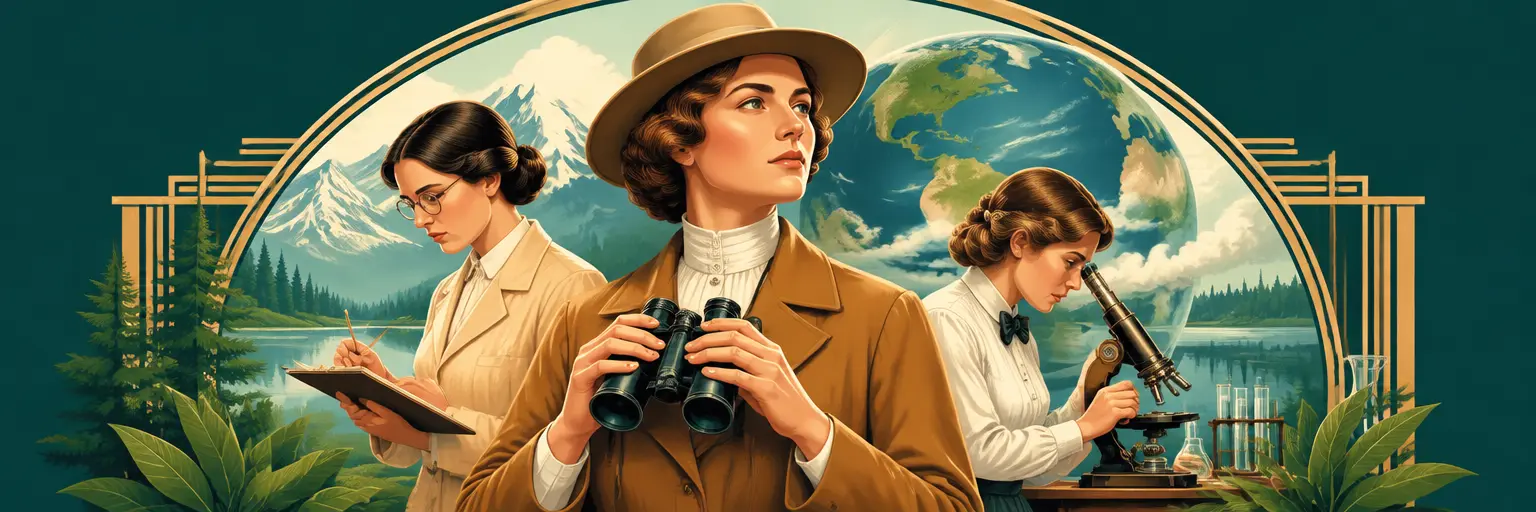
Between 1900 and 1950, a remarkable group of women laid the foundations of modern environmental science, often working against systemic exclusion from academia and field research. From pioneering conservationists to innovative ecologists and soil scientists, these women transformed how we understand nature, biodiversity, and human impact on the planet. Explore their groundbreaking research, the institutional barriers they broke, and the enduring legacies that continue to shape environmental policy and ecological thought today.
🌿 Trailblazing Ecologists and Botanists: Redefining Natural Systems
Women like Edith Clements and Louise A. Boyd used meticulous observation and innovative experimental methods to shift ecology from descriptive natural history to a quantitative science. Clements’ work on plant succession and vegetation dynamics provided foundational frameworks for ecosystem studies, while Boyd’s Arctic expeditions produced critical data on glacial geology and marine biology. Their contributions highlighted the interconnectedness of flora, fauna, and climate, challenging male-dominated narratives that overlooked women’s capacity for rigorous field work.
Readers will discover how these scientists navigated limited funding and institutional exclusion, often using personal networks and independent research stations. Their achievements demonstrate that environmental science’s early development was not solely a male endeavor. Expect detailed biographies, primary source excerpts, and analysis of how their findings influenced later conservation movements, including the establishment of national parks and ecological restoration practices still used today.
🌍 Conservation Advocates and Policy Pioneers: Shaping Public Land Ethics
Margaret Murie, often called the “Grandmother of the Conservation Movement,” combined scientific observation with grassroots activism to protect vast wilderness areas in Alaska. Similarly, Rosalie Edge, a suffragist turned ornithologist, transformed the Audubon Society into a powerful advocacy group, successfully campaigning against feather trade and predator control. These women bridged scientific research with political action, presaging modern environmental law and land management strategies.
This section explores their strategic use of scientific data to lobby legislators, their creation of citizen-science networks, and the cultural resistance they faced. Readers will find documented case studies of successful campaigns, personal correspondence, and analysis of how their work institutionalized the idea that environmental protection is a public responsibility, not just a scientific curiosity. Their legacy is visible in every national monument and wildlife refuge established after 1950.
🔬 Soil Scientists and Agricultural Innovators: Unseen Foundations of Sustainability
Women like Carrie Estelle Doheny and Mary L. H. McColloch pioneered research in soil chemistry, erosion control, and sustainable agriculture during the Dust Bowl era. Their field experiments demonstrated how land-use practices could either degrade or rehabilitate entire ecosystems. McColloch’s work on nitrogen fixation in legumes and soil microbiology directly influenced modern regenerative farming techniques, while others mapped groundwater systems and introduced crop rotation models that saved millions of acres from desertification.
Highlights include forgotten laboratory notebooks, statistical analyses of soil fertility trials, and a critique of how gendered labor divisions in agricultural research marginalized their discoveries. By examining federal agricultural extension programs and private research grants, this section reveals how these women integrated ecological principles into practical farming, laying groundwork for agroecology and sustainable land management that remains critically relevant in addressing climate change today.
📜 Institutional Barriers and Strategies of Survival: A Gender Lens
Zeroing in on structural sexism, this subcategory analyzes how early twentieth-century women scientists navigated professions that denied them university appointments, research funding, and editorial roles. From Florence Bascom’s fight to become the first female geologist at the U.S. Geological Survey to Ellen Swallow Richards’ pioneering sanitary engineering while being barred from MIT’s doctoral program, these women used philanthropy, independent publishing, and women’s colleges as strategic platforms. Their resilience offers concrete models for overcoming systemic exclusion in STEM.
Readers will encounter primary sources like rejection letters, alternative career pathways (e.g., museum curatorships, botanic gardens), and alliances with male allies. This section also discusses how war efforts (WWI and WWII) temporarily opened roles in environmental monitoring and toxicology, only to be revoked post-war. This nuanced history provides essential context for understanding ongoing gender disparities in environmental sciences and offers instructional parallels for modern equity initiatives.
🌱 Legacy and Modern Resonance: Foundations of Today’s Environmental Thought
The intellectual DNA of contemporary environmental movements—from deep ecology to environmental justice—traces directly to these early women. Figures like Rachel Carson (whose foundational research began in the 1930s) and Ruth Patrick (who developed biomonitoring protocols in the 1940s) bridged quantitative ecology with public advocacy. This section connects their early findings to current issues: biodiversity loss, pollution policy, and climate resilience. It underscores how their holistic perspectives, often dismissed as “unscientific,” anticipated current interdisciplinary approaches.
Expect comparative timelines showing how their methods evolved into modern GIS-based tools, predictive models, and policy frameworks. The section also examines how social networks among women scientists, such as the “Ecology Lunch” groups, fostered collaborative knowledge exchange that preceded digital academic communities. By tracing these continuities, readers can appreciate how early twentieth-century women did not merely contribute to science—they actively constructed the foundational premises of environmental responsibility we rely on today.
Frequently Asked Questions
Who is considered the most influential woman environmental scientist from 1900-1950?
Margaret Murie is often cited for her dual role as field biologist and conservation advocate, but Edith Clements’ ecological frameworks and Rosalie Edge’s policy victories are equally foundational. No single figure dominates; their collective influence shaped multiple disciplines. Each faced unique challenges, and their work collectively built the intellectual and institutional scaffolding for modern environmentalism.
Did women have access to formal academic training in environmental science during this era?
Mostly no, but some did. Women’s colleges like Mount Holyoke and Wellesley offered botany and geology programs, while universities rarely accepted female doctoral candidates. Many women trained informally, through museum apprenticeships or independent fieldwork. The lack of formal credentials often pushed them into innovative, non-traditional research methods, which later became accepted practice.
How did these women fund their research without university support?
They relied on private philanthropists, women’s clubs, and personal savings. Some, like Rosalie Edge, used family wealth. Others secured grants from the American Association of University Women or the Guggenheim Foundation, which were more open to female applicants. Many performed unpaid labor for institutions to gain access to lab resources and field equipment.
What key environmental problems did they identify that remain urgent today?
They identified soil erosion due to industrial agriculture, pesticide bioaccumulation (Carson), water pollution from chemical runoff (Patrick), and habitat fragmentation from development (Murie). Their warnings about unsustainable resource extraction and species extinction directly anticipated current climate change and biodiversity crises. Their proposed remedies—grassroots activism, regulatory oversight, and ecological monitoring—remain central to environmental policy.
Are there primary sources available for researchers studying these women?
Yes, many archives exist. The Schlesinger Library at Harvard holds papers of Carrie Chapman Catt and others. The American Heritage Center at Wyoming archives Murie’s extensive journals. State historical societies and the Biodiversity Heritage Library host digitized field notes. Additionally, oral histories conducted in the 1970s with surviving pioneers provide invaluable first-person accounts beyond formal publications.