Early Women in Ecology & Naturalism (Pre-19th Century): Forgotten Pioneers of Environmental Thought
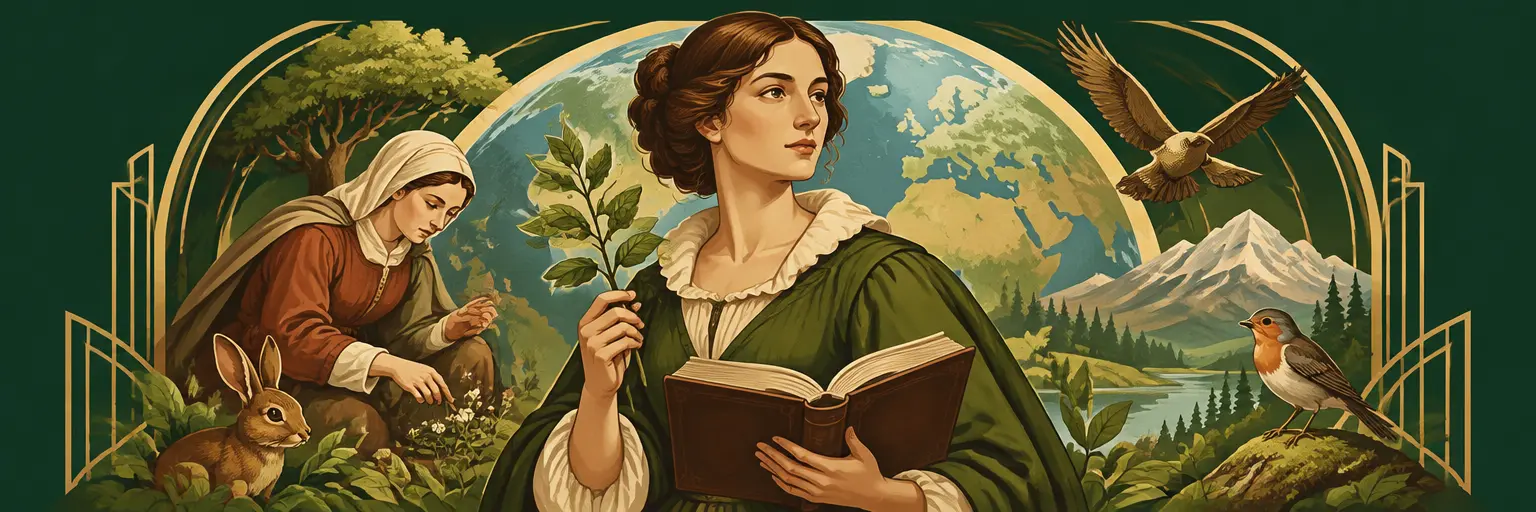
Long before ecology became a formal science, women were observing, documenting, and philosophizing about the natural world. This subcategory uncovers the remarkable yet often overlooked contributions of female naturalists, herbalists, and proto-ecologists who lived before the 19th century. From ancient Greek botanists to medieval abbesses and Renaissance illustrators, these women laid foundational stones for modern environmental science despite immense societal barriers.
🌿 Ancient & Medieval Roots: Women as Nature's First Chroniclers
In antiquity and the Middle Ages, women like Artemisia of Caria (a botanist and medical researcher in 4th century BCE) and Hildegard of Bingen (12th-century abbess who authored Physica, a comprehensive natural history) systematically catalogued plants, animals, and minerals. Their works combined empirical observation with spiritual cosmology, creating early ecological frameworks. You will discover how these women classified species, noted habitat relationships, and even advocated for sustainable harvesting practices—centuries before the term "ecology" existed.
These chroniclers often worked within monastic or courtly settings, leveraging their access to gardens, libraries, and trade networks. Their manuscripts—such as Hildegard's descriptions of animal behavior and plant medicinal uses—offer invaluable insights into pre-industrial human-nature interactions. Expect detailed analyses of their methodologies, the gendered constraints they navigated, and how their writings influenced later male naturalists like Pliny and Albertus Magnus.
📖 Renaissance & Early Modern Observers: Sketching the Living World
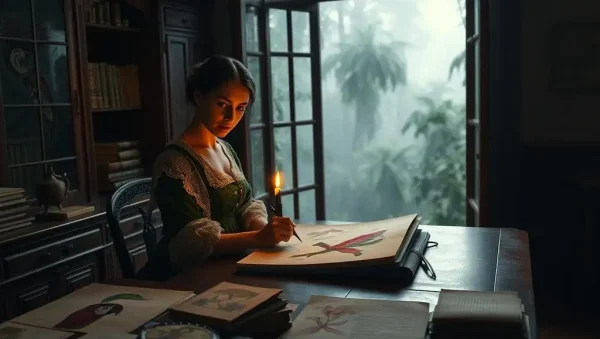
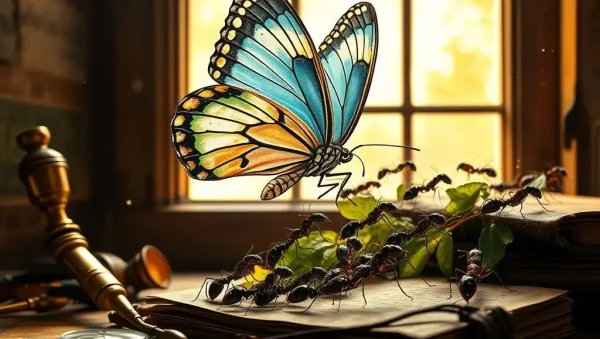
The 16th and 17th centuries saw women like Maria Sibylla Merian (1647–1717) revolutionize entomology and botanical illustration through direct observation of insect-plant relationships. Merian's expedition to Suriname documented metamorphosis and food webs in unprecedented detail, earning her recognition as a founding figure of field ecology. Meanwhile, Eliza Lucas Pinckney (1722–1793) pioneered agricultural ecology by cultivating indigo in colonial America, experimenting with soil conditions and crop rotation.
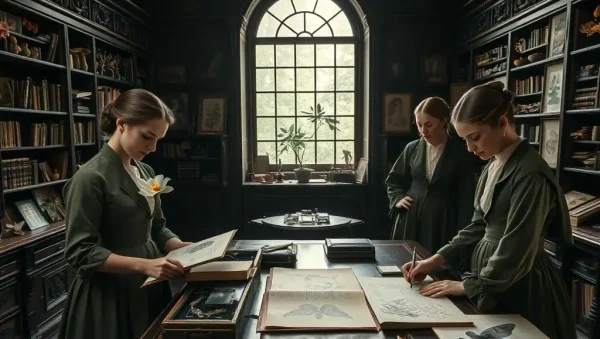
This section examines how these women overcame literacy barriers and scientific exclusion by using visual documentation as their primary scientific language. You will explore their notebooks, watercolors, and specimen collections, which often outperformed male contemporaries in empirical rigor. We also discuss the economic and colonial contexts that enabled their research, and how their works were later plagiarized or erased from mainstream scientific histories.
🔬 Herbalists & Healers: Applied Ecological Knowledge
Pre-19th century women like Trotula of Salerno (11th century) and Elizabeth Blackwell (1699–1758) bridged botany and medicine through applied naturalism. They identified plant properties, documented habitat preferences, and created pharmacopeias that relied on understanding seasonal cycles and local ecosystems. Their practical knowledge—passed through female networks—formed a parallel ecological tradition that competed with academic natural philosophy.
Readers will learn about the physic gardens these women managed, where they tested cultivation techniques, pollination strategies, and pest control methods. We highlight case studies of herbalists who predicted ecological outcomes based on weather patterns or soil types, effectively conducting early ecological experiments. This section also addresses the witch-hunting persecutions that destroyed much of this tradition, and how modern ethnobotany is recovering those lost insights.
🌍 Colonial & Travel Narratives: Women Documenting Global Ecologies
Before 1800, intrepid women like Jeanne Baret (1740–1807) disguised themselves as men to circumnavigate the globe with Bougainville, collecting thousands of plant specimens. Similarly, Sybilla Masters (1675–1720) patented a corn-milling process based on indigenous American agricultural ecology. These women produced observational logs of flora, fauna, and climate across continents, often integrating indigenous knowledge systems that male scientists dismissed.
This facet explores the intersection of gender, empire, and environmental science. You will encounter travel diaries and letters that recorded phenological data—timing of flowering, bird migrations, rainfall patterns—without formal scientific training. We analyze how these narratives influenced colonial agricultural policies and botanical gardens, while also exposing the exploitative dynamics of specimen collection. Expect discussions on how these women's works anticipate concepts like biomes and ecological succession.
⚰️ Rediscovery & Legacy: Reclaiming Their Place in Environmental History
Many pre-19th century female naturalists had their findings attributed to husbands, fathers, or male colleagues. This section chronicles the painstaking archival work by modern historians to reattribute discoveries—for instance, identifying Lady Anne Monson's (1727–1776) botanical illustrations as primary sources for scientific classifications. We also review recent exhibitions and digital humanities projects that are restoring these women to the canon.
Here, visitors will find strategies for tracing female ecological lineages in historical records, including probate inventories, correspondence, and sketchbooks. We discuss how contemporary ecologists are using these historical observations to study climate change impact over centuries. The legacy section also highlights how these early women's holistic perspectives—integrating spirituality, ethics, and utility—foreshadow modern conservation ethics and deep ecology movements.
Frequently Asked Questions
Who is considered the first female ecologist before the 19th century?
While "ecology" wasn't coined until 1866, Hildegard of Bingen (1098–1179) is often retrospectively hailed as a pioneer due to her systematic descriptions of living organisms and their interconnections in Physica and Causae et Curae. She recorded behaviors, habitats, and medicinal uses for over 200 plants and animals, emphasizing interdependence—a core ecological principle.
Why were early women naturalists often forgotten in history?
Systemic barriers included prohibition from universities, publishing under male pseudonyms, and institutional cultures that denied women credit. For example, Jeanne Baret's contributions were attributed to Philibert Commerson, her male companion, for over 200 years. Also, their work in domestic gardens or monastic settings was classified as "amateur" rather than scientific.
How did pre-19th century women study nature without formal education?
They relied on self-directed learning, apprenticeships with family members, and access to monastery libraries or aristocratic estates. Many practiced observational learning by maintaining detailed illustrated journals, such as Maria Sibylla Merian’s caterpillar studies. Some also exchanged letters with male scientists, who often used their data without acknowledgment.
What methods did these women use to document ecological observations?
Common methods included botanical illustration with precise anatomical details, phenological diaries recording seasonal changes, and experimental cultivation in personal gardens. They also conducted plant-herbivore feeding trials, as Merian did, and mapped species distributions through travel logs. These visual and textual records are now analyzed as scientific datasets.
Can we use their historical data in modern ecology research today?
Yes, phenological records from figures like Elizabeth Blackwell help scientists compare seasonal shifts due to climate change. Herbalist ledgers of plant habitats contribute to species distribution modeling. Digital projects like "Early Women in Science" are georeferencing these data, enabling cross-century ecological analyses that inform conservation strategies.