21st Century Women in Environmental Science: Shaping a Sustainable Future
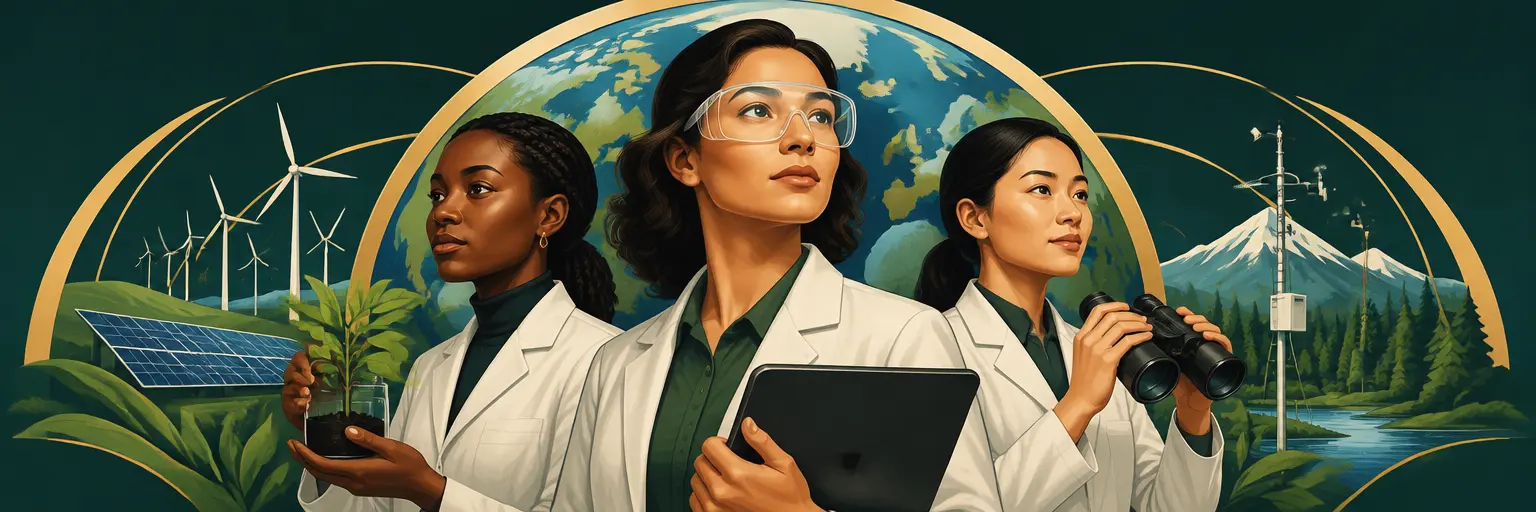
Welcome to our focused exploration of the remarkable women who are redefining environmental science in the 21st century. This subcategory highlights the groundbreaking research, innovative solutions, and fearless advocacy of female scientists tackling climate change, biodiversity loss, and pollution. From climate modeling and conservation biology to environmental policy and renewable energy, these leaders are not just participants in science—they are architects of our planet’s resilience. Discover their stories, their discoveries, and the actionable insights that make their work essential for every concerned global citizen.
🌍 Pioneering Climate Change Research and Data Science
The women at the forefront of climate science are using cutting-edge data models, satellite imagery, and field observations to decode our changing planet. Their work quantifies the impacts of warming oceans, shifting weather patterns, and carbon emissions with unprecedented precision. Scientists like Dr. Katharine Hayhoe and Dr. Kim Cobb have translated complex climate models into urgent, understandable narratives, bridging the gap between raw data and public action.
For readers, this section offers a deep dive into how climate research is conducted and why female perspectives are critical. Expect to learn about specific methodologies—from ice core sampling to AI-driven climate predictions—and how these women’s leadership drives more inclusive, resilient climate strategies. Their findings not only inform global policy but also empower individuals and communities to make evidence-based environmental decisions.
🌱 Conservation Biology and Ecosystem Restoration Leaders
Conservation biology in the 21st century is a race against time, and women are leading the charge in protecting biodiversity and restoring degraded ecosystems. From the Amazon rainforest to coral reefs in the Pacific, female scientists like Dr. Sylvia Earle and Dr. Asha de Vos are pioneering marine protected areas and rewilding projects. Their holistic approaches combine traditional ecological knowledge with modern genetics and habitat mapping.
This segment highlights real-world case studies of successful restoration projects and species recovery programs. Readers will gain insight into how these scientists work with local communities, governments, and NGOs to create sustainable conservation models. By understanding their strategies, you can grasp the intricate balance between human development and ecological health, and how women’s leadership is proving indispensable for long-term planetary survival.
🔄 Pioneering Green Chemistry and Pollution Solutions
Innovation in green chemistry is transforming how we handle waste, plastics, and toxic pollutants. Women such as Dr. Gabriela Chavarria and Dr. Melanie Bergmann are developing biodegradable materials, advanced recycling technologies, and non-toxic alternatives to harmful industrial chemicals. Their work directly addresses the microplastic crisis and industrial runoff, offering tangible solutions for a cleaner water and soil.
In this section, you will discover how these scientists are redesigning product life-cycles and influencing manufacturing standards. Learn about the rise of circular economies, enzyme-based plastic degradation, and low-cost filtration systems for developing nations. These breakthroughs demonstrate that environmental science is not only about observation—it is about actionable, scalable inventions that protect human health and natural systems simultaneously.
⚡ Women Leading in Renewable Energy and Climate Policy
The transition to renewable energy is as much a social and economic challenge as a technical one. Women like Dr. Fatih Birol (a key voice in global energy analysis) and Dr. Juliet Davenport are shaping solar, wind, and geothermal markets through policy innovation and sustainable finance. Their advocacy pushes governments and corporations to adopt net-zero targets and equitable energy access.
This part of the subcategory focuses on the intersection of science and policy. Readers will explore how female scientists influence international treaties, carbon pricing models, and community-based energy grids. Their efforts demystify the clean energy transition, showing how every household and business can participate. Expect to learn about successful case studies of energy cooperatives and the crucial role of women in ensuring that the green revolution does not leave vulnerable populations behind.
📡 Environmental Justice and Interdisciplinary Advocacy
No environmental challenge is purely scientific; it is inherently tied to social justice. Women like Dr. Beverly Wright and Dr. Sacoby Wilson are pioneering environmental justice research, exposing how pollution disproportionately affects marginalized communities. Their work integrates public health, sociology, and climate science to advocate for equitable regulations and grassroots empowerment.
This section illustrates how these scientists use data mapping to reveal systemic inequalities and partner with local groups to drive reform. Readers will learn about community-based participatory research and how listening to frontline voices yields more effective environmental policies. By highlighting these interdisciplinary methods, we show that the future of environmental science depends on inclusive, human-centered approaches that ensure clean air, water, and energy are universal rights, not privileges.
Frequently Asked Questions
What qualifies as "21st century" work in this subcategory?
It refers to research and advocacy conducted primarily after the year 2000, utilizing modern tools like satellite monitoring, genomic sequencing, and advanced AI. These women build on historical foundations but address contemporary crises such as rapid climate change, plastic pollution, and biodiversity loss with cutting-edge, data-driven solutions.
How do these women differ from earlier environmental scientists?
Unlike early 20th-century pioneers, 21st-century women often hold leadership roles in global institutions, lead cross-disciplinary teams, and leverage digital platforms for public engagement. They face less overt exclusion but still navigate subtle biases, and their work emphasizes systemic change, environmental justice, and international collaboration.
Can I access their published research or public talks?
Yes, most of these scientists publish open-access papers in journals like Nature and Science, and their TED talks or keynote speeches are freely available. We recommend starting with the Union of Concerned Scientists’ blog or the Women in Science History database for curated links and summaries.
How can students or early-career researchers get involved?
Seek internships with organizations these women lead, such as the Ocean Foundation or climate policy think tanks. Pursue degrees in environmental engineering, ecology, or sustainability studies, and join networks like 500 Women Scientists to find mentors and collaborative projects.
What is the most urgent environmental issue these women tackle today?
Most experts agree that the rapid acceleration of climate change, combined with irreversible biodiversity loss, is the defining crisis. However, many emphasize that solutions must also address social inequality, because environmental degradation disproportionately harms low-income and indigenous communities worldwide.