Women in Conservation & Wildlife Management: Pioneers Protecting Our Planet
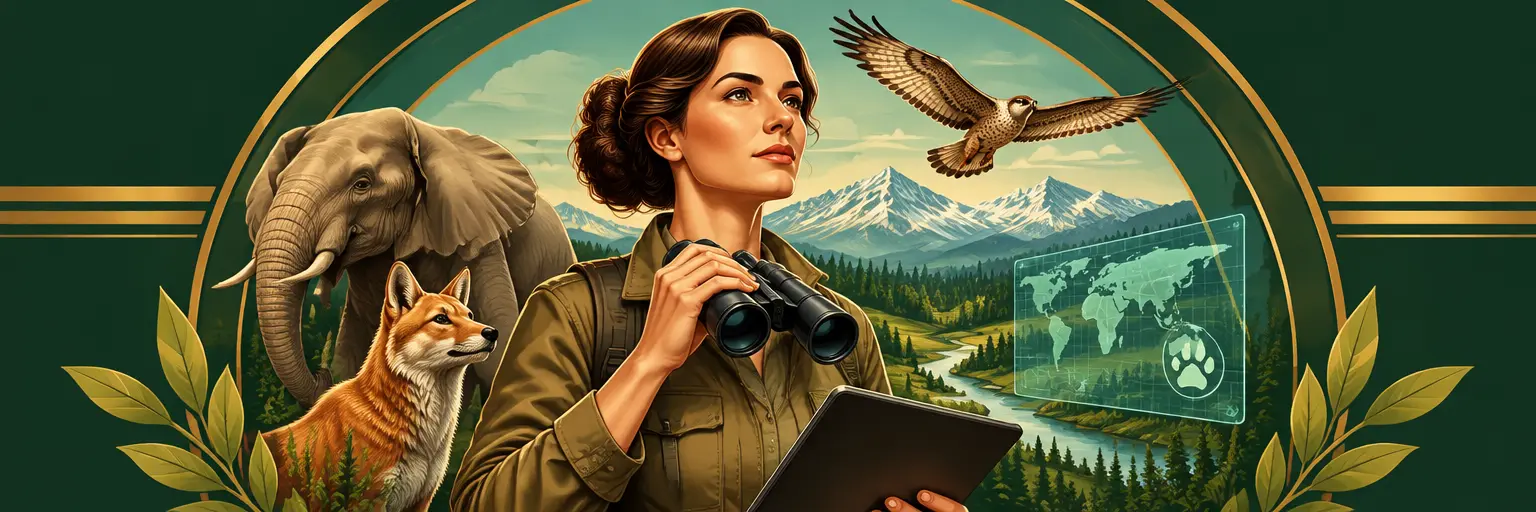
Welcome to the Women in Conservation & Wildlife Management subcategory, a dedicated space within our Environmental Science hub that honors the fearless women who have dedicated their lives to safeguarding Earth’s biodiversity. From tracking endangered species in remote jungles to reshaping global environmental policy, these trailblazers have not only advanced scientific understanding but also fought against poaching, habitat loss, and climate change. This page explores their legacies, methodologies, and the ongoing challenges they overcame—and continue to overcome—in a field historically dominated by men. Dive in to discover how these remarkable figures turned passion into action. 🌍
🌿 Early Pioneers in Wildlife Preservation
The roots of modern conservation are deeply embedded in the work of early female naturalists who dared to venture where few women had gone. Figures like Dian Fossey, who lived among mountain gorillas in Rwanda, and Jane Goodall, whose chimpanzee studies rewrote primatology, set the stage for a new era of field-based research. These women didn’t just observe—they advocated fiercely, using their data to demand protective legislation. Their courage in remote, often dangerous environments proved that scientific rigor and emotional empathy could coexist, fundamentally altering how conservationists approach wildlife protection today.
Their early expeditions were fraught with logistical hurdles, from lack of institutional funding to social ostracization. Yet they persisted, establishing long-term research stations and training local communities as rangers. Their legacy includes not only groundbreaking publications but also the creation of grassroots organizations that continue to thrive. For readers, this section offers a compelling look at how audacity and meticulous observation can turn isolated fieldwork into a global movement, inspiring a generation of young women to pick up binoculars and notebooks. 🌱
🦁 Modern Leaders in Ecosystem Management
Today’s female conservationists are equipped with satellite telemetry, genetic analysis, and advanced data modeling, but they still face the age-old challenge of balancing human needs with wildlife survival. Leaders like Paula Kahumbu, CEO of WildlifeDirect, and Mya-Rose Craig, a birder and climate activist, are redefining what it means to manage ecosystems. They work alongside governments and indigenous groups, implementing community-based conservation that rewards locals for protecting species rather than exploiting them. This approach has proven more sustainable than top-down mandates, as it creates economic incentives for preservation.
These modern pioneers also leverage digital platforms to amplify their impact, using social media to crowdsource funding and raise global awareness. Their work often involves complex negotiations over land rights, water resources, and carbon credits, requiring a blend of scientific expertise and diplomatic skill. By highlighting their strategies, this section shows how contemporary women are not just participants but architects of conservation policy, ensuring that biodiversity survives the Anthropocene. Their stories are a testament to adaptive leadership in an era of rapid environmental change. 🦅
📜 Policy Advocates and Environmental Lawyers
Conservation isn’t solely about fieldwork; it’s also about the legal frameworks that protect habitats and species. Women like Wangari Maathai, the first African woman to win the Nobel Peace Prize, and Ruth Musgrave, a leading wildlife lawyer, have used legislation as their primary tool. Maathai’s Green Belt Movement planted over 51 million trees while mobilizing rural women to combat deforestation, intertwining environmental health with social justice. Musgrave, meanwhile, has fought landmark cases to enforce endangered species acts and halt illegal logging, proving that courtroom victories are as vital as field discoveries.
These advocates often work behind the scenes, drafting policies that will shape conservation for decades. They collaborate with international bodies like the UN and CITES, ensuring that treaties are not just signed but implemented. Their victories are measured in acres protected, species delisted, and fines levied against poachers. For aspiring conservationists, this section demystifies the legal lever, showing how a career in law or advocacy can be as impactful as one in biology. It’s a reminder that saving nature requires not just boots on the ground but also statutes on the books. ⚖️
🔬 Research Scientists and Data-Driven Conservationists
Behind many successful conservation projects lies rigorous scientific research, where women are making significant strides. Scientists like Dr. Asha de Vos, a marine biologist studying blue whales in Sri Lanka, and Dr. Rae Wynn-Grant, a large carnivore ecologist, use cutting-edge tools to inform management decisions. They analyze population dynamics, migration patterns, and genetic diversity to recommend sustainable harvest limits or habitat corridors. Their work is collaborative, often involving citizen science programs that engage the public in data collection, thereby fostering a sense of ownership over local wildlife.
This data-driven approach is crucial for addressing intractable problems like human-wildlife conflict. By using GPS collars and camera traps, these researchers can identify conflict hotspots and propose non-lethal deterrents, such as beehive fences for elephants or guard dogs for livestock. Their peer-reviewed publications serve as the evidence base for policy, ensuring decisions are grounded in objective reality rather than emotion. This section celebrates their intellectual rigor and demonstrates how the scientific method remains our best hope for managing complex ecosystems under pressure. 🔬
🌱 Community Educators and Grassroots Organizers
Conservation succeeds when local communities become stewards, and women are often the most effective at catalyzing this shift. Grassroots organizers like Learning about the heroic efforts of Berta Cáceres, who protected Honduran rivers against dams, and In Tanzania, the work of Dr. Gladys Kalema-Zikusoka, who founded Conservation Through Public Health, cannot be overstated. These women bridge the gap between wildlife welfare and human well-being, promoting hygiene, family planning, and sustainable farming alongside habitat protection. By addressing poverty and disease, they reduce pressure on natural resources, creating a virtuous cycle of health for both people and animals.
Their methods are intensely participatory, relying on village meetings, school programs, and radio broadcasts to spread knowledge. They train local women as eco-guides and para-veterinarians, empowering them economically while simultaneously building a network of dedicated protectors. This approach has a multiplier effect, as educated women tend to champion environmental causes for generations. In this section, readers will discover that conservation is not an elite endeavor but a communal one, driven by trust, respect, and shared goals. The impact of these organizers often exceeds that of well-funded NGOs because their roots run deep in the soil they protect. 🌾
Frequently Asked Questions
Who is considered the first female conservationist?
While many contribute, Rachel Carson is often hailed as the founder of the modern environmental movement, though her background was in marine biology and writing. Earlier pioneers include Maria Sibylla Merian, a 17th-century naturalist who studied insects. However, Dian Fossey and Jane Goodall are iconic for their direct wildlife protection work, setting the standard for later generations.
What challenges do women in conservation face today?
Women still face gender bias, limited funding access, and safety risks in fieldwork, especially in remote areas. They often juggle caregiving responsibilities with demanding schedules. However, networks like the Women in Conservation group and mentorship programs are helping mitigate these barriers, while increased institutional support is gradually normalizing female leadership in this field.
How can I support women in conservation?
Support organizations led by women, such as the Jane Goodall Institute or WildlifeDirect. You can also elevate their voices by sharing their research, donating to scholarship funds for female students in environmental sciences, and volunteering for local conservation projects that emphasize gender equity. Your advocacy matters.
What is community-based conservation?
It is a strategy where local communities receive direct benefits—like employment, education, or healthcare—from protecting wildlife. Women often lead these initiatives, as they see firsthand how resource conservation improves family welfare. This approach reduces illegal poaching because communities become financially invested in preserving species and habitats.
Are there any notable women in wildlife management right now?
Yes, many! Paula Kahumbu in Kenya, Mya-Rose Craig in the UK, and Dr. Asha de Vos in Sri Lanka are just a few. They are active on social media, lead research programs, and influence policy, proving that the legacy of female conservationists is thriving and evolving alongside modern technology.