Women in Planetary Science: Pioneers of Our Solar System
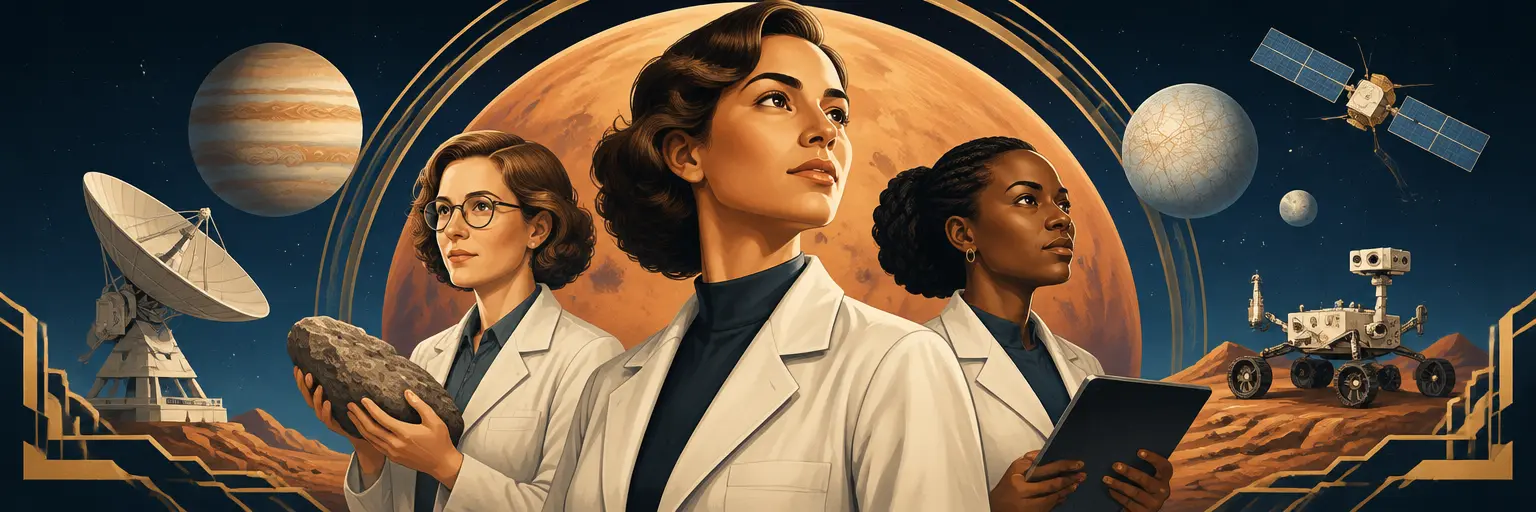
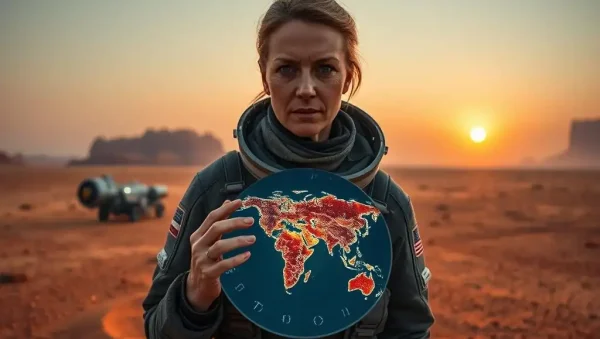
Welcome to our dedicated subcategory on Women in Planetary Science, part of the Space Science & Astronomy section at WomenInScienceHistory.com. Here, we illuminate the remarkable achievements of female scientists who have mapped Mars, decoded lunar geology, and unveiled the secrets of distant moons and asteroids. From early astronomers who cataloged planets to modern mission leads at NASA and ESA, these women defied societal barriers to reshape our understanding of the cosmos. Explore their biographies, pivotal discoveries, and the persistent challenges they overcame, all while gaining insight into how their legacies continue to inspire the next generation of space explorers.
🔭 Trailblazing Women Who Redefined Planetary Observation
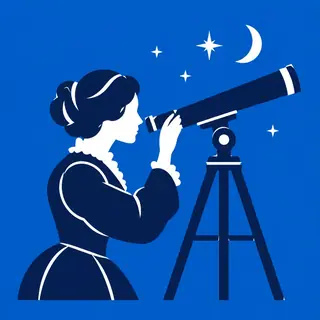
Before space missions reached other worlds, women like Maria Mitchell and Caroline Herschel scanned the heavens with telescopes, discovering comets and detailing planetary surfaces. Their meticulous observations laid the groundwork for modern planetary science. Mitchell, the first American female professional astronomer, made breakthroughs in solar and lunar studies, while Herschel’s cataloging of nebulae expanded our cosmic map. This section profiles their lives and demonstrates how their persistence in the 19th century challenged the notion that science was a male-only pursuit.
These pioneers not only observed but also advocated for women’s education in astronomy, founding observatories and mentoring younger female researchers. By highlighting their correspondence, field notes, and public lectures, we show how their intellectual rigor and courage opened doors for future generations. Expect detailed timelines, rare archival images, and personal anecdotes that bring their struggles and triumphs to life.
🚀 Mission-Driven Women: From Apollo to Mars Rovers
The space race era saw women enter mission control and planetary labs, albeit often behind the scenes. Figures like Katherine Johnson, whose trajectory calculations enabled Apollo moon landings, and Margaret Hamilton, who developed error-proof flight software, are central here. In planetary science specifically, Ellen Stofan (former NASA Chief Scientist) and Laurie Leshin (Director of JPL) led Mars rover and sample-return missions, transforming how we explore rocky worlds. Their stories reveal the critical role women play in mission design, data interpretation, and strategic planning.
This section also covers contemporary mission leads like Katie Stack Morgan of the Perseverance rover team and Karla Clark of the Psyche mission. Each biography includes technical details of their contributions—from orbital mechanics to spectrometric analysis—and highlights how they navigated institutional sexism to secure leadership roles. Expect interviews, mission archives, and explanations of their innovative engineering solutions.
🌍 Women in Astrogeology: Reading Planetary Surfaces
Planetary geology relies on interpreting cratered landscapes, volcanic plains, and ice caps. Pioneering astrogeologists like Eugene Shoemaker’s protégé Carolyn Shoemaker discovered hundreds of comets and asteroids, while Adriana Ocampo identified the Chicxulub impact crater linked to dinosaur extinction. This subcategory showcases women who use remote sensing, lab analysis, and fieldwork simulations to piece together planetary histories. Their work informs climate models for Earth and guides landing-site selection for future missions.
You’ll find case studies on Michelle Minitti, who works on mineral mapping for Mars, and Jennifer Heldmann, who studies ice on the Moon and Mars. We delve into their research methods—such as Raman spectroscopy and thermal imaging—and discuss how they foster collaborative, interdisciplinary teams. These profiles emphasize the importance of diversity in geological interpretation, as different perspectives lead to more robust scientific conclusions.
🛰️ Women Leading Space Exploration Policy and Data Science
Beyond field research, women shape planetary science through data modeling, policy, and communication. Michelle Thaller, a NASA astrophysicist and public communicator, translates complex mission data into accessible narratives, while Gwynne Shotwell (President of SpaceX) pioneered commercial planetary launch systems. This section explores how women in administrative and data-heavy roles ensure that planetary missions are feasible, ethical, and publicly supported. Their work in telemetry analysis, orbital debris management, and funding allocation is as vital as any rover’s sensors.
We profile Dava Newman, former NASA Deputy Administrator who designed biosuits for Mars, and Julie Castillo-Rogez, principal investigator for the Dawn mission’s asteroid studies. These leaders demonstrate that planetary science is a mosaic of engineering, informatics, and diplomacy. Expect discussions on data visualization techniques, international collaboration frameworks, and strategies for encouraging women to pursue space policy careers.
🌟 Overcoming Barriers: The Untold Challenges of Female Planetary Scientists
Despite their achievements, many women in this field faced exclusion from observatory access, publication bias, and unequal pay. This section confronts these systemic issues head-on, drawing on oral histories and recently unsealed correspondence. We examine the impact of Matilda effect—where female contributions are often attributed to male colleagues—and highlight cases like Henrietta Leavitt, whose Cepheid variable period-luminosity law enabled cosmic distance measurements but went long unsung. By acknowledging these barriers, we hope to foster institutional change.
We also share modern advocacy stories, such as the founding of Women in Planetary Science mentoring network and the Lucy mission’s all-female leadership team. These narratives offer practical advice for young scientists on negotiating lab spaces, securing grants, and building resilience. Through interviews with survivors of discriminatory practices and allies, we outline actionable steps for creating equitable research environments.
Frequently Asked Questions
Who is considered the first female planetary scientist?
While not formally titled as such, Caroline Herschel (1750-1848) is often credited as an early pioneer for her systematic comet discoveries and cataloging of celestial objects. However, Maria Mitchell, who discovered a telescopic comet in 1847, is widely recognized as the first American professional female astronomer and is a key figure in planetary observation history.
What are some notable discoveries by women in planetary science?
Carolyn Shoemaker discovered 32 comets and over 800 asteroids, including Shoemaker-Levy 9 which collided with Jupiter. Heidi Hammel studied Jupiter’s Shoemaker-Levy impact and Neptune’s storms, while Bonnie Buratti led ultraviolet observations of Saturn’s moon Titan, revealing its thick nitrogen atmosphere.
How can I find primary sources on women in planetary science?
Check university archives like Harvard’s Wolbach Library, NASA’s History Office, and the Library of Congress women’s science collections. Online, the Women in Planetary Science blog offers original interviews, and JSTOR hosts digitized letters from early observers like Herschel and Mitchell.
Are there any current women leading major planetary missions?
Yes, Laurie Leshin leads NASA’s Jet Propulsion Laboratory, overseeing Mars sample return. Karla Clark is principal investigator for the Psyche asteroid mission, and Jennifer Heldmann leads Artemis science planning for lunar polar ice exploration.
What challenges do modern women in planetary science still face?
Despite progress, women encounter persistent issues like implicit bias in funding reviews, workplace harassment in field settings, and underrepresentation in senior mission leadership roles. However, formal mentorship programs and inclusive mission teams are slowly mitigating these barriers, as documented in recent AGU surveys.