
Through a Woman's Eyes: Unique Perspectives on the Natural World (1600s1700s)

Welcome to WomenInScienceHistory.com!
Dive into a world where scientific discovery intertwines with resilience and groundbreaking insights. This month, we're exploring the fascinating realm of women naturalists of the 17th and 18th centuries. But what unique perspectives did these pioneering women bring to the study of the natural world, and how did their contributions shape our understanding of environmental science? Uncover the hidden narratives and remarkable achievements of these unsung heroes and discover how they defied expectations to leave an indelible mark on history. Prepare to be inspired!
- Introduction: Unveiling the Contributions of Women Naturalists in the 17th and 18th Centuries
- The Landscape of Natural History in the 17th and 18th Centuries
- Key Figures: Female Naturalists Shaping Early Environmental Understanding
- Unique Perspectives: How Women's Observations Differed
- Barriers and Challenges Faced by Early Women Naturalists
- Legacy and Impact: The Enduring Influence of Women Naturalists
- Conclusion: Reclaiming the Narratives of Women in Natural Science
-
Frequently Asked Questions
- How did societal expectations impact women naturalists during the 17th and 18th centuries?
- What were some common avenues for women to engage with natural history during this period?
- What types of scientific contributions did women naturalists make in the 17th and 18th centuries?
- What challenges did women face in publishing their scientific findings during this era?
- How does "WomenInScienceHistory.com" aim to address the historical underrepresentation of women naturalists?
- Final Reflection: Echoes of Observation
- Unveil Nature's Secrets Through Their Eyes!
Introduction: Unveiling the Contributions of Women Naturalists in the 17th and 18th Centuries
Challenging Conventional Narratives: Recognizing Women's Role in Early Naturalism
For centuries, the history of science has predominantly featured male figures, often overlooking or minimizing the significant contributions of women. In the burgeoning fields of natural history and early ecology during the 17th and 18th centuries, women were actively engaged in observation, collection, and documentation of the natural world, yet their work frequently went uncredited or was dismissed as mere amateurism. This historical invisibility has led to an incomplete understanding of how scientific knowledge evolved during this pivotal period.
Re-evaluating historical records reveals a vibrant, albeit often hidden, community of women naturalists 17th-18th century who defied societal norms to pursue their intellectual curiosity. These pioneering women, often operating outside formal institutions, offered unique perspectives and methodologies that enriched the nascent scientific understanding of their time. Their detailed observations and holistic approaches to studying flora, fauna, and their environments provide crucial insights into the diverse origins of modern environmental science.
Resources for Exploring Women's Contributions to Science
The current landscape of historical scholarship has undergone a significant transformation, with a concerted effort to unearth and highlight the contributions of women in science. Digital archives, university libraries, and specialized historical societies are increasingly making primary sources, such as correspondence, diaries, and unpublished manuscripts, accessible to researchers worldwide. This growing body of resources allows for a more nuanced and accurate reconstruction of the scientific activities undertaken by women during the early modern period.
Furthermore, academic publications, biographies, and dedicated online platforms are crucial in disseminating these rediscovered narratives. These resources not only shed light on the individual achievements of women naturalists 17th-18th century but also illuminate the intricate networks of knowledge exchange that existed, often informally, among women who shared a passion for natural history. The ongoing work ensures that the stories of these remarkable women are no longer lost to history but become integral to the broader scientific narrative.
The Landscape of Natural History in the 17th and 18th Centuries
Dominance of Male Voices and Perspectives in Scientific Discourse
The 17th and 18th centuries witnessed the formalization of scientific inquiry with the establishment of influential institutions like the Royal Society of London (founded 1660) and the French Academy of Sciences (founded 1666). These academies served as exclusive bastions of male intellectual pursuit, where scientific papers were presented, debated, and published, effectively shaping the prevailing scientific discourse. Women were almost entirely excluded from membership, attendance at meetings, and formal recognition within these powerful networks.
This male dominance meant that the methodologies, research questions, and interpretations of the natural world were largely defined by men, often reflecting their societal roles and access to resources. While some women engaged in correspondence with male scientists or had their work published under male names, their unique insights or differing approaches were frequently marginalized. The prevailing scientific paradigm, focused heavily on classification and mechanistic explanations, often overlooked the more holistic or narrative observations favored by some women naturalists.
Opportunities and Limitations for Women Engaging with Nature
Despite exclusion from formal institutions, women found various informal avenues to engage with natural history. Many pursued their interests within the domestic sphere, cultivating gardens, keeping detailed records of local flora and fauna, and creating intricate botanical or entomological illustrations. Private patronage, often from aristocratic families, also provided some women with the financial means and social connections to conduct their studies, sometimes even sponsoring expeditions or publications.
However, these opportunities were severely constrained by the limitations imposed by societal expectations and gender roles. Women generally lacked access to formal education, scientific instruments, and the vast libraries available to their male counterparts. Publishing their findings was a formidable challenge, often requiring the endorsement or assistance of a male relative. These limitations meant that even highly skilled women naturalists 17th-18th century often operated in relative obscurity, their contributions less widely disseminated or acknowledged than those of men.
Key Figures: Female Naturalists Shaping Early Environmental Understanding
Maria Sibylla Merian (1647-1717): A Pioneer in Entomological Illustration
Maria Sibylla Merian stands as one of the most remarkable women naturalists 17th-18th century, renowned for her groundbreaking work in entomology and botanical illustration. Born in Frankfurt, Germany, into a family of artists and engravers, Merian received an early education in art that she uniquely applied to the meticulous study of insects. At a time when insects were often viewed with disgust and misunderstood, Merian dedicated herself to observing their life cycles, challenging prevailing beliefs about spontaneous generation.
Her unwavering commitment to scientific observation led her to undertake an extraordinary and perilous journey to Suriname in 1699, accompanied only by her daughter. This two-year expedition, self-funded and driven purely by scientific curiosity, was virtually unprecedented for a woman of her era. In the jungles of South America, she meticulously documented the metamorphosis of insects, their feeding habits, and their intricate relationships with the surrounding plant life, laying the groundwork for modern ecological understanding.
Merian's Groundbreaking Work: "Metamorphosis insectorum Surinamensium"
Merian's most celebrated work, Metamorphosis insectorum Surinamensium (The Metamorphosis of the Insects of Suriname), published in 1705, was a revolutionary achievement. This lavishly illustrated volume featured sixty detailed engravings, each depicting the complete life cycle of various insects – from egg and larva to pupa and adult – alongside the plants they fed upon or inhabited. Unlike previous natural history illustrations, which often showed static, isolated specimens, Merian's plates presented insects within their natural habitats, interacting with their environment.
The scientific accuracy and artistic beauty of Metamorphosis set a new standard for natural history illustration. Merian's observations were not merely descriptive; they provided crucial insights into the complex ecological relationships between insects and plants, a concept far ahead of its time. Her detailed depictions of tropical insects were a significant contribution to the nascent field of entomology, influencing later naturalists, including Carl Linnaeus, who cited her work.
Scientific Contributions and Artistic Legacy
Merian's scientific contributions extended beyond mere illustration. She meticulously recorded the diets of caterpillars, identified specific host plants, and accurately depicted the various stages of metamorphosis, thereby refuting the widely held belief in spontaneous generation for many insect species. Her emphasis on observing organisms in situ within their ecosystems marked a significant shift in scientific methodology, moving beyond collection and classification to understanding ecological interactions.
Her artistic legacy is equally profound. Merian's illustrations combined scientific precision with aesthetic brilliance, making complex biological processes accessible and engaging. Her work influenced generations of natural history illustrators and scientists, demonstrating that rigorous scientific observation could be conveyed through art. As one of the most prominent women naturalists 17th-18th century, her pioneering spirit and interdisciplinary approach left an indelible mark on both science and art.
Dorothea Christiane Erxleben (1715-1762): Pioneering Female Physician and Scientist
Dorothea Christiane Erxleben holds a unique place in the history of women in science as the first German woman to earn a medical doctorate. Born in Quedlinburg, Prussia, she received an unconventional and rigorous education from her father, a physician and university lecturer, who taught her Latin, mathematics, and natural sciences, including medicine. This early exposure to academic and scientific subjects ignited her passion for learning and her ambition to pursue a professional career.
Despite her exceptional intellect and comprehensive training, Erxleben faced immense societal and institutional barriers. Universities were strictly male domains, and the very notion of a woman practicing medicine was met with fierce opposition. Her determination to obtain a formal medical degree led to a protracted struggle against prevailing prejudices and legal restrictions, highlighting the formidable challenges faced by aspiring women naturalists 17th-18th century.
Erxleben's Fight for Medical Education
Erxleben's pursuit of a medical degree was a testament to her tenacity and the support of enlightened individuals. In 1741, after her brother obtained his medical doctorate, she initially sought permission to attend university alongside him, but her request was denied. Undeterred, she appealed directly to Frederick the Great of Prussia, a monarch known for his progressive views on education. In 1742, Frederick the Great issued a royal decree granting her the right to study medicine at any Prussian university.
Despite this decree, it took another twelve years for Erxleben to officially matriculate and defend her dissertation. She finally earned her Doctor of Medicine degree from the University of Halle in 1754, becoming the first German woman to do so. Her dissertation, Quod nimis celeris et frequens de feminarum eruditione iudicium (Whether it is too rapid and frequent a judgment concerning the erudition of women), was a powerful intellectual defense of women's right to education and intellectual equality, demonstrating her scientific rigor and advocacy.
Scientific Contributions and Advocacy for Women
Upon receiving her degree, Dorothea Christiane Erxleben established a successful medical practice in Quedlinburg, treating patients from all social strata. Her approach to medicine was rooted in a scientific understanding, emphasizing observation, diagnosis, and evidence-based treatments, rather than relying solely on traditional remedies. While her primary contribution was in the field of medicine, her rigorous academic training and scientific methodology placed her firmly within the broader scientific community of her time.
Beyond her medical practice, Erxleben's life itself was a powerful act of advocacy for women's rights to intellectual and professional pursuits. By successfully navigating the male-dominated academic and professional spheres, she shattered deeply entrenched prejudices and served as an inspirational figure for future generations of women. Her achievement provided concrete proof that women possessed the intellectual capacity and dedication required for scientific and medical professions, challenging the prevailing narratives about women's roles.
Margaret Cavendish, Duchess of Newcastle (1623-1673): Philosophical Reflections on Nature
Margaret Cavendish, Duchess of Newcastle, was an extraordinary figure among women naturalists 17th-18th century, known not as an empirical scientist but as a prolific philosopher, poet, and playwright who engaged deeply with the scientific debates of her era. Born into an aristocratic family, Cavendish lacked formal education but possessed a formidable intellect and an insatiable curiosity about the natural world and the emerging scientific revolution. Her unique social position as a Duchess allowed her a degree of intellectual freedom and access to elite circles, including the Royal Society, albeit as an observer.
Cavendish's writings spanned various genres, but a significant portion of her work was dedicated to natural philosophy, where she critiqued the dominant mechanistic worldview championed by figures like René Descartes and Robert Boyle. She challenged the idea of a purely mechanical universe composed of inert matter, proposing instead a "vitalist" philosophy where all matter possessed inherent intelligence and self-motion. Her work offered a distinctly philosophical and often poetic perspective on the nature of reality, contrasting sharply with the experimental approaches gaining prominence.
Cavendish's Unique Perspective: Challenging Mechanistic Views of the World
In works such as Observations upon Experimental Philosophy (1666) and Grounds of Natural Philosophy (1668), Cavendish articulated her unique cosmological vision. She argued against the prevalent atomistic theories and the notion of a universe governed by purely external, mechanical forces. Instead, she posited that nature was inherently active and intelligent, with matter possessing an internal principle of motion and organization. This "animate matter" theory presented a profound philosophical challenge to the reductionist views of her contemporaries.
Cavendish's critique extended to the experimental methods of the Royal Society, which she famously visited in 1667. While she admired the ingenuity of their experiments, she questioned whether such fragmented observations could truly reveal the holistic truths of nature. Her philosophical reflections encouraged a more integrated understanding of the natural world, emphasizing the interconnectedness of phenomena and the limitations of purely empirical investigation without a robust theoretical framework.
Literary Contributions and Scientific Thought
Margaret Cavendish's scientific ideas were often inextricably woven into her literary works, demonstrating her interdisciplinary approach. Her most famous work, The Blazing World (1666), is considered one of the earliest examples of science fiction. This utopian fantasy novel explores a parallel world accessible through the North Pole, where Cavendish uses the narrative to present her philosophical and scientific theories in an imaginative context, debating concepts like atoms, spirits, and the nature of knowledge.
Her willingness to publish on scientific and philosophical matters, at a time when such endeavors were considered unseemly for women, made her a singular figure. Although her ideas were often dismissed or ridiculed by male contemporaries for their unconventional nature and her lack of formal training, her voluminous writings provided a significant counterpoint to the prevailing scientific orthodoxy. As one of the most intellectually daring women naturalists 17th-18th century, Cavendish's legacy lies in her pioneering philosophical engagement with science and her bold assertion of a woman's right to participate in intellectual discourse.
Unique Perspectives: How Women's Observations Differed
Emphasis on Detailed Observation and Empirical Evidence
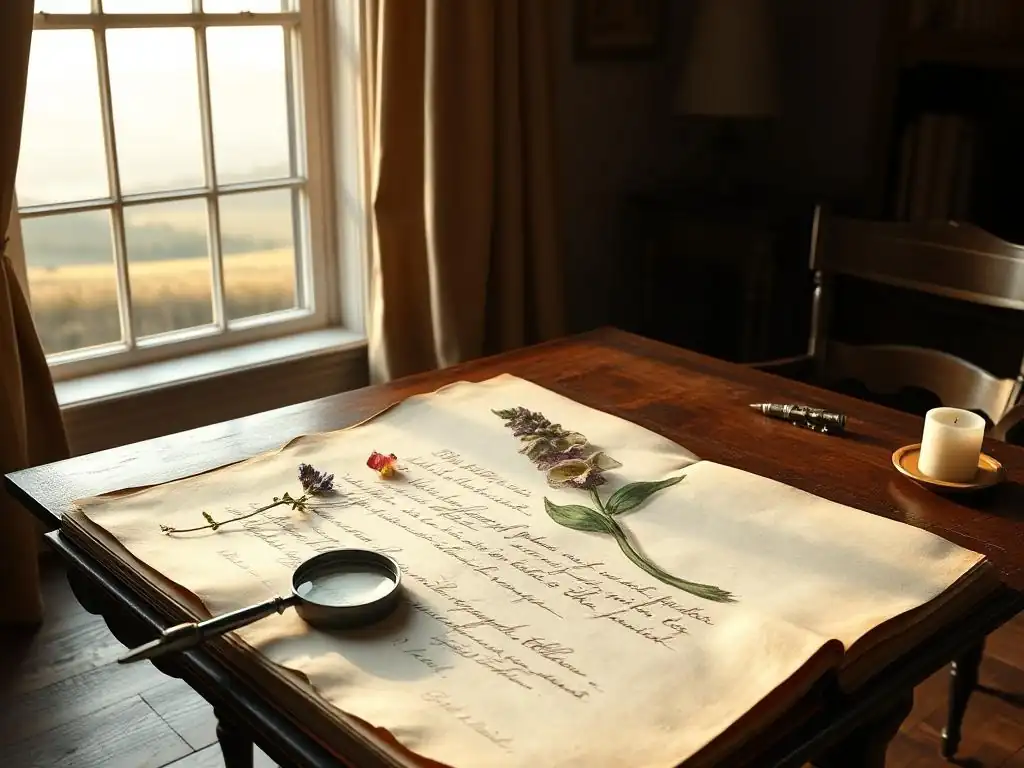
Lacking access to the grand expeditions, laboratories, and extensive scientific instruments available to their male counterparts, many women naturalists 17th-18th century developed a profound reliance on meticulous, close-range observation. Their "laboratories" were often their gardens, local forests, or domestic spaces, where they spent countless hours observing phenomena firsthand. This forced intimacy with their immediate environment fostered an intense focus on empirical evidence, documenting minute details of plant growth, insect behavior, and animal life cycles.
For instance, Maria Sibylla Merian's groundbreaking entomological studies were rooted in years of patient, direct observation of caterpillars transforming into butterflies, a process she documented with unprecedented accuracy. Similarly, other women engaged in botanical illustration, like Elizabeth Blackwell with her Curious Herbal (1737-1739), demonstrated an unwavering commitment to precise depiction based on careful empirical study, often driven by practical applications in medicine or horticulture. This emphasis on granular detail and verifiable data formed a cornerstone of their scientific approach.
A Focus on the Interconnectedness of Natural Systems
The observations of many women naturalists often transcended mere classification, moving towards a more holistic understanding of natural systems. Instead of simply categorizing individual species, they frequently explored the intricate relationships between organisms and their environments. Merian's work, for example, consistently depicted insects alongside the specific plants they fed on, highlighting the vital ecological links that sustained life cycles. This approach foreshadowed modern ecological thought, which emphasizes the interdependence of species within ecosystems.
This focus on interconnectedness contrasted with some of the more reductionist tendencies in male-dominated scientific circles, which often prioritized dissecting, categorizing, and isolating individual components of nature. Women, perhaps due to their domestic roles or less formal scientific training, often brought a broader, more integrated perspective to their studies, seeing nature as a complex, living web rather than a collection of separate parts.
Alternative Methodologies: Blending Domestic Knowledge with Natural Observation
Many early women naturalists ingeniously leveraged their traditional domestic knowledge and roles to inform their scientific pursuits. Skills acquired through gardening, herbalism, animal husbandry, and household management provided a practical, hands-on understanding of natural processes. For example, knowledge of plant cultivation, animal breeding, or the properties of medicinal herbs directly contributed to their botanical or zoological observations.
This blending of practical, domestic experience with scientific curiosity led to unique methodologies. Women might experiment with plant propagation in their gardens, observe the behavior of domestic animals with a scientific eye, or apply their knowledge of cooking and preserving to understand biological decay. This integration of everyday life with scientific inquiry offered perspectives that were often overlooked by male scientists operating in more formalized, detached environments, enriching the empirical data gathered by women naturalists 17th-18th century.
Barriers and Challenges Faced by Early Women Naturalists
Limited Access to Formal Education and Scientific Institutions
The most significant barrier for women pursuing scientific interests in the 17th and 18th centuries was the near-total exclusion from formal educational institutions. Universities, where scientific theories were taught and research conducted, were exclusively male domains. Similarly, burgeoning scientific societies like the Royal Society and the French Academy of Sciences did not admit women as members, effectively denying them access to critical resources, intellectual networks, and opportunities for formal recognition.
This lack of institutional access meant that women had to be largely self-taught or rely on private tutoring, often from family members. They were cut off from libraries, laboratories, instruments, and the intellectual exchange that propelled scientific advancement. Consequently, their research often lacked the formal validation and dissemination channels available to their male counterparts, making it incredibly difficult for their work to gain widespread recognition among the scientific elite.
Societal Expectations and Gender Roles
Beyond institutional barriers, women naturalists 17th-18th century faced immense pressure from prevailing societal expectations and rigid gender roles. Women were primarily expected to occupy domestic roles – wives, mothers, and homemakers – with intellectual pursuits, especially in public or professional spheres, often deemed unfeminine, inappropriate, or even morally questionable. A woman who dedicated herself to scientific study risked social censure, ridicule, or accusations of neglecting her "proper" duties.
This societal disapproval often forced women to conduct their studies in private, publish anonymously, or seek male patronage to lend legitimacy to their work. The very act of intellectual ambition could lead to social isolation or professional discrediting. The pervasive belief in female intellectual inferiority also meant that even when women produced significant scientific work, it was often dismissed or attributed to male influence.
Overcoming Obstacles: Strategies for Pursuing Scientific Interests
Despite these formidable challenges, many women naturalists 17th-18th century demonstrated remarkable ingenuity and resilience in pursuing their scientific passions. One common strategy was leveraging family connections; Dorothea Christiane Erxleben, for instance, benefited from her physician father's tutelage and his advocacy for her right to study. Others, like Maria Sibylla Merian, relied on private patronage or self-funding their ambitious projects, demonstrating immense personal sacrifice and dedication.
Publishing was often achieved through male relatives or under pseudonyms, allowing their work to reach a wider audience, albeit sometimes anonymously. These women often worked in isolation, driven by an inherent intellectual curiosity and a deep love for the natural world, rather than the promise of professional recognition or financial gain. Their ability to overcome societal and institutional barriers through sheer determination, resourcefulness, and intellectual rigor stands as a testament to their profound commitment to science.
Legacy and Impact: The Enduring Influence of Women Naturalists
Inspiring Future Generations of Female Scientists
The pioneering efforts of women naturalists 17th-18th century, though often unacknowledged in their own time, gradually began to serve as powerful precedents for later generations of women aspiring to scientific careers. Figures like Maria Sibylla Merian, whose detailed entomological illustrations were widely recognized, became an early symbol of female scientific capability. Dorothea Christiane Erxleben's legal victory to become Germany's first female doctor provided a tangible example of breaking through deeply entrenched gender barriers.
These early women, by simply pursuing their intellectual passions against overwhelming odds, helped to slowly chip away at the pervasive notion that science was an exclusively male domain. Their courage and intellectual rigor laid foundational stones for future women in science, demonstrating that female intellect was not inherently inferior. While the path remained arduous for centuries, their existence provided crucial inspiration and proof of concept for the ongoing struggle for gender equality in scientific fields.
Redefining the Scope of Natural History and Environmental Studies
The unique perspectives brought by women naturalists 17th-18th century significantly broadened the scope and methodology of natural history. Their emphasis on detailed, empirical observation of life cycles and the interconnectedness of organisms within their environments offered a more holistic view than the purely classificatory or reductionist approaches prevalent in some male-dominated scientific circles. Merian's focus on the entire metamorphosis process and the specific plant-insect relationships, for instance, provided insights crucial to what would later become ecological studies.
Their methodologies, often born from necessity and constrained circumstances, highlighted the value of observations made in informal settings, such as gardens and domestic spaces. This demonstrated that significant scientific contributions could emerge from outside formal institutions. Their work, therefore, contributed to a richer, more nuanced understanding of the natural world, laying conceptual groundwork for the development of modern environmental science and ecological thought, even if their direct influence was not immediately credited.
The Importance of Recognizing and Celebrating Women's Contributions to Science History
A complete and accurate history of science demands the recognition and celebration of all individuals who contributed to its advancement, regardless of gender or societal status. Overlooking the contributions of women naturalists 17th-18th century creates a distorted narrative, perpetuating the myth that scientific progress was solely the domain of men. Acknowledging their work not only corrects historical oversights but also enriches our understanding of the diverse paths and challenges faced by early scientists.
Celebrating these women provides vital role models for contemporary and future female scientists, encouraging greater participation and retention in STEM fields. It underscores the fact that scientific curiosity and intellectual capability are universal, not gender-specific. By integrating the narratives of these pioneering women into the mainstream history of science, we foster a more inclusive and inspiring vision of scientific endeavor for all.
Conclusion: Reclaiming the Narratives of Women in Natural Science
The Ongoing Effort to Highlight the Work of Overlooked Female Scientists
The task of fully integrating the contributions of women naturalists 17th-18th century into the historical narrative of science is an ongoing and vital endeavor. Contemporary scholarship continues to uncover new primary sources, reinterpret existing documents, and apply fresh analytical frameworks to reveal the depth and breadth of women's scientific activities during this period. This sustained effort by historians, biographers, and digital humanities projects ensures that the stories of forgotten female scientists are brought to light, providing a more comprehensive and accurate account of scientific progress.
This ongoing re-evaluation is crucial not only for historical accuracy but also for its contemporary relevance. By meticulously reconstructing the lives and work of these pioneering women, we gain a richer understanding of the societal and intellectual forces that shaped scientific discovery. The rediscovery of these narratives enriches our collective scientific heritage and challenges persistent biases about who can be a scientist.
Women Naturalists 17th-18th Century: A Vital Part of Environmental History
The contributions of women naturalists 17th-18th century are far from mere footnotes; they represent a vital and often understated chapter in the development of environmental history and natural science. Their detailed observations, holistic approaches to understanding interconnected systems, and innovative methodologies, often developed out of necessity, provided unique insights into the natural world that were, in many ways, ahead of their time. They demonstrated that scientific rigor could thrive even outside formal, male-dominated institutions.
These early women, through their dedicated study of flora and fauna, laid crucial groundwork for later ecological thought and conservation efforts. Their passion for documenting and understanding nature, often driven by an intrinsic curiosity rather than professional ambition, highlights the diverse motivations behind scientific inquiry. Their work remains an essential component of the historical record, demonstrating the multifaceted origins of our current environmental understanding.
Recognizing the enduring impact of women's unique perspectives on understanding the natural world.
The enduring impact of women's unique perspectives on understanding the natural world is undeniable. From Maria Sibylla Merian's groundbreaking ecological illustrations to Margaret Cavendish's philosophical critiques of mechanistic science, these women offered alternative ways of seeing and interpreting nature. Their emphasis on detailed observation, the interconnectedness of life, and the integration of domestic knowledge with scientific inquiry enriched the scientific landscape of their time and continues to resonate today.
By acknowledging and celebrating these remarkable women, we not only correct historical omissions but also draw inspiration from their resilience, intellectual courage, and profound contributions. The legacy of women naturalists 17th-18th century serves as a powerful reminder that curiosity about the natural world knows no gender, and that diverse perspectives are essential for a complete and vibrant scientific understanding.
Frequently Asked Questions
How did societal expectations impact women naturalists during the 17th and 18th centuries?
Societal expectations often limited access to formal education and research opportunities. Women naturalists frequently had to overcome gender biases to pursue their scientific interests. Their contributions were often undervalued or attributed to male relatives.
What were some common avenues for women to engage with natural history during this period?
Many women engaged through private study, correspondence with established scientists, and contributing to family estates. Some illustrated botanical specimens or collected and classified natural objects. They also sometimes published anonymously or under male pseudonyms.
What types of scientific contributions did women naturalists make in the 17th and 18th centuries?
Women contributed through botanical illustrations, collecting and classifying specimens, and making detailed observations of the natural world. Some also contributed to horticulture and agriculture, applying their knowledge practically. Their work helped advance scientific understanding in various areas.
What challenges did women face in publishing their scientific findings during this era?
Publishing presented significant hurdles due to limited access to academic journals and scientific societies. They often faced discrimination and skepticism from male colleagues. Securing funding for research and publication was particularly difficult.
How does "WomenInScienceHistory.com" aim to address the historical underrepresentation of women naturalists?
The website actively highlights the stories of pioneering women naturalists. It provides biographies and discussions of their groundbreaking work. The platform aims to inspire future generations by showcasing their contributions.
Final Reflection: Echoes of Observation
The stories of these pioneering women naturalists resonate powerfully today, reminding us that scientific inquiry has always been enriched by diverse perspectives. Their meticulous observations and unwavering curiosity, often conducted in the face of societal constraints, laid crucial groundwork for our understanding of the natural world and continue to inspire a more inclusive approach to scientific exploration.
The impact of these women extends far beyond their individual discoveries. Their dedication to observation and documentation, often overlooked in their time, serves as a potent reminder of the value of diverse voices in shaping our understanding of the world. Look deep into nature, and then you will understand everything better.
- Albert Einstein. This quote, though not from the period, perfectly encapsulates the spirit of these women, who sought understanding through direct engagement with the natural world.
Let us, then, carry forward the torch of curiosity and inclusivity that these women so bravely lit. Consider how you can contribute your own unique perspective to the ongoing conversation about our planet. Observe, question, and share your insights, knowing that every voice, like those of the women naturalists of the 17th and 18th centuries, has the potential to illuminate the world around us.
Unveil Nature's Secrets Through Their Eyes!
Thank you for exploring the fascinating perspectives of women in science during the 1600s and 1700s! We hope you’ve been inspired by their unique contributions and insightful observations. Now, let’s keep that inspiration flowing!
- Dive deeper: Visit our "Notable Women" section on WomenInScienceHistory.com to explore biographies of these groundbreaking scientists and learn more about their discoveries.
- Share their stories: Spread the word by sharing this article with your friends and family on social media. Let’s ensure these pioneering women receive the recognition they deserve!
- Rediscover your surroundings: Take a walk in nature and try to see the world through a fresh, inquisitive lens – what new details will you notice?
Which of these remarkable women's scientific approaches resonates most with you, and how might you apply it to your own explorations of the natural world?