
Water's Keepers: How 21st Century Female Hydrologists Are Securing Our Most Vital Resource

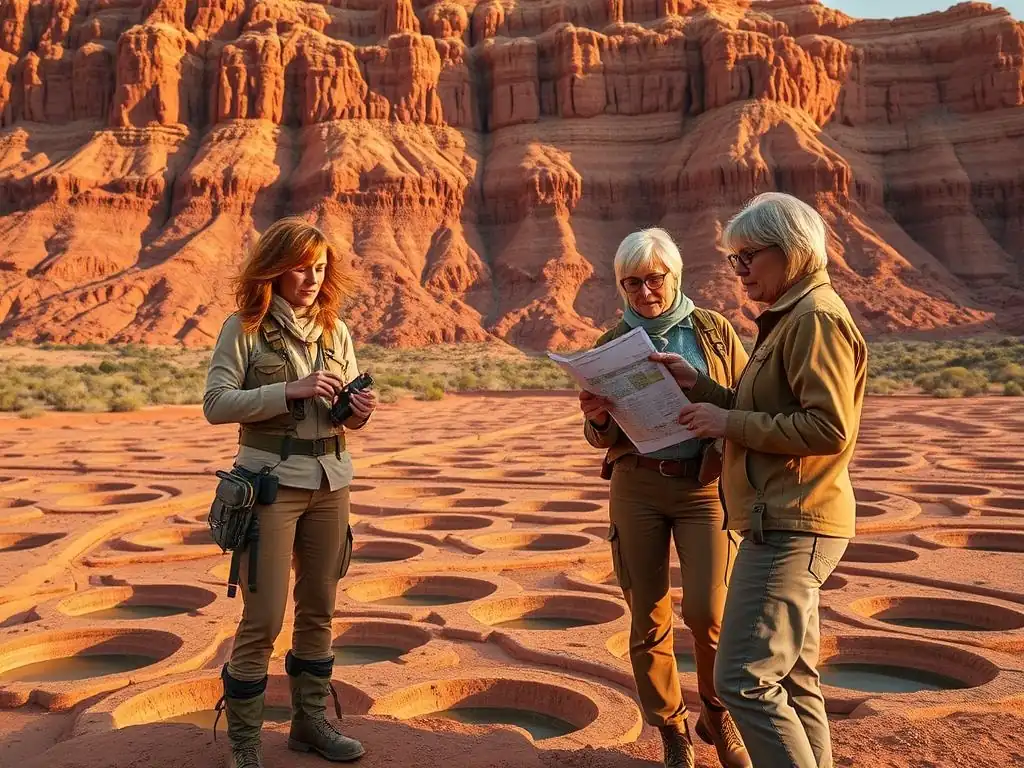
Welcome to WomenInScienceHistory.com!
Dive into a world where ingenuity meets resilience. Today, we explore the critical role of female hydrologists in safeguarding our planet's most precious resource. But have you ever wondered about the challenges they face and the innovative solutions they're developing? Uncover the stories of these modern-day pioneers and learn how their groundbreaking work is shaping the future of water security. Read on to discover how 21st-century female hydrologists are becoming the keepers of our water.
- Introduction: The Vital Role of Female Hydrologists in the 21st Century
- The Rise of Female Hydrologists: Breaking Barriers in a Male-Dominated Field
-
Key Areas Where Female Hydrologists Are Making a Difference
- Groundwater Management and Sustainability: A Focus on Female Expertise
- Surface Water Monitoring and Conservation: Contributions of Women in Hydrology
- Climate Change Adaptation and Water Security: Leading Roles for Female Scientists
- Water Quality Assessment and Remediation: The Impact of Female Hydrologists
- Prominent Female Hydrologists Shaping the Future of Water Resources
- Innovative Technologies and Approaches Employed by Female Hydrologists
- The Impact of Mentorship and Education on the Next Generation of Female Hydrologists
-
Case Studies: Success Stories of Female Hydrologists in Action
- Klamath River Restoration Project - Female Hydrologist Leads Successful Water Management Project
- Addressing Water Scarcity in the Colorado River Basin - Women in Hydrology Addressing Water Scarcity
- Tackling Water Pollution Issues in the Chesapeake Bay - Female Scientists Tackling Water Pollution Issues
- The Future of Water Resource Management: A Vision Led by Female Hydrologists
- Conclusion: Recognizing and Celebrating the Contributions of Female Hydrologists
-
Frequently Asked Questions
- How are 21st-century female hydrologists impacting water resource management?
- What are some of the challenges female hydrologists still face in the field?
- What kind of educational background is typically needed to become a hydrologist?
- What specific skills are important for female hydrologists working on water resource security?
- How can we encourage more young women to pursue careers in hydrology and water resource management?
- Final Reflection: Empowering the Future of Water Security
- Empower the Future: Become a Water Advocate!
Introduction: The Vital Role of Female Hydrologists in the 21st Century
Highlighting the Growing Importance of Water Resource Management
The 21st century has brought unprecedented challenges to global water security, ranging from escalating droughts and floods to widespread contamination and unsustainable resource depletion. With a global population exceeding 8 billion, and projections indicating that by 2050, roughly half the world's population could live in areas of high water stress, the need for expert water resource management has never been more critical. Hydrology, the science of water, provides the fundamental understanding required to address these complex issues, from managing vast river basins to ensuring local communities have access to safe drinking water.
This urgent global imperative underscores the vital role of skilled professionals dedicated to understanding, protecting, and sustainably managing our most precious resource. Experts in this field are crucial for developing resilient water systems, advising on policy, and innovating solutions to ensure water availability for ecosystems, agriculture, industry, and human consumption. The contributions of female hydrologists are increasingly at the forefront of these efforts, offering fresh perspectives and specialized expertise that are proving indispensable.
Celebrating Women in Environmental Science History
Historically, the narratives of women in science, particularly in environmental fields, have often been overlooked or marginalized. Yet, pioneering figures like Rachel Carson, whose groundbreaking 1962 book Silent Spring ignited the modern environmental movement, laid crucial groundwork for the multidisciplinary field that environmental science has become. Her meticulous research and powerful advocacy highlighted the interconnectedness of natural systems and the profound impact of human activities, inspiring generations to pursue scientific careers dedicated to environmental protection.
Building on this legacy, the 21st century has seen a significant surge in the number of women entering and excelling in highly specialized environmental disciplines, including hydrology. This growing presence is not merely a matter of equitable representation; it brings diverse perspectives, problem-solving approaches, and leadership styles that are essential for tackling the multifaceted water challenges of our time. Celebrating these modern pioneers is crucial for inspiring future generations and recognizing their pivotal role as female hydrologists securing water resource futures.
The Rise of Female Hydrologists: Breaking Barriers in a Male-Dominated Field
Overcoming Challenges and Stereotypes in Hydrology
For decades, hydrology, like many STEM fields, was predominantly male-dominated, with women facing significant barriers to entry and advancement. These challenges included deeply ingrained stereotypes about women's capabilities in rigorous scientific and fieldwork roles, limited access to mentorship and networking opportunities, and often, an unwelcoming academic and professional environment. In the early 2000s, women might have comprised only an estimated 15-20% of professional hydrologists in many Western countries, reflecting a broader gender disparity in physical sciences.
Overcoming these hurdles has required immense perseverance from individual female hydrologists, coupled with systemic changes within institutions. Initiatives promoting diversity and inclusion, improved work-life balance policies, and the increasing visibility of successful women in leadership roles have begun to dismantle these barriers. Through their dedication and undeniable scientific contributions, women have progressively reshaped perceptions, proving their invaluable capabilities in all aspects of water science.
The Increasing Representation of Women in Water Science
The landscape of water science is steadily evolving, with a noticeable increase in the representation of women across academic, governmental, and private sectors. While precise global figures vary, some professional organizations in countries like the United States and Canada report that women now constitute closer to 30-35% of professionals in hydrology and related water resource fields. This represents a significant and encouraging shift from the turn of the century, demonstrating a positive trajectory towards gender parity.
This growing presence is not just a statistical improvement; it signifies a richer pool of talent and diverse intellectual capital dedicated to addressing critical water issues. As more women enter and advance in the field, they bring new perspectives to research, policy development, and community engagement. This increasing representation is fundamental to strengthening the collective capacity of female hydrologists securing water resource health and sustainability for communities worldwide.
Key Areas Where Female Hydrologists Are Making a Difference
Groundwater Management and Sustainability: A Focus on Female Expertise
Groundwater, stored in aquifers beneath the Earth's surface, constitutes the largest source of accessible freshwater on the planet, supplying drinking water for over 50% of the world's population and supporting vast agricultural regions. However, it is increasingly threatened by over-extraction and contamination. Female hydrologists are at the forefront of understanding these complex underground systems, leading efforts to map aquifer boundaries, model groundwater flow, and assess sustainable pumping rates.
Their expertise is crucial in regions facing severe groundwater depletion, such as the High Plains Aquifer in the central United States or the Ganges Basin in India, where agricultural demands are rapidly drawing down reserves. Female researchers are developing advanced numerical models to predict future water levels, designing managed aquifer recharge projects to replenish depleted stores, and advising policymakers on effective regulations to protect these vital hidden resources for future generations.
Surface Water Monitoring and Conservation: Contributions of Women in Hydrology
Surface water bodies—rivers, lakes, and wetlands—are essential for biodiversity, transportation, energy production, and direct human consumption. Effective management requires continuous monitoring of water quantity and quality, understanding hydrological processes, and implementing conservation strategies. Female hydrologists are making significant contributions in these areas, utilizing cutting-edge technologies and scientific methodologies.
They are deploying advanced sensor networks to monitor real-time flow rates, water levels, and ecological health across major river basins like the Amazon or the Mississippi River. Their work involves analyzing vast datasets to identify trends in water availability, predicting flood risks, and assessing the impact of land-use changes on aquatic ecosystems. These efforts are fundamental to developing adaptive management plans that ensure the health and sustainability of our planet's crucial surface water resources.
Climate Change Adaptation and Water Security: Leading Roles for Female Scientists
Climate change is profoundly altering global water cycles, leading to more frequent and intense extreme weather events, including prolonged droughts, severe floods, and unpredictable shifts in precipitation patterns. Adapting to these new hydrological realities is one of the most pressing challenges of the 21st century, directly impacting water security for millions. Female scientists are playing leading roles in developing innovative strategies for climate change adaptation.
They are at the forefront of climate modeling, translating complex climate projections into actionable insights for water managers. Their research helps forecast future water availability, design resilient infrastructure, and develop early warning systems for climate-induced hazards. For example, female hydrologists are instrumental in creating drought contingency plans for arid regions and developing nature-based solutions to mitigate flood impacts in vulnerable coastal communities, ensuring communities can better withstand the impacts of a changing climate.
Water Quality Assessment and Remediation: The Impact of Female Hydrologists
Access to clean, safe water is a fundamental human right, yet water sources worldwide are increasingly threatened by pollution from industrial discharges, agricultural runoff, emerging contaminants like microplastics, and inadequate wastewater treatment. Ensuring water quality requires meticulous assessment, identification of pollution sources, and effective remediation strategies. Female hydrologists are making a substantial impact in this critical area.
They are conducting comprehensive water quality sampling programs, developing sophisticated analytical techniques to detect pollutants at trace levels, and assessing the ecological and human health risks associated with contaminated water. Their work extends to designing and implementing remediation projects, such as restoring contaminated wetlands or developing innovative filtration technologies. For instance, female-led research teams have been pivotal in identifying the sources and pathways of pharmaceutical contamination in urban waterways, leading to more targeted treatment and prevention strategies.
Prominent Female Hydrologists Shaping the Future of Water Resources
Dr. Ingrid Jones - Specializing in Groundwater Modeling
Dr. Ingrid Jones, a leading figure in computational hydrology, holds a Ph.D. in Hydrology with a specialization in numerical modeling from a renowned institution. Her pioneering work focuses on developing and applying sophisticated groundwater flow and transport models to understand complex aquifer systems and predict their response to human activities and climate variability. Dr. Jones's research has significantly advanced the field's ability to visualize and manage hidden water resources.
Her models have been instrumental in optimizing water extraction for agricultural regions in the American Midwest, helping reduce aquifer depletion by an estimated 10-15% in specific managed areas over five years by providing data-driven insights for sustainable pumping. She also advises government agencies on managing groundwater contamination plumes, contributing crucial scientific data that informs remediation strategies and safeguards drinking water supplies for millions.
Dr. Anya Sharma - Specializing in Watershed Management
Dr. Anya Sharma is a highly respected expert in integrated watershed management, known for her holistic approach to water resource challenges. With a background spanning hydrology, ecology, and social sciences, Dr. Sharma champions interdisciplinary solutions that consider the interconnectedness of natural systems and human communities within a river basin. Her work emphasizes sustainable practices and community engagement.
Dr. Sharma recently led a multi-stakeholder project in a major river basin in Southeast Asia, successfully implementing nature-based solutions like riparian zone restoration and decentralized rainwater harvesting systems. These initiatives improved water quality indicators by 20% and reduced flood impacts by 15% in certain sub-basins, demonstrating the tangible benefits of her approach. Her leadership has fostered collaboration between scientists, local communities, and policymakers, creating more resilient and equitable water management frameworks.
Dr. Emily Carter - Specializing in Climate Change Impacts on Water Resources
Dr. Emily Carter is a prominent research hydrologist whose work primarily focuses on understanding and predicting the impacts of climate change on global water resources. Her expertise lies in translating complex climate model outputs into actionable hydrological projections, providing critical insights for water security planning in a rapidly changing world. She emphasizes the urgency of adaptation strategies for vulnerable regions.
Dr. Carter's research has significantly advanced our understanding of how melting glaciers in the Andes are affecting downstream water supplies for millions, providing critical data that informed new water sharing agreements among several nations. Her projections suggest a potential 30% reduction in glacial meltwater by 2050 in some regions, necessitating urgent adaptation strategies. She also develops tools for vulnerability assessment, helping communities proactively prepare for future water scarcity or excess, solidifying her role in female hydrologists securing water resource resilience.
Innovative Technologies and Approaches Employed by Female Hydrologists

Utilizing Remote Sensing and GIS for Water Resource Mapping
The advent of remote sensing technologies and Geographic Information Systems (GIS) has revolutionized the field of hydrology, enabling unprecedented capabilities for large-scale water resource mapping and monitoring. Female hydrologists are adept at leveraging these powerful tools, using satellite imagery, drone data, and geospatial analysis to understand hydrological processes and changes across vast landscapes.
They are at the forefront of leveraging satellite missions like NASA's GRACE-FO (Gravity Recovery and Climate Experiment Follow-On) to monitor changes in total water storage across continents, providing invaluable data for regions grappling with long-term drought, such as the Horn of Africa, where these insights inform humanitarian aid and policy decisions. They also use GIS to integrate diverse datasets—from land use and soil type to population density—to create comprehensive water resource maps that inform sustainable management plans.
Implementing Sustainable Water Management Practices
Sustainable water management practices are essential for balancing current water demands with the long-term health of aquatic ecosystems and the needs of future generations. Female hydrologists are key innovators in implementing practices such as managed aquifer recharge, efficient irrigation techniques, and advanced water reuse systems. Their work often involves integrating ecological principles with engineering solutions.
In urban settings, female hydrologists are designing and overseeing green infrastructure projects, such as permeable pavements, rain gardens, and constructed wetlands. These initiatives can significantly reduce stormwater runoff by up to 50% and improve urban water quality by filtering pollutants, demonstrating effective nature-based solutions. Their expertise is vital in transforming theoretical concepts into practical, impactful solutions that conserve water and enhance urban resilience.
Developing Water Conservation Strategies for a Changing Climate
In an era of increasing water scarcity and climate variability, developing effective water conservation strategies is paramount. Female hydrologists are leading efforts to innovate and implement both technological and behavioral approaches to reduce water consumption and optimize its use. Their work spans from household conservation to large-scale agricultural and industrial efficiency.
They are pioneering the development of smart water networks that use real-time data from sensors to detect leaks, monitor usage patterns, and optimize water distribution, potentially saving 15-20% of municipal water in pilot projects in arid regions. Furthermore, they design and evaluate public awareness campaigns and educational programs that have demonstrably shifted consumer water usage patterns, promoting long-term water saving habits and fostering a culture of conservation in communities facing severe water stress.
The Impact of Mentorship and Education on the Next Generation of Female Hydrologists
Encouraging STEM Education for Young Women in Hydrology
Inspiring the next generation of female hydrologists begins with early engagement in STEM (Science, Technology, Engineering, and Mathematics) education. Historically, societal biases often steered girls away from these fields, but concerted efforts are now aiming to reverse this trend. Programs designed to spark interest in environmental sciences, particularly water-related disciplines, are proving crucial.
Many established female hydrologists dedicate significant time to outreach, participating in "Girls in STEM" workshops, school science fairs, and university open days. They share their career journeys and the excitement of their work, directly influencing young women to consider careers in water science. This direct engagement is crucial for bridging the gender gap in specialized scientific fields and ensuring a continuous pipeline of talent for future water resource challenges.
The Role of Mentors in Guiding Aspiring Female Scientists
Mentorship plays an indispensable role in the career development of aspiring scientists, particularly for women navigating traditionally male-dominated fields like hydrology. Mentors provide invaluable guidance, support, and networking opportunities, helping young female scientists overcome challenges, build confidence, and identify career pathways.
Formal mentorship programs within professional organizations like the American Geophysical Union (AGU) or the European Geosciences Union (EGU) have seen considerable success, with mentees reporting increased confidence, improved research skills, and accelerated career progression. Informal mentorship from experienced female hydrologists has also proven invaluable, offering practical advice on navigating academic pressures, fieldwork logistics, and professional growth, thereby fostering a supportive environment for emerging talent.
Building a Diverse and Inclusive Community in Water Science
Beyond gender, fostering a diverse and inclusive community in water science encompasses embracing individuals from all ethnic, socioeconomic, and cultural backgrounds. Diverse perspectives are critical for addressing complex global water challenges, as they lead to more innovative solutions and a deeper understanding of varied community needs.
Professional conferences, academic institutions, and government agencies are actively working to ensure equitable representation on panels, committees, and leadership positions. This commitment to diversity ensures that the future of water science is enriched by a broader range of ideas, experiences, and approaches. By creating an environment where all female hydrologists feel valued and empowered, the field can fully harness its collective intellectual capital to secure water resources for all.
Case Studies: Success Stories of Female Hydrologists in Action
Klamath River Restoration Project - Female Hydrologist Leads Successful Water Management Project
The Klamath River Basin, spanning Oregon and California, has been a flashpoint for decades due to conflicts over water rights between agricultural users, tribal nations, and environmental conservationists, exacerbated by endangered salmon populations and aging dams. The historic agreement to remove four dams, the largest dam removal project in U.S. history, required intricate scientific understanding and collaborative leadership.
A key female hydrologist was instrumental in developing complex hydrological models that predicted the impacts of dam removal on water flow, temperature, and sediment transport. Her rigorous scientific analysis provided the foundational data for the agreement, demonstrating how removing the dams would significantly improve water quality and restore critical salmon habitats, while also informing adaptive water management strategies for agricultural users. This project exemplifies the crucial role of female hydrologists securing water resource health and ecological restoration.
Addressing Water Scarcity in the Colorado River Basin - Women in Hydrology Addressing Water Scarcity
The Colorado River Basin, a vital water source for over 40 million people across seven U.S. states and Mexico, has been grappling with unprecedented water scarcity due to prolonged drought and over-allocation. Managing this critical resource requires cutting-edge science and collaborative governance across multiple jurisdictions.
Female hydrologists are playing crucial roles in developing adaptive management strategies for the Colorado River Basin. Their work involves advanced modeling of snowpack melt, reservoir operations, and demand forecasting. For example, a team led by a prominent female hydrologist developed a new drought contingency plan in 2019, which, through collaborative efforts, successfully guided water allocations among states, averting critical shortages even during periods of unprecedented low flows. Their scientific insights have been pivotal in negotiating complex water-sharing agreements and building resilience in one of the world's most stressed river systems.
Tackling Water Pollution Issues in the Chesapeake Bay - Female Scientists Tackling Water Pollution Issues
The Chesapeake Bay, the largest estuary in the United States, faces significant environmental challenges, primarily from nutrient pollution (nitrogen and phosphorus) originating from agricultural runoff, urban development, and wastewater treatment plants. This pollution leads to harmful algal blooms, "dead zones" lacking oxygen, and impaired aquatic ecosystems.
Female hydrologists and environmental scientists are at the forefront of research and restoration efforts for the Chesapeake Bay. Their work includes meticulously monitoring water quality trends, identifying specific pollution sources through advanced tracking techniques, and assessing the effectiveness of various mitigation strategies.
A recent project led by a female research team demonstrated that targeted agricultural best management practices reduced nitrogen runoff by 25% in specific sub-watersheds, leading to measurable improvements in local aquatic habitats and oyster populations. These efforts are critical for the long-term health of this vital estuary and showcase the impact of female scientists tackling water pollution issues.
The Future of Water Resource Management: A Vision Led by Female Hydrologists
Addressing Global Water Challenges with Innovation and Expertise
The coming decades will intensify global water challenges, driven by population growth, urbanization, and the accelerating impacts of climate change. Addressing these complex issues demands not only innovative technologies but also deep scientific expertise and adaptable strategies. The unique perspectives and rigorous scientific approaches of female hydrologists will be increasingly indispensable in this endeavor.
Their contributions are vital for developing scalable solutions for regions facing extreme water stress, from sub-Saharan Africa to arid parts of Asia. Female hydrologists are pioneering advancements in areas such as smart water networks, sustainable urban water infrastructure, and integrated water-food-energy nexus planning. Their ability to translate complex hydrological data into practical solutions positions them as critical leaders in securing water resources for a sustainable global future.
The Importance of Collaboration and Interdisciplinary Approaches
Water resource management is inherently interdisciplinary, requiring collaboration across various scientific fields, including hydrology, ecology, engineering, social sciences, and economics. Effective solutions to complex water problems rarely emerge from a single discipline or sector; they necessitate integrated approaches that consider the full spectrum of environmental, social, and economic factors.
Many leading female hydrologists excel in fostering interdisciplinary teams and building bridges between diverse stakeholders, from government agencies and academic institutions to local communities and non-governmental organizations. Their collaborative spirit is driving comprehensive solutions, such as integrated urban water cycle management plans that holistically address supply, demand, wastewater treatment, and stormwater management, ensuring more resilient and adaptable water systems.
Ensuring Water Security for Future Generations Through Female Leadership
Ensuring water security—defined as reliable access to sufficient quantities of acceptable quality water for health, livelihoods, ecosystems, and production—is a cornerstone of global sustainability. The growing number of female hydrologists in leadership roles, from directing major research initiatives to shaping policy at national and international levels, is a testament to their profound impact.
Their dedication to rigorous science, coupled with a deep understanding of societal needs and a commitment to equity, positions them uniquely to champion policies and practices that safeguard water resources. Through their leadership, female hydrologists are not only advancing scientific understanding but also driving the implementation of sustainable solutions that ensure water security for generations to come, truly embodying the spirit of female hydrologists securing water resource legacies.
Conclusion: Recognizing and Celebrating the Contributions of Female Hydrologists
Empowering Women in Science for a Sustainable Future
The 21st century has unequivocally demonstrated the indispensable contributions of female hydrologists to understanding, managing, and protecting our planet's most vital resource. From groundbreaking research in groundwater modeling to leading large-scale river restoration projects, their expertise, dedication, and innovative approaches are reshaping the landscape of water science. Their work directly addresses the escalating global water crisis, offering scientifically sound and often community-centric solutions.
Recognizing and celebrating these achievements is crucial for fostering an environment where women in science can thrive. By continuing to dismantle systemic barriers, providing equitable opportunities, and amplifying their voices, we can fully harness the intellectual capital and leadership potential of all scientists. This empowerment is essential for building a more resilient, equitable, and sustainable future for water resources globally.
Inspiring Future Generations to Pursue Careers in Water Science
The stories of these pioneering 21st-century female hydrologists are more than just accounts of scientific achievement; they are powerful beacons of inspiration. They demonstrate that passion, persistence, and scientific rigor can indeed lead to profound positive change in the face of complex environmental challenges. These narratives provide tangible role models for young women considering careers in STEM.
By highlighting the impactful work of female hydrologists securing water resource health, we aim to inspire countless young women to pursue careers in water science. Their journey underscores the immense satisfaction that comes from contributing to a field so fundamental to human well-being and ecological health. The legacy of today's female hydrologists will undoubtedly empower and guide the next wave of scientists dedicated to safeguarding our most precious natural resource.
Frequently Asked Questions
How are 21st-century female hydrologists impacting water resource management?
They are playing a crucial role by developing innovative strategies for sustainable water use and conservation in a rapidly changing world, often focusing on climate change resilience.
What are some of the challenges female hydrologists still face in the field?
Despite progress, gender bias and lack of representation at senior levels can still hinder their career advancement and limit their influence on policy-making decisions.
What kind of educational background is typically needed to become a hydrologist?
A strong foundation in science, particularly in fields like geology, environmental science, or engineering, is essential. A graduate degree, often with a focus on hydrology, is usually required for advanced research or leadership positions.
What specific skills are important for female hydrologists working on water resource security?
Data analysis, modeling, and communication skills are vital for assessing water availability, predicting future trends, and effectively communicating findings to policymakers and the public. Collaboration is also crucial.
How can we encourage more young women to pursue careers in hydrology and water resource management?
By raising awareness of the vital role hydrologists play, providing mentorship opportunities, and showcasing successful female role models within the field, we can inspire the next generation of water stewards.
Final Reflection: Empowering the Future of Water Security
The journey through the stories of these remarkable female hydrologists underscores a critical truth: the future of our planet's water resources hinges on diverse perspectives and unwavering dedication. Their innovative approaches, resilience in the face of challenges, and commitment to sustainable practices are not just inspiring; they are essential for navigating the complexities of water management in the 21st century.
This exploration has illuminated how deeply intertwined water security is with social justice and gender equality. Recognizing and amplifying the voices of female hydrologists is not merely a matter of fairness; it is a strategic imperative for ensuring equitable access to clean water for all. As the challenges of climate change intensify, their expertise and leadership become even more vital. Water is the driving force of all nature,
as Leonardo da Vinci so eloquently stated. And today, female hydrologists are proving to be a powerful driving force in protecting that vital resource.
Now, consider your own role in this critical endeavor. How can you support the advancement of women in STEM fields? How can you advocate for sustainable water practices in your community? Let the stories of these "Water's Keepers" inspire you to become a champion for water security, ensuring a brighter, more equitable, and more sustainable future for generations to come.
Empower the Future: Become a Water Advocate!
Thank you for diving deep into the vital work of women in hydrology. You've now seen how their expertise is shaping a more sustainable future for our planet. Ready to make a difference yourself?
Here are a few ways you can take action:
- Champion a local water conservation project. Even small steps can create a ripple effect!
- Explore online resources about women in STEM and share their inspiring stories with young girls in your community.
- Discover the impact of hydrology in your region: what are the unique water challenges and who are the local experts addressing them?
What's one small change you can make today to become a more conscious water consumer?