From [Her Discovery] to Today: The Evolving Impact of [Name]'s Research
🌟 Tracing the journey from her groundbreaking discovery to today, this article highlights the enduring influence of [Name]'s work in shaping scientific…
Read article
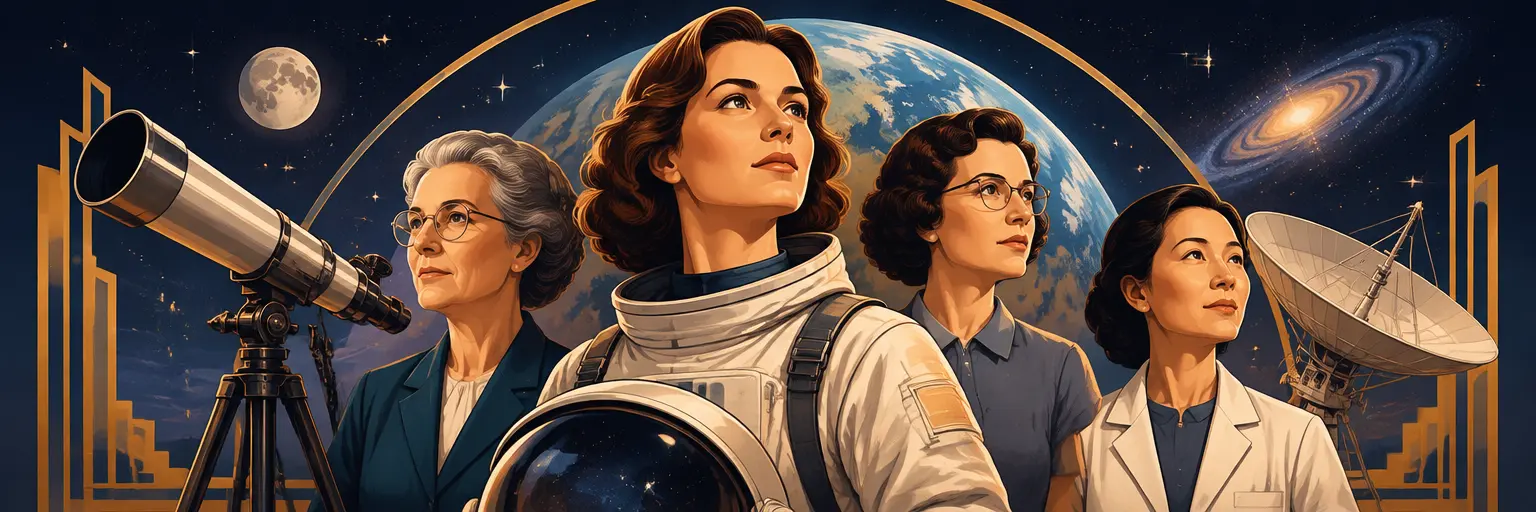
Discover the inspiring stories of trailblazing women who defied gravity and shattered glass ceilings in space science and astronomy. From calculating the trajectories that sent Apollo missions to the Moon to discovering pulsars and leading Mars rover explorations, these biographies reveal the brilliance, resilience, and relentless curiosity of female pioneers. Uncover hidden histories of astronomers who mapped the stars, physicists who decoded the cosmos, and engineers who built the technology that took humanity beyond Earth. Each profile highlights their groundbreaking contributions, the barriers they overcame in male-dominated fields, and the lasting impact on our understanding of the universe. Perfect for students, educators, and space enthusiasts, these narratives not only celebrate their achievements but also serve as powerful role models for the next generation of explorers. Dive into the lives of these remarkable women and see the universe through their eyes—where every discovery was a victory against adversity, and every mission a step toward equality among the stars.
🌟 Tracing the journey from her groundbreaking discovery to today, this article highlights the enduring influence of [Name]'s work in shaping scientific…
Read article
🌟 Explore the inspiring story of [Name], a pioneering woman scientist who overcame significant historical challenges, showcasing resilience and innovation. Her journey…
Read article
🌟 Through relentless dedication, [Name]'s perseverance not only confirmed a major astronomical theory but also exemplified the power of women in astronomy…
Read article
🌟 Vera Rubin’s groundbreaking work on galaxy rotation curves provided compelling evidence for dark matter, revolutionizing our understanding of the universe and…
Read article
🌟 Rediscover the remarkable "Lost Notebooks" of a forgotten female scientist whose pioneering astronomical insights have been long overlooked, highlighting her vital…
Read article
🌟 Discover the untold story of [Name], a pioneering woman whose groundbreaking work reshaped science. This Forgotten female scientist biography tips highlight…
Read article
🌟 Celebrating the pioneering spirit of women like [Name], whose visionary Women’s early space theories laid the groundwork for modern astronomy, inspiring…
Read article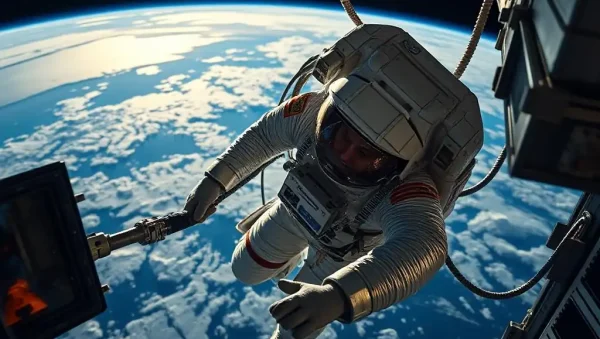
🚀 Sunita Williams's extraordinary spacewalks exemplify overcoming the "Sunita Williams space walk challenges," inspiring future women scientists. Her pioneering missions aboard the…
Read article
🌟 Discover the personal letters of [Name], offering an intimate glimpse into the life of a woman shaping space science. Her story…
Read article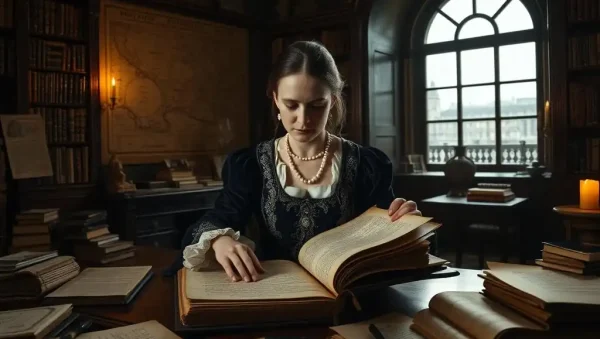
🌟 Discover Émilie du Châtelet’s Newton translation, a groundbreaking work that bridged gender gaps in science history, showcasing her vital role in…
Read article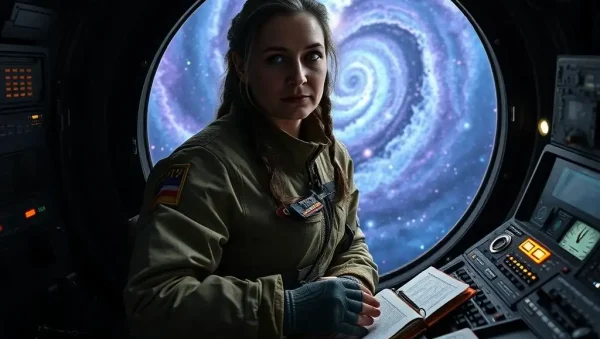
🚀 Celebrating Women in space history, [Name] overcame silent struggles to make groundbreaking contributions to space exploration. Her story exemplifies resilience, inspiring…
Read article
🌟 Discover the inspiring journey of Williamina Fleming, whose astronomical discoveries biography highlights her remarkable rise from maid to pioneering astronomer, including…
Read articleExplore the remarkable lives of the women who defied gravity and societal norms to unlock the secrets of the cosmos. This curated collection within WomenInScienceHistory.com focuses exclusively on pioneering female astronomers, astrophysicists, and space scientists. From early sky mappers to modern mission controllers, these biographies delve into their groundbreaking research, personal perseverance, and lasting legacies. Perfect for students, educators, and space enthusiasts, this resource aims to inspire the next generation of explorers with real stories of resilience and intellectual brilliance.
Discover the foundational contributions of women like Caroline Herschel, who discovered multiple comets in the 18th century, and Henrietta Swan Leavitt, whose work on Cepheid variables changed the scale of the universe. This section focuses on the era when women were often relegated to manual computing roles despite their intellectual capital. You’ll learn how their meticulous observations and cataloging laid the groundwork for modern astrophysics.
These biographies highlight not just astronomical achievements but also the strategic ways these women navigated restrictive academic environments. Expect detailed accounts of their education, the male collaborators who championed them, and the institutional barriers they broke. Through these stories, you’ll appreciate how early female astronomers used persistence and precise data analysis to earn a permanent place in the scientific canon.
Move into the 20th century with profiles of women like Katherine Johnson, whose calculations were critical to NASA’s early missions, and Margaret Hamilton, whose software engineering guided the Apollo landings. This segment examines the “Hidden Figures” era, when female mathematicians and engineers worked behind the scenes. You’ll explore their indispensable roles in orbital mechanics, trajectory analysis, and mission software design.
Beyond technical skills, these biographies reveal the social dynamics of the Space Race, including racial segregation and gender discrimination. Each profile includes primary source quotes and historical context to show how these women overcame dual biases. By highlighting their everyday problem-solving and NASA’s evolving policies, this section offers a nuanced look at how female talent became indispensable to human spaceflight.
Delve into contemporary figures such as Jocelyn Bell Burnell, who discovered pulsars, and Vera Rubin, who provided evidence for dark matter. This section covers women who reshaped fundamental cosmology and high-energy astrophysics. Readers will find detailed narratives on their doctoral research, key publications, and the often-simultaneous fight for professional recognition, including Nobel Prize controversies and their responses to such exclusion.
These biographies are updated with recent career milestones, including leadership roles in major observatories and international collaborations. You’ll also learn about their mentoring networks and public science advocacy. Emphasizing their theoretical breakthroughs and observational innovations, this segment positions modern female astrophysicists as central drivers of our current understanding of galaxies, black holes, and the universe’s expansion.
Meet the women who personally traveled beyond Earth’s atmosphere, from Valentina Tereshkova, the first woman in space, to Sally Ride, the first American woman astronaut, and Mae Jemison, the first Black woman in space. This subcategory focuses on their training, mission-specific contributions, and the intense media scrutiny they faced. You’ll find detailed logs of their flights, experiments conducted, and their post-NASA advocacy for STEM education.
Besides mission details, this section explores their experiences with public perception, family sacrifices, and the expansion of astronaut roles to include science officers and payload specialists. Each biography includes before-and-after narratives of their lives, showing how they leveraged their orbital experience to become ambassadors for space exploration. Expect honest reflections on physical challenges and the psychological resilience required for long-duration spaceflight.
This thematic section examines the compounded obstacles faced by women of color and those from non-Western backgrounds in space science. Profiles include Chien-Shiung Wu (often called the “First Lady of Physics”), France Córdova, and Kalpana Chawla. It sheds light on how ethnicity, nationality, and gender intersected to shape their career paths, access to funding, and historical visibility.
Through these narratives, you’ll understand how mentorship, institutional support, and personal advocacy were crucial to their success. The biographies also address the erasure of their contributions from mainstream history and the recent efforts to restore their legacies through books, films, and honorary degrees. This section is invaluable for researchers studying diversity in STEM and for readers seeking role models who persisted against multiple systemic barriers.
While Hypatia of Alexandria is often cited as the first recorded female astronomer/mathematician (c. 350-415 AD), the most documented early modern pioneer is Caroline Herschel. She was the first woman to discover a comet (1786), the first to be paid for scientific work, and the first to be awarded a Gold Medal from the Royal Astronomical Society (1828).
The term comes from Margot Lee Shetterly’s book about African American women at NASA, like Katherine Johnson. It refers to women whose calculations were essential to space missions but whose names were omitted from official records and media due to segregation and sexism. They worked as “human computers” but received little public credit until recent documentaries and films.
No. The 1974 Nobel Prize in Physics was awarded solely to her supervisor, Antony Hewish, and Martin Ryle for the discovery of pulsars. Bell Burnell was excluded, which became a major controversy. However, she was later honored with numerous awards, including a CBE, and used her Breakthrough Prize funds (2018) to support women in physics.
It occurred on October 18, 2019, when NASA astronauts Christina Koch and Jessica Meir performed a spacewalk to replace a power controller outside the International Space Station. The historic event was significant because it represented a step forward for gender equity in spaceflight after decades of male-dominated EVA assignments.
Yes, this subcategory includes active researchers like Nadia Drake, Jane Rigby, and Knicole Colón, among others. We update these profiles periodically to reflect new discoveries, awards, and mission roles, ensuring readers have access to current information about women shaping modern space science and astronomy.