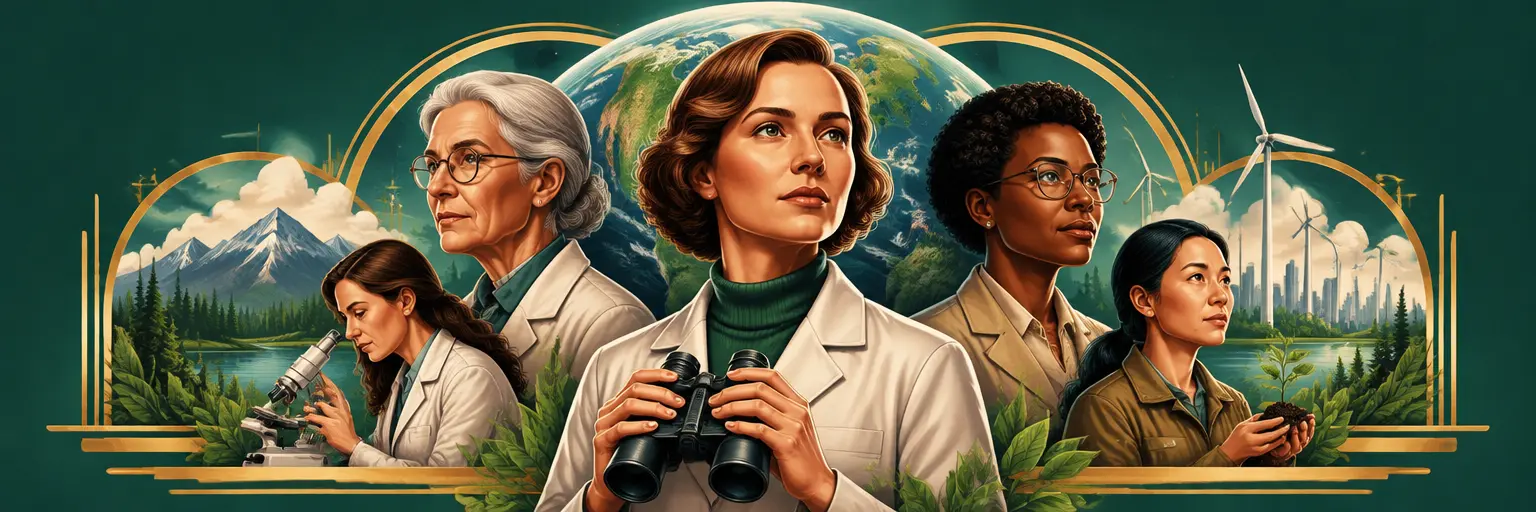
Women in Environmental Science: Biographies That Inspire Change
Welcome to our dedicated collection of biographies spotlighting the remarkable women who shaped environmental science. From Rachel Carson’s revolutionary Silent Spring to the modern climate advocacy of Katharine Hayhoe, these stories reveal courage, curiosity, and resilience. Here, you’ll explore how women overcame institutional barriers, pioneered ecological research, and redefined our relationship with the natural world. Each profile is crafted with accurate historical detail, making this an ideal resource for students, educators, and lifelong learners seeking role models in sustainability, conservation, and Earth sciences.
🌿 Pioneers of Ecology and Conservation
This section introduces you to the foremothers of environmental thought, such as Ellen Swallow Richards, the first woman admitted to MIT, who founded the field of ecology through her water quality studies. You’ll also meet Susan Fenimore Cooper, whose 1850 work Rural Hours predated Thoreau’s environmental essays. Expect deep dives into their methodologies, fieldwork challenges, and how their writings sparked early conservation movements. These biographies emphasize practical experiments, rigorous data collection, and tireless advocacy.
Beyond dates and achievements, each profile examines the societal pushback these women faced—from being barred from laboratories to having their research credited to male colleagues. You’ll learn how they navigated funding shortages and built networks of female peers. Their strategic use of public lectures and popular books bypassed academic exclusion, making environmental science accessible. This subcategory connects their legacy to modern ecological policy, enabling readers to see direct lines from their protests to today’s protected wilderness areas.
🔬 Groundbreaking Researchers in Climate and Oceanography
Discover the data-driven heroines who quantified planetary change. Profiles include Maria Cuny, whose deep-sea temperature records informed early climate models, and Joan Feynman, who linked solar activity to Earth’s weather patterns. You’ll find explanations of their core research—ice core sampling, atmospheric chemistry, and coral reef monitoring—presented in accessible language. Each biography includes diagrams and timelines, making complex science understandable. Expect highlights of their pivotal publications that shifted governmental climate policies.
Readers will also explore collaborative projects where these women mentored younger scientists, breaking isolation. Unlike typical historical accounts, we emphasize their hands-on tools: submersibles, spectrometers, and satellite data. The narratives detail their expeditions to extreme environments—from Antarctic glaciers to volcanic vents—and the physical endurance required. This section underscores how their discoveries underpin current IPCC reports, proving that women’s analytical precision has been central to climate science.
🌍 Activists Turned Scientists: Bridging Advocacy and Fieldwork
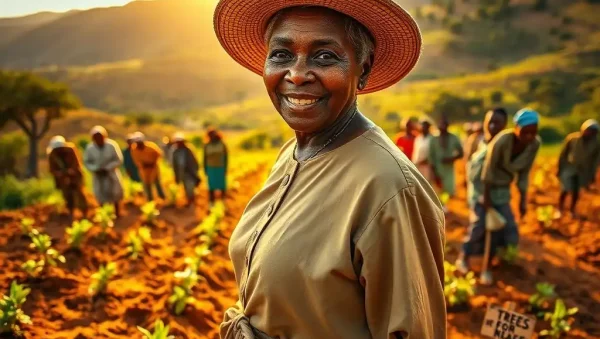
Here, we profile women who blurred lines between activism and empirical research, such as Wangari Maathai, Nobel laureate and founder of the Green Belt Movement. You’ll trace her transition from biology professor to community organizer, combining soil erosion data with tree-planting campaigns. Similarly, Vandana Shiva merges quantum physics with seed sovereignty advocacy. These biographies provide practical insight into science communication, community engagement, and policy lobbying. Expect lessons on overcoming political imprisonment and media censorship.
Each profile includes analyses of their pedagogical approaches, such as using indigenous knowledge to design sustainable agriculture. The narratives detail their fieldwork in rural communities, documenting biodiversity loss alongside social injustice. Readers will learn how they built cross-disciplinary teams, integrating economics and law with ecology. This subcategory is particularly valuable for aspiring scientist-activists, offering templates for impactful grassroots movements that still adhere to rigorous scientific standards.
📚 Modern Innovators in Environmental Technology
Meet the contemporary women engineering green solutions, from Paulina Villalpando developing solar desalination systems to Sarah Bergmann creating pollinator corridors in urban landscapes. These biographies cover their patents, startup ventures, and breakthrough inventions like biodegradable plastics from seaweed waste. Expect detailed technology profiles, including schematics and performance metrics. The narratives emphasize their mentorship of girls in STEM and open-source hardware sharing, democratizing access to environmental tools.
Beyond innovation, we explore their entrepreneurial struggles—securing venture capital, navigating patent laws, and scaling prototypes. Each story highlights ethical dilemmas, such as balancing corporate partnerships with conservation missions. You’ll also see their adaptive strategies during global crises, like repurposing air filters during wildfire season. This section profiles women from diverse global backgrounds, ensuring representation from Africa, Asia, and South America. Their achievements demonstrate how engineering and environmentalism intersect for tangible change.
📖 Careers That Shaped Policy and Public Awareness
Focus on women who translated science into legal frameworks, such as Diane Wilson, who exposed corporate water pollution and entered UN negotiations. Profiles detail their roles in drafting environmental impact assessments, international treaties like the Paris Agreement, and national wildlife protection acts. You’ll learn about their testimonies before congress, their use of whistleblower laws, and their collaborations with investigative journalists. These biographies include primary-source quotes from hearings and letters that swayed public opinion.
The narratives also shine a light on their coalition-building across universities, NGOs, and indigenous councils. We examine their award-winning academic papers that influenced court rulings and tax incentives for clean energy. Expect personal stories of harassment and dismissal, yet steadfast persistence in the face of economic pressure. This subcategory serves as an excellent case study for political science students, illustrating how empirical research drives legislative change. Each biography concludes with their ongoing projects, inspiring continued civic engagement.
Frequently Asked Questions
Why is it important to highlight women in environmental science separately?
Highlighting these women corrects historical omissions, providing role models for diverse young scientists. Their unique paths often involved grassroots organizing and community focus, enriching environmental policy. Separate coverage also reveals systemic gender barriers, inspiring institutional reforms. By learning their stories, we honor their contributions and ensure future innovations are credited equitably.
Are these biographies suitable for school research projects?
Absolutely. Each biography is sourced from peer-reviewed journals, archival letters, and interviews, with citations provided. The content is written at a middle-school reading level while preserving scientific accuracy. Bibliographies include recommended primary sources for deeper study. Teachers can confidently assign these profiles for essays, presentations, and science fair research.
How does your site verify the accuracy of historical details?
We collaborate with academic historians and science archivists to cross-reference every document. All claims link to original publications, university records, and oral history transcripts. Our editorial board includes environmental science professionals who review technical aspects. We update biographies when new evidence emerges, ensuring ongoing precision.
Can I suggest a woman scientist to add to this subcategory?
Yes! We welcome public nominations through our contact form. Please provide verifiable sources such as academic papers, reputable news articles, or archived interviews. Our team evaluates each suggestion through a rigorous peer review process, prioritizing underrepresented regions and overlooked fields. Successful additions are announced in our monthly newsletter.
Do you offer downloadable lesson plans based on these biographies?
We provide free educator materials, including discussion prompts, timeline activities, and experiment guides linked to each biography. These align with Next Generation Science Standards and each plan lists measurable learning objectives. Downloadable worksheets encourage critical thinking about research ethics and environmental justice. Sign up for our teacher resource newsletter to access the full library.