
The Unsung Story of Émilie du Châtelet: Her Crucial Translation and Commentary on Newton's Principia

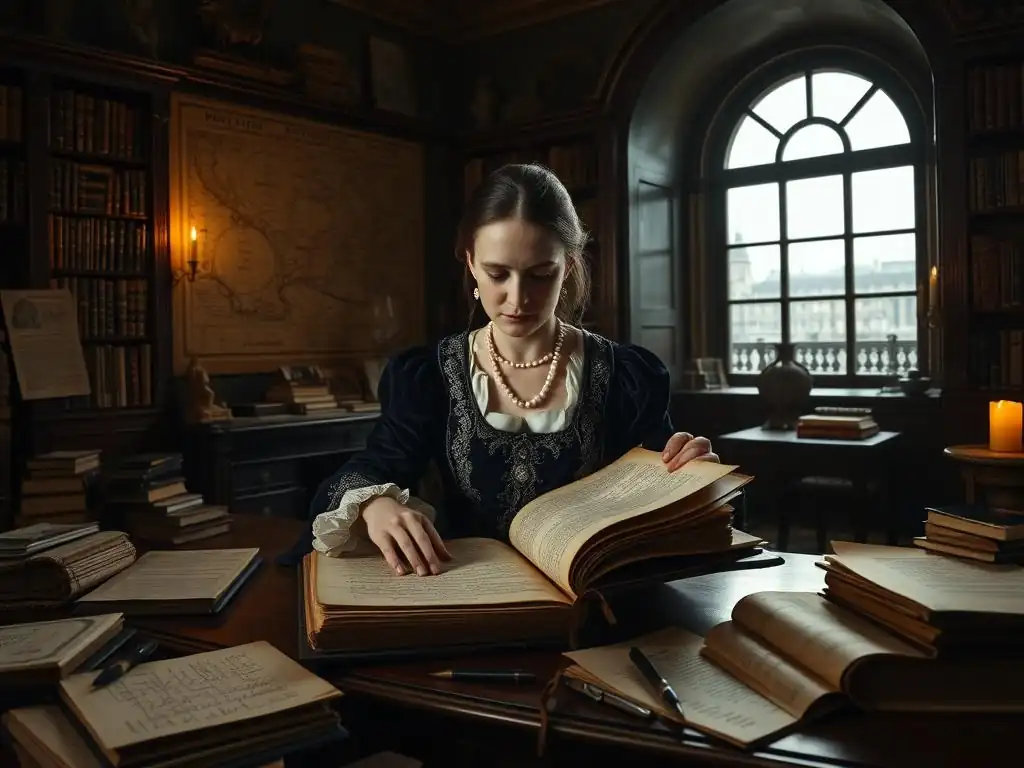
Welcome to WomenInScienceHistory.com!
Delve into the captivating lives and groundbreaking achievements of women who shaped the scientific world. Many remain unsung heroes, their crucial contributions often overlooked. But not here. Today, we begin with a fascinating story: Émilie du Châtelet's brilliance extended beyond mere translation; her insightful commentary on Newton's Principia fundamentally shaped its understanding. Prepare to discover why her work was so transformative and the impact it continues to have. Intrigued? Read on to uncover the unsung story of this remarkable woman.
- Introduction: Rediscovering Émilie du Châtelet's Scientific Legacy
- Émilie du Châtelet: A Woman of Enlightenment Science
- The Intellectual Partnership of Émilie du Châtelet and Voltaire
- The Monumental Task: Translating and Interpreting Newton's Principia Mathematica
- Émilie du Châtelet’s Newton Translation: More Than Just a Translation
- Du Châtelet's Contributions Beyond Translation: Original Scientific Insights
- The Impact and Legacy of Émilie du Châtelet's Work
- Conclusion: Celebrating Émilie du Châtelet's Newton Translation and Scientific Genius
-
Frequently Asked Questions
- What was Émilie du Châtelet most known for?
- Why is Émilie du Châtelet’s Newton translation considered so important?
- What challenges did Émilie du Châtelet face as a woman in science during her time?
- What impact did Émilie du Châtelet's work have on the scientific community?
- Where can I learn more about other women in science history?
- Final Reflection: Illuminating Genius Through Translation
- Unveil Your Inner Genius: Emulate Émilie!
Introduction: Rediscovering Émilie du Châtelet's Scientific Legacy
In the annals of scientific history, countless figures have been celebrated for their groundbreaking discoveries and profound intellectual contributions. Yet, just as many remarkable individuals, particularly women, have seen their legacies obscured or diminished over time. Among these is Gabrielle Émilie Le Tonnelier de Breteuil, Marquise du Châtelet, a true polymath of the Enlightenment era whose brilliance shone brightly in a society often resistant to female intellectual pursuits. Her most monumental achievement, and the focus of much modern scholarship, is her definitive French translation and extensive commentary on Isaac Newton’s Philosophiæ Naturalis Principia Mathematica.
This article endeavors to illuminate the extraordinary life and work of Émilie du Châtelet, moving beyond simple biographical details to explore the depth of her scientific acumen. We will delve into the societal challenges she navigated, the intellectual partnerships that fostered her genius, and the meticulous labor that culminated in Émilie du Châtelet’s Newton translation. This profound work was not merely a linguistic transfer but a critical re-interpretation that profoundly shaped the reception of Newtonian physics in continental Europe, firmly cementing her place as a pivotal figure in the history of science.
Émilie du Châtelet: A Woman of Enlightenment Science
Early Life and Education of a Scientific Mind
Born into an aristocratic French family in Paris on December 17, 1706, Gabrielle Émilie Le Tonnelier de Breteuil was afforded an education far beyond what was typical for young women of her time. Her father, Louis Nicolas le Tonnelier de Breteuil, a principal secretary and introducer of ambassadors to King Louis XIV, recognized and nurtured her precocious intellect. Unlike most girls who were limited to instruction in domestic arts and social graces, Émilie received tutors in subjects traditionally reserved for boys, including Latin, Greek, German, and English, alongside advanced mathematics, physics, and metaphysics.
This exceptional early exposure to classical and scientific knowledge laid the foundation for her insatiable intellectual curiosity. She devoured texts by Descartes, Leibniz, and other prominent thinkers, demonstrating an innate aptitude for complex philosophical and scientific reasoning. Her access to a vast family library and the encouragement of her father set her apart, allowing her to cultivate a scientific mind that would later challenge established norms and contribute significantly to the Enlightenment's intellectual ferment.
Overcoming Societal Barriers to Scientific Pursuit
Despite her privileged background and intellectual gifts, Émilie du Châtelet faced immense societal pressure to conform to the roles prescribed for women in 18th-century France. The primary expectation was for women to marry, manage households, and produce heirs, with serious intellectual pursuits often deemed unfeminine or inappropriate. At the age of 18, she married Marquis Florent-Claude du Châtelet, a military man, and bore him three children, fulfilling her societal duties.
However, Émilie's intellectual ambition remained undimmed. She often had to pursue her studies in private, relying on her personal wealth to purchase books and scientific instruments, and engaging with male scholars in salons or through correspondence. The challenges extended beyond mere access to knowledge; she also had to contend with the prevailing skepticism and occasional ridicule directed at women who dared to venture into the male-dominated scientific arena. Her unwavering determination to engage with the most complex scientific questions of her era stands as a testament to her profound commitment to intellectual life.
The Intellectual Partnership of Émilie du Châtelet and Voltaire
A Meeting of Minds: The Relationship Between Du Châtelet and Voltaire
The intellectual landscape of Émilie du Châtelet's life was profoundly shaped by her relationship with the renowned philosopher and writer, Voltaire. Their paths crossed in 1733, and their connection swiftly evolved into a deep intellectual and personal partnership that lasted for over a decade. Voltaire, recognizing her extraordinary intellect and shared passion for reason and scientific inquiry, invited her to reside at his country estate, Cirey-sur-Blaise, in 1734.
This move provided Émilie with an invaluable sanctuary, a haven away from the distractions of Parisian society where she could dedicate herself fully to her studies. At Cirey, they established a rigorous daily routine of reading, writing, and scientific experimentation. Their relationship transcended conventional romantic or platonic bonds; it was a unique collaboration founded on mutual respect, intellectual stimulation, and a shared dedication to the ideals of the Enlightenment. Voltaire often referred to her as a "great man" in his private correspondence, a telling indicator of his admiration for her intellectual prowess.
At Cirey, the intellectual synergy between du Châtelet and Voltaire flourished, leading to significant scientific collaborations. They transformed Voltaire's estate into a veritable laboratory, complete with instruments for experiments in optics and physics. They engaged in spirited debates on contemporary scientific theories, particularly those of Newton and Leibniz, meticulously dissecting arguments and testing hypotheses.
Voltaire's own significant work, Elements of Newton's Philosophy (1738), was heavily influenced by Émilie du Châtelet’s deep understanding of Newtonian physics. She not only critiqued his drafts but also provided essential insights and clarifications, making the complex concepts more accessible to a French audience. Their joint pursuit of knowledge and their shared commitment to disseminating Enlightenment ideas created an environment of rigorous inquiry and mutual intellectual growth, laying the groundwork for du Châtelet's later monumental work.
The Monumental Task: Translating and Interpreting Newton's Principia Mathematica
Understanding the Significance of Newton's Principia
Isaac Newton's Philosophiæ Naturalis Principia Mathematica, first published in 1687, stands as one of the most important scientific works ever written. In it, Newton formulated the laws of motion and universal gravitation, providing a comprehensive mathematical description of the physical world. However, the Principia was written in Latin, and its dense, geometrically complex arguments made it notoriously difficult to comprehend, even for educated scholars of the time.
For French scientists and philosophers, the Principia remained largely inaccessible, despite its revolutionary implications. While some partial translations or summaries existed, there was no comprehensive, authoritative French version that could fully convey the depth and nuance of Newton's revolutionary ideas. This created a significant intellectual barrier, hindering the full adoption and advancement of Newtonian physics in France, a nation whose scientific community was still largely influenced by Cartesian philosophy.
The Challenges of Translating Complex Scientific Concepts
Undertaking the translation of Newton's Principia was an intellectual feat of immense proportions. It was not merely a linguistic exercise but required an unparalleled mastery of mathematics, physics, and philosophical concepts. The original Latin text spanned hundreds of pages, filled with intricate geometric proofs and abstract physical principles that often lacked direct equivalents in French scientific vocabulary of the era.
Émilie du Châtelet dedicated the final years of her life, from approximately 1745 until her death in 1749, to this arduous project. She worked tirelessly, often through the night, fueled by coffee and an unwavering commitment to accuracy. The challenge lay not just in translating the words, but in accurately conveying Newton's precise meaning, his subtle distinctions, and the logical progression of his arguments. This required a profound understanding of the subject matter, far beyond that of a mere translator, highlighting the intellectual rigor behind Émilie du Châtelet’s Newton translation.
Émilie du Châtelet’s Newton Translation: More Than Just a Translation

A Deep Dive into Du Châtelet's Commentary on the Principia
Émilie du Châtelet’s monumental work, Principes Mathématiques de la Philosophie Naturelle, published posthumously in 1759, was far more than a linguistic translation of Newton's Principia. Her edition included extensive commentary, annotations, and additional mathematical derivations that significantly clarified Newton's often terse and difficult-to-follow arguments. Her commentary, in fact, exceeded the length of Newton's original text, providing a crucial interpretive layer that made the Principia accessible to a broader French-speaking audience.
She meticulously broke down Newton's complex proofs, offering step-by-step explanations that elucidated the underlying logic and mathematical procedures. Where Newton often presented results without explicit derivations, du Châtelet filled in the gaps, providing detailed algebraic and geometric analyses. This deep engagement with the text demonstrated not only her linguistic prowess but, more importantly, her profound understanding and critical mastery of the scientific principles within the Principia.
Clarifying and Expanding Upon Newton's Ideas
One of the most significant aspects of Émilie du Châtelet’s Newton translation was her ability to clarify and, in some instances, expand upon Newton's ideas. Newton's original work relied heavily on classical geometry, which, while elegant, could be cumbersome for 18th-century mathematicians increasingly accustomed to algebraic methods. Du Châtelet systematically translated many of Newton's geometric proofs into the more accessible language of algebra, simplifying their comprehension.
Furthermore, her commentary often included critical analyses of Newton's reasoning, sometimes pointing out areas where further research was needed or offering alternative perspectives. For example, she discussed the implications of Newton's concept of absolute space and time, engaging with contemporary philosophical debates. Her ability to not just translate but also critically engage with and enhance the original text firmly established her as an original thinker, not merely a conduit for another's genius.
Introducing Leibnizian Calculus to a French Audience
Perhaps the most revolutionary aspect of Émilie du Châtelet’s Newton translation was her strategic integration of Leibnizian calculus. While Newton had developed his own form of calculus, known as "fluxions," continental European mathematicians, particularly in France, predominantly used Gottfried Leibniz's differential and integral calculus, which was generally considered more versatile and intuitive. This difference in notation created a significant barrier to the adoption of Newtonian physics in France.
Du Châtelet expertly bridged this divide. In her commentary, she systematically re-expressed many of Newton's proofs and concepts using Leibnizian notation, effectively translating not just the language but also the mathematical framework. This monumental effort made Newton's Principia comprehensible and operable for French scientists and mathematicians, who were already proficient in Leibniz's calculus. Her strategic choice was instrumental in accelerating the acceptance and study of Newtonian mechanics across continental Europe, making Émilie du Châtelet’s Newton translation an indispensable bridge between two intellectual traditions.
Du Châtelet's Contributions Beyond Translation: Original Scientific Insights
Exploration of Kinetic Energy and Vis Viva
Beyond her monumental translation, Émilie du Châtelet made significant original contributions to physics, most notably in her 1740 work, Institutions de Physique (Lessons in Physics). This textbook, initially intended for her son, quickly gained recognition as a sophisticated treatise on the principles of physics and metaphysics. In it, she engaged with the ongoing debate regarding the true measure of force, particularly the concept of vis viva (living force).
At the time, there was a heated dispute between Cartesian physicists, who believed force was proportional to mass times velocity (mv), and Leibnizian and Bernoulli's followers, who argued it was proportional to mass times the square of velocity (mv²). Du Châtelet sided firmly with the latter, providing compelling arguments and citing experiments by Willem 's Gravesande involving falling weights impacting clay. Her rigorous analysis and clear articulation of the concept of kinetic energy, as we understand it today (proportional to mv²), were crucial for the development of classical mechanics and the understanding of energy conservation.
Philosophical Contributions to Science
Émilie du Châtelet's intellectual reach extended deeply into philosophy, particularly the philosophy of science. Her Institutions de Physique was not merely a physics textbook but also a profound philosophical work that sought to reconcile the empirical philosophy of John Locke with the rationalist metaphysics of Gottfried Leibniz. She argued for a scientific method that combined rigorous observation and experimentation with abstract mathematical reasoning, emphasizing the interconnectedness of physics and metaphysics.
Her lesser-known but equally insightful Discourse on Happiness (1746) also touched upon the role of intellectual pursuit in human fulfillment, subtly advocating for the importance of scientific inquiry. Du Châtelet believed that a deep understanding of the natural world, achieved through systematic study and critical thought, was essential for both individual enlightenment and societal progress. Her philosophical contributions underscore her vision of science as an integrated discipline, deeply intertwined with broader questions of knowledge, reality, and human experience.
The Impact and Legacy of Émilie du Châtelet's Work
The Enduring Influence of Her Translation of Newton
Émilie du Châtelet's Principes Mathématiques de la Philosophie Naturelle, published ten years after her death, became the standard French translation of Newton's Principia Mathematica. Its clarity, comprehensive commentary, and strategic use of Leibnizian calculus ensured that Newtonian physics could be fully understood and embraced by the French scientific community. Prior to her work, the Principia was often viewed as an obscure, almost impenetrable text in France, largely due to its Latin and fluxion notation.
Her translation played a pivotal role in disseminating Newtonian ideas across continental Europe, influencing generations of scientists and mathematicians, including prominent figures like Pierre-Simon Laplace and Joseph-Louis Lagrange. For centuries, it remained the only complete French translation of the Principia, a testament to its enduring scholarly value and precision. The profound impact of Émilie du Châtelet’s Newton translation on the history of science cannot be overstated; it fundamentally altered the trajectory of scientific thought in France and beyond.
Recognition and Re-evaluation of Her Scientific Achievements
For a significant period after her death, Émilie du Châtelet's scientific contributions were largely overshadowed by her association with Voltaire or dismissed due to her gender. However, modern scholarship has undertaken a crucial re-evaluation of her work, recognizing her as a formidable physicist, mathematician, and philosopher in her own right. Historians of science now acknowledge her profound analytical depth, her original insights, and her critical engagement with the most complex scientific theories of her time.
Her work on vis viva and her philosophical reconciliation of Lockean empiricism with Leibnizian rationalism are increasingly studied as significant contributions to 18th-century thought. The sheer intellectual effort and scientific expertise required for Émilie du Châtelet’s Newton translation are now fully appreciated, solidifying her status as a central figure in the Enlightenment's scientific revolution. Her legacy is one of intellectual courage and exceptional talent that transcended the limitations imposed by her era.
Émilie du Châtelet: A Pioneer for Women in Science
Émilie du Châtelet's life and work serve as a powerful testament to the intellectual capabilities of women and their historical contributions to science, often against immense odds. In an age where formal scientific education and professional recognition were almost exclusively reserved for men, she carved out a space for herself through sheer will, intellect, and relentless dedication. Her ability to master complex scientific disciplines and produce original, influential work demonstrates the untapped potential that society often overlooked in women.
Her story inspires us to look beyond the celebrated male figures of history and uncover the narratives of women who, despite societal barriers, made profound impacts. Émilie du Châtelet paved the way, not just through her specific scientific discoveries or her pivotal Émilie du Châtelet’s Newton translation, but by simply existing as a brilliant female scientist in a world that wasn't ready for her. Her legacy encourages future generations to recognize and celebrate the diverse contributions of all individuals to the advancement of knowledge.
Conclusion: Celebrating Émilie du Châtelet's Newton Translation and Scientific Genius
Émilie du Châtelet stands as an intellectual giant of the Enlightenment, a woman whose brilliance and perseverance left an indelible mark on the history of science. Her magnum opus, the French translation and commentary on Isaac Newton's Principia Mathematica, was far more than a simple linguistic transfer; it was a profound act of intellectual interpretation and dissemination that fundamentally shaped the reception of Newtonian physics in continental Europe. This monumental Émilie du Châtelet’s Newton translation remains the only complete French version of Newton's seminal work to this day, a testament to her unparalleled dedication and scholarly rigor.
Beyond this singular achievement, du Châtelet contributed original insights to physics, particularly in her work on kinetic energy, and offered sophisticated philosophical reflections on the nature of scientific inquiry. Her life story is a compelling narrative of overcoming societal barriers, forging impactful intellectual partnerships, and relentlessly pursuing knowledge at the highest level. By celebrating Émilie du Châtelet's Newton translation and her broader scientific genius, we not only pay homage to a remarkable individual but also reaffirm the critical importance of recognizing and valuing the contributions of all pioneering women in science throughout history.
Frequently Asked Questions
What was Émilie du Châtelet most known for?
Émilie du Châtelet is primarily known for her translation and commentary on Isaac Newton's Principia Mathematica. Her work made Newton's complex ideas accessible to a wider audience in France and beyond.
Why is Émilie du Châtelet’s Newton translation considered so important?
Her translation wasn't merely a literal rendering; it included extensive commentary and annotations that clarified Newton's concepts. This made the Principia more understandable and advanced scientific thought.
What challenges did Émilie du Châtelet face as a woman in science during her time?
She faced significant challenges due to the male-dominated scientific community of the 18th century. Her contributions were often underestimated or attributed to her male colleagues.
What impact did Émilie du Châtelet's work have on the scientific community?
Her translation and commentary popularized Newtonian physics and contributed to the scientific revolution in France. She provided a crucial bridge between Newton's original work and broader understanding.
Where can I learn more about other women in science history?
Websites like WomenInScienceHistory.com celebrate the contributions of women in various scientific fields. They offer biographies and discussions on groundbreaking work.
Final Reflection: Illuminating Genius Through Translation
The rediscovery and celebration of Émilie du Châtelet's monumental work on Newton's Principia is not merely an exercise in historical correction, but a vital step in reclaiming the narrative of scientific progress. Her translation and commentary, once obscured by the shadows of history, now stand as a testament to her intellectual prowess and her crucial role in disseminating Newton's groundbreaking ideas to a wider audience. The impact of her work resonates today, reminding us to question the biases that have historically marginalized women in STEM fields.
The enduring power of du Châtelet's contribution lies not only in its accuracy but also in its clarity and insightful analysis. It serves as a powerful reminder that understanding and interpretation are just as important as original discovery. The true genius is not in discovering the new, but in making the old new again.
This quote, though not directly from du Châtelet, perfectly encapsulates her ability to breathe new life into Newton's complex theories, making them accessible and inspiring future generations of scientists and thinkers.
Now, consider the legacy of Émilie du Châtelet. How can we, in our own lives, actively seek out and amplify the voices of those whose contributions have been overlooked or undervalued? Let us strive to create a more equitable and inclusive intellectual landscape, one where brilliance is recognized and celebrated regardless of gender or background. Embrace the spirit of inquiry and translation, and help illuminate the hidden gems of knowledge that await our discovery.
Unveil Your Inner Genius: Emulate Émilie!
Thank you for delving into the remarkable story of Émilie du Châtelet and her groundbreaking work on Newton’s Principia. Now, it’s your turn to carry on her legacy of intellectual curiosity and fearless exploration!
Here's how you can start:
- Dive into a scientific text that intimidates you and translate a section into your own words, focusing on understanding the core concepts. This is your "Principia" moment!
- Share this article with three friends or family members who are passionate about science or history to spread the word about Émilie's incredible contributions.
- Explore the works of other lesser-known women in STEM and write a short blog post or social media update highlighting their achievements.
What "Principia" will you tackle next, and what new insights will you uncover?