Women in Engineering Sub-Disciplines: Inspiring Biographies
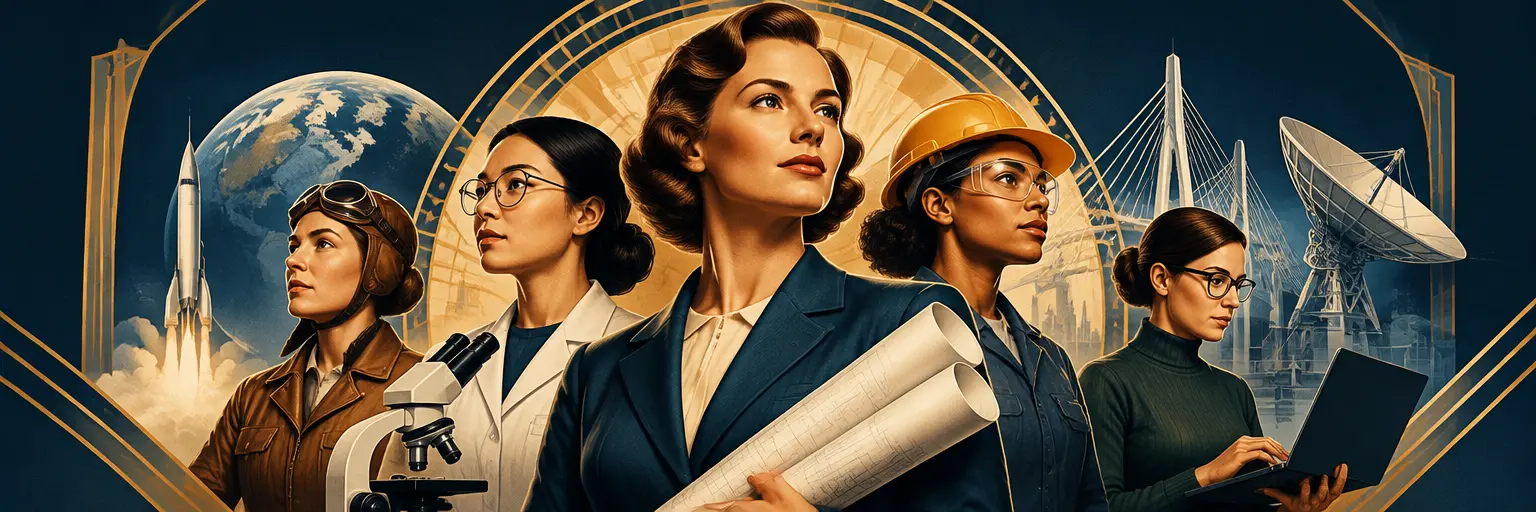
Welcome to our dedicated section on Women in Engineering Sub-Disciplines, a cornerstone of WomenInScienceHistory.com. Here, we illuminate the remarkable lives of female engineers who broke barriers across diverse fields—from civil and mechanical to electrical, chemical, and aerospace engineering. Each biography offers a deep dive into their pioneering contributions, personal struggles, and enduring legacies, providing rich, SEO-optimized content that celebrates these unsung heroes. Explore how these women reshaped our built world and inspired future generations.
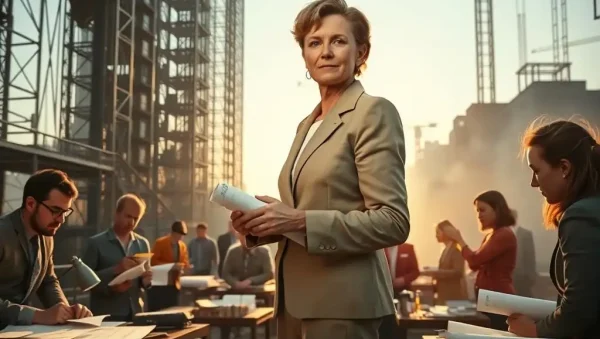
🔧 Trailblazers in Civil & Structural Engineering
Discover the stories of women who designed bridges, skyscrapers, and infrastructure that stand as testaments to their genius. This subcategory highlights figures like Emily Roebling, who guided the Brooklyn Bridge’s completion, and modern pioneers like Elsie Eaves, a foundational figure in construction data. Expect detailed accounts of their engineering feats, the societal hurdles they overcame, and their technical innovations in materials, load-bearing structures, and urban planning.
Learn how these civil engineers not only mastered complex mathematical models but also navigated exclusionary professional societies and educational barriers. Their biographies often include rare primary-source quotes, project blueprints, and historical context, making this an invaluable resource for students and enthusiasts alike. By intertwining personal narratives with engineering principles, we showcase how these women’s work remains integral to today’s skylines and public works systems.
⚡ Pioneers in Electrical & Electronic Engineering
This section celebrates women who electrified the modern age, from Edith Clarke, the first female electrical engineering professor in the U.S., to Hertha Ayrton, whose research on electric arcs and ripples in sand paved the way for radar and spotlight technology. Each biography explains their breakthroughs in circuit theory, power systems, and communication technologies, contextualized within the technological revolutions of their eras.
Beyond their technical acumen, these engineers often faced skepticism about women’s capacity for electrical work. We detail how they leveraged patents—like Clarke’s graphical calculator—and academic roles to cement their authority. Expect insights into their collaborations, failed experiments, and the relentless persistence that led to foundational inventions in wireless telegraphy, AC power transmission, and early computing. These stories inspire a new generation of women in STEM to harness the power of innovation.
🚀 Groundbreakers in Aerospace & Mechanical Engineering
Soar through the biographies of women who conquered the skies and beyond, including Olive Ann Beech, a business aviation pioneer, and Mary Golda Ross, the first Native American female aerospace engineer at Lockheed’s Skunk Works. This subcategory covers propulsion systems, aerodynamics, and spacecraft design, with technical details of their work on missions like the Mariner spacecraft and advanced helicopter rotor blades.
We also spotlight mechanical engineering innovators like Lillian Gilbreth, whose time-motion studies revolutionized industrial efficiency. Their stories reveal how these engineers merged creative problem-solving with rigorous applied physics, often working in classified or male-dominated defense sectors. Through interviews, declassified project notes, and archival photos, we reconstruct their daily lab realities, including the workplace challenges they overcame to lead teams designing aircraft, missiles, and human ergonomic systems.
🧪 Innovators in Chemical & Materials Engineering
Delve into the lives of women who transformed raw materials into life-saving products and sustainable solutions. This category features Stephanie Kwolek, inventor of Kevlar, and Edith Flanigen, a pioneer in synthetic zeolites for petroleum refining. Their biographies emphasize polymer chemistry, catalysis, and process engineering, explaining how their discoveries impact modern safety gear, clean fuels, and medical implants.
These engineers often navigated industrial labs where they were the sole females, yet their patents and research papers became industry standards. We highlight their collaborative research methods, unexpected “eureka” moments, and the strategic mentorship they provided to junior scientists. Expect a blend of chemistry fundamentals and personal anecdotes, illustrating how their resilience in the face of corporate biases led to materials that save thousands of lives annually, from bulletproof vests to water purification systems.
🌍 Visionaries in Environmental & Bioengineering
Explore the frontiers of sustainability and healthcare through biographies of women like Ellen Swallow Richards, founder of environmental engineering, and Yvonne Cagle, a physician-astronaut bridging aerospace and biomedical engineering. This subcategory showcases water quality management, bioremediation, and prosthetic design, emphasizing how these engineers applied science to solve pressing global challenges.
Their narratives often begin in childhood fascinations with nature or tinkering, leading to interdisciplinary careers that merge biology, ecology, and engineering. We document their fieldwork, from analyzing contaminated riverbeds to developing tissue scaffolding for organ regeneration. By highlighting their policy advocacy and community outreach, we demonstrate how these women not only engineered solutions but also championed environmental justice and accessible healthcare, leaving a blueprint for future engineers committed to social impact.
Frequently Asked Questions
Who was the first female engineer in a major sub-discipline?
While near-impossible to pinpoint exactly, Emily Roebling is often credited as the first female structural engineer for her role in completing the Brooklyn Bridge, though she lacked formal credentials. Similarly, Edith Clarke became the first professionally employed female electrical engineer in the U.S. in 1922, holding an MIT master’s degree. Early pioneers often worked through husbands or male colleagues to gain access to labs and sites, making their formal “firsts” complex.
What challenges did women engineers historically face?
They faced exclusion from engineering societies, lack of access to university programs (some until the 1970s), and frequent dismissal by male peers. Many patented inventions under male names or worked unpaid “assistant” roles. For example, Lillian Gilbreth initially couldn’t join the American Society of Mechanical Engineers due to her gender, despite her groundbreaking work. Hiring discrimination was rampant, with many women sidelined to drafting or clerical roles despite advanced degrees.
How did these engineers balance family life and career?
Many remained single or delayed marriage, while others, like Hertha Ayrton, married supportive colleagues who championed their research. Several, such as Olive Ann Beech, co-founded companies with spouses, enabling flexible work. However, many also faced childcare penalties, often hiring domestic help or relying on extended family. Their biographies reveal a recurring theme of juggling societal expectations, but many openly stated that their passion for engineering overshadowed conventional domestic roles.
Are there any modern female engineers included in these biographies?
Yes, we cover contemporary figures like Yvonne Cagle, an active astronaut-physician, and Gwynne Shotwell, President of SpaceX, who pioneered commercial spaceflight operations. We also include rising leaders in renewable energy and biomedical device design, such as those developing low-cost prosthetics in developing nations. Our database is regularly updated to reflect new pioneers, ensuring both historical and current role models are accessible to inspire today’s STEM students.
How can I use these biographies for academic or inspirational purposes?
Each biography includes citations, primary source links, and project descriptors suitable for school projects, university papers, or personal reading. We offer a searchable timeline and cross-referenced sub-discipline tags, making it easy to compare challenges across eras. For educators, our downloadable lesson plans integrate these stories into physics, chemistry, or history curricula. For aspiring engineers, the “Personal Lessons” section distills each woman’s strategies for overcoming obstacles, providing actionable motivation.