
[Name]: Her Silent Struggle and Triumphant Contributions to Space Exploration

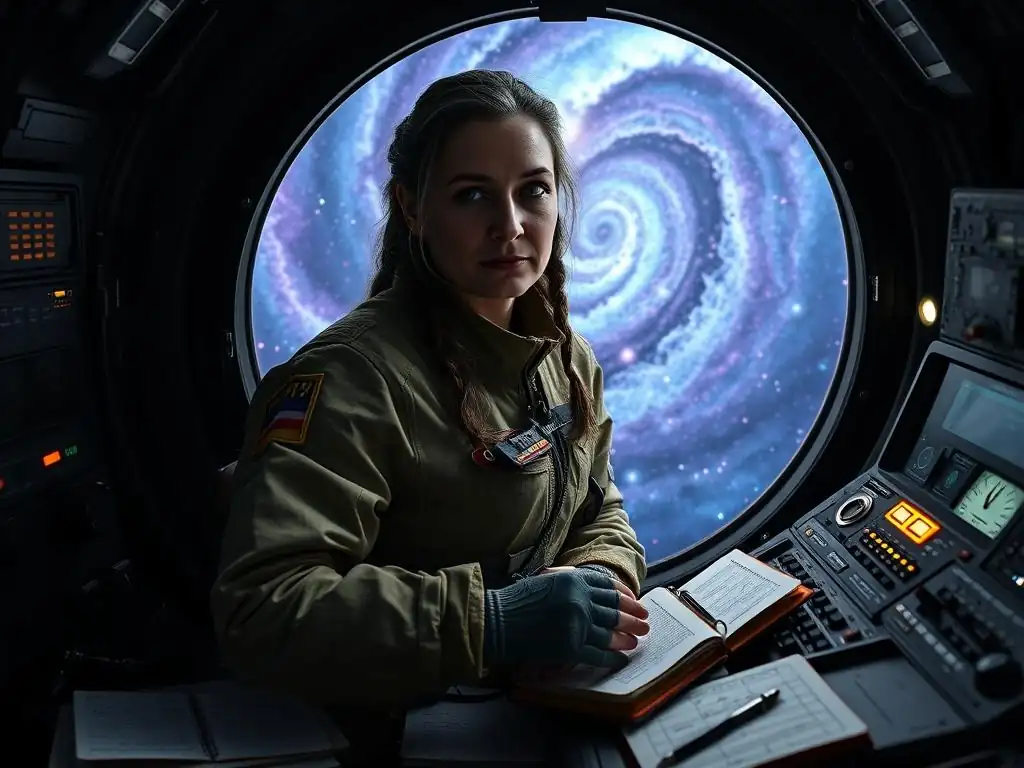
Welcome to WomenInScienceHistory.com!
Discover the untold stories of groundbreaking women who shaped the world of science. Today, we delve into the captivating biography of a remarkable figure in Women in Space History. Uncover her silent struggles and triumphant contributions to space exploration, a narrative often hidden in the shadows. Prepare to be inspired by her resilience and groundbreaking achievements as we explore the challenges she overcame and the impact she made, leaving you eager to learn more about the remarkable women who dared to reach for the stars.
- Nancy Grace Roman: Her Silent Struggle and Triumphant Contributions to Space Exploration
- Introduction: Unveiling Nancy Grace Roman's Story in Women in Space History
- Early Life and Education: The Seeds of a Space Pioneer
- Facing Gender Bias: Nancy Grace Roman's Challenges in a Male-Dominated Field
- Nancy Grace Roman's Groundbreaking Contributions to Space Exploration
- The Silent Struggle: Nancy Grace Roman's Personal and Professional Battles
- Triumphant Achievements and Lasting Legacy
- Nancy Grace Roman's Influence on Women in Space Science
- Remembering Nancy Grace Roman: A Pioneer in Women's Space History
-
Frequently Asked Questions
- ### What is WomenInScienceHistory.com about?
- ### What kind of information can I find on WomenInScienceHistory.com?
- ### Why is it important to learn about "Women in Space History"?
- ### What types of challenges did women in space history typically face?
- ### How does WomenInScienceHistory.com aim to inspire future generations?
- Final Reflection: Echoes of Silent Strength
- Unveil the Inspiring Legacy: Take Action!
Nancy Grace Roman: Her Silent Struggle and Triumphant Contributions to Space Exploration
Introduction: Unveiling Nancy Grace Roman's Story in Women in Space History
Highlighting Nancy Grace Roman's Place in the History of Women in Space Science
Nancy Grace Roman stands as a towering figure in the annals of astronomy, widely recognized as the "Mother of Hubble" for her pivotal role in conceiving and championing the Hubble Space Telescope. Her visionary leadership at NASA laid the foundational groundwork for space-based astronomy, forever altering humanity's perspective of the cosmos. In the broader narrative of women in space history, Roman's foresight in advocating for telescopes positioned beyond Earth's distorting atmosphere was revolutionary, securing her legacy as a true pioneer.
Her contributions are especially significant when considering the challenging landscape for women in science during the mid-20th century. Roman joined NASA in 1959, just a year after its inception, and became the agency's first Chief of Astronomy. This role not only showcased her exceptional scientific acumen but also underscored her trailblazing spirit, establishing a critical precedent for women in space science and demonstrating their capacity for leadership in burgeoning fields like space exploration.
Early Life and Education: The Seeds of a Space Pioneer
Nancy Grace Roman's Early Interest in Science and Mathematics
Nancy Grace Roman's fascination with the stars began at an exceptionally young age, fueled by a natural curiosity and supportive family environment. By the age of eleven, she was already organizing astronomy clubs with her friends, charting constellations, and devouring books on stars and planets. Her mother, a mathematics teacher, fostered this early scientific inclination, providing a crucial foundation and encouraging her daughter's intellectual pursuits in a field not typically encouraged for girls at the time.
This early exposure to and passion for the natural world, particularly the night sky, solidified her career path. Roman pursued her academic dreams with unwavering dedication, earning a Bachelor of Arts degree in Astronomy from Swarthmore College in 1946. She then continued her advanced studies, receiving her Ph.D. in Astronomy from the University of Chicago in 1949, a remarkable achievement for a woman in an era where advanced scientific degrees for women were exceedingly rare.
Overcoming Obstacles in Accessing Education for Women
Despite her innate talent and passion, Nancy Grace Roman encountered the pervasive societal and institutional barriers that limited educational opportunities for women in the mid-20th century. While Swarthmore College was co-educational, the broader academic landscape, especially in physics and astronomy departments, was largely male-dominated and often unwelcoming to female students. She was frequently one of the very few women in her classes, facing implicit biases and skepticism about her long-term commitment to a scientific career.
The challenges extended beyond the classroom. Securing research assistantships or faculty positions post-graduation proved difficult for many women, regardless of their qualifications. Roman's perseverance in earning her Ph.D. from a prestigious institution like the University of Chicago speaks volumes about her resolve, as she navigated a system that, while not explicitly barring women, certainly did not actively promote their participation or provide equitable pathways in the same manner as for their male counterparts.
Facing Gender Bias: Nancy Grace Roman's Challenges in a Male-Dominated Field
The Prevalence of Sexism in Nancy Grace Roman's Scientific Era
Nancy Grace Roman's professional journey unfolded during an era deeply entrenched in systemic sexism within scientific and academic institutions. Women in science were often relegated to supportive, less visible roles, such as "human computers" or laboratory assistants, rather than being acknowledged as principal investigators or leaders. The prevailing assumption was that women would eventually leave their careers for marriage and family, leading to a reluctance to invest in their long-term professional development.
This environment meant that even highly credentialed women like Roman, with a Ph.D. in astronomy, faced significant hurdles in securing tenure-track positions or leadership roles. Her initial post-doctoral work at Yerkes Observatory, while scientifically valuable, did not immediately lead to the academic progression she might have otherwise achieved. The subtle and overt biases she encountered were a common experience for pioneering women in space history and other scientific disciplines.
To navigate the pervasive discrimination, Nancy Grace Roman employed a strategy of quiet persistence, exceptional competence, and an unwavering focus on the scientific merit of her work. She understood that her achievements would ultimately speak louder than any prejudice. Her meticulous research, rigorous methodology, and undeniable contributions consistently demonstrated her intellectual prowess, making it increasingly difficult for her male colleagues to overlook her talent.
Her strategic move to NASA in 1959 proved to be a pivotal decision. As a newly formed agency, NASA offered a unique environment, potentially more open to fresh talent and innovative ideas compared to more traditional academic institutions, though still operating within a male-dominated aerospace culture. By becoming the first Chief of Astronomy, Roman not only broke a significant barrier but also gained a platform from which she could champion her vision for space-based observatories, ultimately leading to the realization of the Hubble Space Telescope.
Nancy Grace Roman's Groundbreaking Contributions to Space Exploration
Specific Research and Discoveries by Nancy Grace Roman
Before her transformative work at NASA, Nancy Grace Roman made significant contributions to stellar astronomy. During her time at the University of Chicago and Yerkes Observatory, her research focused on stellar classification and motions. She meticulously studied high-velocity stars and the distribution of stars within the Milky Way galaxy. Her groundbreaking work revealed that stars in the galactic disk exhibited different metal compositions compared to those found in the galactic halo, providing crucial insights into the formation and evolution of our galaxy.
Later, at the Naval Research Laboratory, Roman further diversified her expertise, engaging in radio astronomy and developing innovative techniques for measuring stellar parallaxes. This foundational research across various observational methods showcased her versatility and deep understanding of astronomical principles. These early contributions provided her with the comprehensive knowledge base necessary for her future role in shaping NASA's space astronomy programs.
Nancy Grace Roman's Innovative Approaches to Space-Based Astronomy
Nancy Grace Roman's most profound legacy lies in her visionary advocacy for space-based astronomy. She was among the first to recognize that Earth's atmosphere, while vital for life, severely hampered astronomical observations by distorting light and absorbing crucial wavelengths. Her conviction that placing telescopes in orbit was essential to unlock the universe's secrets was a radical concept in the 1960s, requiring immense scientific foresight and persuasive power.
She tirelessly championed the idea of a large orbiting observatory, meticulously outlining its scientific objectives and potential. Roman played an instrumental role in securing initial funding, building consensus within the astronomical community, and garnering support from Congress for what would eventually become the Hubble Space Telescope. Her innovative approach involved defining the mission requirements, selecting instruments, and integrating the complex scientific goals into a viable engineering project, thereby laying the intellectual and logistical groundwork for decades of space-based exploration.
How Nancy Grace Roman's Work Advanced Space Science
Nancy Grace Roman's relentless efforts directly led to the development of not only the Hubble Space Telescope but also a series of earlier orbiting observatories, including the Orbiting Astronomical Observatories (OAOs). These missions provided unprecedented views of the universe across various wavelengths, from ultraviolet to X-ray and gamma-ray spectra. Her work expanded the very definition of observational astronomy, moving it beyond the limitations of ground-based facilities.
The crowning achievement, the Hubble Space Telescope, launched in 1990, stands as a testament to her vision. Hubble has revolutionized nearly every field of astronomy, from precisely measuring the universe's expansion rate and age to discovering new galaxies, understanding planetary formation, and characterizing exoplanet atmospheres. The wealth of data and breathtaking images it has provided has profoundly deepened our understanding of the cosmos, directly fulfilling the potential Roman envisioned decades prior.
The Silent Struggle: Nancy Grace Roman's Personal and Professional Battles

Balancing Personal Life and a Demanding Scientific Career
For women pursuing high-powered scientific careers in the mid-20th century, the societal expectations often presented an impossible choice between professional ambition and a conventional personal life. Nancy Grace Roman, who never married, dedicated her life entirely to her scientific pursuits. This decision, while enabling her unparalleled contributions, was a common path for many pioneering women in space history and other STEM fields who found the demands of a groundbreaking career incompatible with traditional domestic roles.
Her role as NASA's Chief of Astronomy was immensely demanding, requiring extensive travel for international conferences, negotiations with scientists and engineers, and constant oversight of complex space missions. The sheer workload left little time or energy for a conventional personal life. Her unwavering commitment to advancing space science came with significant personal sacrifices, highlighting the often-unseen struggles faced by women striving for excellence in male-dominated professions.
Lack of Recognition and Opportunities Compared to Male Colleagues
Despite holding a prominent leadership position at NASA, Nancy Grace Roman's public recognition often lagged behind that of her male counterparts or the engineers and astronauts associated with space missions. Her critical role as the visionary planner and advocate for the Hubble Space Telescope was largely behind the scenes, a common fate for many women whose intellectual contributions were vital but less visible. This disparity in recognition was a subtle yet pervasive form of the "silent struggle" she endured.
Furthermore, even within NASA, securing resources and gaining full acceptance for her ambitious space telescope projects sometimes required her to work harder to overcome initial skepticism or implicit biases. While her scientific arguments were irrefutable, the path to implementation often involved navigating a system that, while valuing her expertise, might not have offered her the same immediate trust or opportunities as it did for male colleagues in similar leadership roles.
Specific Examples of Obstacles Faced by Nancy Grace Roman
One significant obstacle Nancy Grace Roman faced was the initial resistance to the very concept of a large space telescope. Many astronomers of the era believed that ground-based observatories were sufficient, and the immense cost of an orbiting telescope was a daunting deterrent. Roman had to tirelessly overcome this scientific and financial skepticism, spending years advocating for the necessity and feasibility of such a monumental undertaking.
Another persistent challenge was securing consistent, long-term funding for her ambitious projects. The development of a telescope like Hubble stretched over decades, requiring continuous advocacy through changing political landscapes and fluctuating budget priorities. Roman had to navigate congressional hearings, justify expenditures, and continuously articulate the profound scientific value of space astronomy, a battle that continued even after the telescope's construction began, until its eventual launch in 1990.
Triumphant Achievements and Lasting Legacy
Key Accomplishments and Awards Received by Nancy Grace Roman
While public recognition for Nancy Grace Roman often came later in her career, her profound impact was acknowledged within scientific circles. She received numerous accolades for her contributions, including the NASA Exceptional Scientific Achievement Medal in 1969, an early testament to her significant role in shaping the agency's astronomical pursuits. She was also honored with the NASA Public Service Award, highlighting her dedication to advancing scientific knowledge for the benefit of all.
Perhaps the most significant posthumous honor came in 2020, when NASA announced that its next-generation space telescope, previously known as the Wide Field Infrared Survey Telescope (WFIRST), would be renamed the Nancy Grace Roman Space Telescope. This renaming serves as a powerful and fitting tribute, cementing her foundational role in space astronomy and ensuring her name is forever linked to the future of cosmic exploration.
Nancy Grace Roman's Impact on Future Generations of Women in Science
Nancy Grace Roman's very presence in a high-ranking leadership position at NASA served as an undeniable source of inspiration, even if often quietly expressed. She demonstrated through her career that women could not only excel in demanding scientific fields but also lead major scientific initiatives. Her pioneering spirit and success in navigating a predominantly male environment provided a tangible example for aspiring female scientists, especially those interested in space exploration.
While not always a formal mentor, her career trajectory acted as an indirect guide. By breaking through significant barriers and achieving such monumental success, Roman paved a clearer path for other women in space history and STEM fields. Her life's work showed what was possible, encouraging countless young women to pursue their scientific dreams and proving that gender was no impediment to reaching the highest echelons of scientific achievement.
How Nancy Grace Roman's Research Continues to Influence Space Exploration Today
The enduring legacy of Nancy Grace Roman's vision is most evident in the continued operation and unparalleled success of the Hubble Space Telescope. Over three decades since its launch, Hubble continues to provide groundbreaking data that informs current research across nearly every area of astronomy, from investigating dark energy and exoplanets to studying galaxy evolution and star formation. Its observations remain vital to our understanding of the universe.
Furthermore, her advocacy for space-based observatories directly influenced the development of subsequent missions. The James Webb Space Telescope, launched in 2021, and the upcoming Nancy Grace Roman Space Telescope are direct descendants of her initial concept, extending her legacy into the next generation of space exploration. Her foresight continues to shape the future of astronomy, proving that her early vision remains fundamentally relevant to humanity's quest to understand the cosmos.
Nancy Grace Roman's Influence on Women in Space Science
Mentorship and Advocacy for Aspiring Female Scientists
While much of her advocacy was demonstrated through her groundbreaking work, Nancy Grace Roman also served as an informal mentor and a quiet champion for aspiring female scientists. She understood the unique challenges faced by women in STEM fields and, later in her career, actively encouraged young women to pursue their scientific passions. She often shared her experiences, providing practical advice and insights into navigating a demanding profession.
Roman also participated in various initiatives aimed at supporting and increasing female representation in science. She spoke at conferences and contributed to discussions focused on diversity in STEM, particularly within astronomy and space science. Her presence and willingness to share her journey provided a powerful example and a source of encouragement for the next generation of women in space science.
Breaking Barriers and Paving the Way for Future Generations
Nancy Grace Roman's appointment as NASA's first Chief of Astronomy was a monumental barrier broken. It was a clear signal that women could hold significant leadership positions within the burgeoning space agency, a crucial step forward for women in space history. Her success in this role demonstrated her exceptional capabilities and shattered preconceived notions about the limits of women's contributions in high-stakes scientific endeavors.
Her relentless pursuit and eventual realization of the Hubble Space Telescope concept provided a powerful, tangible example of what a determined woman could achieve in a field overwhelmingly dominated by men. This achievement significantly influenced the opportunities and perceptions for subsequent female scientists, making it easier for them to gain acceptance, secure funding, and advance their careers in space exploration and related fields.
The Importance of Recognizing Nancy Grace Roman's Contributions to Diversity in STEM
Acknowledging and celebrating figures like Nancy Grace Roman is paramount for a comprehensive and accurate understanding of scientific progress. Her story highlights that innovation and discovery stem from diverse perspectives, and that countless contributions by women have historically been overlooked or minimized. Recognizing her pivotal role ensures that the historical narrative of science reflects the full breadth of human ingenuity.
Moreover, celebrating Roman's legacy is vital for inspiring young girls and women today to pursue STEM careers. By showcasing her triumphs over adversity and her monumental impact on space exploration, we provide role models who demonstrate that scientific excellence knows no gender. Her story empowers the next generation of women in space science, assuring them that their contributions are not only valued but are also essential for the future of scientific discovery.
Remembering Nancy Grace Roman: A Pioneer in Women's Space History
Celebrating Nancy Grace Roman's Life and Work
Nancy Grace Roman's life, spanning nearly a century from 1925 to 2018, was a testament to unwavering dedication, intellectual curiosity, and profound scientific vision. Her journey from a young girl captivated by the night sky to becoming a principal architect of space astronomy is a remarkable narrative of perseverance and triumph. Her meticulous planning and tireless advocacy fundamentally altered humanity's view of the universe.
The enduring nickname, the "Mother of Hubble," perfectly encapsulates her pivotal role in bringing the iconic space telescope to fruition. It is a fitting tribute to a woman whose foresight revolutionized observational astronomy and whose work continues to inspire awe and wonder in the cosmos. Her legacy is etched not only in the scientific achievements she enabled but also in the countless minds she inspired.
Resources for Learning More About Nancy Grace Roman's Contributions
For those eager to delve deeper into the life and work of Nancy Grace Roman, various resources offer valuable insights. NASA's historical archives contain numerous documents and reports detailing the early planning and development of space-based observatories, in which Roman played a central role. Several oral history interviews with Roman herself are available, providing firsthand accounts of her experiences and perspectives.
Additionally, numerous articles and biographies published by scientific societies and educational institutions offer detailed profiles of her contributions. Seeking out information from organizations dedicated to women in space history and STEM fields often provides a comprehensive understanding of her impact and the challenges she overcame.
The Ongoing Effort to Highlight Women's Roles in Scientific History
The mission to unearth and celebrate the stories of women like Nancy Grace Roman is an ongoing and crucial endeavor. Websites dedicated to women in science history play a vital role in ensuring that their contributions are fully recognized and integrated into the broader historical narrative of scientific progress. It is essential to continuously shine a light on these often "silent struggles" and "triumphant contributions" to provide a complete and accurate account of human achievement.
By honoring the past and acknowledging the profound impact of pioneers like Roman, we not only pay tribute to their legacies but also actively inspire a more inclusive and equitable future for science and space exploration. This continuous effort ensures that the next generation of women in space science feels empowered, knowing that their potential is limitless and their contributions are essential for the advancement of human knowledge.
Frequently Asked Questions
### What is WomenInScienceHistory.com about?
WomenInScienceHistory.com is dedicated to celebrating the contributions of women to various scientific fields throughout history. It features biographies, discussions, and highlights the challenges faced by women in science, aiming to inspire future generations.
### What kind of information can I find on WomenInScienceHistory.com?
The site provides information on pioneering female scientists, their groundbreaking work, and the obstacles they overcame in male-dominated fields. It focuses on highlighting overlooked narratives in science history.
### Why is it important to learn about "Women in Space History"?
Learning about "Women in Space History" is crucial because it sheds light on the often-unrecognized roles women played in space exploration. It helps to challenge historical biases and provides role models for aspiring scientists.
### What types of challenges did women in space history typically face?
Women in space history often faced gender discrimination, limited opportunities for advancement, and societal expectations that hindered their scientific pursuits. They had to navigate male-dominated environments and fight for recognition.
### How does WomenInScienceHistory.com aim to inspire future generations?
By showcasing the achievements and resilience of women in science, WomenInScienceHistory.com provides powerful role models for young people, particularly girls, interested in STEM fields. It encourages them to pursue their passions and overcome obstacles.
Final Reflection: Echoes of Silent Strength
The story of women in space history, often overshadowed, resonates powerfully today. Their contributions, though sometimes muted, were instrumental in shaping the very fabric of space exploration. As we celebrate advancements in science and technology, it's crucial to remember the unsung heroes, like the woman highlighted in this article, whose dedication and resilience paved the way for future generations. Their struggles and triumphs are not just historical footnotes; they are vital lessons in perseverance and the pursuit of dreams against all odds.
The impact of these women extends far beyond the technical achievements of space programs. Their presence, even when facing systemic barriers, redefined the possibilities for women in STEM fields and challenged societal expectations. Their stories inspire us to question the status quo and advocate for a more inclusive and equitable future. The important thing is this: To be able at any moment to sacrifice what we are for what we could become.
- Charles Dubois. This quote encapsulates the spirit of these pioneering women, who dared to envision a future where their talents were recognized and valued.
Let us carry forward the legacy of these remarkable women. As you reflect on their silent struggles and triumphant contributions, consider how you can champion inclusivity and empower others to reach for the stars, regardless of their background. The journey to space, and indeed, the journey to a more just world, requires the collective strength and vision of all.
Unveil the Inspiring Legacy: Take Action!
Thank you for exploring the remarkable story of a pioneering woman who made significant contributions to space exploration. Now, let's turn that inspiration into meaningful action.
- Research further: Dive deeper into her specific projects and publications to better understand the technical aspects of her work.
- Share her story: Spread awareness by sharing this article with your network and on social media using the hashtag #WomenInScienceHistory.
- Nominate: Recognize a deserving woman in STEM within your community or organization for her achievements.
What steps will you take to honor her legacy and motivate future generations of women in science?