Dorothy Lewis Bernstein: Applied Mathematics Pioneer and Computer Programmer
🌟 Dorothy Lewis Bernstein, a trailblazing woman in applied mathematics, revolutionized the field with her pioneering work in computer programming. Her legacy…
Read article
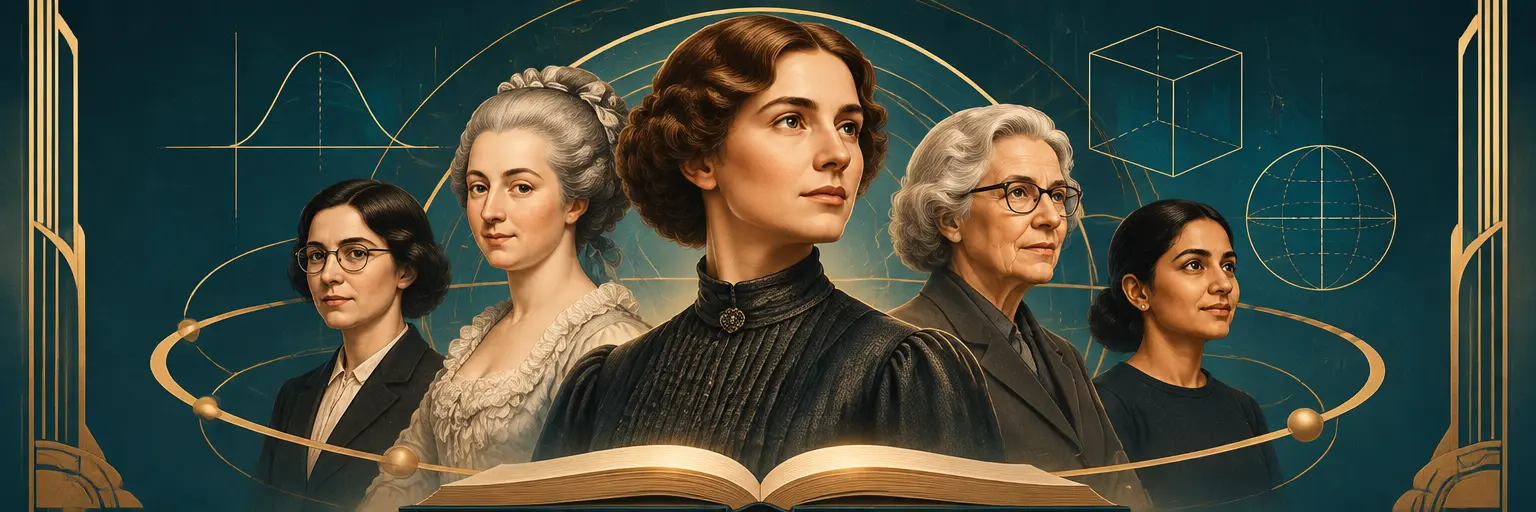
Discover the remarkable lives of trailblazing women who defied societal norms and reshaped the world of mathematics. From ancient pioneers like Hypatia to modern giants such as Emmy Noether and Maryam Mirzakhani, these biographies reveal the brilliant minds behind revolutionary theories, from abstract algebra to dynamic systems. Each story uncovers the perseverance, genius, and groundbreaking contributions of women who overcame barriers of gender, race, and class to leave an indelible mark on the field. Explore how their work influenced cryptography, physics, computing, and beyond, while navigating exclusion from academic institutions, lack of recognition, and relentless prejudice. These narratives not only celebrate their mathematical achievements but also illuminate the personal struggles, collaborations, and quiet triumphs that defined their journeys. Perfect for students, educators, and history enthusiasts, this collection bridges the gap between hidden histories and modern inspiration, proving that mathematical excellence knows no gender.
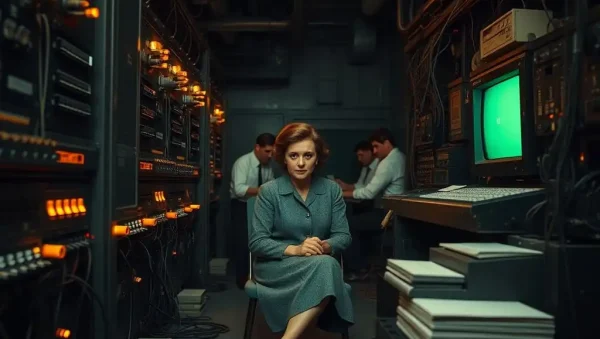
🌟 Dorothy Lewis Bernstein, a trailblazing woman in applied mathematics, revolutionized the field with her pioneering work in computer programming. Her legacy…
Read article
🌟 Discover the inspiring journey of Dusa McDuff, whose groundbreaking work in mathematical geometry transformed symplectic topology. Her biography highlights her pioneering…
Read article
🌟 Discover the inspiring story of Sofia Kovalevskaya, a trailblazing mathematician whose journey from Russian nobility to scientific prominence exemplifies resilience. Her…
Read article
🌟 Discover the inspiring story of Grace Chisholm Young: Mathematician biography that highlights how she expertly balanced groundbreaking mathematical research with family…
Read article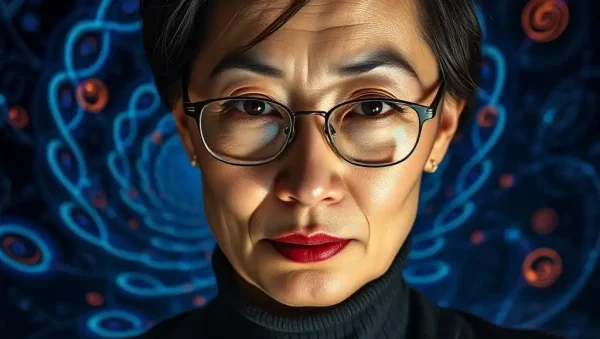
🌟 Discover LaiSang Young, the pioneering ergodic theorist whose groundbreaking work unravels the complexities of chaos, inspiring future generations of women in…
Read article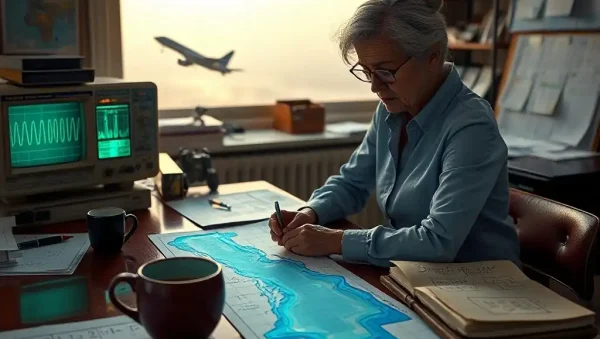
🌟 Celebrating Christine Darden's groundbreaking sonic boom research, this inspiring biography highlights her trailblazing role as NASA's sonic boom specialist and a…
Read article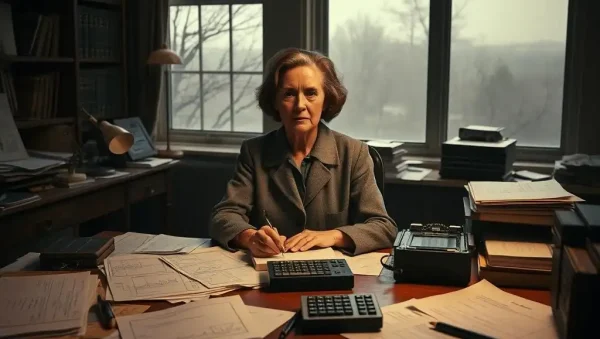
🌟 Mina Rees's pivotal role in shaping postwar funding for American science transformed research opportunities for women and minorities, highlighting her groundbreaking…
Read article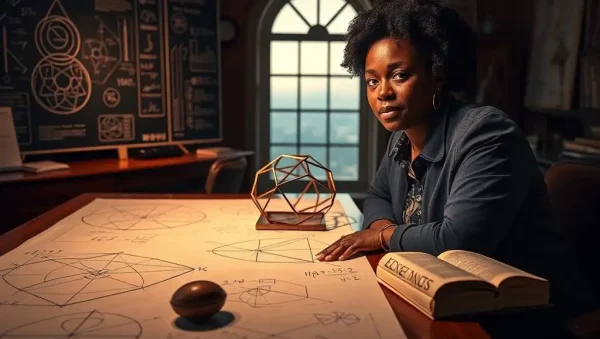
🚀 Evelyn Boyd Granville, a trailblazing space mathematician, broke barriers during the Space Race, inspiring future women scientists. Her pioneering work in…
Read article
🌟 Grace Chisholm Young Set Theory pioneer and collaborative trailblazer, her groundbreaking work challenged gender barriers in mathematics, inspiring future women scientists…
Read article
🌟 Euphemia Lofton Haynes broke barriers as DC’s first woman PhD in math and tirelessly championed educational equity, inspiring generations of women…
Read article
🌟 Hanna Neumann's pioneering genetics research methods revolutionized group theory, showcasing her elegant mathematical mind. As a trailblazing woman in science, her…
Read article
🌟 Euphemia Lofton Haynes' mathematical legacy exemplifies how dedication to education and faith can break barriers, inspiring future women scientists and enriching…
Read articleWelcome to our dedicated section on Women in Mathematics, part of the broader Biographies collection at WomenInScienceHistory.com. Here, we honor the brilliant minds who cracked codes, solved unsolvable theorems, and paved the way for future female mathematicians. These are not just stories of numbers; they are stories of resilience, genius, and defiance against societal norms. Dive deep into the lives of women who turned abstract logic into revolutionary breakthroughs and who continue to inspire a new generation of problem-solvers. Explore their struggles, their triumphs, and their enduring legacies in a field historically dominated by men.
Begin your journey with the earliest documented female mathematicians, whose work laid the groundwork for modern geometry, algebra, and number theory. These women often had to fight for access to education, yet their intellectual contributions were nothing short of monumental. From Hypatia of Alexandria, who taught philosophy and mathematics in the 4th century, to the astronomer and mathematician Hypatia’s predecessors, this section contextualizes their work within ancient scholarly traditions.
You will discover how women like Theano, associated with the Pythagorean school, and later figures such as Maria Agnesi in the 18th century navigated restricted academic environments. Each biography highlights their specific mathematical achievements—from writing the first comprehensive calculus textbook to solving polynomial equations. We also delve into the cultural and historical contexts that shaped their lives, offering a rich narrative that connects their work to the broader scientific revolution of their times. Expect a blend of technical insight and human story that makes these pioneers relatable and awe-inspiring.
This section focuses on the transformative 1800s, a period when formal education for women began to expand, yet mathematics remained a fortress of male privilege. We profile figures like Sofya Kovalevskaya, the first woman to earn a doctorate in mathematics (from the University of Göttingen), and Ada Lovelace, whose pioneering work on Charles Babbage’s analytical engine is widely considered the first computer program. These biographies explore how these women balanced intellectual ambition with societal expectations of marriage and domesticity.
Learn about their groundbreaking contributions—Kovalevskaya’s work on partial differential equations and Lovelace’s visionary notes on computing algorithms. Each narrative includes primary source excerpts and contextual analysis, showing how they circumvented institutional barriers by auditing classes, studying under private tutors, or corresponding with leading male mathematicians. Their perseverance created new pathways for women, and their stories are essential for understanding the very foundations of modern applied mathematics and early computing.
As universities slowly opened their doors, the 20th century saw a surge of female mathematicians who made paradigm-shifting contributions. Meet Emmy Noether, often called the "most important woman in the history of mathematics" for her work in abstract algebra and theoretical physics, and Julia Robinson, whose work on Hilbert’s tenth problem laid the groundwork for modern computational logic. This section also covers figures like Katherine Johnson, whose calculations were vital to NASA’s space missions, and Mary Cartwright, who pioneered chaos theory research.
These biographies go beyond dates and formulas to explore the collaborative and often competitive environments in which these women worked. You’ll read about the challenges of obtaining professorships, the discrimination they faced in wartime research groups, and the often-unseen mentorship networks they built. We emphasize both their mathematical rigor and their institutional impact, showing how they became chairs of departments, editors of journals, and role models. Their stories are a testament to intellectual courage in the face of systemic sexism.
Mathematics is a universal language, but the stories of female mathematicians from Asia, Africa, Latin America, and the Middle East are frequently overlooked in mainstream history. This subcategory celebrates diversity by featuring figures like Ramanujan’s contemporary, the Indian mathematician Shakuntala Devi, known as the "human computer," and Mariam Mirzakhani, an Iranian mathematician who was the first woman to win the Fields Medal in 2014. We also include pioneers like Grace Wahba (China-born) and Maria Chudnovsky (Russia-born), showing how migration and cultural exchange fuel mathematical innovation.
Each biography explores how cultural contexts—from colonial education systems to post-war reconstruction—shaped these women’s access to mathematics. You will learn about the unique challenges they faced, such as language barriers, political upheaval, and gender-based restrictions that differed from Western contexts. We highlight their contributions to statistics, combinatorics, and applied mathematics, ensuring that the global story of women in mathematics is both accurate and inspiring. These narratives are vital for a truly inclusive history of science.
This section brings you up to the present day, profiling living mathematicians who are actively shaping the field. Figures like Karen Uhlenbeck, the first woman to win the Abel Prize (2019), and Ingrid Daubechies, known for her work on wavelets in image compression, are featured alongside rising stars in cryptography, data science, and topology. We also include interviews, personal reflections, and academic career advice from these math luminaries, making this a unique resource for aspiring young mathematicians.
Expect content that blends biography with contemporary relevance—discussing topics like the current gender gap in STEM, the role of mentorship, and the impact of open-access publishing. These stories demonstrate that being a woman in mathematics is not just a historical novelty, but a vibrant, active pursuit. We highlight their awards, their teaching philosophies, and their research agendas, giving you a front-row seat to the future of mathematics. Their journeys offer practical guidance and hope for anyone dreaming of a career in this exacting, beautiful discipline.
The earliest recorded female mathematician is Hypatia of Alexandria, who lived in the 4th–5th century AD. She was a renowned teacher of mathematics, astronomy, and philosophy. Her work, primarily in editing and commenting on classical texts, helped preserve Greek mathematical knowledge for future generations. While no original treatises survive, her influence was so significant that she is celebrated as a martyr of intellectual freedom.
Emmy Noether’s theorem, formulated in 1915, is a cornerstone of theoretical physics. It states that every symmetry in a physical system corresponds to a conservation law (e.g., time symmetry leads to energy conservation). This bridged mathematics and physics, revolutionizing both fields. Her work in abstract algebra also laid foundations for modern ring theory. She remains a symbol of pure mathematical genius.
Many women relied on private tutoring, family support, or auditing classes since universities often excluded them. For example, Sofia Kovalevskaya studied under private tutors in Russia and later in Germany. Other strategies included corresponding with male colleagues, like Ada Lovelace with Charles Babbage, or traveling abroad to countries with liberal policies. Persistence, intellectual brilliance, and strong networks were key.
Yes, several living women have earned prestigious honors. Karen Uhlenbeck won the Abel Prize in 2019, while Ingrid Daubechies received the National Medal of Science and the Abel Prize nomination. Maryam Mirzakhani (d. 2017) won the Fields Medal in 2014, and Grace Wahba has won numerous statistics awards. Today, many hold named professorships and lead major research institutes.
Each biography offers a comprehensive narrative—covering early life, education, key mathematical contributions, and personal challenges. You will find technical explanations written for a general audience, primary source quotes, and context on the social and political climate. We also include timelines, suggested further reading, and links to original papers where available. Our goal is to make these complex lives both accessible and deeply informative.