
Sofia Kovalevskaya: From Russian Nobility to a Mathematical Titan

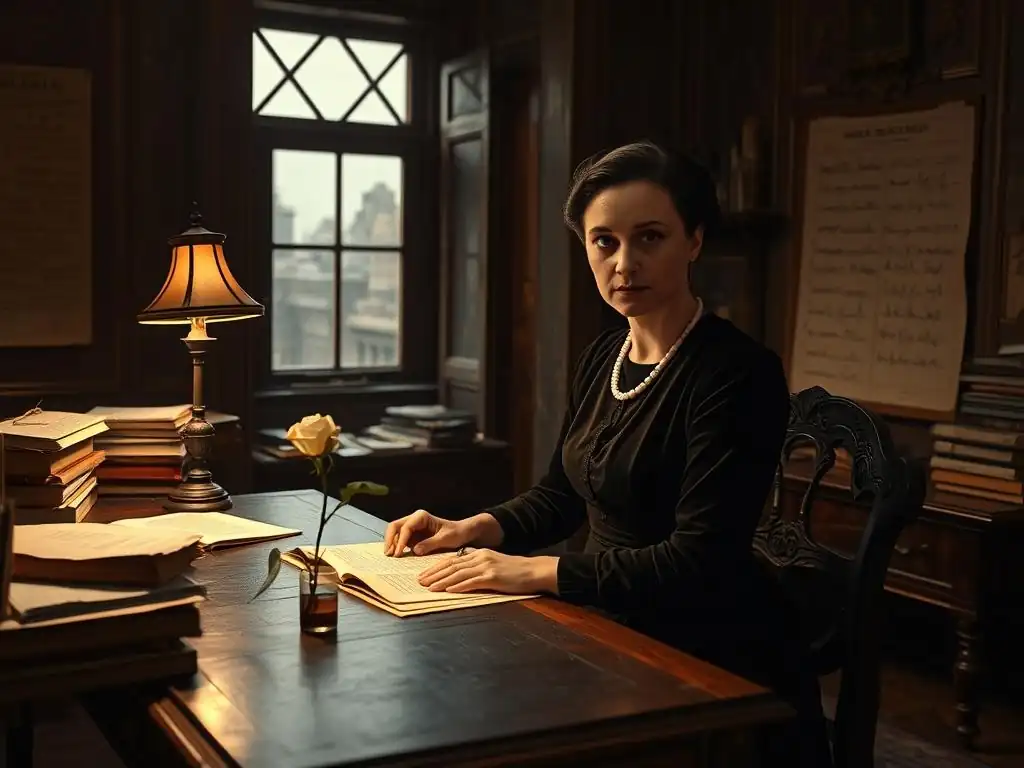
Welcome to WomenInScienceHistory.com!
Delve into the inspiring and often untold stories of women who shaped the world of science. Ever wondered how a woman from Russian nobility defied societal expectations to become a mathematical giant? Then prepare to be captivated by the extraordinary life and groundbreaking work of Sofia Kovalevskaya. This mathematical biography uncovers the challenges and triumphs of a true pioneer, offering a compelling glimpse into the world of women who dared to break barriers and leave an indelible mark on history. Read on to discover her incredible journey!
- Sofia Kovalevskaya: A Mathematical Titan's Biography
- Introduction to Sofia Kovalevskaya: A Pioneer for Women in Mathematics
- Early Life and Education of Sofia Kovalevskaya
- Kovalevskaya's Journey to Higher Education and Mathematical Research
- Key Mathematical Contributions of Sofia Kovalevskaya
- Academic Career and Recognition
- Challenges and Personal Life
- Legacy and Impact on Women in Mathematics
- Sofia Kovalevskaya: A Timeline of Key Events
- Conclusion: Celebrating Sofia Kovalevskaya's Mathematical Genius and Pioneering Spirit
-
Frequently Asked Questions
- How did Sofia Kovalevskaya overcome societal barriers to pursue her mathematical career?
- What were some of Sofia Kovalevskaya's most significant mathematical contributions?
- What challenges did Sofia Kovalevskaya face as a woman in science during her time?
- Where did Sofia Kovalevskaya eventually find a stable academic position?
- Why is it important to remember and celebrate the mathematical biography of women like Sofia Kovalevskaya?
- Final Reflection: Echoes of a Mathematical Pioneer
- Unlock Your Inner Genius: Embrace the Challenge!
Sofia Kovalevskaya: A Mathematical Titan's Biography
Introduction to Sofia Kovalevskaya: A Pioneer for Women in Mathematics
Highlighting Sofia Kovalevskaya's Groundbreaking Contributions
Sofia Kovalevskaya stands as an unparalleled figure in the history of science, celebrated not only for her profound mathematical insights but also for her pioneering role in breaking barriers for women in academia. Born in 1850, her journey from the confines of 19th-century societal expectations to the pinnacle of mathematical achievement is a testament to her extraordinary intellect and unyielding determination. Her work, particularly in the theory of partial differential equations and the dynamics of rigid bodies, earned her international recognition and cemented her place among the great mathematicians of her era.
Among her most significant achievements is the Cauchy-Kovalevskaya theorem, a fundamental result proving the existence and uniqueness of solutions to certain initial value problems for partial differential equations. Equally impactful was her solution to the problem of the rotation of a rigid body, known as the Kovalevskaya Top, for which she won the prestigious Prix Bordin from the French Academy of Sciences in 1888. These contributions were not merely theoretical exercises; they advanced foundational aspects of mathematics and physics, demonstrating a depth of understanding that few could match.
The Significance of Kovalevskaya's Life and Work
The significance of Sofia Kovalevskaya's life extends far beyond her mathematical theorems; it lies in her profound impact on the trajectory of women in science. In an age where universities were largely closed to women, and professional scientific careers were virtually unthinkable, Kovalevskaya carved a path through sheer brilliance and perseverance. Her successful academic career, culminating in her appointment as the first female professor of mathematics in Northern Europe, shattered pervasive gender stereotypes and demonstrated the intellectual capabilities of women.
Her mathematical biography serves as an inspiring narrative of resilience against systemic discrimination. Kovalevskaya's story illuminated the immense talent that society was overlooking by excluding women from scientific pursuits. By achieving such high academic and research accolades, she provided a tangible role model and a powerful argument for the inclusion of women in higher education and research, profoundly influencing subsequent generations of aspiring women in mathematics and other STEM fields.
Early Life and Education of Sofia Kovalevskaya
Sofia Vasilyevna Korvin-Krukovskaya: Her Russian Nobility Roots
Sofia Vasilyevna Korvin-Krukovskaya was born into an aristocratic Russian family in Moscow on January 15, 1850. Her father, Vasily Vasilyevich Korvin-Krukovsky, was a general in the Imperial Russian Army, and her mother, Elizaveta Fyodorovna Schubert, was a well-educated woman of German descent, whose own grandfather was a renowned astronomer and geographer. This privileged upbringing provided Sofia with access to tutors and a culturally rich environment, which, while conventional for nobility, also nurtured her intellectual curiosity in unexpected ways.
The family's estate at Palibino, where Sofia spent much of her childhood, offered a unique setting for her burgeoning intellect. While her sisters pursued more traditional feminine accomplishments, Sofia displayed an early aptitude for logical thought and a deep fascination with numbers. This unconventional interest set her apart and laid the groundwork for her future as a groundbreaking Sofia Kovalevskaya mathematical biography subject.
Initial Exposure to Mathematics: Awakening a Passion
Sofia's passion for mathematics was sparked by a series of serendipitous encounters. One famous anecdote recounts how, due to a shortage of wallpaper, a nursery wall was papered with lecture notes on differential and integral calculus, which Sofia, then a young child, would spend hours trying to decipher. Though she didn't fully understand the symbols, the patterns and structure captivated her. Further encouragement came from her uncle, Pyotr Petrovich Krukovsky, who discussed mathematical and scientific concepts with her, fostering her natural curiosity.
By the age of eleven, Sofia was formally introduced to mathematics by Joseph Malewich, a tutor who recognized her exceptional talent. Malewich was astonished by her ability to grasp complex concepts, such as trigonometry, without formal instruction, and quickly realized that her mathematical intuition was far beyond that of a typical student. This early, intensive exposure to advanced mathematical ideas, though informal, was crucial in solidifying her commitment to the field.
Overcoming Barriers: Accessing Mathematical Education in 19th Century Russia
Despite her evident genius, Sofia faced immense obstacles in pursuing higher education in 19th-century Russia. Universities at the time were strictly closed to women, reflecting widespread societal beliefs about women's intellectual capacities and their proper place in society. This institutional sexism meant that even the most brilliant young women, like Sofia Kovalevskaya, had no legal pathway to formal university study within their own country.
To circumvent these draconian restrictions, many ambitious Russian women, including Sofia, resorted to the unconventional practice of entering into "fictitious marriages." This arrangement provided them with the legal independence to travel abroad, where universities were slowly beginning to open their doors, albeit reluctantly, to female students. For Sofia, this meant a strategic alliance with Vladimir Kovalevskij, a young paleontologist who shared her liberal views and desire for academic freedom, enabling her to embark on her pivotal journey to Western Europe.
Kovalevskaya's Journey to Higher Education and Mathematical Research
Studying Abroad: Overcoming Societal Restrictions
In 1869, at the age of 19, Sofia Kovalevskaya, accompanied by her husband Vladimir, left Russia to pursue her mathematical studies in Heidelberg, Germany. This move was a direct response to the oppressive educational policies in her homeland that barred women from university access. At the University of Heidelberg, she was permitted to audit lectures, a privilege still rare for women, where she studied under prominent mathematicians such as Hermann Kirchhoff, Gustav Kirchhoff, and Leo Königsberger. Her exceptional aptitude quickly became apparent to her professors.
Despite the progress in Heidelberg, the most advanced mathematical instruction was still largely inaccessible to women. Her ambition led her to Berlin in 1870, where she sought to study with Karl Weierstrass, arguably the leading mathematician of the era. However, the University of Berlin maintained a strict prohibition against female students. This forced Kovalevskaya to rely on private tutelage, a workaround that underscored the persistent societal restrictions on women's academic pursuits, even in more progressive European intellectual centers.
Mentorship and Influence: Karl Weierstrass and Sofia's Mathematical Development
Karl Weierstrass, upon reviewing some of Sofia Kovalevskaya's early work, immediately recognized her profound mathematical talent. Despite the university's rules, he agreed to tutor her privately, providing her with the same demanding assignments he gave his male students. This mentorship proved to be a pivotal turning point in her mathematical biography. For four intensive years, from 1870 to 1874, Weierstrass guided her through advanced topics in analysis, partial differential equations, and elliptic integrals, nurturing her raw ability into sophisticated mathematical prowess.
Weierstrass's unwavering belief in Kovalevskaya's intellectual capabilities was instrumental in her development. He not only provided her with rigorous training but also championed her work, advocating for her recognition in academic circles. His influence is evident in the depth and originality of her subsequent research, particularly in the areas of analysis where he was a master. This unique student-mentor relationship highlights how individual support could sometimes bypass the systemic barriers faced by pioneering women in science.
Earning a Doctorate in Absentia: A Testament to Her Intellect
By 1874, after four years of intensive study under Weierstrass, Sofia Kovalevskaya had produced three outstanding dissertations: "On the Theory of Partial Differential Equations," "On the Reduction of a Certain Class of Abelian Integrals of the Third Rank to Elliptic Integrals," and "Supplement to Laplace's Study on the Form and Rotation of a Solid Ring." These works were of such exceptional quality that Weierstrass recommended her for a doctorate. Given the prevailing prejudices against women, an ordinary path to a degree was impossible.
Consequently, the University of Göttingen, a more liberal institution, awarded her a doctorate in absentia (without an oral examination) based solely on the merit of her dissertations. This was an extraordinary achievement, making her one of the first women in Europe to receive a doctorate in mathematics. It served as a powerful testament to her unparalleled intellect and the undeniable quality of her research, forcing the academic establishment to acknowledge her brilliance despite their entrenched biases.
Key Mathematical Contributions of Sofia Kovalevskaya
The Kovalevskaya Top: A Revolution in Rigid Body Dynamics
One of Sofia Kovalevskaya's most celebrated contributions to mathematics is her work on the rotation of a rigid body around a fixed point, famously known as the Kovalevskaya Top. This problem, rooted in classical mechanics, had long puzzled mathematicians and physicists. While Euler and Lagrange had found two integrable cases for the motion of a rigid body, Kovalevskaya discovered a third, entirely new, integrable case in 1888. Her solution involved ingenious use of complex analysis and hyperelliptic functions.
The Kovalevskaya Top is significant because it provided a complete analytical solution to a notoriously difficult problem, demonstrating the power of advanced mathematical techniques. Her discovery was not just a clever trick; it revealed a deep, underlying structure in the dynamics of rigid bodies that had eluded others for centuries. This groundbreaking work earned her the prestigious Prix Bordin from the French Academy of Sciences, solidifying her international reputation as a leading mathematician.
Contributions to Partial Differential Equations: The Cauchy-Kovalevskaya Theorem
Perhaps the most enduring legacy of Sofia Kovalevskaya's early work is her contribution to the theory of partial differential equations (PDEs), culminating in what is now known as the Cauchy-Kovalevskaya Theorem. This fundamental theorem, developed from her doctoral dissertation, provides existence and uniqueness conditions for solutions to certain classes of nonlinear partial differential equations with analytic coefficients. It addresses the question of whether a solution exists locally around a given initial condition.
The theorem is critical in mathematical physics and engineering, as many physical phenomena are modeled by PDEs. Kovalevskaya's proof was a significant advancement, extending Cauchy's earlier work and providing a rigorous foundation for understanding the behavior of solutions to these equations. This theorem remains a cornerstone of PDE theory and is taught in advanced mathematics courses worldwide, underscoring the lasting impact of her analytical genius.
Investigations into Saturn's Rings
Beyond her most famous contributions, Sofia Kovalevskaya also applied her mathematical prowess to astronomical problems, notably investigating the stability of Saturn's rings. This complex problem, involving the dynamics of celestial bodies under gravitational forces, attracted the attention of many leading mathematicians of the 19th century. Kovalevskaya brought her expertise in differential equations and analytical mechanics to bear on this challenge.
While her work on Saturn's rings may not be as widely recognized as the Kovalevskaya Top or the Cauchy-Kovalevskaya Theorem, it further illustrates the breadth of her interests and capabilities. Her investigations contributed to the ongoing scientific discourse about the formation and stability of planetary systems, demonstrating her ability to tackle diverse and challenging problems across different scientific disciplines. This work reinforced her image as a versatile and formidable Sofia Kovalevskaya mathematical biography subject.
Academic Career and Recognition

Lectureship at Stockholm University: A Milestone for Women in Academia
After years of struggle to secure a permanent academic position due to pervasive gender discrimination, Sofia Kovalevskaya finally achieved a significant breakthrough in 1884. With the persistent advocacy of her former student and colleague, Gösta Mittag-Leffler, she was appointed as a privat-docent (lecturer) in mathematics at Stockholm University in Sweden. This appointment was a momentous occasion, making her one of the very few women in Europe to hold such a position in a university setting.
Her lectures at Stockholm were initially met with some skepticism from conservative elements within the university, but her brilliance and pedagogical skills quickly won over her students and colleagues. She lectured in German during her first year, then transitioned to Swedish, demonstrating her commitment to integrating into her new academic environment. This lectureship was not just a job; it was a pioneering step that opened a crack in the formidable wall of male-dominated academia, setting a precedent for future female scholars.
Becoming a Professor: Breaking Gender Barriers in Mathematics
The success of her lectureship and the undeniable quality of her research, particularly her seminal work on the rotation of a rigid body, paved the way for further advancement. In 1889, Sofia Kovalevskaya was appointed a full professor of mathematics at Stockholm University, becoming the first woman in Northern Europe to hold such a distinguished and permanent academic chair. This promotion was a monumental achievement, shattering one of the most significant gender barriers in higher education.
Her professorship was not merely a symbolic gesture; it was a recognition of her profound intellectual contributions and her standing as a leading mathematician. As a full professor, she gained the authority and resources to conduct her research, teach advanced courses, and mentor students, tasks that were historically reserved for men. This milestone firmly established her as a preeminent figure in the mathematical biography of the 19th century and a beacon for aspiring female scholars.
Awards and Accolades: Recognizing Her Mathematical Prowess
Sofia Kovalevskaya's exceptional mathematical prowess was not only recognized through her academic appointments but also through prestigious awards and accolades from leading scientific institutions. In 1888, she won the coveted Prix Bordin from the French Academy of Sciences for her groundbreaking paper, "On the Problem of the Rotation of a Solid Body about a Fixed Point." This prize, awarded for the most important discovery in mathematical physics, was a testament to the originality and depth of her work, and it came with a significantly increased monetary award due to the exceptional quality of her submission.
The following year, in 1889, she was elected a corresponding member of the Imperial Academy of Sciences in St. Petersburg, Russia. Although she could not become a full member as a woman, this was still a significant honor, representing a formal acknowledgment of her contributions by her home country's premier scientific body. These awards underscored her international standing and helped solidify her legacy as a truly remarkable woman in mathematics.
Challenges and Personal Life
Balancing Personal Life and Academic Pursuits
Sofia Kovalevskaya's life was a constant struggle to balance her intense passion for mathematics with the societal expectations placed upon women in the 19th century. Unlike her male counterparts who often had wives managing their domestic lives, Sofia had to navigate the complexities of marriage, motherhood, and household responsibilities alongside her demanding academic career. Her daughter, Sofia (nicknamed Fufa), was born in 1878, adding to her personal commitments.
The pressures were immense; she often felt torn between her roles as a mother and a mathematician, a dilemma that many professional women still face today. There were periods where her academic work suffered due to personal challenges or health issues, yet she always returned to her mathematical pursuits with renewed vigor. Her ability to persist and excel despite these formidable personal and societal pressures makes her mathematical biography all the more inspiring.
Societal Expectations and Gender Discrimination in Science
Throughout her life, Sofia Kovalevskaya encountered pervasive gender discrimination that significantly impacted her opportunities and recognition. From being denied entry to universities in Russia to facing resistance from male colleagues in Europe, she constantly battled against the notion that women were intellectually inferior or unsuited for scientific work. Even after earning her doctorate, securing a stable academic position proved incredibly difficult for nearly a decade.
She was often judged not just on her intellectual merit but also on her gender, leading to skepticism about her abilities and the legitimacy of her achievements. This systemic bias meant she had to work twice as hard to prove herself and overcome the ingrained prejudices of the academic establishment. Her experiences vividly illustrate the profound challenges faced by pioneering women in STEM fields during that era, making her achievements even more remarkable given the hostile environment.
Vladimir Kovalevskij and the Complexities of Marriage and Career
Sofia's "fictitious marriage" to Vladimir Kovalevskij in 1868, initially a strategic arrangement to gain independence and study abroad, evolved into a complex and often strained relationship. While Vladimir was supportive of her academic ambitions and shared many of her progressive ideals, their marriage was not without its difficulties. They lived apart for periods, and Vladimir's own scientific career in paleontology, though initially successful, faced financial setbacks and personal struggles.
Vladimir's eventual suicide in 1883, brought on by financial ruin and depression, deeply affected Sofia. This tragedy plunged her into a period of severe grief and emotional turmoil, temporarily sidelining her mathematical work. Despite the personal hardships and the unconventional nature of their union, Vladimir's initial willingness to facilitate her academic journey was crucial. Their complex relationship highlights the personal sacrifices and unconventional paths that women often had to take to pursue their intellectual passions in the 19th century.
Legacy and Impact on Women in Mathematics
Inspiring Future Generations of Female Mathematicians
Sofia Kovalevskaya's groundbreaking career served as an unparalleled source of inspiration for future generations of female mathematicians. Her success in securing a professorship and winning prestigious awards demonstrated definitively that women were capable of achieving the highest levels of mathematical thought and academic distinction. Her mathematical biography became a powerful narrative, proving that gender was not a barrier to intellectual excellence.
Her journey, marked by perseverance against immense societal odds, provided a tangible role model for young women contemplating careers in science and mathematics. She showed that it was possible not only to enter these fields but to excel within them, thereby encouraging countless others to pursue their intellectual passions despite prevailing gender stereotypes. Her legacy continues to resonate, inspiring women to challenge limitations and strive for their full potential in STEM.
Breaking Down Barriers for Women in STEM Fields
Beyond her direct influence on mathematics, Sofia Kovalevskaya played a crucial role in breaking down broader societal barriers for women across all STEM fields. Her public success as a professor and a celebrated researcher forced the academic and scientific communities to confront their deeply ingrained prejudices against female scholars. Her achievements made it increasingly difficult to argue that women lacked the intellectual capacity for rigorous scientific work.
Her life demonstrated the necessity of providing equal access to education and professional opportunities for women. While progress was slow and arduous, Kovalevskaya's pioneering efforts contributed significantly to the gradual opening of universities and research institutions to female students and faculty. Her enduring legacy is not just in her theorems but in her pivotal role in paving the way for greater inclusion and recognition of women's intellectual contributions in science and technology.
Sofia Kovalevskaya's Enduring Influence on Mathematical Research
The influence of Sofia Kovalevskaya's work continues to be felt in contemporary mathematical research. The Cauchy-Kovalevskaya theorem, a fundamental result in the theory of partial differential equations, remains a cornerstone of analysis and is regularly taught in advanced courses. Its implications for the existence and uniqueness of solutions are critical in understanding a vast array of physical phenomena modeled by PDEs.
Similarly, her discovery of the third integrable case of the rigid body motion, the Kovalevskaya Top, is a classic result in mechanics and dynamical systems. It continues to be studied for its elegant solution and its connections to complex analysis and integrable systems. Her innovative application of complex variables to problems in mechanics was ahead of its time and has inspired subsequent research. Thus, her mathematical biography is not only a story of a pioneer but also a testament to her lasting contributions to the very fabric of mathematical knowledge.
Sofia Kovalevskaya: A Timeline of Key Events
Timeline of Key Events in Sofia Kovalevskaya's Life
- 1850: Born Sofia Vasilyevna Korvin-Krukovskaya in Moscow, Russia (January 15).
- 1868: Enters into a "fictitious marriage" with Vladimir Kovalevskij to gain independence and study abroad.
- 1869: Begins studying mathematics at the University of Heidelberg, Germany.
- 1870: Moves to Berlin to study privately with Karl Weierstrass, as women are not permitted at the university.
- 1874: Awarded a doctorate in absentia (without an oral examination) from the University of Göttingen, based on three dissertations.
- 1878: Gives birth to her daughter, Sofia (Fufa).
- 1883: Her husband, Vladimir Kovalevskij, dies by suicide; Sofia falls into a period of deep depression.
- 1884: Appointed as a privat-docent (lecturer) in mathematics at Stockholm University, Sweden, with the support of Gösta Mittag-Leffler.
- 1888: Wins the prestigious Prix Bordin from the French Academy of Sciences for her work on the rotation of a rigid body (the Kovalevskaya Top).
- 1889: Appointed a full professor of mathematics at Stockholm University, becoming the first woman in Northern Europe to hold such a position.
- 1889: Elected a corresponding member of the Imperial Academy of Sciences in St. Petersburg, Russia.
- 1891: Dies in Stockholm, Sweden, at the age of 41 (February 10).
Conclusion: Celebrating Sofia Kovalevskaya's Mathematical Genius and Pioneering Spirit
Remembering Sofia Kovalevskaya: A Role Model for Aspiring Scientists
Sofia Kovalevskaya's life story is a compelling narrative of intellectual brilliance, unwavering determination, and profound resilience. As the subject of a compelling Sofia Kovalevskaya mathematical biography, she transcended the severe limitations imposed on women in the 19th century to become a world-renowned mathematician. Her achievements, from groundbreaking theorems to her pioneering role as a university professor, stand as enduring testaments to her genius and her courage. She not only excelled in a field dominated by men but actively challenged the societal norms that sought to exclude women from intellectual pursuits.
Her legacy extends far beyond the equations she solved; it is etched into the history of gender equality in science. Kovalevskaya demonstrated, unequivocally, that talent knows no gender. She remains an inspirational figure for aspiring scientists, particularly women, reminding them that passion, hard work, and defiance of unjust barriers can lead to extraordinary accomplishments and pave the way for future generations. Her life encourages us to recognize and champion talent wherever it may be found, regardless of background or perceived limitations.
Further Exploration: Resources for Learning More About Her Work
The remarkable mathematical biography of Sofia Kovalevskaya offers a rich tapestry for further exploration. Her scientific papers, though highly technical, provide deep insights into her analytical mind and contributions to areas like differential equations and rigid body dynamics. For those interested in her personal life and the challenges she faced, her autobiographical novel, "A Russian Childhood," offers a poignant and insightful glimpse into her early years.
Numerous biographies and historical analyses have been written about her, detailing her academic journey, her complex relationships, and her lasting impact on both mathematics and the women's rights movement. Exploring these resources can provide a more comprehensive understanding of the extraordinary life and enduring legacy of this mathematical titan, whose influence continues to shape our understanding of both science and societal progress.
Frequently Asked Questions
How did Sofia Kovalevskaya overcome societal barriers to pursue her mathematical career?
Sofia overcame barriers through a fictitious marriage that allowed her to leave Russia and study abroad, and by demonstrating exceptional talent that impressed leading mathematicians despite facing sexism in academia.
What were some of Sofia Kovalevskaya's most significant mathematical contributions?
Kovalevskaya made significant contributions to the theory of partial differential equations, particularly the Cauchy-Kovalevskaya theorem, and also worked on the dynamics of rigid bodies and Abelian integrals.
What challenges did Sofia Kovalevskaya face as a woman in science during her time?
Sofia faced significant challenges including restricted access to formal education, societal expectations that limited women's roles, and discrimination in academic hiring and promotion.
Where did Sofia Kovalevskaya eventually find a stable academic position?
Sofia secured a position at the University of Stockholm in Sweden, becoming the first woman in Europe to hold a full professorship in mathematics.
Why is it important to remember and celebrate the mathematical biography of women like Sofia Kovalevskaya?
Highlighting Kovalevskaya's story and other women in science provides inspiration for future generations, corrects historical oversights, and promotes gender equality in STEM fields.
Final Reflection: Echoes of a Mathematical Pioneer
The story of Sofia Kovalevskaya, once confined to the pages of history, resonates powerfully today, reminding us that the pursuit of knowledge knows no gender or societal boundaries. Her unwavering determination to break through barriers in mathematics, a field then largely closed to women, serves as a potent symbol of resilience and intellectual courage, a beacon for aspiring scientists and mathematicians worldwide.
Sofia's journey profoundly shaped the landscape of both mathematics and the fight for women's rights. Her legacy extends far beyond specific theorems; it's about the courage to challenge the status quo and the enduring power of intellectual curiosity. Say what you know, do what you must, come what may.
This quote, often attributed to Kovalevskaya, encapsulates her spirit of unwavering dedication to truth and her refusal to be silenced, a message that continues to inspire generations.
Let us, then, carry forward the torch that Sofia Kovalevskaya so bravely lit. Consider how you can champion inclusivity and empower those who face obstacles in their pursuit of knowledge. Embrace your own intellectual curiosity, challenge assumptions, and remember that, like Sofia, you too have the potential to leave an indelible mark on the world.
Unlock Your Inner Genius: Embrace the Challenge!
Thank you for exploring the inspiring journey of Sofia Kovalevskaya. You've now seen how passion and perseverance can shatter barriers. It's time to take that inspiration and turn it into action!
- Embrace a new challenge: Take an online course in a subject that intimidates you but sparks your curiosity. Just like Sofia fearlessly pursued mathematics, push your boundaries!
- Share Sofia's story: Spread the word about her incredible achievements to inspire others to pursue their dreams, regardless of obstacles.
- Reflect on your own "mathematical challenge": What is one area in your life where you can apply Sofia's spirit of relentless pursuit and intellectual courage?