
Christine Darden: NASA's Sonic Boom Specialist, A Mathematician Breaking Sound Barriers

Welcome to WomenInScienceHistory.com!
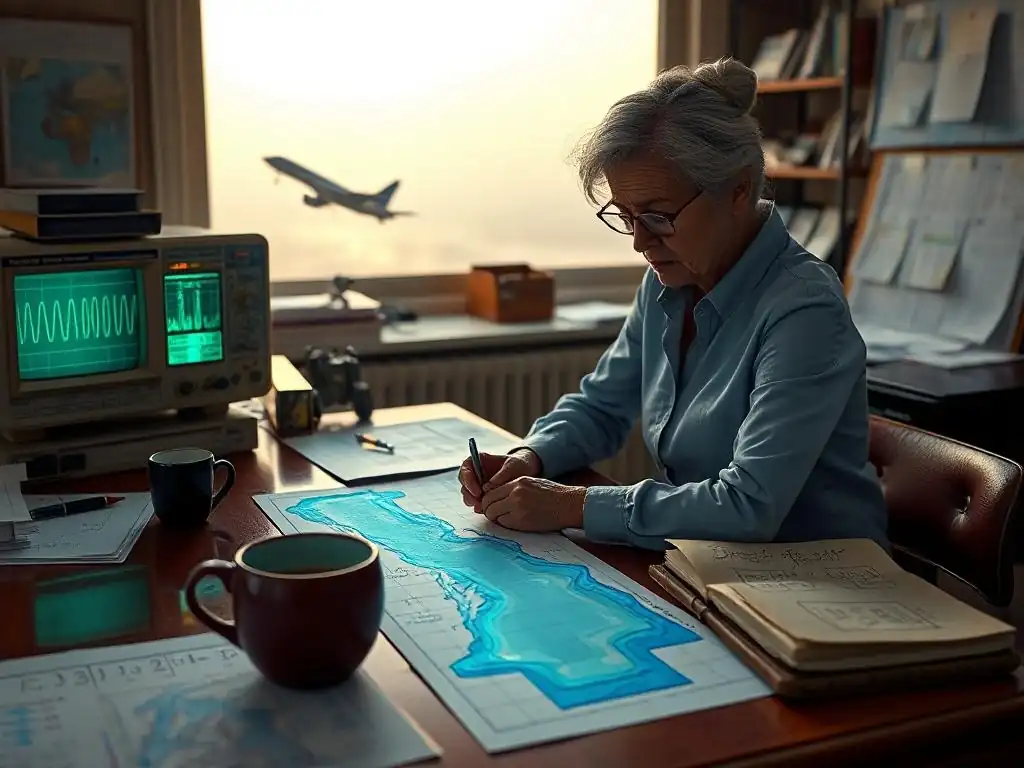
Delve into the captivating world of women who defied expectations and reshaped the landscape of science. Today, we spotlight Christine Darden, a brilliant mathematician whose groundbreaking work at NASA revolutionized our understanding of sonic booms. Her journey is one of perseverance, ingenuity, and a relentless pursuit of knowledge. But what exactly makes her sonic boom research so impactful? Explore her biography and uncover the story of a woman who truly broke sound barriers.
- Introduction: Celebrating Christine Darden's Legacy in Sonic Boom Research
- Early Life and Education: Laying the Foundation for a Mathematical Career
- NASA Career: Overcoming Obstacles and Pushing Boundaries in Aerodynamics
- Sonic Boom Research: Darden's Groundbreaking Contributions to Supersonic Flight
- Leadership Roles at NASA: Shaping the Future of Aeronautics
- Awards and Recognition: Acknowledging Darden's Impact on STEM
- Impact on Supersonic Aircraft Design
- Influence on Future Generations of Women in Mathematics and Engineering
- Conclusion: A Pioneer in Mathematics and Sonic Boom Technology
-
Frequently Asked Questions
- What was Christine Darden's primary area of research at NASA?
- How did Christine Darden contribute to the field of sonic boom research?
- What were some of the challenges Christine Darden faced as a woman in science?
- Why is Christine Darden's work on sonic boom research so important?
- What is the legacy of Christine Darden as highlighted by WomenInScienceHistory.com?
- Final Reflection: Echoes of Innovation
- Uncover Your Inner Pioneer: Christine Darden's Legacy Awaits!
Introduction: Celebrating Christine Darden's Legacy in Sonic Boom Research
Recognizing Dr. Christine Darden's Contributions to STEM
Dr. Christine Darden stands as a towering figure in the annals of aerospace engineering, particularly renowned for her groundbreaking work in sonic boom research. Her contributions at NASA's Langley Research Center spanned over four decades, during which she transitioned from a data analyst to an internationally recognized expert on supersonic flow and noise reduction. Darden's relentless pursuit of knowledge and her innovative approaches significantly advanced the understanding and mitigation of sonic booms, paving the way for quieter supersonic flight.
Her journey not only showcases remarkable scientific achievement but also highlights the perseverance required to excel as an African American woman in a predominantly male-dominated field during the mid to late 20th century. Dr. Darden's work transcended theoretical concepts, directly influencing the design and feasibility of future supersonic aircraft, making her a pivotal force in modern aeronautics.
Highlighting the Importance of Women Mathematicians
The history of science often overlooks the profound contributions of women in mathematics, despite their critical role in advancing various scientific disciplines. Dr. Christine Darden's career vividly illustrates the indispensable nature of mathematical prowess in solving complex engineering challenges. Her ability to translate theoretical mathematical concepts into practical applications for aerodynamics exemplifies how foundational mathematical skills are to scientific progress.
Darden's expertise in computational fluid dynamics and her development of algorithms for sonic boom prediction underscore the intellectual rigor and analytical precision that women mathematicians bring to the forefront. Her story serves as a powerful testament to the fact that mathematical insight, regardless of gender, is a cornerstone of innovation and discovery, especially in fields as demanding as aerospace engineering.
Early Life and Education: Laying the Foundation for a Mathematical Career
Early Interest in Mathematics and Science
Christine Darden's journey into the world of science and mathematics began in Monroe, North Carolina, where she was born in 1942. From an early age, she displayed a keen aptitude for numbers and logical problem-solving, nurtured by a family that valued education. Her mother, a school teacher, and her father, an insurance agent, instilled in her a strong work ethic and intellectual curiosity, encouraging her to pursue her academic interests without limitation.
This foundational period was crucial in shaping her future trajectory. Her early experiences in a segregated school system did not deter her passion for learning; instead, they may have fueled her determination to excel and break barriers. It was during these formative years that her inherent talent for mathematics truly began to blossom, setting the stage for a distinguished career.
Academic Journey: From Hampton University to a PhD in Engineering
Darden's academic journey formally commenced at Hampton Institute (now Hampton University), where she enrolled in 1959. She excelled in her studies, graduating at the top of her class in 1962 with a Bachelor of Science degree in Mathematics. Following her undergraduate studies, she taught high school mathematics for a brief period before pursuing advanced degrees.
In 1967, she earned a Master of Science degree in Applied Mathematics from Virginia State College (now Virginia State University). Her intellectual curiosity, however, extended beyond pure mathematics, leading her to pursue a Ph.D. in Mechanical Engineering from George Washington University. She successfully defended her dissertation and earned her doctorate in 1975, a remarkable achievement that solidified her transition from a mathematician to a highly qualified aerospace engineer, poised to make significant contributions to NASA's research efforts.
NASA Career: Overcoming Obstacles and Pushing Boundaries in Aerodynamics
Entry into NASA's Engineering Workforce
Christine Darden joined NASA's Langley Research Center in 1967, initially hired as a data analyst in the "computer pool." This role, while vital, often placed highly educated women in positions that did not fully utilize their engineering or scientific training. However, Darden quickly demonstrated her exceptional capabilities and expressed a desire to move beyond data processing into more direct engineering work.
Her persistence paid off. Within a few years, she transitioned into an aerospace engineering role, a significant step that marked the beginning of her impactful career in aerodynamics. This move was crucial for her, allowing her to apply her extensive mathematical background to complex problems related to supersonic flight and, eventually, to become a leading expert in Christine Darden sonic boom research.
Challenges Faced as a Woman in STEM at NASA
Despite her undeniable talent and qualifications, Christine Darden, like many women in STEM during her era, faced considerable challenges at NASA. The aerospace industry was overwhelmingly male-dominated, and implicit biases often created hurdles for women seeking to advance into leadership or highly technical roles. Darden herself recalled instances where her contributions were initially overlooked or where she had to actively advocate for opportunities that were more readily available to her male counterparts.
Her resilience and unwavering focus on her research were instrumental in overcoming these systemic obstacles. By consistently delivering groundbreaking work in Christine Darden sonic boom research and demonstrating unparalleled expertise, she earned the respect and recognition necessary to ascend through the ranks, breaking down barriers for future generations of women in engineering.
Sonic Boom Research: Darden's Groundbreaking Contributions to Supersonic Flight
Understanding Sonic Booms: The Science Behind the Phenomenon
A sonic boom is a powerful shockwave created when an object travels through the air faster than the speed of sound. This phenomenon generates a sudden change in pressure, which is perceived as a loud, thunder-like noise on the ground. Historically, sonic booms posed a significant challenge to the widespread adoption of supersonic commercial flight, as the noise generated over populated areas led to public complaints and regulatory restrictions, such as the ban on supersonic flight over land in the United States enacted in 1973.
The scientific understanding of how these shockwaves propagate and interact with the atmosphere was crucial for any attempt at mitigation. Dr. Christine Darden's work began by meticulously studying the fundamental physics behind these pressure waves, laying the groundwork for her revolutionary Christine Darden sonic boom research aimed at reducing their impact.
Mathematical Modeling of Sonic Boom Propagation
At the heart of Dr. Darden's groundbreaking contributions was her unparalleled skill in mathematical modeling. She developed sophisticated computer programs and algorithms to accurately predict how sonic booms would propagate through the atmosphere and how their intensity would be perceived on the ground. This involved complex calculations of fluid dynamics, wave theory, and atmospheric conditions, pushing the boundaries of computational aerodynamics.
Her models allowed engineers to simulate various aircraft designs and their potential sonic boom signatures without the need for expensive and time-consuming physical tests. This predictive capability became an invaluable tool in Christine Darden sonic boom research, enabling a systematic approach to designing quieter supersonic aircraft by understanding the precise mathematical relationships governing boom generation.
Research on Minimizing Sonic Boom Intensity
Building upon her robust mathematical models, Dr. Darden focused her Christine Darden sonic boom research on devising methods to minimize the intensity of these disruptive pressure waves. She pioneered concepts for "low-boom" or "shaped-boom" designs, which involved altering the aerodynamic shape of supersonic aircraft to spread out the shockwave, thereby reducing its peak pressure and perceived loudness. For instance, her work explored how the curvature of the aircraft's underside and nose could influence the shockwave's signature.
Her research posited that instead of a sharp, sudden "boom," a carefully designed aircraft could produce a much softer, less perceptible "thump." This fundamental shift in approach, from simply accepting sonic booms to actively engineering against them, was a direct result of her innovative Christine Darden sonic boom research and has profoundly influenced modern supersonic aircraft development, including projects like NASA's X-59 Quiet SuperSonic Technology (QueSST) aircraft.
Leadership Roles at NASA: Shaping the Future of Aeronautics
Promotion to Leadership Positions
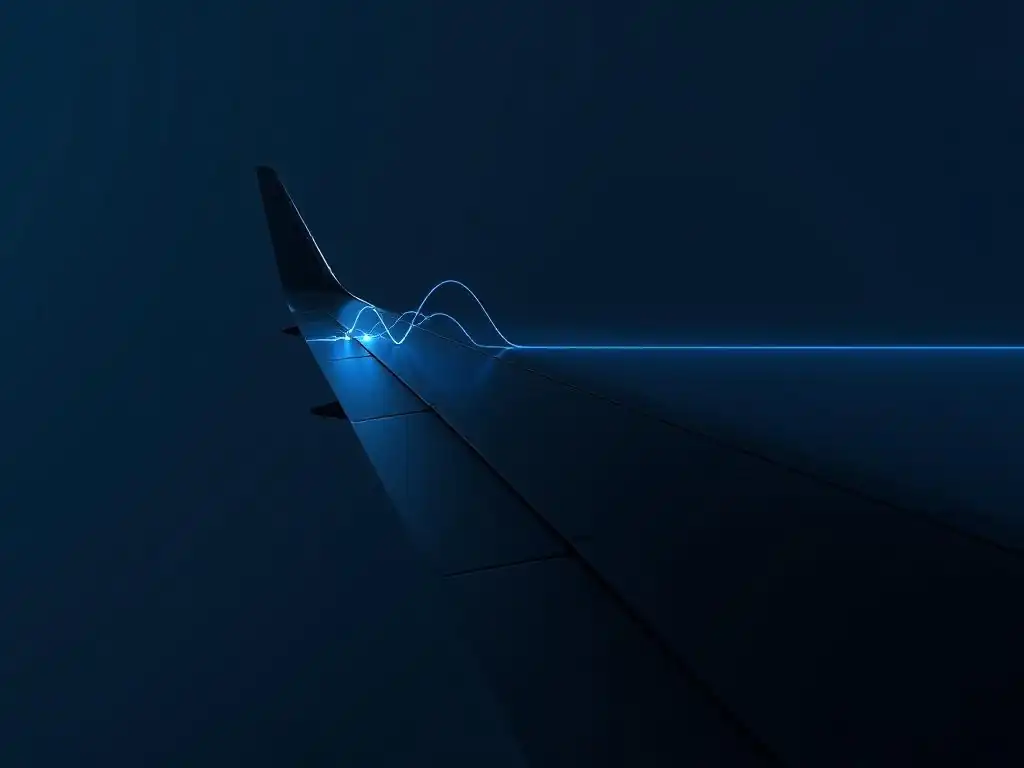
Christine Darden's exceptional technical expertise and leadership qualities were recognized throughout her distinguished career at NASA. Her progression from an aerospace engineer to holding various significant leadership positions underscored her growing influence within the agency. In 1994, she was appointed as the technical leader of NASA's Sonic Boom Group, a testament to her foundational Christine Darden sonic boom research.
A pinnacle of her career was her promotion in 1999 to the Senior Executive Service (SES), the highest rank in the federal civil service. This made her the first African American woman at NASA Langley Research Center to achieve this prestigious status. In this role, she managed the strategic planning for the High Speed Research Program, which aimed to develop environmentally friendly supersonic aircraft technology.
Mentoring the Next Generation of Engineers
Beyond her scientific contributions, Dr. Darden dedicated herself to nurturing the next generation of scientists and engineers. Throughout her leadership roles, she actively mentored younger colleagues, particularly women and minorities, sharing her knowledge, experiences, and insights into navigating a demanding field. She understood the importance of creating a more inclusive environment within STEM.
Her mentorship efforts extended beyond individual guidance, as she also championed diversity initiatives within NASA. By serving as a role model and an advocate, she encouraged aspiring professionals to pursue their passions in mathematics and engineering, leaving a lasting impact not just on technology but also on the human capital of the aerospace industry.
Awards and Recognition: Acknowledging Darden's Impact on STEM
Prestigious Awards and Honors
Dr. Christine Darden's remarkable contributions to aerodynamics and her pioneering Christine Darden sonic boom research have garnered her numerous prestigious awards and honors throughout her career. She received multiple Outstanding Performance Awards from NASA for her exceptional work. In 1987, she was awarded the Dr. A. T. Weathers Technical Achievement Award by the National Technical Association, recognizing her significant scientific advancements.
Further accolades include the Black Engineer of the Year Award for Outstanding Achievement in Government in 1994. In 2019, she was inducted into the Virginia Aviation Hall of Fame, an acknowledgment of her profound impact on the field of aviation. Her story, alongside those of other brilliant African American women at NASA, gained broader recognition through the "Hidden Figures" narrative, highlighting her as a contemporary and peer of the mathematicians who were instrumental in early space missions.
Legacy as a Pioneer in Aerodynamics and Sonic Boom Mitigation
Christine Darden's legacy extends far beyond the accolades she received; it is etched into the very fabric of modern aerodynamics and the pursuit of quieter supersonic flight. Her Christine Darden sonic boom research fundamentally transformed the approach to designing supersonic aircraft, moving from simply accepting the noise to actively engineering solutions for its reduction. She demonstrated that supersonic flight could be made more environmentally and socially acceptable.
Her pioneering work in mathematical modeling and low-boom design principles continues to influence ongoing efforts to develop the next generation of commercial supersonic jets. Dr. Darden's career serves as a powerful testament to the impact one individual can have in pushing the boundaries of scientific knowledge and technological innovation, solidifying her place as a true pioneer.
Impact on Supersonic Aircraft Design
Influence on Supersonic Aircraft Development
Dr. Christine Darden's Christine Darden sonic boom research has had a profound and enduring influence on the trajectory of supersonic aircraft development. Her mathematical models and theoretical insights into shockwave propagation provided the foundational knowledge required to move beyond conventional designs. Before her work, the primary focus was on achieving speed; after her contributions, the emphasis shifted to achieving speed quietly.
Her concepts for shaping aircraft to mitigate sonic booms directly informed subsequent research and experimental aircraft projects. For example, modern efforts such as NASA's Quiet SuperSonic Technology (QueSST) X-59 experimental aircraft, which aims to produce a barely perceptible "thump" instead of a loud boom, are built upon the principles and understanding established by Darden's pioneering work in Christine Darden sonic boom research. Her foresight enabled a paradigm shift in aerodynamic design.
Reducing Environmental Impact: Sonic Boom Minimization Efforts
The environmental and social ramifications of sonic booms were a major hurdle for the commercial viability of supersonic travel over land. The pervasive noise pollution caused by these booms led to widespread public opposition and strict regulations that effectively grounded commercial supersonic flight in many regions. Dr. Darden's Christine Darden sonic boom research directly addressed this critical issue by providing the scientific and engineering solutions necessary to minimize the environmental impact.
By demonstrating that sonic booms could be significantly reduced through clever aerodynamic design, Darden's work opened the possibility of re-introducing supersonic commercial air travel that is acceptable to communities below. Her efforts transformed a major environmental liability into a solvable engineering problem, showcasing how advanced mathematical and scientific research can lead to tangible societal benefits by making high-speed travel more sustainable and less disruptive.
Influence on Future Generations of Women in Mathematics and Engineering
Inspiring Girls to Pursue STEM Careers
Dr. Christine Darden's extraordinary career is a powerful source of inspiration for girls and young women considering paths in science, technology, engineering, and mathematics (STEM). Her journey, from her early aptitude for numbers to her groundbreaking Christine Darden sonic boom research at NASA, visibly demonstrates that women can not only participate but also lead in highly technical and innovative fields. Her story challenges outdated stereotypes about who belongs in STEM.
Through her public appearances and the growing recognition of her contributions, Darden serves as a tangible role model, showing that intellectual curiosity, perseverance, and a strong foundation in mathematics can unlock limitless possibilities. Her success underscores the importance of encouraging young girls to cultivate their interests in these critical disciplines from an early age, knowing that a fulfilling and impactful career awaits them.
Role Model for Aspiring Mathematicians and Engineers
For aspiring mathematicians and engineers, Christine Darden's career trajectory offers a compelling blueprint for success. Her path from a gifted mathematician to a leading aerospace engineer highlights the interdisciplinary nature of modern scientific inquiry and the value of continuous learning. She exemplified how a strong theoretical background in mathematics can be leveraged to solve real-world engineering challenges, particularly in her pivotal Christine Darden sonic boom research.
Her resilience in navigating a male-dominated environment, her unwavering commitment to scientific excellence, and her eventual rise to senior leadership positions provide invaluable lessons. Dr. Darden's legacy encourages future generations to pursue their intellectual passions with determination, to advocate for themselves, and to strive for excellence, knowing that their contributions can shape the future of technology and human endeavor.
Conclusion: A Pioneer in Mathematics and Sonic Boom Technology
Contributions to NASA and the Field of Aerodynamics
Dr. Christine Darden's indelible mark on NASA and the broader field of aerodynamics is characterized by her groundbreaking Christine Darden sonic boom research. Over her more than 40-year career at the Langley Research Center, she played a pivotal role in advancing the understanding of supersonic flow, developing sophisticated mathematical models, and pioneering designs for quieter supersonic aircraft. Her work was instrumental in transforming the once-intractable problem of sonic booms into a solvable engineering challenge.
From her early days as a human computer to her ascent as a senior executive, Darden consistently pushed the boundaries of scientific inquiry, making her a true pioneer in her field. Her dedication ensured that NASA remained at the forefront of aeronautical innovation, particularly in the quest for more efficient and environmentally friendly high-speed flight.
Ongoing Significance of Work on Sonic Boom Reduction
The significance of Dr. Christine Darden's Christine Darden sonic boom research continues to resonate powerfully in the present day. Her foundational work on low-boom design and mathematical prediction models remains highly relevant for ongoing efforts to develop the next generation of commercial supersonic aircraft. Projects like NASA's X-59 QueSST, which aims to achieve a "quiet" supersonic flight, directly build upon the theoretical and practical insights she provided decades ago.
Her vision for making supersonic travel acceptable over land is closer to realization today thanks to her relentless pursuit of knowledge and innovative solutions. As the aerospace industry looks towards a future of faster, more efficient air travel, Christine Darden's legacy ensures that the challenge of sonic boom reduction is met with the scientific rigor and ingenuity she championed, securing her place as a visionary leader in aerospace technology.
Frequently Asked Questions
What was Christine Darden's primary area of research at NASA?
Christine Darden's primary area of research at NASA focused on sonic boom minimization related to supersonic flight. She aimed to make supersonic air travel more viable.
How did Christine Darden contribute to the field of sonic boom research?
Darden developed mathematical models to understand and predict sonic boom behavior. Her work led to methods for reducing the intensity of these booms.
What were some of the challenges Christine Darden faced as a woman in science?
As a woman in science, Darden faced gender bias and limited opportunities for advancement. She had to prove her abilities in a male-dominated field.
Why is Christine Darden's work on sonic boom research so important?
Darden's work is important because it could enable the development of quieter supersonic aircraft. This could lead to a resurgence of supersonic commercial air travel.
What is the legacy of Christine Darden as highlighted by WomenInScienceHistory.com?
WomenInScienceHistory.com recognizes Darden as a pioneer who overcame significant obstacles to make groundbreaking contributions to aeronautics, inspiring future generations.
Final Reflection: Echoes of Innovation
The story of Christine Darden, a brilliant mathematician who dedicated her life to understanding and mitigating the disruptive power of sonic booms, resonates profoundly today. Her pioneering work at NASA, pushing the boundaries of aerospace engineering, continues to inform our pursuit of quieter, more efficient supersonic flight. As we strive for technological advancements that minimize environmental impact and enhance global connectivity, Darden's legacy serves as a powerful reminder of the transformative potential of perseverance and scientific curiosity.
Darden's journey, overcoming both gender and racial barriers, has not only shaped the field of aerodynamics but has also profoundly influenced the cultural landscape, inspiring generations of aspiring scientists and engineers. Her unwavering commitment to excellence underscores the importance of inclusivity and equal opportunity in STEM fields. You have to believe in yourself. You have to be confident in your abilities.
This quote encapsulates the spirit that propelled Darden forward, a spirit that continues to empower individuals to challenge the status quo and pursue their passions relentlessly.
As you reflect on Christine Darden's remarkable contributions, consider the sonic booms you encounter in your own life – the moments of disruptive change, the challenges that test your resilience, and the opportunities to break through barriers. Embrace the spirit of innovation and unwavering dedication that defined her career. Let Darden's story inspire you to pursue your own passions with unwavering commitment, leaving your own lasting echo on the world.
Uncover Your Inner Pioneer: Christine Darden's Legacy Awaits!
Thank you for exploring the incredible story of Christine Darden and her groundbreaking contributions to NASA. We hope you found her journey as inspiring as we do. Now, let's translate that inspiration into action:
- Embrace the Challenge: Research a scientific field that excites you and identify one problem you'd like to help solve, just like Christine did with sonic booms.
- Share Darden's story! Inspire others by posting this article on your social media and tagging someone who needs a dose of STEM inspiration.
- Explore Further: Dive deeper into NASA's history and the contributions of other remarkable women scientists.
What's one small step you can take today to channel your inner scientist and break a barrier of your own?