
Annie Montague Alexander: The Fossil Hunter Who Founded Berkeley's Paleontology Museum

Welcome to WomenInScienceHistory.com!
Ever wonder about the untold stories behind groundbreaking scientific discoveries? Dive into a world where extraordinary women defied societal norms and left an indelible mark on the scientific landscape. This week, we explore the remarkable life of Annie Montague Alexander, a pioneering fossil hunter whose passion and dedication led to the founding of Berkeley's Museum of Paleontology. Prepare to be captivated by her adventurous spirit and significant contributions to the field. What secrets did she unearth, and what obstacles did she overcome? Read on to discover the fascinating story of Annie Montague Alexander!
- Introduction: Annie Montague Alexander, A Pioneer in Paleontology
- Early Life and Education: Shaping a Passion for Natural History
- The Call of the Wild: Annie Alexander's Early Expeditions
- Landmark Fossil Discoveries: Annie Alexander's Contributions to Paleontology
- Founding the University of California Museum of Paleontology
- Alexander's Lasting Legacy: Beyond Fossil Hunting
- Overcoming Obstacles: Challenges Faced by a Woman in Early Paleontology
- Annie Montague Alexander: A Timeline of Key Events
- Conclusion: Celebrating Annie Montague Alexander's Enduring Impact
-
Frequently Asked Questions
- What made Annie Montague Alexander a significant figure in paleontology?
- How did Annie Montague Alexander contribute to the UC Berkeley's Museum of Paleontology?
- What kind of challenges did Annie Montague Alexander face as a woman in science?
- What type of fossils was Annie Montague Alexander most known for finding?
- Besides fossil hunting, what else was Annie Montague Alexander interested in?
- Final Reflection: Unearthing Legacy, Inspiring Discovery
- Unearth Your Inner Explorer!
Introduction: Annie Montague Alexander, A Pioneer in Paleontology
Unveiling the Story of Annie Montague Alexander
Annie Montague Alexander stands as a titan in the annals of natural history and paleontology, a pioneering figure whose passion for the natural world reshaped scientific research in California and beyond. Born in 1867, Alexander was not merely a wealthy benefactor; she was an intrepid explorer, an astute observer, and a hands-on fossil hunter who personally funded and participated in numerous expeditions across the American West. Her relentless pursuit of scientific knowledge, combined with her remarkable foresight, led to the establishment of two of the University of California, Berkeley's most significant natural history museums.
Her story is one of unwavering dedication to scientific discovery, demonstrating how an individual's personal commitment can profoundly impact institutional development and academic inquiry. Annie Montague Alexander's legacy is etched not only in the thousands of specimens she collected but also in the very foundations of the institutions that continue to house and study them, making her an indispensable figure in the history of American science.
Women in Science History: Recognizing Annie Alexander's Contributions
Within the broader narrative of women in science history, Annie Montague Alexander's contributions are particularly illuminating. Operating in an era when scientific fields were overwhelmingly dominated by men, she carved out an extraordinary niche for herself, not by seeking academic titles, but by actively engaging in the demanding physical work of field science and by strategically deploying her resources. Her independence, both intellectual and financial, allowed her to pursue her scientific interests without the typical institutional constraints faced by many women of her time.
Alexander's expeditions broke new ground, literally and figuratively, providing invaluable collections that continue to inform our understanding of ancient life and ecosystems. Her profound impact on the study of paleontology and zoology at Berkeley serves as a powerful testament to the often-overlooked yet critical roles women have played in shaping scientific disciplines. Her story inspires future generations, highlighting that passion, perseverance, and strategic vision are paramount to scientific progress, regardless of gender.
Early Life and Education: Shaping a Passion for Natural History
Annie Alexander's Childhood and Early Interest in Nature
Annie Montague Alexander was born on February 13, 1867, in Honolulu, Hawaii, into a prominent and wealthy family. Her father, Charles B. Alexander, was a successful lawyer who later became a regent of the University of California, Berkeley, and served as counsel for the Southern Pacific Railroad. Growing up with significant financial resources, Annie was afforded opportunities for travel and education that were uncommon for women of her time. This early exposure to diverse landscapes and cultures, particularly during family trips to Europe and the American West, likely fostered a deep-seated curiosity about the natural world.
From a young age, Alexander exhibited a keen interest in outdoor activities and a practical, hands-on approach to learning. While the specifics of her earliest natural history pursuits are not extensively documented, it is clear that her upbringing provided fertile ground for the development of her observational skills and an independent spirit that would later define her scientific career. This foundational period instilled in her a profound appreciation for the intricacies of nature, setting the stage for her future as a dedicated fossil hunter and patron of science.
Formal Education and Scientific Training
Despite her privileged background, Annie Alexander did not initially pursue a traditional university degree. Instead, she attended private schools, including the Lasell Seminary for Young Women in Auburndale, Massachusetts, which provided a broad, albeit non-scientific, education. Her true scientific awakening came later, in the early 1900s, when she began attending lectures and classes at the University of California, Berkeley, as a special student. It was there that she encountered Professor John C. Merriam, a distinguished paleontologist who would become a pivotal mentor and collaborator.
Merriam's courses in geology and paleontology ignited Alexander's passion for fossil hunting and the study of ancient life. She quickly moved beyond passive learning, demonstrating an exceptional aptitude for fieldwork and a desire to contribute directly to scientific discovery. Her informal yet intensive scientific training, guided by leading experts like Merriam, equipped her with the foundational knowledge and methodological understanding necessary to embark on her extraordinary career as a pioneering Annie Montague Alexander fossil hunting expedition leader.
The Call of the Wild: Annie Alexander's Early Expeditions
First Fossil Hunting Expeditions with Professor John C. Merriam
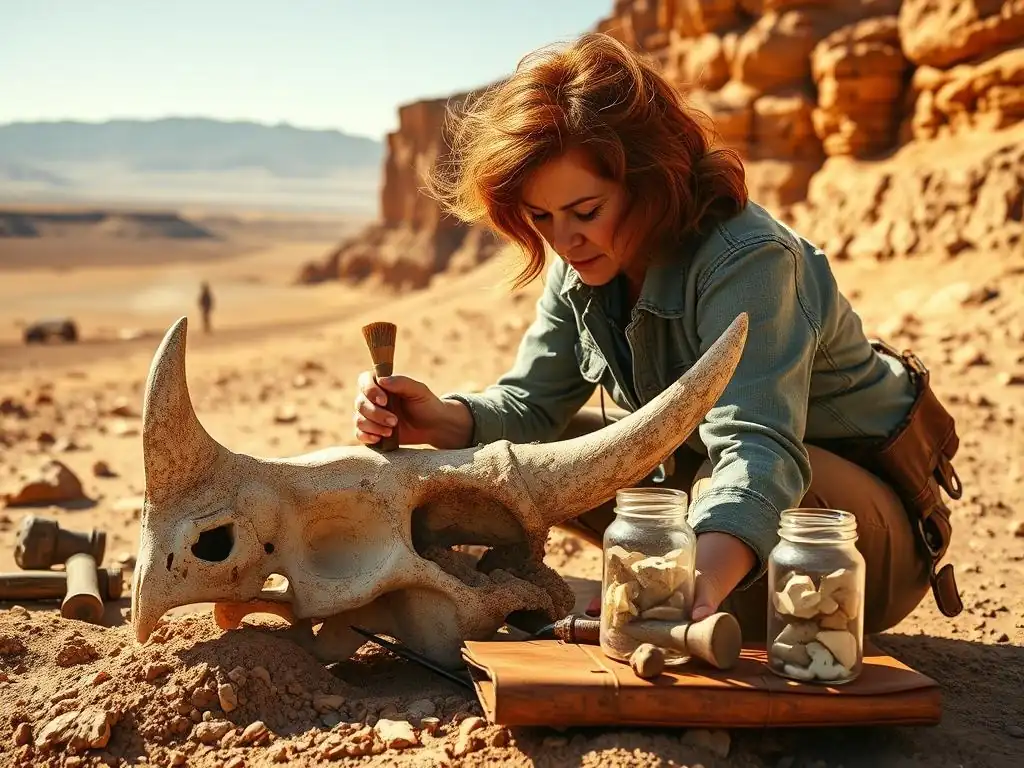
Annie Montague Alexander's active involvement in scientific fieldwork began in earnest in the early 1900s, notably through her collaboration with Professor John C. Merriam of the University of California. Her first major expedition, in 1901, took her to Fossil Lake, Oregon, a site renowned for its abundant Pleistocene fossils. This initial venture was a significant turning point, cementing her commitment to hands-on fossil hunting and demonstrating her capacity for leading and financing demanding fieldwork. She quickly proved to be not just a patron, but an indispensable member of the team, actively participating in the excavation and collection processes.
These early expeditions, often to remote and challenging terrains, were instrumental in shaping her practical skills and understanding of field paleontology. She financed these ventures entirely herself, providing the necessary funds for equipment, supplies, and the salaries of field assistants. This unique position allowed her to direct the scope and focus of the expeditions, ensuring that scientific rigor and thorough documentation were paramount, setting a high standard for future Annie Montague Alexander fossil hunting endeavors.
Developing Unique Fossil Collection Techniques
Beyond merely funding expeditions, Annie Alexander was deeply involved in the practical aspects of fossil collection, often developing and refining techniques that were ahead of their time. She understood the importance of meticulous documentation, insisting on detailed field notes, accurate maps, and systematic cataloging of every specimen. Her approach emphasized careful excavation and preservation, ensuring that fossils were recovered with as much contextual information as possible, maximizing their scientific value.
Alexander's expeditions were characterized by their efficiency and thoroughness. She managed logistics with precision, from organizing transport and supplies in rugged wilderness areas to overseeing the careful packing and shipment of delicate specimens back to Berkeley. Her dedication to these practical details, combined with her innate ability to identify promising fossil beds, made her an exceptionally effective fossil hunter. This hands-on expertise was crucial in building the vast and scientifically significant collections that would later form the core of the museums she founded.
Landmark Fossil Discoveries: Annie Alexander's Contributions to Paleontology
Significant Fossil Finds in Nevada
Annie Montague Alexander's most celebrated fossil hunting achievements include her groundbreaking work in the remote West Humboldt Range of Nevada. In 1905 and 1906, she personally financed and led expeditions to these ancient marine deposits, which yielded an extraordinary collection of Triassic ichthyosaur remains. These discoveries were particularly significant because they included some of the largest ichthyosaur skeletons ever found, providing unprecedented insights into the size and diversity of these ancient marine reptiles. One notable find was a nearly complete skeleton of Shastasaurus alexandrae, a massive ichthyosaur that could reach lengths of over 50 feet.
The careful excavation and documentation of these enormous fossils under Alexander's direct supervision were monumental undertakings, requiring significant logistical planning and skilled labor in challenging desert conditions. The sheer scale and scientific importance of these Nevada finds solidified her reputation as a leading figure in American paleontology, demonstrating the profound impact of her Annie Montague Alexander fossil hunting efforts.
Unearthing Marine Reptiles in California
Alexander's fossil hunting prowess extended beyond Nevada, with equally significant discoveries made within California. Her expeditions to regions like Shasta County, in the northern part of the state, further enriched the understanding of Triassic marine life. Here, she and her teams unearthed additional specimens of marine reptiles, including various species of ichthyosaurs and plesiosaurs, contributing to a more comprehensive picture of California's prehistoric marine ecosystems. These finds complemented the Nevada collections, allowing paleontologists to draw broader conclusions about the distribution and evolution of these ancient creatures across the western North American continent.
Beyond marine reptiles, Alexander's wide-ranging fossil hunting expeditions also uncovered a wealth of Cenozoic mammal fossils and Pleistocene megafauna from various California localities. Her comprehensive approach to collecting provided a rich tapestry of faunal and floral evidence, contributing to a holistic understanding of past environments and evolutionary changes across vast geological timescales.
Documenting and Cataloging Fossil Specimens: A Rigorous Approach
A hallmark of Annie Montague Alexander's contributions was her unwavering commitment to the meticulous documentation and cataloging of every fossil specimen. She understood that a fossil's scientific value was intrinsically linked to its context. Consequently, her expeditions were characterized by rigorous field practices, including detailed stratigraphic notes, precise locality data, and comprehensive photographic records of excavations. She ensured that each specimen was assigned a unique accession number and that all associated information was systematically recorded.
This dedication to scientific rigor set a high standard for early 20th-century paleontology. Her insistence on thoroughness meant that the vast collections amassed through Annie Montague Alexander fossil hunting expeditions were not merely impressive in volume but also incredibly valuable for ongoing research. The meticulous records she demanded allowed future generations of scientists to accurately interpret the finds, ensuring their enduring utility for studying ancient life and environments.
Founding the University of California Museum of Paleontology
The Vision for a Paleontology Museum at Berkeley
Annie Montague Alexander's extensive fossil hunting expeditions rapidly amassed an overwhelming quantity of specimens, far exceeding the existing capacity of the University of California's departments to properly house and study them. Recognizing this critical need, Alexander developed a profound vision: to establish dedicated, world-class museums at Berkeley that could serve as permanent repositories for these invaluable natural history collections. Her motivation was not merely to store specimens, but to create vibrant research institutions where scientists could actively study and interpret the vast evidence of past life.
She envisioned a place where her significant finds, particularly the marine reptile fossils from Nevada and California, could be meticulously curated, made accessible for scholarly research, and utilized for public education. This foresight went beyond simple patronage; it reflected a deep understanding of the infrastructure required to advance scientific disciplines like paleontology and zoology, ensuring that the fruits of her Annie Montague Alexander fossil hunting efforts would have a lasting impact.
Establishing the Museum and Building its Collections
Alexander's vision quickly transformed into reality through her extraordinary financial generosity and unwavering commitment. In 1908, she provided the foundational endowment to establish the Museum of Vertebrate Zoology (MVZ) at the University of California, Berkeley.
Shortly thereafter, her continued financial support and the sheer volume of her paleontological collections became the impetus for the formal establishment of the University of California Museum of Paleontology (UCMP). She personally oversaw the initial acquisition of collections, including thousands of specimens from her own expeditions, and played a crucial role in the selection of initial staff, ensuring that highly competent scientists were at the helm.
Her contributions were not a one-time donation; Alexander provided sustained financial support for decades, covering salaries, equipment, and operating costs. This consistent funding allowed the museums to grow rapidly, acquiring additional collections and attracting leading researchers. The UCMP, in particular, became a direct beneficiary of her prolific fossil hunting, with its early growth inextricably linked to the continuous influx of scientifically vital specimens she personally collected or funded.
Annie Alexander's Role in the Museum's Development
Annie Alexander's involvement with the museums she founded was far more profound than that of a typical benefactor. She remained deeply engaged in their development for over four decades, acting as an informal scientific advisor and a constant source of encouragement and support. She regularly visited the museums, reviewed collections, and discussed research directions with staff and faculty. Her continued Annie Montague Alexander fossil hunting expeditions served as a direct pipeline, continually enriching the museums' holdings with new and significant specimens.
Her influence extended to the strategic direction of the institutions, ensuring they maintained their focus on field-based research and comprehensive collection building. She was instrumental in shaping their policies regarding specimen acquisition, preservation, and accessibility for research. Alexander's hands-on dedication ensured that the museums evolved into world-renowned centers for natural history research and education, a testament to her enduring commitment to the scientific enterprise.
Alexander's Lasting Legacy: Beyond Fossil Hunting
Impact on Paleontological Research and Education
Annie Montague Alexander's lasting legacy extends far beyond the impressive volume of fossils she personally collected; it lies fundamentally in the institutional framework she helped create. The University of California Museum of Paleontology (UCMP) and the Museum of Vertebrate Zoology (MVZ), both established through her vision and immense financial support, have grown into globally recognized research powerhouses. These museums provide invaluable resources for paleontological research, housing millions of specimens that continue to be studied by scientists worldwide. Her collections have facilitated countless studies on evolution, biodiversity, ancient ecosystems, and climate change, underpinning decades of academic publications and discoveries.
Furthermore, these institutions have served as crucial training grounds for generations of paleontologists, zoologists, and natural historians. The rigorous collection methods she championed, combined with the accessibility of the specimens, have educated and inspired thousands of students and researchers, ensuring that the spirit of scientific inquiry she embodied continues to flourish.
Inspiring Future Generations of Women in Science
In an era when women's participation in scientific fieldwork and leadership roles was largely unprecedented, Annie Montague Alexander's career serves as a powerful source of inspiration. She demonstrated that a woman could not only thrive in the physically demanding and intellectually rigorous world of fossil hunting but also lead major scientific initiatives. Her independent spirit, her hands-on engagement in expeditions, and her strategic vision for institution-building provided a tangible example of female leadership in science.
Her story resonates deeply with the mission of recognizing women in science history, highlighting how determination and passion can overcome societal barriers. Alexander proved that significant scientific contributions could come from outside traditional academic pathways, encouraging future generations of women to pursue their scientific curiosities with courage and conviction, regardless of prevailing norms.
The Annie Alexander Collection: A Treasure Trove of Scientific Knowledge
The collections amassed through Annie Montague Alexander's expeditions constitute an unparalleled treasure trove of scientific knowledge. Her contributions to the UCMP alone include tens of thousands of vertebrate fossils, encompassing a vast array of ancient life forms from marine reptiles to Cenozoic mammals. Additionally, her efforts led to the collection of hundreds of thousands of invertebrate and plant fossils, providing a comprehensive snapshot of prehistoric ecosystems. For instance, the ichthyosaur material she collected from Nevada remains among the most complete and scientifically important in the world.
These vast holdings are not static relics; they are dynamic resources that continue to yield new insights. Modern analytical techniques, such as CT scanning and stable isotope analysis, are continually applied to her specimens, revealing details about diet, growth, and migration patterns that were unimaginable in her time. The Annie Alexander collection thus remains a living legacy, a testament to the enduring value of meticulous Annie Montague Alexander fossil hunting and dedicated stewardship of natural history specimens for future scientific discovery.
Overcoming Obstacles: Challenges Faced by a Woman in Early Paleontology
Operating in the early 20th century, Annie Montague Alexander faced the inherent challenges of navigating a scientific field overwhelmingly dominated by men. While her personal wealth provided her with a degree of independence and autonomy that many women lacked, she still operated within a societal and academic structure that often marginalized or overlooked female contributions. The physically demanding nature of fossil hunting expeditions, often in remote and rugged terrain, was typically perceived as a masculine pursuit.
Despite these prevailing attitudes, Alexander distinguished herself not just as a financial backer but as an active, hands-on participant in the fieldwork. She commanded respect through her expertise, her meticulous approach, and her unwavering dedication. Her ability to lead expeditions, manage diverse teams, and make significant scientific discoveries in such an environment stands as a testament to her resilience and pioneering spirit, subtly challenging the gender norms of her time.
Securing Funding and Resources for Research Expeditions
While Annie Alexander possessed significant personal wealth, the logistical complexities and financial demands of conducting large-scale, sustained research expeditions were considerable. Securing and managing the necessary funding and resources for Annie Montague Alexander fossil hunting endeavors was an ongoing challenge, even for someone of her means. This involved not only purchasing equipment and supplies but also hiring and managing a diverse team of paleontologists, geologists, and laborers for extended periods in often inhospitable conditions.
Her commitment went beyond initial endowments; she provided continuous financial support for decades, ensuring that the research and collection efforts could be sustained. This consistent resource allocation was crucial for the success of her numerous expeditions and for the eventual establishment and growth of the museums. Her ability to plan, fund, and execute such ambitious scientific undertakings demonstrates a remarkable blend of business acumen, scientific vision, and personal dedication.
Annie Montague Alexander: A Timeline of Key Events
Timeline of Key Events
- 1867: Born in Honolulu, Hawaii, on February 13.
- Early 1900s: Begins attending classes at the University of California, Berkeley, as a special student, where she meets Professor John C. Merriam.
- 1901: Undertakes her first significant fossil hunting expedition to Fossil Lake, Oregon, marking the beginning of her active fieldwork.
- 1905-1906: Leads and funds major expeditions to the West Humboldt Range, Nevada, resulting in the discovery of numerous large ichthyosaur remains, including Shastasaurus alexandrae.
- 1908: Provides the foundational endowment to establish the Museum of Vertebrate Zoology (MVZ) at the University of California, Berkeley.
- Circa 1920: Her substantial collections and continued support lead to the formal establishment and growth of the University of California Museum of Paleontology (UCMP) at Berkeley.
- 1920s-1940s: Continues to fund and participate in numerous Annie Montague Alexander fossil hunting expeditions across California and other Western states, enriching the museum collections.
- 1950: Passes away on December 10, leaving an enduring legacy in natural history and paleontology.
Conclusion: Celebrating Annie Montague Alexander's Enduring Impact
Remembering a Pioneering Woman in Science
Annie Montague Alexander stands as an unparalleled figure in the history of American science, a woman whose vision, financial acumen, and hands-on dedication fundamentally shaped the landscape of natural history research. She was far more than a wealthy patron; she was an active fossil hunter, an expedition leader, and a strategic force behind the creation of two world-renowned scientific institutions. Her life story is a powerful narrative of independent scientific pursuit, demonstrating how an individual's commitment can yield monumental and lasting contributions to human knowledge.
Her legacy is not merely in the vast number of specimens she collected, but in the enduring scientific infrastructure she helped establish. Alexander's pioneering spirit opened doors and set precedents for future generations, quietly but effectively challenging the conventional roles for women in science during her era. She truly embodies the spirit of a pioneer who broke ground in more ways than one.
Annie Alexander's Contribution to Environmental Science and Paleontology
Annie Montague Alexander's contributions to environmental science and paleontology are profound and multifaceted. Through her extensive Annie Montague Alexander fossil hunting expeditions, she amassed collections that serve as invaluable archives of Earth's past biodiversity and environmental conditions. These specimens provide critical baseline data for understanding long-term ecological and evolutionary changes, informing contemporary studies on climate change, species extinction, and ecosystem resilience. Her work helped to populate the scientific record with tangible evidence of ancient life, from massive marine reptiles to diverse Cenozoic mammals, offering crucial insights into prehistoric environments.
Furthermore, the museums she founded, particularly the University of California Museum of Paleontology, continue to be vital centers for research into Earth's history. These institutions foster interdisciplinary studies that bridge paleontology with geology, ecology, and evolutionary biology, directly contributing to our understanding of the planet's past and its potential future.
Exploring the Legacy of Annie Montague Alexander's Work
The enduring impact of Annie Montague Alexander's work can be explored through the very institutions she helped build and the vast collections she amassed. The University of California Museum of Paleontology and the Museum of Vertebrate Zoology at Berkeley stand as living testaments to her vision, housing millions of specimens that continue to be actively researched by scientists worldwide. These collections are not static; they are dynamic resources that continually yield new discoveries, shedding light on the intricate history of life on Earth.
Her meticulous documentation and the sheer volume of her fossil hunting efforts ensure that her contributions remain a cornerstone of paleontological and zoological research. For anyone interested in the history of science, the role of women in pioneering fields, or the rich tapestry of Earth's past life, studying the legacy of Annie Montague Alexander provides a compelling and inspiring journey into the heart of scientific discovery.
Frequently Asked Questions
What made Annie Montague Alexander a significant figure in paleontology?
Annie Montague Alexander was a pioneering fossil hunter and philanthropist. She funded and participated in numerous expeditions, making significant contributions to vertebrate paleontology and founding the University of California, Berkeley's Museum of Paleontology.
How did Annie Montague Alexander contribute to the UC Berkeley's Museum of Paleontology?
Alexander founded the museum in 1908, providing it with a substantial collection of fossils and specimens gathered during her expeditions. Her financial support and collecting efforts were crucial to its early development.
What kind of challenges did Annie Montague Alexander face as a woman in science?
Like many women in science during her time, Alexander faced gender-based discrimination and a lack of recognition. She often had to fund her own research and fight for her work to be taken seriously.
What type of fossils was Annie Montague Alexander most known for finding?
While she collected a wide range of specimens, Alexander is particularly known for her discoveries of vertebrate fossils, including important finds from the Tertiary period in the western United States.
Besides fossil hunting, what else was Annie Montague Alexander interested in?
Beyond paleontology, Alexander was also an avid zoologist and botanist. She collected specimens of plants and animals, contributing significantly to the understanding of natural history in the regions she explored.
Final Reflection: Unearthing Legacy, Inspiring Discovery
The life and work of Annie Montague Alexander, as we've explored, is not just a historical account; it's a vibrant testament to the power of unwavering curiosity and dedicated scientific pursuit. Her contributions to paleontology, particularly her role in founding Berkeley's Paleontology Museum, resonate deeply today, reminding us that groundbreaking discoveries often stem from passionate individuals driven by a thirst for knowledge and a commitment to preserving our planet's history.
Annie's influence extends far beyond the museum walls. Her story serves as a powerful reminder that women have always been integral to scientific advancement, even when their contributions were often overlooked. Her dedication to fieldwork and meticulous collection practices set a standard for future generations of paleontologists. The world is a book and those who do not travel read only one page.
This quote, though not directly from Annie, encapsulates her spirit of exploration and her belief in learning through direct experience, a philosophy that continues to inspire researchers today.
Let Annie Montague Alexander's legacy ignite your own passion for discovery. Consider the world around you with fresh eyes, and ask yourself: what hidden stories are waiting to be unearthed? What contributions can you make to preserve our planet's rich history and inspire future generations of explorers? The spirit of Annie Montague Alexander lives on in every fossil found, every question asked, and every step taken towards a deeper understanding of our world. Embrace that spirit, and embark on your own journey of discovery.
Unearth Your Inner Explorer!
Thanks for delving into the extraordinary life of Annie Montague Alexander! We hope you're feeling inspired by her dedication and the impact she made on paleontology. Now, let's channel that inspiration into action:
- Visit a local museum and discover the paleontological exhibits near you. Imagine yourself following in Annie's footsteps, uncovering the stories hidden within the bones.
- Share Annie's incredible story with a friend or on social media. Help inspire the next generation of female scientists!
- Start a nature journal and document your own observations of the natural world around you, just as Annie did.
What small adventure will you embark on this week, inspired by Annie's boundless curiosity?