
Valérie MassonDelmotte: Leading Climate Scientist and IPCC Author Shaping Global Climate Understanding

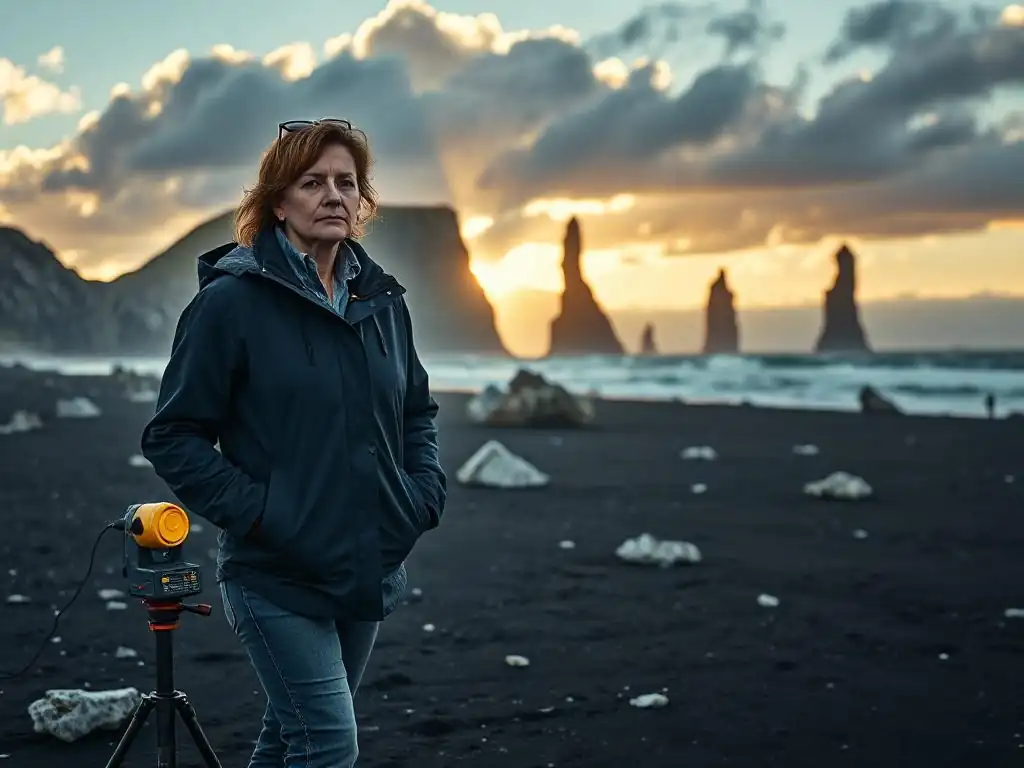
Welcome to WomenInScienceHistory.com!
Dive into the inspiring world of Valérie Masson-Delmotte, a leading figure in climate science, and discover how her groundbreaking work with the IPCC is shaping our understanding of global climate change. But who is this influential scientist, and what challenges did she overcome to reach the forefront of her field? Explore her biography and unlock the story of a remarkable woman making a profound impact on our planet's future.
- Introduction: Valérie Masson-Delmotte - A Profile in Climate Science Leadership
- Early Life and Education: The Foundation of a Climate Science Career
- Valérie Masson-Delmotte's Groundbreaking Research Contributions
- The IPCC Leadership Role: Shaping Global Climate Assessments
- Valérie Masson-Delmotte: Communicating Climate Science to the Public
- Recognition and Awards: Honoring a Climate Science Pioneer
- Overcoming Challenges as a Woman in Climate Science
- Valérie Masson-Delmotte Climate Science Biography: Legacy and Future Directions
-
Frequently Asked Questions
- What is WomenInScienceHistory.com all about?
- Why is it important to highlight women in science history?
- What is Valérie Masson-Delmotte known for in climate science?
- What challenges did women like Valérie Masson-Delmotte face in their scientific careers?
- Where can I find more information about Valérie Masson-Delmotte and other women in science?
- Final Reflection: A Legacy of Climate Clarity
- Ignite Change: Embrace Valérie's Climate Call Now!
Introduction: Valérie Masson-Delmotte - A Profile in Climate Science Leadership
Celebrating the Contributions of Women in Environmental Science: The Story of Valérie Masson-Delmotte
The field of environmental science, particularly climate research, has been profoundly shaped by the dedicated work of numerous pioneering individuals. Among these, Valérie Masson-Delmotte stands out as a preeminent figure whose contributions have significantly advanced our understanding of Earth's climate system. Her journey exemplifies the critical role women play in scientific discovery, often navigating challenges to make groundbreaking advancements. This Valérie Masson-Delmotte climate science biography delves into her remarkable career, highlighting her scientific rigor and leadership.
Masson-Delmotte's narrative is particularly inspiring for those interested in the often-overlooked stories of women in science. She has not only excelled in complex scientific domains but has also risen to positions of global influence, demonstrating that gender is no barrier to achieving scientific excellence and leadership. Her work, spanning from intricate ice core analysis to broad international climate assessments, underscores a career dedicated to unraveling the complexities of climate change and informing the global response.
Why Valérie Masson-Delmotte's Work Matters for Understanding Climate Change
Valérie Masson-Delmotte's extensive research and leadership are fundamental to the contemporary understanding of climate change. As a research director at the French Alternative Energies and Atomic Energy Commission (CEA), she has been at the forefront of efforts to reconstruct past climate conditions, providing crucial context for current warming trends. Her expertise in paleoclimatology allows scientists to compare present climate anomalies with historical data, offering robust evidence of human impact.
Her most prominent role, however, has been as the co-chair of Working Group I (WGI) for the Intergovernmental Panel on Climate Change (IPCC) Sixth Assessment Report (AR6). This critical position placed her at the helm of synthesizing the latest physical science basis of climate change, a report widely regarded as the most authoritative scientific document on the subject. The findings presented under her leadership have directly informed global policy discussions, including the Paris Agreement goals, making her work indispensable for shaping climate action worldwide.
Early Life and Education: The Foundation of a Climate Science Career
From Mathematics and Fluid Mechanics to a Passion for Climate Research
Valérie Masson-Delmotte's academic journey began with a strong foundation in fundamental sciences, a trajectory that would eventually lead her to the cutting edge of climate research. She pursued studies in physics and mathematics, earning her diploma from the École Centrale Paris in 1993. This rigorous training in quantitative disciplines provided her with the analytical tools and problem-solving skills essential for tackling complex scientific challenges. Her early academic focus included fluid mechanics, a field that, while seemingly distant from climate science at first glance, provided a crucial understanding of atmospheric and oceanic dynamics.
Her transition from these foundational subjects to a specialized interest in climate research was driven by a growing awareness of environmental issues and the profound scientific questions surrounding Earth's past and future climate. This shift reflected a burgeoning passion for understanding the intricate mechanisms that govern our planet's climate system. Her doctoral research, completed in 1996, focused on the modeling of atmospheric water vapor and its isotopic composition, laying the groundwork for her future work in paleoclimate reconstruction and the water cycle.
Key Influences and Mentors Shaping Masson-Delmotte's Scientific Path
Throughout her formative years and early career, Valérie Masson-Delmotte benefited from the guidance of influential mentors who helped shape her scientific approach and research interests. These mentors provided not only scientific direction but also fostered an environment of intellectual curiosity and rigorous inquiry. Their insights were instrumental in steering her towards the highly interdisciplinary field of climate science, which demands expertise across physics, chemistry, geology, and biology.
One significant influence was her engagement with the Laboratoire des Sciences du Climat et de l'Environnement (LSCE), where she has spent the majority of her career. The collaborative atmosphere and pioneering research conducted at LSCE, particularly in the realm of ice core analysis, provided a fertile ground for her talents to flourish. This environment, coupled with the mentorship of established climate scientists, allowed her to develop her unique research niche and contribute significantly to the collective effort of understanding global climate change.
Academic Achievements and Early Research in Paleoclimatology
Valérie Masson-Delmotte's early academic achievements quickly marked her as a rising star in the scientific community. Following her doctorate, she joined the CEA, where she began her seminal work in paleoclimatology. This field, which studies ancient climates, relies heavily on natural archives such as ice cores, tree rings, and sediment layers to reconstruct past environmental conditions. Her early research focused intensely on the analysis of ice cores from Antarctica and Greenland.
Her contributions during this period included developing and refining methods for interpreting isotopic signals in ice cores, which serve as proxies for past temperatures and atmospheric composition. For instance, her work on the EPICA Dome C ice core in Antarctica, which extends back approximately 800,000 years, provided crucial data on long-term natural climate variability and the relationship between greenhouse gas concentrations and temperature. This foundational research established her expertise in reconstructing ancient climates, a cornerstone of her distinguished Valérie Masson-Delmotte climate science biography.
Valérie Masson-Delmotte's Groundbreaking Research Contributions
Ice Core Analysis and Paleoclimate Reconstruction: Unveiling Past Climate Changes
Valérie Masson-Delmotte's most significant and enduring scientific contributions stem from her pioneering work in ice core analysis and paleoclimate reconstruction. Her research has involved meticulous examination of ice cores drilled from polar regions, such as the Greenland Ice Sheet and the Antarctic ice cap. These ice cores act as frozen archives of Earth's past atmosphere and climate, trapping ancient air bubbles and layers of snow that preserve information about temperature, atmospheric composition, and precipitation over hundreds of thousands of years.
Through her sophisticated isotopic analysis techniques, Masson-Delmotte has been instrumental in providing highly detailed records of past climate variability. For example, her work on the EPICA Dome C ice core in Antarctica provided climate data spanning the last 800,000 years, revealing eight glacial cycles and demonstrating the strong natural correlation between atmospheric CO2 concentrations and global temperatures. This research has been crucial in establishing a baseline for natural climate fluctuations, thereby allowing scientists to unequivocally attribute recent rapid warming to anthropogenic greenhouse gas emissions.
Advancing Climate Models and Projections: Understanding Future Climate Scenarios
Beyond her work on past climates, Valérie Masson-Delmotte has made substantial contributions to the advancement of climate models and projections, which are essential tools for understanding future climate scenarios. Her expertise bridges the gap between observational data from paleoclimate records and the complex numerical simulations used to forecast future climate conditions. She has been involved in validating and refining these models, ensuring their accuracy in representing Earth's climate system.
Her research often involves integrating paleoclimate data into climate models to test their ability to reproduce past climate states, thereby increasing confidence in their projections for the future. This rigorous validation process helps to reduce uncertainties in climate predictions, providing more robust estimates of potential temperature increases, sea-level rise, and changes in extreme weather events under various emissions scenarios. Her insights have been vital in making these complex models more accessible and relevant for policy decisions, a key aspect of her Valérie Masson-Delmotte climate science biography.
Focus on Understanding the Water Cycle and Climate Variability
A distinct thread running through Valérie Masson-Delmotte's research is her deep focus on understanding the global water cycle and its intricate relationship with climate variability. Water, in its various forms (vapor, liquid, ice), plays a central role in Earth's energy balance and climate dynamics. Her work has explored how changes in temperature and atmospheric circulation impact precipitation patterns, evaporation rates, and the distribution of freshwater resources.
Her studies have utilized isotopic tracers in water molecules to track the movement of water through the atmosphere and oceans, providing insights into processes like monsoons, droughts, and glacial melt. This research is critical for predicting regional climate impacts, which are often experienced through changes in water availability. For instance, her work has helped to clarify how Arctic warming affects mid-latitude weather patterns, influencing extreme events such as heatwaves and heavy rainfall in temperate zones.
The IPCC Leadership Role: Shaping Global Climate Assessments
Valérie Masson-Delmotte's influence extends far beyond her individual research, largely due to her pivotal roles within the Intergovernmental Panel on Climate Change (IPCC). Her engagement with the IPCC began as a lead author for previous assessment reports, where she contributed her expertise to synthesize vast amounts of scientific literature. This experience prepared her for one of the most demanding and impactful positions in climate science: Co-Chair of Working Group I (WGI) for the IPCC's Sixth Assessment Report (AR6).
As WGI Co-Chair, she led a global team of hundreds of scientists responsible for assessing the physical science basis of climate change. This involved overseeing the rigorous review process of tens of thousands of scientific papers, ensuring that the report accurately reflected the current state of climate science. Her leadership was instrumental in navigating the complexities of international scientific collaboration and consensus-building, a testament to her diplomatic skills alongside her scientific acumen.
Contributions to IPCC Assessment Reports: Providing Scientific Evidence for Climate Action
The IPCC Assessment Reports are widely recognized as the most authoritative scientific assessments on climate change, serving as the primary scientific input for international climate negotiations and policy development. Valérie Masson-Delmotte's contributions to these reports have been profound and multifaceted. In her role as WGI Co-Chair for AR6, she oversaw the production of a report that provided the most up-to-date and comprehensive understanding of the climate system and human-induced climate change.
The AR6 WGI report, published in 2021, unequivocally stated that it is "unequivocal that human influence has warmed the atmosphere, ocean, and land." This report detailed the observed increases in greenhouse gas concentrations, the extent of global warming (approximately 1.1°C above pre-industrial levels), and the attribution of extreme weather events to climate change. Her leadership ensured that the report's findings were presented with clarity, precision, and a high degree of confidence, providing policymakers worldwide with the robust scientific evidence needed for urgent climate action. This is a central element of her Valérie Masson-Delmotte climate science biography.
Leading an international body like the IPCC involves significant challenges, particularly in building consensus among a diverse group of scientists from various countries and disciplines. Valérie Masson-Delmotte excelled in this demanding environment, demonstrating exceptional skill in facilitating discussions and resolving differing scientific perspectives. The IPCC's process requires every sentence of its Summary for Policymakers (SPM) to be approved by representatives of all member governments, a process that can be arduous and politically charged.
She successfully guided the WGI team through this intricate process, ensuring that the scientific integrity of the report remained paramount while also achieving universal endorsement. Her ability to foster a collaborative spirit and maintain focus on the scientific evidence was critical in delivering a report that is both scientifically robust and politically legitimate. This capacity for effective leadership in a complex international context highlights her unique blend of scientific expertise and diplomatic prowess.
Valérie Masson-Delmotte: Communicating Climate Science to the Public

Effective Communication Strategies for Climate Science Awareness
Valérie Masson-Delmotte is not only a brilliant researcher but also a highly effective communicator of climate science. Recognizing that scientific findings must be understood by the public and policymakers to drive action, she has dedicated significant effort to translating complex scientific concepts into accessible language. She frequently engages with the media, participates in public forums, and gives lectures to diverse audiences, from schoolchildren to heads of state.
Her communication strategy emphasizes clarity, accuracy, and the use of compelling data to illustrate the urgency of climate change. She often employs analogies and relatable examples to explain intricate phenomena, such as the role of feedback loops in accelerating warming or the significance of a mere degree of global temperature rise. This commitment to public outreach is a defining characteristic of her Valérie Masson-Delmotte climate science biography, ensuring that her research has a tangible impact beyond academic circles.
Addressing Climate Change Denial and Misinformation
In an era rife with climate change denial and misinformation, Valérie Masson-Delmotte has actively confronted these challenges with scientific rigor and calm persistence. She systematically addresses common misconceptions and unsubstantiated claims by presenting clear, evidence-based rebuttals. Her approach is rooted in the IPCC's commitment to transparency and the robust assessment of scientific literature, which provides a strong foundation for countering false narratives.
She often highlights the overwhelming scientific consensus on anthropogenic climate change, citing the thousands of peer-reviewed publications assessed by the IPCC. By focusing on the strength of the evidence and the rigorous processes behind scientific conclusions, she helps to build public trust in climate science and debunk efforts to sow doubt. Her steadfast dedication to factual accuracy is crucial in a landscape where misinformation can impede effective climate action.
Engaging with Policymakers and Stakeholders for Climate Action
A vital aspect of Valérie Masson-Delmotte's communication efforts involves direct engagement with policymakers and various stakeholders. She understands that scientific findings alone are not enough; they must be effectively translated into actionable policies. Through briefings, presentations, and direct consultations, she has worked to ensure that decision-makers are fully informed about the latest climate science and its implications.
Her role as IPCC WGI Co-Chair provided a unique platform for this engagement, as the IPCC reports are explicitly designed to be policy-relevant, though not policy-prescriptive. She has consistently emphasized the scientific imperative for rapid and deep greenhouse gas emission reductions, aligning her scientific communication with the urgency of global climate goals. This proactive engagement underscores her belief that scientists have a responsibility to inform and empower societal responses to environmental challenges.
Recognition and Awards: Honoring a Climate Science Pioneer
Acknowledgment of Valérie Masson-Delmotte's Scientific Excellence
Valérie Masson-Delmotte's exceptional contributions to climate science have garnered widespread recognition and numerous prestigious awards throughout her career. These accolades are a testament to her scientific excellence, the profound impact of her research, and her leadership within the global scientific community. Such honors highlight not only her individual achievements but also the growing acknowledgment of climate science as a critical field.
Among her notable recognitions, she was awarded the prestigious Météo et Climat Science Prize in 2011, acknowledging her significant work in paleoclimatology and climate modeling. Her contributions to the IPCC, particularly the Nobel Peace Prize awarded to the IPCC in 2007, also underscore the collective impact of the scientific body she has so effectively led. These recognitions affirm her status as a leading figure in her field.
Impact on the Scientific Community and Beyond
The impact of Valérie Masson-Delmotte's work extends far beyond the confines of academic research, influencing both the scientific community and broader society. Within science, her rigorous methodologies in ice core analysis have set new standards for paleoclimate reconstruction, inspiring and guiding subsequent generations of researchers. Her role in the IPCC has also shaped how climate science is assessed and presented globally, fostering greater collaboration and consensus.
Beyond the scientific realm, her clear and compelling communication of climate science has played a crucial role in raising public awareness and informing policy debates worldwide. Her leadership in the AR6 WGI report, which provided unequivocal evidence of human-caused climate change, has significantly influenced international climate negotiations, including those under the United Nations Framework Convention on Climate Change (UNFCCC). Her Valérie Masson-Delmotte climate science biography is thus intricately linked to global efforts to address the climate crisis.
Inspiring Future Generations of Women in Climate Science
Valérie Masson-Delmotte serves as an immense source of inspiration, particularly for aspiring young scientists and women pursuing careers in STEM fields. Her journey from a background in physics and mathematics to becoming a globally recognized climate leader demonstrates that dedication, intellectual curiosity, and perseverance can lead to extraordinary achievements. She actively champions diversity and inclusion in science, advocating for greater representation of women in leadership roles.
By visibly occupying a prominent position in a historically male-dominated field, she provides a powerful role model, showing that women can not only excel in complex scientific disciplines but also lead international efforts to solve critical global challenges. Her commitment to mentorship and her advocacy for equal opportunities encourage more women to enter and thrive in climate science, ensuring a richer and more diverse pool of talent for future discoveries.
Overcoming Challenges as a Woman in Climate Science
Addressing Gender Imbalances in STEM Fields
The field of climate science, like many STEM disciplines, has historically faced significant gender imbalances, with women often underrepresented in senior positions and leadership roles. Valérie Masson-Delmotte's career journey reflects the challenges inherent in navigating such an environment, yet she has consistently risen to prominence. While specific instances of direct gender-based obstacles she faced might not be publicly detailed, her ascent in a field where women were historically less visible speaks volumes about her resilience and determination.
She has been a vocal advocate for addressing these systemic issues, emphasizing the importance of creating inclusive environments that support women's participation and advancement. Her own success serves as a powerful counter-narrative to the traditional male-dominated image of science, demonstrating that excellence knows no gender. By openly discussing the need for diversity, she contributes to fostering a more equitable scientific landscape.
Breaking Barriers and Advocating for Diversity in Science
Valérie Masson-Delmotte has not only broken barriers through her own achievements but has also actively worked to dismantle them for others. Her advocacy for diversity extends beyond gender to include geographical and disciplinary representation within the scientific community, particularly within the IPCC. She understands that a wider range of perspectives enriches scientific inquiry and leads to more robust and comprehensive assessments.
During her tenure as IPCC WGI Co-Chair, she made conscious efforts to ensure a more balanced representation of scientists from developing countries and across various sub-disciplines. This commitment to inclusivity helps to ensure that climate research is globally relevant and that the scientific voice from all parts of the world is heard and valued. Her leadership is a testament to the power of diverse teams in tackling complex global issues.
Valérie Masson-Delmotte's Role as a Role Model for Aspiring Scientists
Valérie Masson-Delmotte stands as an exemplary role model for aspiring scientists, especially young women contemplating careers in environmental and climate research. Her career trajectory illustrates that a deep passion for understanding the natural world, combined with rigorous scientific training and unwavering dedication, can lead to profound impact. She embodies the qualities of a pioneering scientist: intellectual curiosity, analytical precision, and a strong sense of responsibility to communicate scientific findings for societal benefit.
Her public profile, particularly through her IPCC leadership, has allowed her to connect with and inspire a vast audience. She consistently encourages young people to pursue their scientific interests, emphasizing that their contributions are vital for addressing the pressing challenges of our time. Her Valérie Masson-Delmotte climate science biography is a narrative of breaking ground, leading with integrity, and inspiring a new generation to continue the critical work of understanding and protecting our planet.
Valérie Masson-Delmotte Climate Science Biography: Legacy and Future Directions
Summarizing Key Contributions and Lasting Impact
The Valérie Masson-Delmotte climate science biography is defined by a remarkable array of key contributions that have left an indelible mark on our understanding of climate change. Her foundational work in paleoclimatology, particularly through the intricate analysis of ice cores, has provided invaluable insights into Earth's past climate variability, establishing the long-term context for current warming trends. This research has been instrumental in unequivocally linking rising greenhouse gas concentrations to human activities.
Beyond her individual research, her lasting impact is perhaps most profoundly felt through her leadership within the Intergovernmental Panel on Climate Change (IPCC). As Co-Chair of Working Group I for the Sixth Assessment Report, she spearheaded the most comprehensive assessment of the physical science basis of climate change to date.
This report has become the authoritative scientific reference for global climate policy, providing robust evidence that underpins international efforts like the Paris Agreement. Her ability to synthesize vast amounts of scientific literature, foster international consensus, and communicate complex findings with clarity has solidified her legacy as a transformative figure in climate science.
Future Research and Advocacy Goals
Looking ahead, Valérie Masson-Delmotte's commitment to climate science and advocacy remains unwavering. While her specific future research projects may evolve, it is anticipated that she will continue to explore critical areas such as the dynamics of the global water cycle, the interaction between different components of the Earth system, and the regional impacts of climate change. Her work will likely continue to focus on reducing uncertainties in climate projections and providing more localized insights that are crucial for adaptation strategies.
Furthermore, her advocacy goals will undoubtedly center on ensuring that scientific knowledge continues to inform urgent climate action. She will likely remain a prominent voice in public discourse, emphasizing the need for rapid decarbonization and equitable transitions. Her ongoing engagement with policymakers and the public will be vital in translating scientific imperatives into tangible societal responses, reinforcing the critical link between research and policy.
Continuing the Fight for Climate Action: Valérie Masson-Delmotte's Vision
Valérie Masson-Delmotte's vision for the future is one where robust scientific understanding drives effective and equitable climate action. She believes in the power of science to illuminate challenges and guide solutions, and her career is a testament to this conviction. Her work has consistently underscored that while the challenges of climate change are immense, the scientific community provides the knowledge necessary to confront them.
She envisions a future where global warming is limited in line with the Paris Agreement goals, requiring unprecedented levels of international cooperation and rapid societal transformations. Her leadership within the IPCC has provided a clear roadmap for achieving these goals by presenting the latest scientific evidence on emission pathways and their consequences. Through her continued research, communication, and advocacy, Valérie Masson-Delmotte remains a leading force in the ongoing fight for a sustainable and resilient future for our planet, embodying the very essence of a dedicated climate scientist.
Frequently Asked Questions
What is WomenInScienceHistory.com all about?
WomenInScienceHistory.com is a website dedicated to celebrating the contributions of women in various scientific fields throughout history. It focuses on biographies, groundbreaking work, and the challenges they faced.
Why is it important to highlight women in science history?
Highlighting women in science history helps correct historical biases and provide role models for future generations. It also sheds light on the often-overlooked narratives of women's contributions.
What is Valérie Masson-Delmotte known for in climate science?
Valérie Masson-Delmotte is a leading climate scientist known for her work on past climate reconstructions and her role as a lead author for the IPCC (Intergovernmental Panel on Climate Change). Her research has significantly contributed to understanding global climate change.
What challenges did women like Valérie Masson-Delmotte face in their scientific careers?
Women in science often face challenges related to gender bias, limited opportunities, and lack of recognition in historically male-dominated fields, though significant strides have been made.
Where can I find more information about Valérie Masson-Delmotte and other women in science?
You can find more information on WomenInScienceHistory.com, which features biographies, articles, and resources about pioneering female scientists like Valérie Masson-Delmotte.
Final Reflection: A Legacy of Climate Clarity
The insights of Valérie Masson-Delmotte, as explored throughout this biography, are not merely historical records; they are urgent calls to action in a world grappling with the escalating consequences of climate change. Her dedication to rigorous scientific inquiry and clear communication has shaped our understanding of the climate crisis, and her work continues to inform policy decisions and inspire future generations of scientists.
The impact of Masson-Delmotte's work extends far beyond the scientific community. It has permeated the cultural and social landscape, fostering a deeper awareness of our interconnectedness with the planet. Her unwavering commitment to truth, even in the face of skepticism, serves as a powerful reminder of the importance of scientific integrity. The climate is changing, and we need to act now. The longer we wait, the more difficult and costly it will be to address the problem.
This quote encapsulates the urgency and responsibility that Masson-Delmotte has consistently championed.
As you reflect on Valérie Masson-Delmotte's remarkable journey and her profound contributions to climate science, consider how you can contribute to a more sustainable future. Let her dedication inspire you to become a more informed and engaged citizen, advocating for policies that protect our planet and ensuring that future generations inherit a world where climate clarity leads to meaningful action.
Ignite Change: Embrace Valérie's Climate Call Now!
Thank you for delving into the inspiring journey of Valérie Masson-Delmotte and her pivotal role in shaping our understanding of climate change. Now, it's time to translate that understanding into action.
Here's how you can contribute to a healthier planet:
- Commit to one sustainable habit each week, starting with reducing your carbon footprint through mindful consumption.
- Share Valérie's story to inspire other women and girls to pursue careers in STEM, amplifying her impact.
- Explore the latest IPCC reports to deepen your knowledge of climate science and engage in informed conversations with your community.
What small but significant change will you champion this week to honor Valérie's legacy and build a more sustainable future?