Discover the Overlooked Pioneers of 18th Century Women in Physics
Welcome to our dedicated subcategory on 18th Century Women in Physics, a vital part of WomenInScienceHistory.com. Here, we uncover the remarkable yet often forgotten contributions of women who shaped the physical sciences during the Enlightenment—a time when scientific inquiry flourished but female voices were systematically silenced. This page serves as your comprehensive guide to their experiments, writings, and legacies, offering rich SEO-focused content for researchers, students, and history enthusiasts alike.
🔬 Trailblazers in Experimental Physics
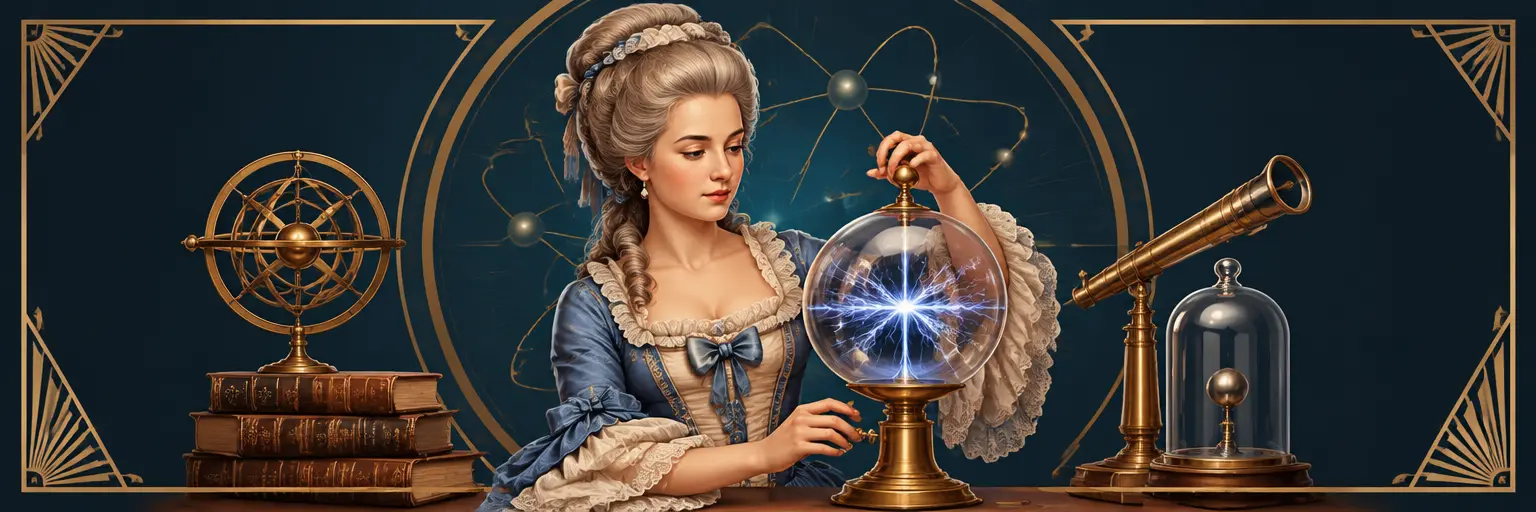
In the 1700s, women like Émilie du Châtelet and Laura Bassi broke barriers by conducting hands-on experiments in mechanics, optics, and electricity. Du Châtelet famously translated Newton’s Principia into French, adding her own commentary on energy conservation, while Bassi became the first female university professor in physics at Bologna. This section delves into their methodologies, laboratory settings, and the intellectual networks they navigated.
These pioneers often worked from home laboratories or salons, transforming private spaces into scientific hubs. Despite lacking formal institutions, they designed creative experiments—such as du Châtelet’s studies on the nature of fire—that earned recognition from academies like the French Academy of Sciences. Expect detailed biographies, primary source quotes, and analyses of how their work influenced later physicists, making this a treasure trove for history buffs and science educators.
📚 Education and Intellectual Salons
The 18th century saw women like Caroline Herschel receive informal training from male relatives, yet they turned these limited opportunities into astronomical breakthroughs. Herschel, initially her brother William’s assistant, discovered several comets and nebulae, eventually earning a royal salary for her work. This section explores the educational avenues available—from private tutoring to public lectures—and how women leveraged them to master physics concepts.
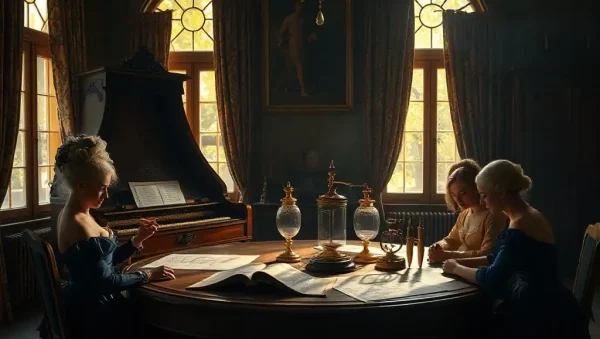
Salons hosted by women like Madame Geoffrin served as informal academies where physics theories were debated. These gatherings allowed women to engage with leading thinkers, publish anonymous papers, and even influence scientific discourse without official credentials. We highlight how these networks fostered innovation, offering a unique lens into the social fabric of Enlightenment science and the persistent fight for intellectual equality.
🌌 Astronomy and Celestial Mechanics
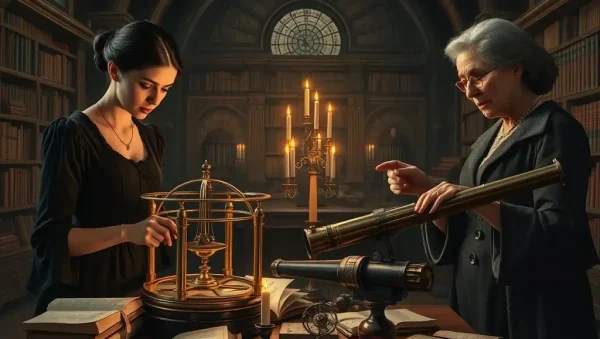
Many 18th century women in physics excelled in astronomy, a field closely tied to Newtonian mechanics. Nicolle-Reine Lepaute calculated the timing of Halley’s Comet’s return with mathematician Alexis Clairaut, while Marguerite de La Sablière converted her Paris home into a scientific observatory. This section uncovers their complex calculations, telescope observations, and collaborations with male counterparts, which often led to their contributions being under-credited.
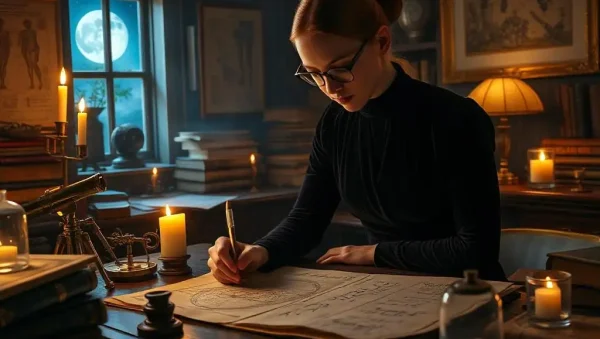
Lepaute’s painstaking tables and Elisabetha Hevelius’s earlier catalogs set precedents for women in computational astronomy, merging physics with meticulous data analysis. Readers will find detailed accounts of their star charts, planetary orbit studies, and the astronomical instruments available at the time, alongside discussions on how sexism diluted their recognition. This serves as a vital resource for understanding women’s roles in shaping modern cosmology.
⚡ Theoretical Contributions and Publications
Women did not merely conduct experiments—they also shaped physical theory. Émilie du Châtelet introduced the concept of kinetic energy (vis viva) to French audiences, arguing for a more nuanced understanding of force than Descartes offered. Her 1740 book Institutions de Physique synthesized Cartesian and Newtonian ideas, becoming a university text. This section examines her theoretical frameworks, mathematical notations, and the philosophical debates she ignited.
Other figures like Maria Gaetana Agnesi wrote influential mathematical treatises, including Analytical Institutions, which integrated calculus with physics applications. We discuss their peer reviews, publication challenges under male pseudonyms, and eventual reclamations of authorship. By focusing on primary texts, this section provides intellectual depth, perfect for academics seeking non-traditional sources in the history of physics.
📜 Legacy and Recognition Challenges
Despite their brilliance, 18th century women in physics faced systemic erasure—few gained academic posts, and many works were attributed to male colleagues. This section addresses historiography: how recent researchers have uncovered misattributed discoveries, restored credit using archival evidence, and campaigned for posthumous awards. We also explore modern initiatives, like naming craters or prizes after these pioneers.
Understanding their struggles helps contextualize contemporary efforts toward gender equity in STEM. Here, readers can access timelines, legal barriers, and political contexts, from university admission bans to patriarchal scientific societies. We tie these narratives to present-day movements, offering actionable insights for educators and activists. This legacy section ensures their stories inspire future generations, fulfilling our site’s mission comprehensively.
Frequently Asked Questions
Who is considered the most influential woman in 18th century physics?
Émilie du Châtelet is widely regarded as the most influential, due to her translation of Newton’s Principia and her original work on energy. She bridged French and British science, but others like Laura Bassi also had lasting impacts, especially in experimental physics education.
Did 18th century women in physics receive formal university education?
Almost none did. Formal university admission was largely prohibited for women in Europe. Exceptions like Laura Bassi, who earned a doctorate and professorship at Bologna, were rare and required special permission. Most women learned via private tutors, family members, or self-study.
What were the main obstacles these women faced?
Beyond legal bans on education, they faced social ostracism, lack of access to laboratories, and plagiarism or ignored authorship. Many had to publish anonymously or under male names, and their findings were often credited to fathers, husbands, or collaborators.
How can I find original works by these women for research?
Digital archives like the Internet Archive and Gallica host scanned copies of du Châtelet’s and Agnesi’s texts. The Wikisource project has transcribed some works. Check academic databases for modern annotated editions, which often include critical introductions.
Why is it important to study 18th century women in physics now?
Studying them corrects historical biases, provides role models for girls in STEM, and reveals how scientific progress is shaped by social context. It also highlights persistent gender disparities, motivating institutional changes and inclusive curricula in modern physics education.