21st Century Women in Physics: Shaping Modern Science
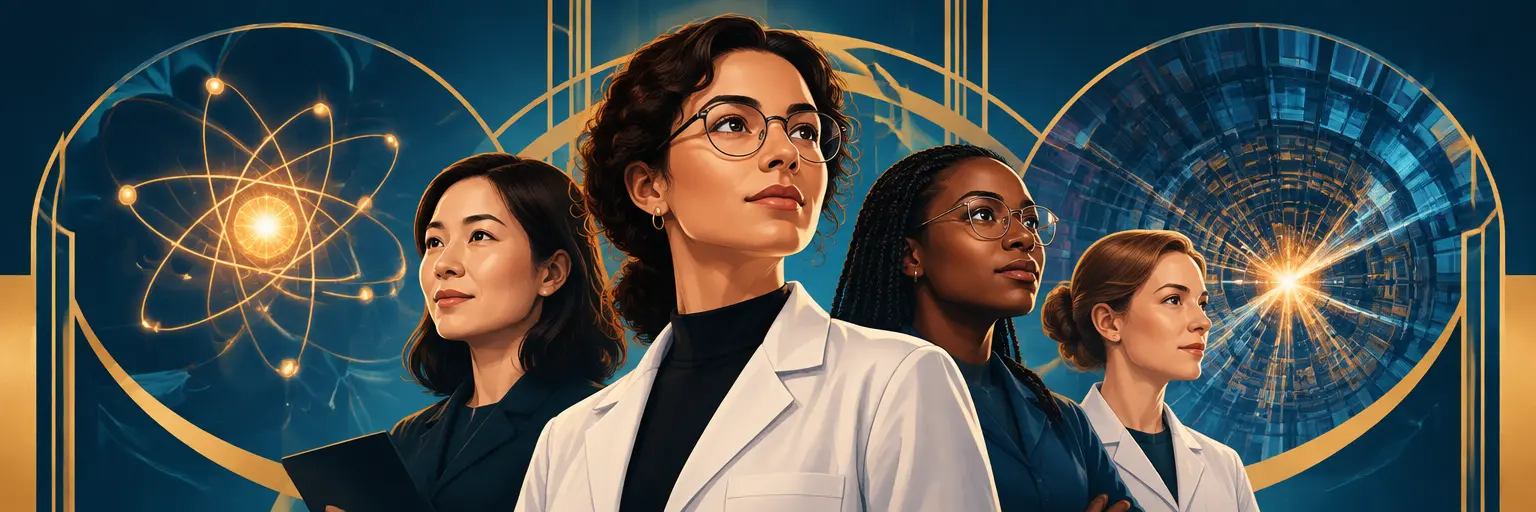
Welcome to our dedicated section on 21st Century Women in Physics, a vibrant tribute to the brilliant minds redefining our understanding of the universe today. From quantum computing to astrophysics, these remarkable scientists are not only advancing cutting-edge research but also breaking barriers and mentoring the next generation. Here, we highlight their breakthroughs, personal journeys, and the evolving landscape of physics, offering both inspiration and insight. Explore how contemporary female physicists are tackling the biggest questions in cosmology, particle physics, and applied technology, ensuring that the future of science is inclusive, diverse, and boundless in its potential.
🔬 Pioneers in Quantum Mechanics and Particle Physics
In the 21st century, women are at the forefront of unraveling the subatomic world. Researchers like Fabiola Gianotti, former CERN Director-General, led the ATLAS experiment that discovered the Higgs boson, while Shirley Ann Jackson has influenced condensed matter physics. Their work in quantum entanglement, neutrino oscillations, and dark matter detection is pushing the boundaries of the Standard Model. Expect detailed profiles of these leaders, their experimental methodologies, and collaborative global efforts that define modern particle physics.
You’ll discover how these scientists navigate massive international collaborations, data analysis challenges, and the philosophical implications of their findings. Our content emphasizes their technical contributions, such as designing detectors or developing new theoretical frameworks, while also addressing the mentorship networks they’ve built. This subcategory provides a rich resource for students and enthusiasts seeking role models in fundamental physics research.
🌌 Astrophysics and Cosmology: Women Mapping the Cosmos
The study of the universe’s origins and evolution has been profoundly shaped by women like Priyamvada Natarajan, known for mapping dark matter and black holes, and Andrea Ghez, Nobel laureate for her work on supermassive black holes. These scientists use advanced telescopes, gravitational wave detectors, and computational models to explore galaxy formation, cosmic microwave background, and exoplanets. Here, we spotlight their discoveries, from the first image of a black hole to insights into dark energy.
Beyond the science, we discuss the logistical realities of astronomical observation, including time on space telescopes and data from missions like James Webb. You’ll also learn about their advocacy for open science and STEM education, illustrating how they inspire young women to pursue astrophysics. This section serves as a comprehensive guide to modern cosmic inquiry through a female lens, emphasizing persistence, innovation, and global collaboration.
⚡ Applied Physics and Innovation: From Nanotech to Energy
21st century women in physics are translating fundamental knowledge into transformative technologies. Innovators like Mildred Dresselhaus, the "Queen of Carbon Science," and Vera Rubin Professor Rachel Mandelbaum are pioneers in materials science, renewable energy, and photonics. Their work impacts semiconductors, battery storage, and solar cells, directly addressing climate change and computing limits. This subcategory covers practical applications, including quantum sensors and medical imaging, showing how physics solves real-world problems.
We highlight their entrepreneurial ventures, patents, and cross-disciplinary collaborations with engineers and chemists. Expect case studies on how these women lead research labs, secure funding, and translate lab discoveries into commercial products. Additionally, we explore their roles as policy advisors, shaping energy grids and tech regulations. This content is ideal for aspiring applied physicists seeking examples of career paths beyond academia, with a focus on tangible societal benefits.
📡 Computational Physics and Data Science
As physics becomes increasingly data-driven, women like Katie Bouman, who contributed to the first black hole image algorithm, are leading computational revolutions. This niche covers machine learning in particle collision analysis, simulations of galaxy evolution, and big data techniques for gravitational wave detections. We profile female scientists who develop open-source software, high-performance computing frameworks, and AI models to accelerate discovery.
Our guides explain complex algorithms like neural networks and Bayesian inference in accessible terms, emphasizing their role in validating theoretical models. You’ll also find discussions on reproducibility, data ethics, and the growing importance of interdisciplinary skills. These stories demonstrate how women harness computing power to address problems from climate modeling to drug design, showcasing physics as a quantitative cornerstone of modern tech.
🌟 Breaking Barriers: Leadership, Mentorship, and Advocacy
This section celebrates women who not only excel in research but also transform the culture of physics. Leaders like France Córdova, former NSF Director, and Sheila Tobias, behind gender equity initiatives, are highlighted. We discuss their policies to improve work-life balance, combat implicit bias, and increase retention of women in STEM. Expect personal narratives of overcoming adversity, managing funding pressures, and fostering inclusive environments in physics departments.
We also feature grassroots mentors, teaching innovators, and science communicators like Hélène Langevin-Joliot. Through interviews and biographies, we explore effective strategies for advocacy, such as conferences, social media campaigns, and institutional reforms. This content is a vital resource for understanding systemic challenges and actionable solutions, inspiring readers to become allies or advocates themselves. It underscores that progress in physics requires not just brilliant minds, but equitable systems.
Frequently Asked Questions
Who are some famous 21st century female physicists?
Notable figures include Nobel laureates Andrea Ghez (black holes) and Donna Strickland (laser physics), along with Fabiola Gianotti (CERN), and Priyamvada Natarajan (dark matter). Their work spans astrophysics, quantum physics, and materials science, with many leading global collaborations and advocating for diversity in STEM.
What major discoveries have women made in physics recently?
Women contributed to gravitational wave detection (Rainer Weiss, though male, with women leaders like Alessandra Buonanno), the first black hole image algorithm (Katie Bouman), and advancements in quantum computing. They’ve also pioneered high-temperature superconductors and photosynthesis simulations, pushing both fundamental and applied science.
How can I support women in physics?
You can mentor young female students, fund scholarships, and promote inclusive workplace policies. Supporting organizations like the American Physical Society’s Committee on Women, sharing research by female physicists, and challenging gender stereotypes in classrooms are practical steps.
What challenges do women in physics face today?
Despite progress, women face implicit bias in hiring, unequal grant funding, and limited representation in senior roles. They also encounter harassment and work-life balance struggles. Many solutions include transparent evaluations, parental leave policies, and advocacy networks.
Where can I find biographies of modern women physicists?
Visit our main category "Women in Science History" for archived profiles, or explore academic society directories like APS’s "Women in Physics" listings. Additionally, books such as "In Praise of Simple Physics" and online platforms like 500 Women Scientists offer ongoing spotlights.