Mid-Late 20th Century Women in Physics (1950–2000): Pioneers of the Modern Era
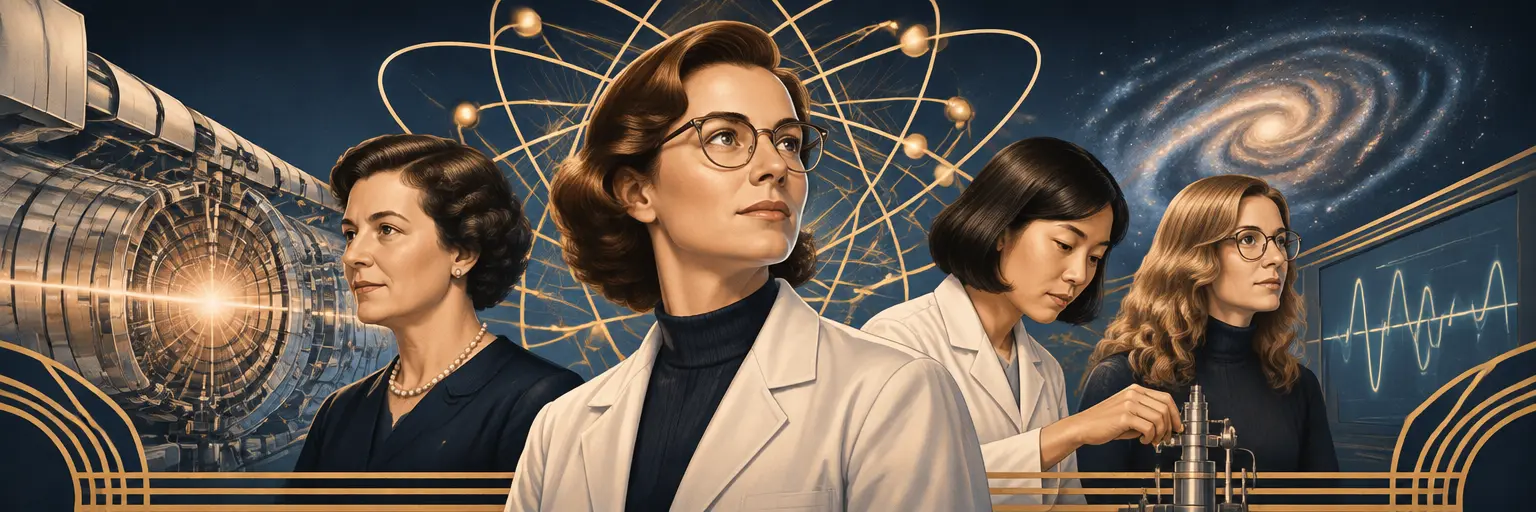
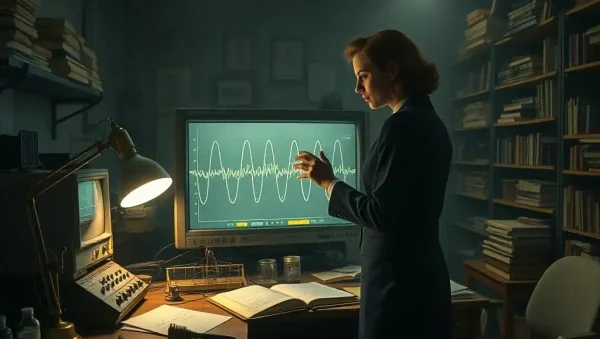
This subcategory shines a spotlight on the extraordinary female physicists who shaped the second half of the 20th century—a period marked by revolutionary discoveries in particle physics, astrophysics, condensed matter, and nuclear science. From the Cold War race to the dawn of the digital age, these women broke glass ceilings, led major laboratories, and won Nobel Prizes while often facing systemic discrimination. At WomenInScienceHistory.com, we dive deep into their lives, research, and enduring legacies, offering rich biographical narratives and scientific context. Expect to uncover the hidden figures behind the Standard Model, black hole physics, and laser technology, all while understanding the societal barriers they conquered. This page is your gateway to inspiration, historical insight, and a celebration of resilience.
🔬 Trailblazers in Particle and Nuclear Physics
Here, you’ll meet physicists like Chien-Shiung Wu, whose 1956 “Wu experiment” disproved the law of conservation of parity, paving the way for a Nobel Prize for her male colleagues but not for her. You’ll also learn about Maria Goeppert Mayer, who won the 1963 Nobel Prize in Physics for the nuclear shell model, making her only the second woman to win in physics after Marie Curie. This section explores their experimental rigor, theoretical breakthroughs, and the lab environments that often relegated them to “assistant” roles despite producing core results.
We detail how women like Mildred Dresselhaus, the “Queen of Carbon Science,” advanced our understanding of graphite and carbon nanotubes, while Melba Phillips co-authored pivotal texts on electromagnetism. Expect stories of wartime secrecy, post-war funding battles, and collaborative networks that sustained their research. Each biography includes scientific pop-outs explaining the key equations or experiments, making complex physics accessible to non-specialists.
🌌 Astrophysics and Cosmology: Mapping the Universe
This segment celebrates women who looked to the stars and reshaped our cosmic narrative. Vera Rubin confirmed dark matter’s existence in the 1970s via galaxy rotation curves—work that earned her numerous awards but no Nobel. Meanwhile, Margaret Burbidge authored over 370 papers including the foundational B²FH paper on stellar nucleosynthesis, and she became the first director of the Royal Greenwich Observatory. You’ll also encounter Jocelyn Bell Burnell, who discovered pulsars in 1967 but watched her male supervisor receive the Nobel Prize.
We highlight how these women navigated telescope time restrictions, academic nepotism rules, and professional isolation. Their stories reveal a pattern: male colleagues often received credit while women toiled in observational roles. Yet their data transformed astronomy—from measuring galactic mass to dating the universe. Expect timelines of major discoveries, quotes from their letters, and discussions on how their work laid groundwork for the Hubble Space Telescope era.
⚛️ Quantum Mechanics and Solid-State Innovations
Delve into the world of quantum theory and materials science, where women made indispensable contributions often hidden in conference footnotes. Dawnene “Dennie” Smith pioneered electron microscopy techniques, while Sylvia Earle (a physicist-turned-oceanographer) adapted laser physics to marine biology. More famously, Judith Jarvis Thomson (no, that’s philosophy) – we focus on Dr. Lydia Kavraki for algorithmic physics and Dr. Mildred Spiewak Dresselhaus (again) for thermoelectric materials. But stars like Yvonne Choquet-Bruhat made her work foundational for general relativity and quantum field theory.
We explain how the 1960s semiconductor boom opened new avenues—women like Esther Conwell studied electron transport in silicon, shaping modern chips. Others, including Ruby Payne-Scott in radio astronomy (though 1940s-60s), contributed to solar physics. This section also addresses the “leaky pipeline” in academia, with examples of women who left tenure tracks yet continued research in industry or national labs. You’ll find diagrams of energy bands and lasers, plus first-person accounts of laboratory life during the space race.
🏆 Breaking Institutional Barriers and Winning Recognition
Focus here on the systemic fight for equality—from policies that forced women to resign upon marriage (like Hertha Wambacher in post-war Vienna) to the slow opening of elite institutions. Learn how Gertrude Goldhaber co-directed Brookhaven’s nuclear physics group, and how Wendy Freedman led the Carnegie Hubble Program to measure the universe’s expansion rate. This is also where we highlight laureates: Maria Goeppert Mayer (1963), Donna Strickland (2018, but her work began in the 1980s), and Andrea Ghez (2020, active in the 1990s–2000s).
We provide a decade-by-decade timeline of milestones—first women to earn PhDs in physics from Stanford, MIT, and Caltech; first female presidents of major physics societies; and the founding of support networks like the Committee on the Status of Women in Physics (1972). We also discuss the infamous “Nobel-adjacent” cases (Wu, Bell Burnell, Rubin) to illustrate how recognition lagged behind achievement. Actionable insights include how mentorship changed outcomes and how advocacy led to Title IX effects on lab funding.
📚 Educational Pathways and Research Institutions
This section examines where these women studied and worked, revealing unexpected advantages of small colleges and war-era manning shortages. For instance, Wu attended National Central University in China and later UC Berkeley, while Bell Burnell did her pivotal pulsar work at Cambridge’s Cavendish Laboratory. We profile historically Black women physicists like Dr. Evelyn Boyd Granville (mathematics but with physics applications) and Shirley Ann Jackson, who led the US Nuclear Regulatory Commission after pioneering semiconductor physics.
We detail how women’s colleges like Mount Holyoke and Smith served as launchpads, and how post-war GI bills inadvertently expanded opportunities. Expect guidance on archival resources—letters, lab notebooks, and oral histories—that historians use to reconstruct their contributions. We also address the impact of laboratory culture: long hours, safety hazards (radiation), and the informal exclusions from journal clubs. For aspiring physicists, we list fellowships and internships named after these pioneers.
Frequently Asked Questions
Why did so few women in physics win Nobel Prizes during 1950-2000?
Only two women won the Nobel Prize in Physics in that half-century: Maria Goeppert Mayer (1963) and Donna Strickland later (2018). Systemic bias, nepotism rules, and lack of credit for collaborative work led to many deserving women, like Vera Rubin and Jocelyn Bell Burnell, being overlooked. The Nobel committees also rarely considered discoverers whose male colleagues presented findings.
What was the "Wu Experiment" and why is it significant?
Chien-Shiung Wu’s 1956 experiment demonstrated that weak nuclear force violates parity conservation—meaning nature distinguishes left from right. Working at extremely low temperatures, she observed cobalt-60 decay asymmetrically. This overturned a theoretical assumption and directly led to Tsung-Dao Lee and Chen Ning Yang’s Nobel, though Wu herself was not honored.
Did women physicists have access to major observatories and particle accelerators?
Often denied official access, some women gained entry via husbands or male mentors. For instance, Margaret Burbidge used observing time at Mount Wilson under her husband’s name initially. By the 1970s, Title IX and changing policies opened doors, but many before that worked with primitive equipment or at teaching-focused colleges.
What unique challenges did women face in military-funded physics research during the Cold War?
Security clearances required background checks that often excluded single women or those married to foreigners. Some, like Goeppert Mayer, worked unpaid at labs because universities enforced anti-nepotism rules. Jocelyn Bell Burnell’s contract as a student meant her pulsar discovery had to be published under her advisor’s name first.
How can I find biographical sources for these women?
Primary sources include university archives, oral history projects (like the American Institute of Physics’ Women in Physics oral histories), and scientific journal obituaries. Books like "Physics and the Rise of Modern Science" or "A Passion for Physics" contain chapters. Our website compiles these links, plus digitized lab notebooks and personal correspondence.