
Bridging Theory and Practice: 18th Century Women in Applied Physics

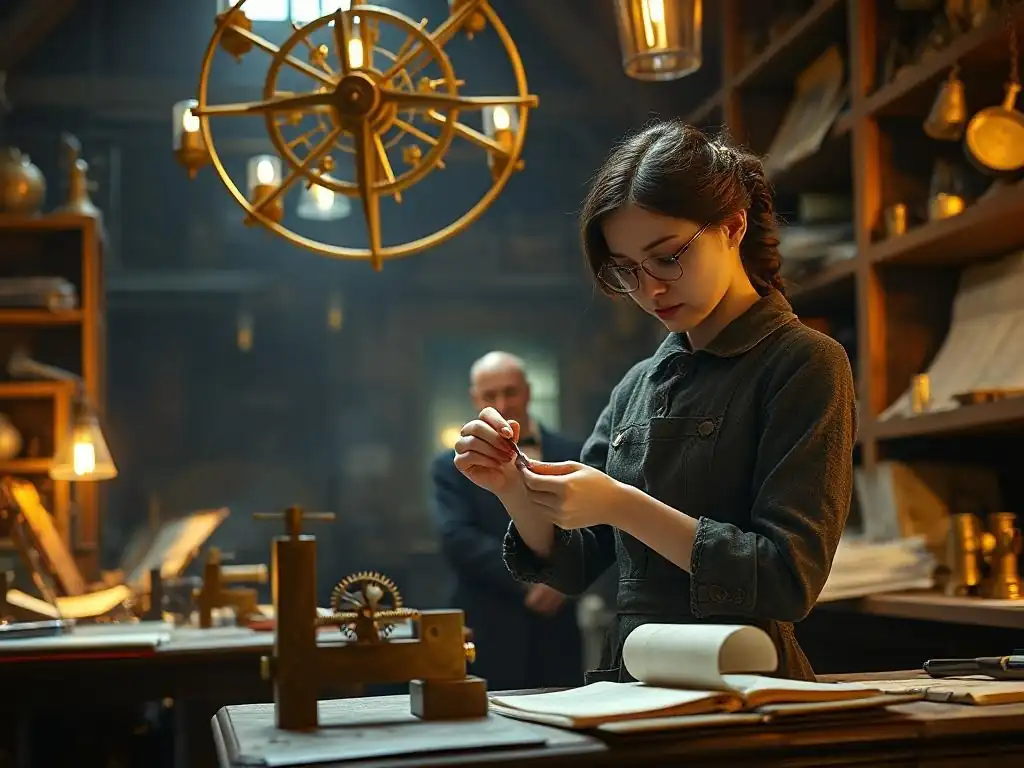
Welcome to WomenInScienceHistory.com!
Dive into the fascinating world of scientific discovery and uncover the untold stories of remarkable women who shaped our understanding of the universe. Are you ready to explore the vital contributions of pioneering figures in applied physics? Our latest article sheds light on the often-overlooked achievements of 18th-century women who bridged the gap between theoretical concepts and real-world applications. Discover their ingenuity, perseverance, and the impact they had on a rapidly evolving scientific landscape. What challenges did they overcome, and how did their work pave the way for future generations? Read on to find out!
- Bridging Theory and Practice: Women and Scientific Instrumentation in the 18th Century
- Introduction: Unveiling Women's Contributions to Scientific Instrument Development
- The Landscape of 18th Century Science: Opportunities and Obstacles for Women
- Case Studies: Pioneering Women in Scientific Instrument Development
- Applied Physics Disciplines and Women's Involvement in the 1700s
- Challenges Faced by 18th Century Women in Applied Scientific Fields
- The Lasting Impact of 18th Century Women in Applied Science
- Conclusion: Celebrating the Legacy of Women in Applied Science
-
Frequently Asked Questions
- How did 18th-century societal norms impact women pursuing applied physics?
- What were some of the practical applications of physics that women were involved in during the 18th century?
- What challenges did women face in getting recognition for their contributions to applied physics?
- Can you name a specific example of an 18th-century woman who made significant contributions to applied physics?
- Why is it important to highlight the stories of women in applied physics from the 18th century?
- Final Reflection: Illuminating the Path of Innovation
- Unleash Your Inner Innovator: A New Chapter Awaits!
Bridging Theory and Practice: Women and Scientific Instrumentation in the 18th Century
Introduction: Unveiling Women's Contributions to Scientific Instrument Development
WomenInScienceHistory.com: Recognizing 18th Century Female Instrument Makers
WomenInScienceHistory.com is dedicated to illuminating the often-overlooked contributions of women to the annals of science. In the 18th century, a period of profound scientific discovery and innovation, the role of women in the practical development of scientific instruments was particularly significant, yet frequently unacknowledged. This platform aims to correct this historical oversight by spotlighting the ingenuity and craftsmanship of these pioneering female instrument makers, whose work was foundational to the advancement of various scientific disciplines.
By bringing these narratives to the forefront, WomenInScienceHistory.com seeks to showcase how 18th-century women, despite societal barriers, actively participated in and propelled scientific progress. Their engagement in areas like optics, mechanics, and precise measurement, which are core to applied physics, demonstrates a profound commitment to empirical inquiry. These stories not only enrich our understanding of history but also serve as powerful inspirations, revealing the enduring spirit of women in applied physics.
The Intersection of Theory and Application: Women's Role in 18th Century Instrument Innovation
The 18th century was characterized by a rapid expansion of scientific theory, but this progress was inextricably linked to the development of increasingly sophisticated and precise scientific instrumentation. From astronomical observations to microscopic biological studies, accurate tools were indispensable for empirical validation and new discoveries. The ability to measure, observe, and manipulate the natural world relied heavily on the craftsmanship of instrument makers.
Women, though often excluded from formal scientific institutions and academic discourse, played a crucial role at this vital intersection of theory and application. Many were involved in the intricate processes of crafting, calibrating, and even innovating instruments. Whether through family workshops or independent endeavors, their hands-on skills in areas like lens grinding, clockmaking, and drafting tools were direct contributions to what we now understand as applied physics, underpinning the scientific revolution of their era.
The Landscape of 18th Century Science: Opportunities and Obstacles for Women
Societal Expectations and the Pursuit of Scientific Craftsmanship
Eighteenth-century European society largely confined women to domestic roles, emphasizing their responsibilities within the household and family. Formal education beyond basic literacy was rare, and professional careers were overwhelmingly reserved for men. This societal framework presented formidable challenges for women aspiring to engage in scientific pursuits, especially those requiring public presence or formal training.
Despite these pervasive expectations, a number of women found avenues to pursue scientific craftsmanship, often through necessity or familial connections. Many learned trades, including those related to scientific instrument making, within family workshops, assisting fathers, husbands, or brothers. This informal apprenticeship allowed them to acquire highly specialized skills in applied physics, even if their contributions were often viewed as extensions of domestic labor rather than independent professional endeavors.
Access to Workshops and Scientific Networks for Women in Instrument Making
For women in the 18th century, access to workshops and the broader scientific networks was primarily facilitated through their male relatives. It was common for daughters and wives to work alongside fathers and husbands in their businesses, contributing to the family income and often managing the administrative aspects of the enterprise. This direct exposure allowed them to gain practical expertise in instrument design, repair, and manufacturing.
However, these informal networks rarely extended to formal scientific societies or guilds, which were largely exclusive to men. This exclusion meant that women often lacked official recognition, patronage, and the opportunities for independent professional growth enjoyed by their male counterparts. While some exceptional women managed to gain the attention of prominent scientists or patrons, their pathways into the world of applied physics remained significantly more constrained than those of men.
Case Studies: Pioneering Women in Scientific Instrument Development
Caroline Herschel: Astronomical Assistant and Telescope Builder
Caroline Herschel (1750–1848) stands as an extraordinary figure in the history of science, often celebrated as her brother William Herschel's astronomical assistant. However, her contributions extended far beyond mere assistance; she was an accomplished astronomer and a vital partner in the construction and maintenance of their groundbreaking telescopes. These instruments, central to 18th-century observational astronomy, required immense skill in applied physics to build and operate effectively. For instance, she was directly involved in the laborious process of polishing the 4-foot diameter speculum metal mirror for their massive 40-foot focal length telescope, a task requiring incredible precision and physical stamina.
Her independent scientific work is equally remarkable. Caroline Herschel discovered eight comets and fourteen nebulae, meticulously cataloging her findings and performing complex astronomical calculations. Her dedication to observing and recording celestial phenomena demonstrated a profound understanding of the instruments she used and helped to build. Her work exemplifies the critical role of women in applied physics, showcasing how practical craftsmanship directly facilitated monumental scientific discoveries.
Theoretical Foundations of Herschel's Astronomical Work
Caroline Herschel's practical involvement in telescope construction and astronomical observation was underpinned by a robust understanding of astronomical theory and mathematics. She was not simply a technician but an active participant in the scientific inquiry, possessing the theoretical knowledge necessary to interpret observations and refine instrumental designs. For example, her work on stellar parallax and the classification of nebulae required a deep grasp of celestial mechanics and optical principles.
Her ability to calculate stellar positions, prepare observational schedules, and reduce astronomical data was a testament to her comprehensive theoretical grounding. This blend of theoretical insight and practical application allowed her to contribute significantly to the Herschel observatory's success. Her contributions illustrate how women in applied physics were capable of bridging the gap between abstract scientific principles and their tangible implementation through instrumentation.
Practical Applications and Impact of Herschel's Telescopes
The telescopes built by the Herschels, particularly the colossal 40-foot reflector completed in 1789, were marvels of 18th-century applied physics. Caroline Herschel's hands-on involvement in the grinding and polishing of its massive 4-foot diameter speculum mirror was crucial for achieving the optical precision required for unprecedented celestial observations. This intricate process often took days, requiring constant attention to temperature and pressure to ensure a perfect parabolic surface.
These instruments revolutionized astronomy, enabling discoveries such as the planet Uranus (by William, but with Caroline's assistance) and the first systematic surveys of nebulae and star clusters. Caroline's meticulous record-keeping and independent discoveries, like that of Comet 35P/Herschel-Rigollet in 1786, directly stemmed from the quality of the instruments she helped to create and operate. Her work stands as a powerful example of the profound impact that skilled women in applied physics had on scientific advancement.
Mary Delany: Botanical Accuracy in Scientific Illustration
Mary Delany (1700–1788) made a unique contribution to natural history through her exquisite "paper mosaicks," or Flora Delanica. While not an instrument maker in the traditional sense, her artistic endeavors demanded an extraordinary level of precision, observation, and an understanding of botanical structure that mirrored the meticulousness required in instrument crafting. Her work represents a fascinating intersection of art and applied science, showcasing a different facet of women in applied physics—the precise rendering of scientific data.
Her method involved cutting thousands of tiny pieces of paper to create lifelike, three-dimensional botanical specimens. This painstaking process, which she began at the age of 72, required an almost engineering-like accuracy in replicating the morphology, venation, and coloration of over 980 plant species. Each "mosaick" was a scientifically valuable record, providing detailed visual documentation essential for 18th-century botanical study before the advent of photography.
Exploring Botanical Illustration in 18th Century Context
In the 18th century, before the widespread use of photography, accurate botanical illustration was paramount for the scientific study, classification, and dissemination of knowledge about plant species. Detailed drawings and models served as crucial empirical data, enabling botanists to identify new species and understand plant anatomy. Mary Delany's "paper mosaicks" filled a vital need for precise visual documentation, demonstrating a highly skilled form of applied science.
Her artistic creations were far more than aesthetic pieces; they were rigorous scientific records. Each "plant portrait" captured the exact morphology, texture, and color of the living specimen, from the delicate veins of a leaf to the intricate structure of a flower. This required not only artistic talent but also a deep observational capacity and a scientific understanding of plant anatomy, reflecting a unique contribution by women to the practical application of scientific knowledge.
Challenges and Recognition Faced by Delany
Despite the immense scientific value and artistic brilliance of Mary Delany's Flora Delanica, her work was often categorized as a "lady's accomplishment" rather than a serious scientific endeavor. This prevailing societal view meant that her contributions, though celebrated within her aristocratic circle, were largely confined to private exhibition and were not formally published or recognized by the scientific institutions of the day.
Nevertheless, her work garnered the admiration of prominent figures such as Sir Joseph Banks, president of the Royal Society, who recognized its scientific accuracy and artistic merit. King George III and Queen Charlotte were also keen admirers. Delany's unique approach to botanical illustration remains a testament to how women, even without formal scientific titles or institutional recognition, contributed significantly to scientific documentation through highly skilled, applied techniques, embodying a form of women in applied physics for the natural sciences.
Jane Squire: Mathematical Instrument Maker
Jane Squire (fl. 1700s) represents a direct and significant example of women in applied physics as a mathematical instrument maker and author. While less widely known than some contemporaries, her work, particularly in the challenging field of navigation, demonstrates a profound engagement with instrument design and theoretical innovation. Her contribution directly challenges the notion that 18th-century women were excluded from highly technical and mathematical pursuits.
Squire is notable for her published work, "A Proposal for a New Method of Finding the Longitude at Sea" (1742). This treatise not only presented a theoretical approach to solving the critical problem of longitude determination but also included detailed designs for the mathematical instruments necessary to implement her method. Her ability to conceptualize both the theoretical solution and its practical instrumental realization highlights her advanced technical and intellectual capabilities.
Squire's Innovative Approach to Instrument Design
Jane Squire's "Proposal" showcased her innovative approach to instrument design, specifically targeting the 18th century's most pressing scientific and practical challenge: accurately determining longitude at sea. Her designs for new or improved mathematical instruments, which would enable more precise celestial observations and calculations, required a deep understanding of geometry, trigonometry, and the mechanics of instrument construction. She demonstrated a rare combination of abstract mathematical reasoning and practical engineering acumen.
Her work contributed to the ongoing "longitude prize" debate, a significant driver of innovation in applied physics and instrument making. Squire's capacity to articulate and design instruments for such a complex problem underscores her sophisticated technical and conceptual skills, placing her firmly among the pioneering women in applied physics who sought to push the boundaries of scientific instrumentation.
The Legacy of Squire's Work in Mathematical Instrument Making
While Jane Squire's specific instruments may not have gained widespread adoption or won the coveted longitude prize, her published work stands as an undeniable testament to her capabilities and the intellectual potential of women in applied physics and instrument design. It provided concrete evidence that women were not only capable of using complex scientific instruments but also of conceiving and designing them.
Her existence and documented contributions are crucial for a more accurate and inclusive understanding of 18th-century science. Squire's work challenges the conventional historical narrative that often excludes women from such technical and mathematical endeavors. Her legacy lies in demonstrating that women were active, innovative participants in the development of scientific tools, even if their achievements were not always celebrated or widely known in their time.
Applied Physics Disciplines and Women's Involvement in the 1700s
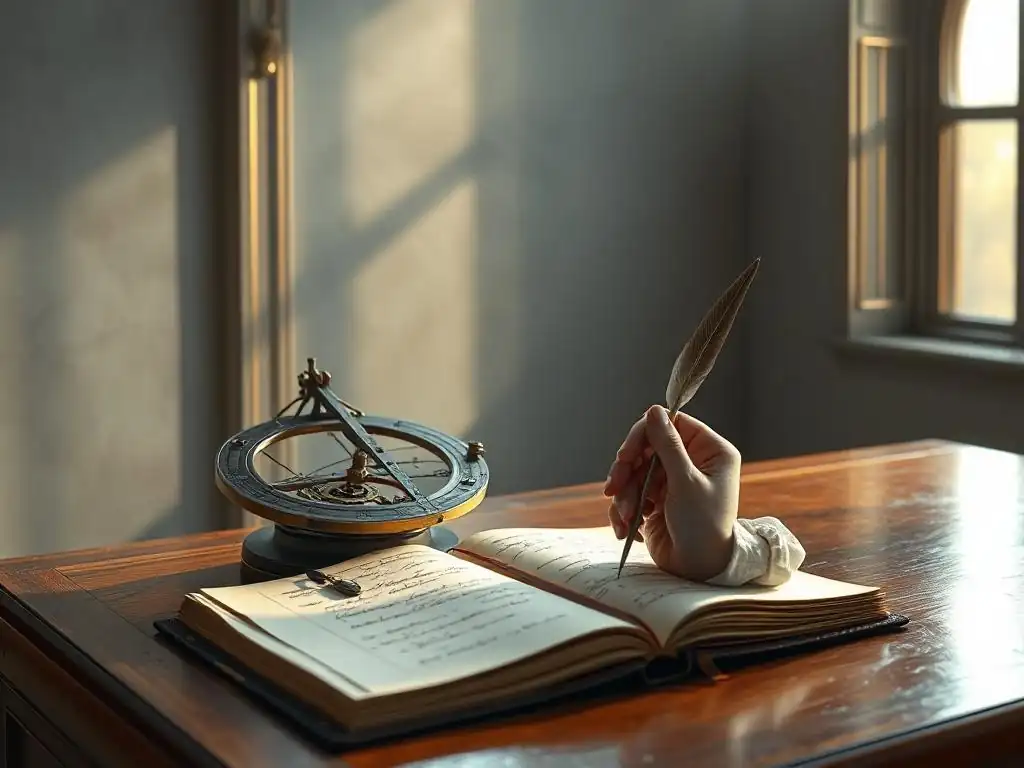
Optics and Instrumentation: Women's Contributions to Lens Grinding and Microscope Technology
The 18th century witnessed significant advancements in optics, leading to more powerful and precise telescopes and microscopes that revolutionized astronomy and biology. The workshops that produced these intricate instruments were often family-run businesses, and women frequently played integral, albeit often uncredited, roles in their production. This included painstaking tasks crucial to optical quality, making them key contributors among women in applied physics.
Women might have been involved in the laborious and highly skilled process of grinding and polishing lenses, a task demanding immense precision, patience, and a delicate touch to achieve the perfect curvature and clarity required for high-magnification instruments. They also contributed to the assembly of delicate components, the calibration of scales, and the finishing of brass and wooden parts. Their contributions ensured the quality of optical instruments that were vital for scientific discovery, from observing distant stars to microscopic organisms.
Mechanics and Engineering: Women's Roles in Clock and Watch Making
Eighteenth-century clock and watch making was a highly sophisticated mechanical art, crucial for advancements in navigation, astronomy, and daily life. Precision timekeeping instruments, such as marine chronometers, were at the forefront of applied physics and engineering. Women were often employed in various stages of this intricate industry, particularly in tasks requiring fine motor skills and meticulous attention to detail.
Their roles included the delicate assembly of miniature gears, springs, and escapements, as well as the intricate finishing, engraving, and polishing of clock and watch components. The accuracy of these timepieces was paramount for determining longitude at sea and for precise astronomical observations. Women's involvement in producing these highly accurate mechanisms was a direct, hands-on contribution to the practical applications of physics and mechanical engineering, underscoring their presence among women in applied physics.
Chemistry and Pharmacy: Women's Production of Scientific Preparations
In the 18th century, the fields of chemistry and pharmacy were often intertwined, with significant overlap into early applied physics, particularly concerning the preparation of substances for scientific experiments, medicinal use, or industrial processes. Women frequently managed apothecaries, distilleries, or were involved in household chemical processes, demonstrating practical scientific skills.
Their work involved meticulous tasks such as preparing precise chemical solutions, distilling compounds, or concocting specific mixtures for various purposes. This required an understanding of chemical properties, reactions, and accurate measurement, a form of applied chemistry and physics in practice. For instance, creating specific tinctures or pure reagents demanded careful control over temperature, concentration, and purity. The meticulousness of their work ensured the consistency and reliability of materials used in both scientific experiments and practical applications.
Challenges Faced by 18th Century Women in Applied Scientific Fields
Overcoming Gender Bias in Craft Guilds
One of the most significant barriers for 18th-century women seeking to establish themselves in applied scientific fields was the pervasive gender bias within craft guilds. These powerful organizations controlled access to trades, dictated training through apprenticeships, and regulated market entry. Guilds were almost exclusively male-dominated, and women were generally barred from formal apprenticeships or full membership, effectively shutting them out of recognized professional pathways.
This systemic exclusion meant that women, even those with exceptional skills in instrument making or other technical crafts, struggled to gain official recognition, secure independent contracts, or formally pass on their expertise. Without guild membership, they lacked the professional legitimacy and networking opportunities afforded to men, severely limiting their visibility and economic opportunities as women in applied physics or related technical professions.
Securing Resources and Recognition for Skilled Labor
Beyond guild restrictions, 18th-century women faced considerable challenges in securing the necessary resources—such as capital, dedicated workshop spaces, and raw materials—to operate independently as skilled craftswomen. Legal and financial autonomy for women was severely limited; married women, for example, typically had no independent property rights. This meant that establishing a standalone business was an immense hurdle.
Furthermore, even when women performed highly skilled and essential labor, their contributions were often either attributed to male relatives (fathers, husbands, brothers) or simply overlooked by historical record-keepers. This lack of formal recognition made it difficult to build a professional reputation, attract a broad clientele, or receive fair compensation for their expertise, thereby diminishing the documented history of countless women in applied physics and other technical trades.
Balancing Family Responsibilities with Workshop Responsibilities
For many 18th-century women involved in scientific craftsmanship, a significant challenge was balancing their workshop responsibilities with the pervasive societal expectation that they manage the household and raise children. While some women were integral to family businesses, they often simultaneously bore the primary burden of domestic duties, which were considered their inherent and most important roles.
This dual burden could severely limit their time, energy, and freedom to pursue advanced training, engage in independent projects, or participate in scientific discourse. The demands of childcare, cooking, cleaning, and managing household finances often left little room for dedicated professional development or public recognition, making the achievements of these women in applied physics and other technical fields even more remarkable demonstrations of their commitment and ingenuity.
The Lasting Impact of 18th Century Women in Applied Science
Inspiring Future Generations of Female Craftspeople and Scientists
Despite the profound obstacles they faced, the stories of 18th-century women in applied physics and scientific craftsmanship serve as powerful and enduring inspirations. Their perseverance, ingenuity, and technical prowess in fields like instrument making, astronomical observation, and precise technical illustration demonstrate unequivocally that scientific aptitude and practical skill are not bound by gender. Their lives provide tangible proof of women's historical capacity for complex technical work.
Platforms like WomenInScienceHistory.com play a crucial role in bringing these previously marginalized narratives to light. By highlighting these historical figures, we can encourage young women today to pursue careers in STEM, particularly those involving hands-on, applied sciences and engineering. Their historical contributions provide a vital foundation and a powerful precedent for modern women in applied physics and other technical fields.
Reclaiming the Narrative: Highlighting Undervalued Technical Skills
For too long, the history of science has predominantly focused on theoretical breakthroughs and the achievements of formally recognized male scientists, often overlooking the essential role of skilled craftsmanship and instrument development. This narrow perspective has regrettably obscured the significant contributions of women who were integral to the practical application of scientific principles.
By recognizing and celebrating the roles of 18th-century women in creating, refining, and utilizing scientific tools, we gain a more complete, accurate, and nuanced understanding of scientific progress. This reclamation of history acknowledges the significant, often "invisible," contributions of women to applied physics and other technical disciplines, ensuring their legacy is appropriately valued and integrated into the broader historical record.
Further Research and Exploration of Women's Roles in 18th Century Science
The historical record concerning 18th-century women in science, particularly those involved in applied physics and scientific craftsmanship, remains incomplete. Many stories are yet to be fully discovered or adequately documented, especially those of women who operated in less prominent roles or within family businesses. There is a continuing need for dedicated academic and historical research to uncover these hidden figures.
Future exploration could involve delving into workshop inventories, personal correspondence, local guild records, and family archives to unearth more instances of women's involvement in instrument making, chemical preparations, and other forms of applied physics. This ongoing scholarly effort is essential to enrich our collective scientific heritage, providing a fuller picture of the diverse contributions of women to the scientific and technological advancements of the 18th century.
Conclusion: Celebrating the Legacy of Women in Applied Science
Women in 18th Century Science: A Call for Continued Recognition
The evidence is clear: 18th-century women made substantial, though often unacknowledged, contributions to applied physics and scientific instrumentation. Whether meticulously building astronomical telescopes, precisely illustrating botanical specimens, or crafting mathematical tools for navigation, their work was fundamental to the era's scientific advancements. Their dedication to precision, their ingenuity in design, and their perseverance in the face of societal and institutional barriers underscore their vital role in scientific progress.
It is imperative that we continue to recognize these "hidden figures" of science. Their skill, intellect, and sheer determination, often against considerable odds, deserve a prominent and honored place in the history of science, particularly as pioneers among women in applied physics. Acknowledging their contributions not only corrects historical oversights but also provides a more accurate and inspiring narrative of scientific development.
WomenInScienceHistory.com: A Platform for Sharing Their Stories
WomenInScienceHistory.com stands as a vital platform in this ongoing effort to illuminate the contributions of pioneering women in science. By collecting, preserving, and disseminating the stories of these remarkable 18th-century women in applied physics and other scientific fields, the website ensures that their legacies endure and continue to inspire. It provides a dedicated space to celebrate their achievements and the challenges they overcame.
Through detailed biographies and contextual analyses, WomenInScienceHistory.com aims to not only correct historical omissions but also to empower future generations. By celebrating these historical figures, the website fosters a greater appreciation for the diversity of scientific talent and encourages young women today to pursue their passions in science, including the dynamic and evolving field of applied physics.
Frequently Asked Questions
How did 18th-century societal norms impact women pursuing applied physics?
Societal norms created significant barriers, limiting access to formal education and scientific communities. Women often had to rely on informal learning through family or personal connections.
What were some of the practical applications of physics that women were involved in during the 18th century?
Women contributed to areas like instrument making, astronomical observation, and medicine. They often applied their physics knowledge in practical ways, often within domestic or artisanal settings.
What challenges did women face in getting recognition for their contributions to applied physics?
Women faced pervasive gender bias, leading to their work being attributed to men or simply overlooked. They lacked the same opportunities for publication and academic advancement.
Can you name a specific example of an 18th-century woman who made significant contributions to applied physics?
While documentation is limited, figures like Caroline Herschel in astronomy exemplify how women applied scientific principles. Her work in identifying comets and assisting her brother highlights her contributions.
Why is it important to highlight the stories of women in applied physics from the 18th century?
Highlighting their stories corrects historical inaccuracies and provides inspiration for future generations. It demonstrates that women have always been involved in science, even when underrepresented and unacknowledged.
Final Reflection: Illuminating the Path of Innovation
The journey through the lives and contributions of 18th-century women in applied physics reveals a profound truth: innovation thrives when diverse perspectives are embraced. Their stories, often relegated to the footnotes of history, demonstrate the untapped potential that lies dormant when societal barriers restrict access to knowledge and opportunity. By recognizing their ingenuity, we acknowledge the inherent value of inclusivity in scientific progress, a principle that remains critically relevant in our pursuit of solutions to today's complex challenges.
This exploration into the past underscores how deeply ingrained societal norms can shape, and often limit, the trajectory of scientific advancement. The resilience and ingenuity displayed by these women, despite facing immense obstacles, serve as a powerful reminder of the importance of challenging conventional wisdom and fostering environments where all voices can be heard. The mind has no gender, and brilliance knows no boundaries.
This sentiment, though not explicitly stated in the 18th century, encapsulates the spirit of these pioneering women and the enduring need to dismantle systemic barriers that hinder the full realization of human potential.
As we close this chapter, let us carry forward the lessons learned from these unsung heroines of applied physics. Consider how you can actively contribute to creating a more equitable and inclusive landscape in STEM fields. Embrace the challenge of amplifying marginalized voices, championing diverse perspectives, and fostering a culture where innovation flourishes through the collective brilliance of all. The future of scientific discovery depends on our commitment to building a world where every individual has the opportunity to contribute their unique talents to the advancement of knowledge.
Unleash Your Inner Innovator: A New Chapter Awaits!
Thank you for diving into the world of 18th-century women in applied physics. We hope you've found inspiration in their stories and a renewed appreciation for their contributions. Now, it's your turn to carry their legacy forward.
Here's how you can continue the journey:
- Embrace Curiosity: Seek out a modern-day challenge that blends scientific theory and practical application. What real-world problem can you tackle with a creative, physics-based solution?
- Share Their Stories: Help rewrite history by sharing this article with friends, family, and colleagues, ensuring these pioneering women are no longer forgotten.
- Start a Conversation: Initiate a discussion about the importance of recognizing women's contributions to STEM throughout history on social media or within your community.
What innovative project will you embark on, inspired by the brilliance of these 18th-century women?