Did Women Shape Early Physics? Unearthing Pre1700 Contributions
🌟 Discover how women’s early physics contributions, often overlooked, laid foundational stones for modern science. Explore inspiring stories of pioneering women who…
Read article
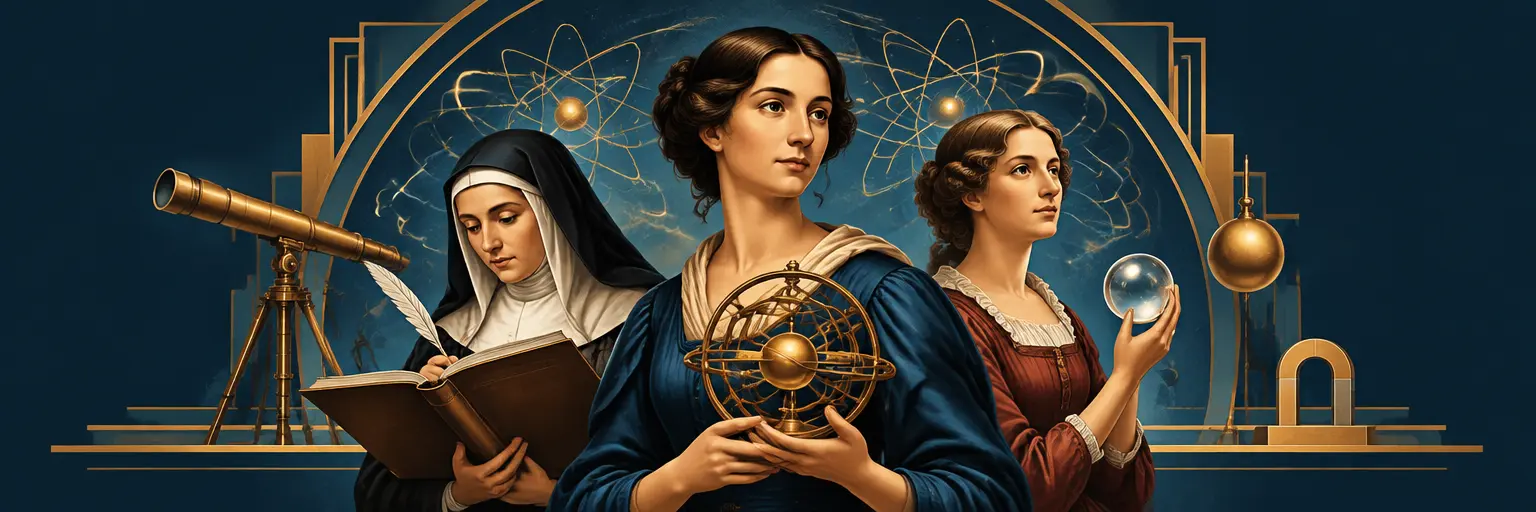
Discover the untold stories of early pioneers in physics, where visionary women defied societal norms to lay the groundwork for modern science before the 18th century. From ancient natural philosophers to Renaissance experimenters, these trailblazers explored motion, light, and the cosmos—often without formal recognition. Their relentless curiosity and resilience overcame formidable barriers, shaping foundational theories that still echo in classrooms today. Dive into a world where intellect triumphed over prejudice, and uncover how these forgotten heroines ignited a legacy of inquiry. Perfect for history buffs, science enthusiasts, and anyone seeking inspiring female role models, this journey reveals the sparks that lit the torch of physics—proving that brilliance knows no gender. Explore their remarkable achievements and the obstacles they conquered, redefining what was possible in an era of limited opportunity.
🌟 Discover how women’s early physics contributions, often overlooked, laid foundational stones for modern science. Explore inspiring stories of pioneering women who…
Read article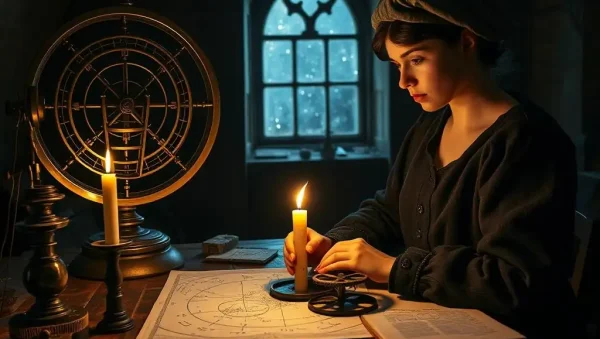
🌟 Women’s early astronomy observations laid crucial groundwork in a male-dominated field, showcasing their ingenuity with instruments and insight. This article highlights…
Read article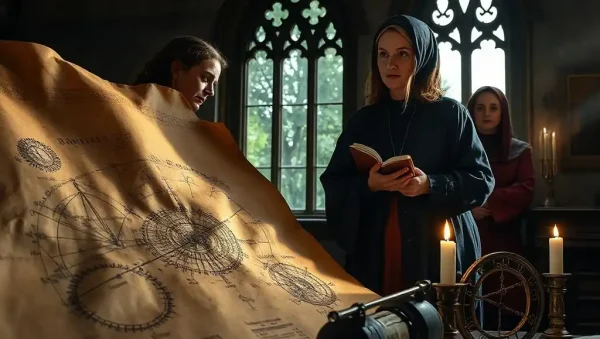
🌟 Discover the inspiring stories of early female physics pioneers who broke barriers before the 18th century, shaping science’s history and paving…
Read article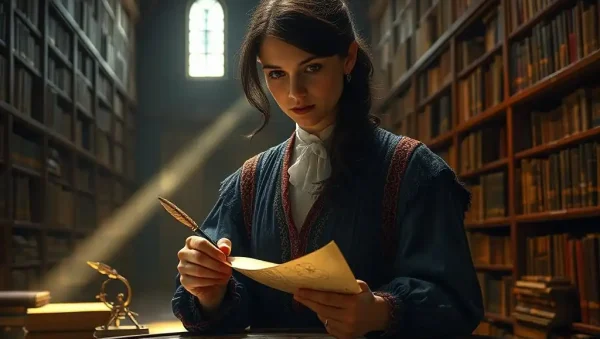
🌟 Explore the often overlooked stories of Women in physics history before 1700, revealing how pioneering women challenged societal norms and laid…
Read articleBefore Newton’s laws and Galileo’s telescopes, a handful of remarkable women were already questioning the nature of matter, motion, and light. Within the "Women in Science History" category, this subcategory unearths the pre-18th-century female physicists—philosophers, mathematicians, and natural observers—whose ideas laid groundwork for modern physics, despite being erased from mainstream textbooks. Here, you’ll discover their theories, experiments, and the intellectual contexts that both enabled and constrained their work. Expect a blend of biographical detail, scientific analysis, and historical context, all optimized for those seeking underrepresented STEM narratives.
This section explores women from antiquity to the early medieval period, including Hypatia of Alexandria (c. 350–415 CE), who taught astronomy and mathematics, and Aglaonike of Thessaly, famed for predicting lunar eclipses. These women didn’t have labs, but they used observation, geometry, and philosophical reasoning to explain celestial and terrestrial phenomena. You’ll learn how their work—like Hypatia’s commentaries on Ptolemy and Apollonius—influenced later physics, especially optics and kinematics.
For SEO-rich content, we emphasize keywords like ancient physics, female philosophers, Hypatia contributions, pre-Socratic science. Readers will appreciate that these pioneers often worked within religious or scholarly institutions, yet their writings occasionally survived through male disciples. Expect detailed breakdowns of their known theories, such as Hypatia’s instruments for measuring density and her astrolabe designs, proving that physics wasn’t exclusively a modern, male pursuit.
Moving into the 11th–15th centuries, this segment highlights figures like Hildegard of Bingen (1098–1179), whose cosmological visions described a dynamic, interconnected universe, and Trotula of Salerno, whose medical physics—thermal balances and fluid mechanics—informed early thermodynamics. We also cover Sophie Brahe (1556–1643), who assisted her brother Tycho in astronomical measurements crucial for planetary motion models. Their work blended mysticism, practical healing, and empirical measurement.
Expect keywords such as medieval women scientists, Hildegard cosmology, Salerno medical physics, Sophie Brahe planetary data. This section explains how these women used available tools—water clocks, balance scales, celestial charts—to pioneer concepts of force, energy, and matter. We highlight their resilience: many wrote in Latin or vernacular, often facing ecclesiastical suspicion, yet their recorded observations remain testaments to early experimental physics.
The 16th–17th centuries witnessed women like Margaret Cavendish (1623–1673), who challenged mechanistic physics with her vitalist matter theory, and Maria Cunitz (1610–1664), whose astronomical tables simplified Kepler’s elliptical orbits. Then there’s Émilie du Châtelet (1706–1749), though slightly post-18th-century, we include her foundational work on energy conservation here as a bridge. These women translated, critiqued, and expanded male contemporaries’ ideas, often publishing under their own names in academies—a rarity.
For search optimization, we target phrases like Renaissance female physicists, Cavendish matter theory, Cunitz astronomical tables, du Châtelet vis viva. Readers will find analyses of their experiments, such as Cavendish’s thought experiments on motion and Cunitz’s corrections to astronomical ephemerides. We also discuss institutional barriers—many were barred from universities—and how they used salons, correspondences, and patron networks to disseminate their physics.
This facet focuses on the practical side: how pre-18th-century women used early instruments like astrolabes, pendulums, and water clocks. Figures such as Hypatia (again) and Sophie Brahe exemplify hands-on measurement. We also include lesser-known names like Anna Maria van Schurman (1607–1678), who studied optics and refraction, and Elisabeth of Bohemia (1618–1680), whose correspondence with Descartes on mind-body interaction influenced his physics of motion.
Keywords here include early scientific instruments, women in optics, pendulum experiments, astrolabe users. This section explains their methodologies—e.g., repeated observation, calibration—and how their data fed into broader physical theories. We emphasize that despite lacking formal labs, these women’s meticulous records set precedents for reproducibility and precision, essential for later physics. Expect detailed case studies of specific instruments and their uses.
Finally, this section examines the social and intellectual networks that enabled these pioneers. Women like du Châtelet (again, as bridge) accessed knowledge through family connections, religious orders, and royal courts. We analyze the roles of patrons—e.g., Queen Christina of Sweden supporting Cartesian physics—and correspondence circles (like the Descartes–Elisabeth letters). These networks provided resources, validation, and dissemination channels, bypassing universities.
SEO terms include women in science networks, patronage in physics, correspondence science, academic exclusion. This content helps readers understand not just what they discovered but how they did so. We highlight strategies like pseudonyms, translation, and editorial work to gain credibility. This section is vital for educators and researchers looking to contextualize early female contributions, making the subcategory a rich resource for diversity in STEM history.
We use “physicist” retrospectively to describe women who studied natural phenomena—motion, matter, light, and forces—through observation, math, or experimentation. Examples include Hypatia’s astronomy and Hildegard’s cosmology. Their methods may seem philosophical today, but they laid conceptual foundations for later physics, so we honor them as pioneers.
Historical bias and institutional exclusion are primary reasons. Many women’s works were published under male names, lost, or destroyed. Additionally, early science prioritized university-trained men, while women worked in informal settings. Our subcategory corrects this by recovering primary sources and contextualizing their contributions within their contemporary frameworks.
Yes, indirectly. Sophie Brahe’s astronomical measurements aided Tycho Brahe, whose data Kepler used. Émilie du Châtelet’s translation of Newton’s Principia (including her commentary) spread his physics in France. Margaret Cavendish debated with male counterparts like Descartes. Thus, they shaped the intellectual environment, even if not always credited.
They relied on astrolabes for celestial mapping, water clocks for time measurement, balance scales for mass, and simple lenses for optics. For example, Hypatia used hydrostatic instruments, while Sophie Brahe used sextants. These tools allowed them to collect empirical data, albeit with less precision than later instruments.
Many are in public domain repositories. For instance, du Châtelet’s Institutions de Physique is available via Gallica or archive.org. Margaret Cavendish’s works are on Early English Books Online. Key primary texts include letters (Descartes–Elisabeth) and astronomical tables (Cunitz). Our site provides links and excerpts within biographies.