
"Unladylike" Pursuits: The Stigma Faced by 18th Century Female Physicists

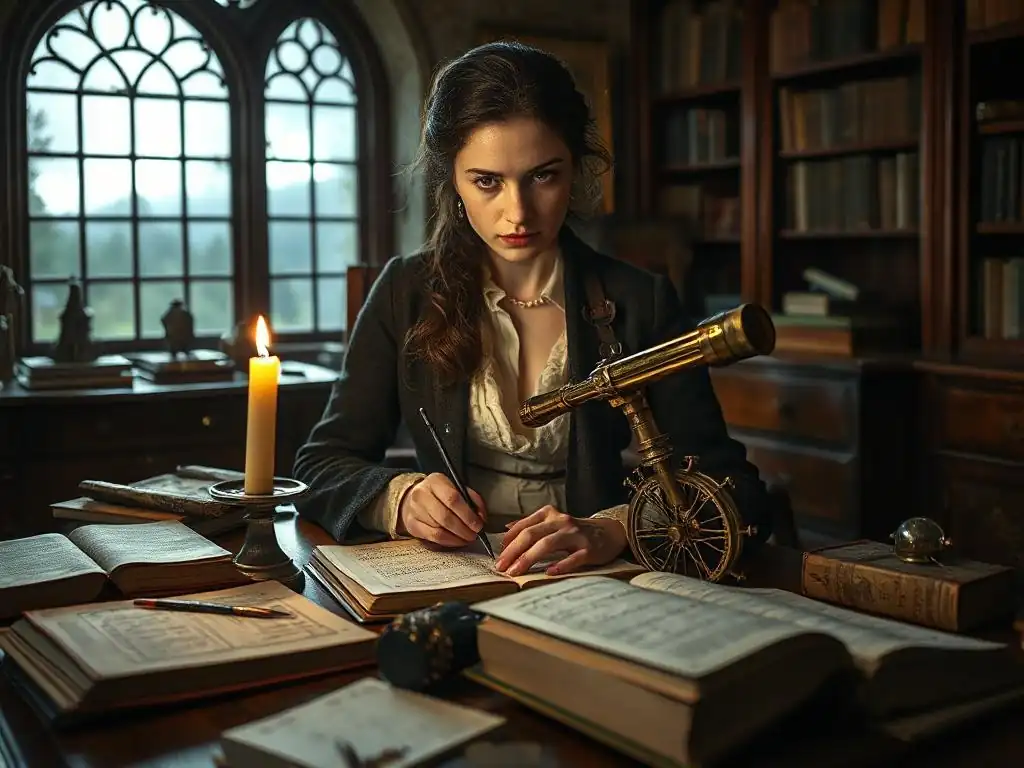
Welcome to WomenInScienceHistory.com!
Delve into the fascinating, and often untold, stories of women who dared to defy expectations and shape the world of science. Were you aware of the significant hurdles faced by women in early physics? Prepare to be captivated as we explore the lives and legacies of 18th century female physicists, uncovering the societal stigmas and extraordinary resilience that defined their "unladylike" pursuits. Discover how they navigated a male-dominated world to make groundbreaking contributions, and consider the lasting impact of their perseverance. Intrigued? Read on to uncover the hidden history of these scientific pioneers!
- Introduction: Unveiling the Hidden Contributions of 18th Century Women in Physics
- The Societal Landscape: Gender Roles and Scientific Pursuits in the 18th Century
- Pioneering Women in Physics: Examples of Scientific Excellence Despite Obstacles
- The Nature of the Stigma: Examining the "Unladylike" Accusation
- The Impact of Stigma on the Development of Physics
- Strategies for Overcoming Obstacles: How 18th Century Women Physicists Persevered
- Legacy and Influence: The Enduring Impact of 18th Century Female Physicists
- Conclusion: Celebrating the Resilience and Achievements of 18th Century Women in Physics
-
Frequently Asked Questions
- What were some of the main societal barriers preventing women from becoming physicists in the 18th century?
- Did any formal scientific organizations or institutions accept women as members during the 18th century?
- What types of "physics" were 18th century female physicists most likely to study, given the limitations they faced?
- How did women overcome the lack of formal education to contribute to physics in the 18th century?
- Why is it important to highlight the contributions of 18th-century female physicists today?
- Final Reflection: Embracing Scientific Curiosity
Highlighting the Overlooked Role of Women in 18th Century Scientific Advancements
The 18th century, often celebrated as the Age of Enlightenment, saw remarkable strides in scientific thought, particularly in fields like physics. Figures such as Isaac Newton, Leonhard Euler, and Daniel Bernoulli dominated the narrative, pushing the boundaries of mechanics, optics, and mathematics. However, this traditional account frequently overlooks the profound contributions made by women who, despite immense societal pressure and systemic exclusion, actively engaged with and advanced scientific knowledge. These pioneering 18th century female physicists and mathematicians were not merely passive observers but active participants, often making significant intellectual breakthroughs that shaped the trajectory of scientific development.
Their work, ranging from intricate mathematical analyses to groundbreaking experimental setups, challenged the prevailing notion that scientific inquiry was an exclusively male domain. While their names may not resonate as loudly in mainstream historical accounts, their intellectual rigor and unwavering dedication to understanding the natural world were undeniable. Unearthing the stories of these 18th century female physicists is crucial for a complete and accurate understanding of scientific history, revealing a richer tapestry of collaboration and individual brilliance that transcends gendered limitations.
The path for any intellectually curious woman in the 18th century was fraught with formidable social barriers and deeply ingrained prejudices. Society largely confined women to domestic roles, viewing intellectual pursuits, especially in rigorous fields like physics, as "unladylike" and potentially damaging to their perceived delicate sensibilities or reproductive capabilities. This pervasive sexism created an environment where formal education beyond basic literacy was largely inaccessible, and entry into established scientific institutions like universities and academies was virtually impossible.
Consequently, aspiring 18th century female physicists faced a constant struggle for legitimacy and recognition. Their passion for science was often met with ridicule, suspicion, or outright condemnation, forcing many to pursue their studies in isolation or through informal networks. The stigma attached to their "unladylike" pursuits meant that their work was frequently undervalued, attributed to male relatives, or simply forgotten, systematically erasing their presence from the annals of scientific achievement.
The Societal Landscape: Gender Roles and Scientific Pursuits in the 18th Century
Expectations of Women: Domesticity vs. Intellectual Engagement
In the 18th century, societal expectations for women were rigidly defined, primarily centering around domesticity, marriage, and child-rearing. The prevailing ideology dictated that a woman's sphere was the home, where she was expected to manage the household, raise children, and provide a nurturing environment for her husband. Educational opportunities for girls were typically limited to accomplishments deemed suitable for marriage, such as needlework, music, and basic literacy, with little to no emphasis on rigorous academic subjects like natural philosophy or mathematics.
Any deviation from these prescribed roles was often met with disapproval, as intellectual engagement, particularly in public or professional spheres, was seen as masculine and unfeminine. A woman who pursued advanced studies or scientific inquiry was often labeled as eccentric, neglecting her "true" duties, or even as a threat to the established social order. This stark contrast between societal expectations and intellectual ambition created a profound internal and external conflict for many 18th century female physicists.
The Exclusion of Women from Formal Scientific Education and Institutions
One of the most significant obstacles confronting 18th century female physicists was their systematic exclusion from formal educational institutions and scientific societies. Universities, which were the primary centers for advanced scientific learning and research, barred women from enrollment. Similarly, prestigious academies like the Royal Society of London or the French Académie des Sciences, which served as vital hubs for scientific discourse, publication, and collaboration, admitted only men. This exclusion meant that women had no official access to laboratories, specialized equipment, extensive libraries, or the critical intellectual exchange that fostered scientific progress.
Without formal training, women often relied on self-education, private tutors, or informal apprenticeships within their families. This significantly limited their opportunities for mentorship, peer review, and the validation necessary for their work to gain widespread acceptance. While some aristocratic women might have had private libraries or access to learned men, the vast majority of aspiring 18th century female physicists were denied the foundational infrastructure that their male counterparts took for granted.
"Unladylike" Label: How Gender Norms Shaped Perceptions of Female Scientists
The term "unladylike" became a powerful social weapon used to enforce gender norms and discredit women who dared to venture into traditionally male domains, especially science. An "unladylike" woman was perceived as someone who transgressed the delicate, passive, and domestic ideals of femininity. Engaging in deep intellectual thought, debating scientific theories, or conducting experiments was seen as antithetical to these ideals, suggesting a woman was neglecting her beauty, social graces, or moral purity.
For 18th century female physicists, this label carried significant weight, leading to social ostracization, ridicule, and professional marginalization. Critics might suggest that their intellect was unfeminine, or that their pursuit of knowledge made them undesirable wives or mothers.
This societal pressure often forced women to choose between their intellectual passions and social acceptance, or to pursue their work in secrecy. The "unladylike" accusation was not merely a social slight; it was a powerful mechanism of control that aimed to keep women from challenging the male-dominated scientific establishment and reinforcing the belief that women were inherently incapable of rigorous scientific thought.
Pioneering Women in Physics: Examples of Scientific Excellence Despite Obstacles
Émilie du Châtelet: Mathematical Physics and Translation
Translation and Commentary on Newton's Principia and its Significance
Gabrielle Émilie Le Tonnelier de Breteuil, Marquise du Châtelet, stands as one of the most brilliant and influential 18th century female physicists and mathematicians. Her most monumental contribution to physics was her French translation and commentary of Isaac Newton's Philosophiæ Naturalis Principia Mathematica. Published posthumously in 1759, this work was not merely a linguistic translation but a profound reinterpretation and clarification of Newton's complex theories. Du Châtelet added extensive notes, derivations, and a comprehensive commentary that made Newton's groundbreaking work more accessible to the French-speaking scientific community, solidifying its place as the standard French translation to this day.
Her commentary included her own original contributions, such as a crucial insight into the concept of kinetic energy, where she argued for a proportionality to the square of velocity (mv²) rather than just velocity (mv), a concept later proven by Leiden jar experiments. This demonstrated her deep understanding and ability to critically engage with, and even improve upon, the leading scientific thought of her era. Her work directly contributed to the spread of Newtonian physics across continental Europe, a testament to her intellectual prowess and dedication as an 18th century female physicist.
Overcoming Societal Resistance: Patronage and Independent Study
Born into an aristocratic family, Émilie du Châtelet had the rare privilege of access to education and intellectual circles that were largely denied to other women. Despite these advantages, she still faced significant societal resistance to her serious pursuit of science. She famously studied with renowned mathematicians and scientists, including Pierre Louis Moreau de Maupertuis and Alexis Clairaut. Her relationship with Voltaire, the prominent philosopher, provided her with a crucial intellectual partnership and a supportive environment, though it also drew public scrutiny.
Du Châtelet's dedication to independent study was legendary; she often worked for 18 hours a day, fueled by an insatiable intellectual curiosity. She established her own laboratory at her estate, Cirey-sur-Blaise, where she conducted experiments in optics and heat. Through sheer force of will, intellect, and the strategic leveraging of patronage, she circumvented the formal barriers to education and institutional recognition, becoming a paradigm of the determined 18th century female physicist who forged her own path.
Laura Bassi: Experimental Physics and Academia
First Woman to Officially Teach at a European University
Laura Bassi Veratti, an extraordinary Italian scholar, achieved unprecedented academic recognition for an 18th century female physicist. In 1732, at the age of 21, she was appointed professor of philosophy at the University of Bologna, making her the first woman to officially teach at a European university.
Her appointment was a momentous event, celebrated with public disputations where she defended 49 theses in philosophy and physics, demonstrating her profound knowledge in both areas. She specialized in Newtonian physics and conducted extensive experimental work, establishing a private laboratory in her home where she taught courses and demonstrated principles of electricity and mechanics.
Bassi's lectures and experiments were highly regarded, attracting both students and established scholars. She broke barriers not only by teaching but also by being granted a public lectureship in 1738, allowing her to lecture at the university, though her public appearances were often limited by the university's conservative views on women's roles. Her pioneering academic career set a precedent for future generations of women seeking a place in higher education and scientific research, solidifying her status as an iconic 18th century female physicist.
Navigating Family Expectations and Scientific Ambitions
Laura Bassi successfully navigated the complex societal expectations of marriage and motherhood alongside her rigorous scientific ambitions. In 1738, she married Giuseppe Veratti, a fellow professor of anatomy and physics at the University of Bologna, with whom she had eight children. Her husband was a supportive partner, often assisting her in her experiments and teaching. This partnership allowed her to continue her scientific work within her home, conducting experiments and holding private classes, which were essential given the university's restrictions on her public activities.
Bassi's ability to balance a prolific academic career with a large family life was remarkable for the 18th century. She exemplified how an 18th century female physicist could challenge gender norms by demonstrating that intellectual pursuit did not necessarily preclude domestic roles. Her life story offers a powerful narrative of perseverance, showing that with dedication and a supportive environment, women could achieve significant scientific milestones despite the prevailing social pressures.
Maria Gaetana Agnesi: Mathematics and Ballistics
Contributions to Calculus and Ballistics Research
Maria Gaetana Agnesi was an Italian mathematician and philosopher whose work significantly impacted the understanding and teaching of calculus in the 18th century. Her most renowned publication, Instituzioni analitiche ad uso della gioventù italiana (Analytical Institutions for the Use of Italian Youth), published in 1748, was a comprehensive two-volume textbook covering differential and integral calculus, as well as analytical geometry. This monumental work, which synthesized the existing knowledge of calculus, was translated into English and French and became a standard reference throughout Europe for decades.
Agnesi's book also included a detailed discussion of a specific curve, known as the "Witch of Agnesi," which she explored in the context of cubic curves. While her primary fame rests on her contributions to pure mathematics, the principles of calculus she elucidated were fundamental to the nascent field of theoretical physics, including mechanics and ballistics. Her systematic approach to mathematical problems laid a crucial groundwork for understanding physical phenomena, making her an indirect but significant contributor to the advancements in quantitative analysis employed by 18th century female physicists and their male counterparts.
The Role of Mentorship and Collaboration in Supporting Female Physicists
Maria Gaetana Agnesi's intellectual development was significantly fostered by a supportive home environment and access to prominent scholars. Her father, Pietro Agnesi, a professor of mathematics at the University of Bologna, recognized her prodigious talent from a young age and provided her with an exceptional education. He encouraged her to engage in intellectual discussions with the leading minds of Milan, hosting regular salons where she could converse with philosophers, scientists, and mathematicians on complex topics. This informal network served as a vital substitute for the formal university education denied to women.
Her father also facilitated her access to a vast library and tutors, enabling her to master multiple languages and scientific disciplines. While Agnesi later withdrew from public intellectual life to dedicate herself to religious and charitable work, the early mentorship and collaborative environment provided by her family and their intellectual circle were instrumental in her groundbreaking mathematical achievements. This highlights a common thread among successful 18th century female physicists: the crucial role of personal support networks in overcoming systemic barriers.
The Nature of the Stigma: Examining the "Unladylike" Accusation
Intellectual Capability: Challenging the Beliefs About Women's Inferior Intellect
The "unladylike" accusation leveled against 18th century female physicists was deeply rooted in the pervasive belief that women possessed an inherently inferior intellect compared to men. This prejudice suggested that women's brains were physically smaller, less capable of abstract thought, or too emotionally driven to engage in the rigorous, objective reasoning required for scientific inquiry. Consequently, any intellectual achievement by a woman was often dismissed as an anomaly, a mere imitation of male thought, or attributed to external male influence rather than genuine talent.
The accomplishments of figures like Émilie du Châtelet, Laura Bassi, and Maria Gaetana Agnesi directly challenged these deeply entrenched misogynistic beliefs. Their mastery of complex mathematical physics, their innovative experiments, and their authoritative publications provided irrefutable evidence of women's intellectual capability. Yet, even in the face of such brilliance, the stigma persisted, forcing these 18th century female physicists to continually prove their worth in a system designed to doubt and diminish them.
Professional Recognition: The Struggle for Acknowledgment and Acceptance
For 18th century female physicists, achieving professional recognition was an arduous, often impossible, struggle. Even when their work was undeniably brilliant, formal acknowledgment from established scientific institutions was largely denied. Women were excluded from prestigious academies, denied university positions (with rare exceptions like Laura Bassi, whose appointment was still subject to strict limitations), and often found their work published anonymously, under pseudonyms, or credited to male relatives. This systemic denial of professional recognition meant that their contributions remained on the periphery of the scientific community.
The struggle for acknowledgment extended beyond formal titles; it also involved the fight for intellectual property. Instances existed where a woman's research or ideas were appropriated by male colleagues or relatives without proper credit. This erasure of individual contribution was a significant form of stigma, preventing 18th century female physicists from building a reputation, attracting students, or securing funding for further research, thus stifling their potential impact on the development of physics.
The pursuit of scientific knowledge, especially in a public or professional capacity, often came at a significant social cost for 18th century female physicists. By deviating from the prescribed gender norms of domesticity and subservience, these women risked social isolation, ridicule, and even moral condemnation. They might be perceived as neglecting their family duties, as being overly ambitious, or as challenging the very fabric of societal order. This pressure could manifest as gossip, exclusion from social events, or a general air of disapproval from their communities.
For some, like Maria Gaetana Agnesi, the intense public scrutiny and the conflict between intellectual life and personal piety ultimately led to a withdrawal from public scientific engagement. While Émilie du Châtelet navigated aristocratic circles with more freedom, her intellectual pursuits were still a subject of public discussion and often caricature. The social isolation, whether self-imposed or externally enforced, was a heavy price paid by these 18th century female physicists for their intellectual courage and dedication to science, highlighting the profound impact of the "unladylike" stigma.
The Impact of Stigma on the Development of Physics

Suppressed Research: The Loss of Potential Discoveries Due to Gender Bias
The pervasive stigma and systematic exclusion faced by 18th century female physicists undoubtedly led to the suppression of invaluable research and the loss of countless potential discoveries. When talented women are denied access to education, resources, and platforms for dissemination, their innovative ideas and unique perspectives are stifled before they can fully develop. It is impossible to quantify the intellectual capital that was lost because a promising young woman was discouraged from pursuing science, or because a brilliant female physicist's work was ignored or forgotten.
Consider the potential for alternative approaches to problems in mechanics, optics, or thermodynamics that might have emerged if more women had been encouraged and supported in these fields. The very fabric of scientific progress relies on a diversity of thought and inquiry. By actively excluding half the population, the 18th-century scientific community inadvertently limited its own capacity for innovation, leaving gaps in knowledge and delaying advancements that could have been made by these brilliant 18th century female physicists.
Limited Opportunities: The Restriction of Women's Access to Resources and Collaboration
The stigma against 18th century female physicists translated directly into severely limited opportunities for access to critical resources and collaborative networks. Scientific progress in physics, then as now, heavily relies on access to laboratories, specialized instruments, and the exchange of ideas among peers. Women were largely denied entry to university laboratories, preventing them from conducting essential experimental work. The cost of setting up private laboratories, as Laura Bassi did, was prohibitive for most.
Furthermore, the exclusion from scientific societies and academic circles meant a significant lack of collaborative opportunities. Physics often thrives on discussion, debate, and the sharing of preliminary findings. Without these networks, 18th century female physicists were often forced to work in isolation, making it harder to refine their theories, test their hypotheses, or gain critical feedback. This restriction on resources and collaboration significantly hampered their ability to contribute fully to the scientific discourse of the era.
Historical Erasure: The Underrepresentation of Female Physicists in Scientific History
Perhaps one of the most enduring and damaging impacts of the stigma faced by 18th century female physicists is their widespread underrepresentation and often complete erasure from historical narratives. For centuries, the history of science has been largely written by men, focusing almost exclusively on male achievements. The contributions of women, if acknowledged at all, were often minimized, relegated to footnotes, or attributed to their male relatives or mentors. This systematic historical erasure has created a skewed and incomplete picture of scientific development.
This lack of visibility not only deprives these pioneering women of their rightful place in history but also denies future generations of aspiring female scientists crucial role models. It perpetuates the myth that science is an inherently male pursuit. Reclaiming the stories of 18th century female physicists is not merely an academic exercise; it is a vital step in correcting historical injustices and inspiring a more inclusive and accurate understanding of scientific progress.
Strategies for Overcoming Obstacles: How 18th Century Women Physicists Persevered
Utilizing Informal Networks: Family, Friends, and Supportive Male Colleagues
Faced with formal exclusion, many 18th century female physicists successfully leveraged informal networks to pursue their intellectual passions. Enlightened fathers, husbands, or brothers often played a crucial role, providing access to private libraries, tutors, and intellectual discussions that mimicked formal education. Maria Gaetana Agnesi's father, for instance, fostered her education and hosted salons where she could engage with leading scholars. Similarly, Laura Bassi's husband, Giuseppe Veratti, was a supportive colleague who collaborated on experiments and teaching.
Beyond family, some women found support among progressive male colleagues who recognized their talent, such as Voltaire's patronage of Émilie du Châtelet. These informal networks, while not replacing institutional access, provided vital intellectual stimulation, mentorship, and a degree of legitimacy that allowed these 18th century female physicists to develop their skills and contribute to scientific knowledge.
Self-Education and Independent Research: Pursuing Knowledge Outside Formal Institutions
Given the widespread ban on women in universities, self-education and independent research became fundamental strategies for 18th century female physicists. These women displayed extraordinary discipline and intellectual curiosity, often spending countless hours poring over books, translating texts, and conducting experiments in private. Émilie du Châtelet's legendary 18-hour study days exemplify the intense dedication required to master complex subjects like Newtonian physics without formal instruction.
Laura Bassi's establishment of a private laboratory in her home, where she conducted experiments and taught classes, is another prime example of independent research. These private endeavors, fueled by an unwavering passion for knowledge, allowed these 18th century female physicists to circumvent the institutional barriers and make significant contributions to their fields, proving that intellectual genius could flourish even outside traditional academic structures.
Publishing Under Pseudonyms or Through Male Relatives: Bypassing Gender Bias in Scientific Publications
The pervasive gender bias in 18th-century scientific publication often forced 18th century female physicists to employ creative, albeit often uncredited, strategies to disseminate their work. Publishing under male pseudonyms or having their work presented and published through male relatives or mentors was a common tactic. This allowed their intellectual contributions to be judged on their merit, rather than being dismissed outright due to the author's gender. While specific instances of this for physics papers by these named women are less documented than for other female authors in different fields, the general practice highlights the systemic obstacles.
This strategy, while necessary for their work to gain any traction, came at the cost of personal recognition and historical credit. It contributed to the historical erasure of many 18th century female physicists, as their true authorship remained hidden. Nevertheless, it was a practical means of bypassing the "unladylike" stigma and ensuring their ideas entered the scientific discourse, even if their names did not.
Legacy and Influence: The Enduring Impact of 18th Century Female Physicists
Inspiring Future Generations: The Importance of Recognizing Their Contributions
The stories of 18th century female physicists like Émilie du Châtelet, Laura Bassi, and Maria Gaetana Agnesi are not merely historical footnotes; they are powerful narratives of resilience, intellectual courage, and groundbreaking achievement. Recognizing their contributions is vital for inspiring future generations of women and girls in STEM fields. These pioneers demonstrated that intellectual curiosity and scientific talent are not bound by gender, and that perseverance can overcome even the most formidable societal barriers.
By highlighting their struggles and triumphs, platforms like Women in Science History provide crucial role models, showing aspiring scientists that they are part of a long and distinguished lineage of women who have pushed the boundaries of knowledge. Their legacies serve as a powerful reminder that women have always been, and continue to be, integral to scientific progress, encouraging young minds to pursue their passions regardless of societal expectations.
Challenging Gender Stereotypes: Breaking Down Barriers in Science and Beyond
The very existence and achievements of 18th century female physicists fundamentally challenged the rigid gender stereotypes of their time. By demonstrating profound intellectual capabilities in fields deemed "unladylike" and masculine, they chipped away at the notion that women were inherently inferior or incapable of rigorous scientific thought. Their work provided concrete evidence that women could excel in mathematics, experimental physics, and theoretical inquiry, defying the prevailing prejudices.
While their impact on immediate societal norms was limited, their pioneering efforts laid important groundwork for future generations to advocate for greater equality. Their lives proved that intellectual ambition and scientific pursuits were not incompatible with femininity, gradually eroding the "unladylike" label. The courage of these 18th century female physicists in defying restrictive gender roles paved the way for broader conversations about women's rights and capabilities, extending their influence far beyond the realm of science.
Reclaiming Their Place in Scientific History: Promoting Visibility and Recognition
For too long, the contributions of 18th century female physicists have been marginalized or entirely omitted from mainstream scientific history. Reclaiming their rightful place involves a concerted effort to research, document, and promote their stories, ensuring their achievements are acknowledged and celebrated. This process of historical revisionism is crucial for a more accurate and inclusive understanding of how science has evolved.
Promoting their visibility through articles, biographies, and educational initiatives ensures that these pioneering women are no longer forgotten. By bringing their lives and work to the forefront, we not only honor their individual brilliance but also highlight the systemic barriers they faced, providing valuable lessons for addressing contemporary gender disparities in science. Ensuring that 18th century female physicists receive the recognition they deserve is a vital step towards a more equitable and representative narrative of scientific progress.
Conclusion: Celebrating the Resilience and Achievements of 18th Century Women in Physics
The Ongoing Fight for Gender Equality in Science
The struggles faced by 18th century female physicists serve as a poignant reminder that the fight for gender equality in science is a long and ongoing battle. While significant progress has been made since the 1700s, women in physics and other STEM fields still encounter various forms of bias, from subtle microaggressions to persistent pay gaps and underrepresentation in leadership roles. For instance, in 2021, women earned only about 21% of physics bachelor's degrees and 20% of physics doctorates in the United States, indicating a continued disparity compared to their male counterparts.
The historical "unladylike" stigma may have evolved, but its echoes can still be felt in implicit biases and systemic barriers that discourage women from pursuing or remaining in physics careers. Understanding the historical context of exclusion helps us recognize and dismantle the contemporary challenges that prevent full gender parity in scientific fields.
The Importance of Remembering and Learning from the Past
Remembering the resilience and achievements of 18th century female physicists is not merely an act of historical appreciation; it is a vital lesson for the present and future. Their stories illuminate the profound impact of societal prejudice on intellectual progress and the immense strength required to overcome such obstacles. By learning about the challenges they faced—from exclusion from formal education to the struggle for recognition—we gain critical insights into the systemic nature of gender inequality in science.
These historical narratives provide context for current disparities and offer inspiration for continued advocacy. They teach us that true scientific progress requires inclusivity and that overlooking talent based on gender only impoverishes the scientific endeavor as a whole. The legacy of these pioneering 18th century female physicists compels us to reflect on how far we've come and how much further we still need to go.
A Call to Action: Supporting and Encouraging Women in STEM Fields Today
Inspired by the unwavering spirit of 18th century female physicists, it is imperative that we actively support and encourage women and girls in STEM fields today. This involves dismantling lingering biases in educational institutions and workplaces, promoting equitable opportunities for research and leadership, and fostering inclusive environments where all scientists can thrive. Mentorship programs, scholarships, and initiatives designed to retain women in STEM are crucial steps.
Furthermore, it means actively celebrating the achievements of women in science, past and present, to ensure their visibility and provide powerful role models. By championing diversity and inclusion, we build upon the foundation laid by these courageous 18th century female physicists, ensuring that future generations of brilliant minds, regardless of gender, have the opportunity to contribute fully to the advancement of human knowledge and truly shape the future of physics.
Frequently Asked Questions
What were some of the main societal barriers preventing women from becoming physicists in the 18th century?
Women faced significant social stigma and lack of access to formal education. The prevailing belief was that scientific pursuits were "unladylike," hindering their opportunities.
Did any formal scientific organizations or institutions accept women as members during the 18th century?
Generally, no. Formal scientific societies were almost exclusively male, barring women from participation and recognition. This exclusion severely limited their professional advancement.
What types of "physics" were 18th century female physicists most likely to study, given the limitations they faced?
They often focused on areas considered more "appropriate" for women, such as domestic science, natural history, or sometimes astronomy, which could be pursued through observation.
How did women overcome the lack of formal education to contribute to physics in the 18th century?
Some women were tutored privately, often by family members. They also engaged in self-study and collaborated with male scientists, though their contributions were often understated.
Why is it important to highlight the contributions of 18th-century female physicists today?
Recognizing their achievements helps challenge historical biases and inspires future generations of women in STEM. It also provides a more accurate and inclusive history of scientific progress.
Final Reflection: Embracing Scientific Curiosity
The journey through the lives of 18th-century female physicists reveals a stark reality: scientific curiosity, when pursued by women, was often deemed "unladylike" and actively suppressed. This historical context resonates powerfully today, reminding us that the fight for equitable access to STEM fields is far from over, and that biases, though perhaps more subtle, continue to shape opportunities for women in science.
The legacy of these pioneering women, who defied societal expectations to pursue their intellectual passions, profoundly influences the cultural landscape. Their stories serve as a potent reminder of the resilience of the human spirit and the importance of challenging established norms. The mind has no gender,
as Marie Curie so eloquently stated, a truth that these 18th-century physicists embodied despite the obstacles they faced. Their struggles paved the way for future generations, and their contributions, though often overlooked, deserve recognition and celebration.
Let us remember the courage of these "unladylike" physicists and be inspired to foster a world where curiosity knows no gender. Consider how you can actively champion inclusivity in STEM, whether through mentorship, advocacy, or simply by challenging your own biases. Embrace the spirit of inquiry, and help build a future where every individual, regardless of gender, has the opportunity to explore the wonders of science.
Please complete the required fields in the form.