Online Courses & Learning at WomenInScienceHistory.com
Dive into curated, expert-led online courses and learning modules that illuminate the pivotal roles women have played in biology, mathematics, physics, chemistry, and astronomy. Designed for adult learners, university students, and lifelong enthusiasts, these programs blend rigorous historical context with accessible pedagogy, making the legacy of female scientists both compelling and actionable for today’s education.
🔬 Intro Biology Courses: Female Scientists (Adult Learners)
These introductory biology courses for adult learners spotlight women such as Barbara McClintock, Rachel Carson, and Rita Levi-Montalcini, framing their discoveries within modern ecological and genetic frameworks. Expect interactive timelines, annotated primary sources, and reflective quizzes that connect historical breakthroughs to current biological research. The emphasis is on accessible language and real-world relevance, ideal for career changers, educators, or curious minds seeking a structured yet flexible pathway into women’s contributions to life sciences.
📐 Masterclasses: Women Mathematicians & Legacies
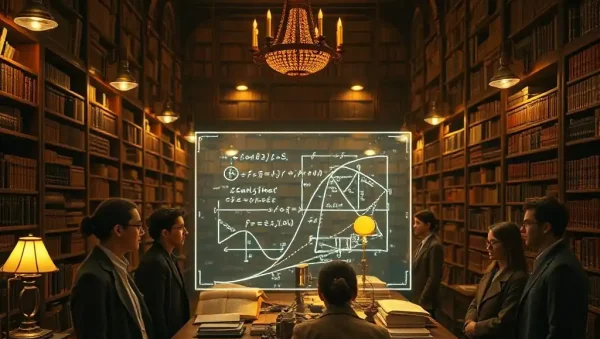
Our masterclasses on women mathematicians offer deep dives into the works of Emmy Noether, Maryam Mirzakhani, and Sophie Germain, blending biographical storytelling with problem-solving sessions. Each module includes video lectures from math historians, annotated proofs, and community discussion forums to unpack enduring mathematical legacies. Perfect for advanced high schoolers, undergraduates, or professionals, these classes focus on both the human struggle and the abstract beauty of mathematics, revealing how these pioneers reshaped algebra, topology, and number theory.
⚛️ Online Courses: Women in Physics History (University)
Tailored for university-level learners, these physics history courses examine the experimental and theoretical contributions of Marie Curie, Lise Meitner, and Chien-Shiung Wu, among others. Rigorous reading lists, archival lab notebooks, and peer-reviewed assessments challenge students to critically evaluate how gender bias historically influenced scientific recognition. With a blend of synchronous webinars and asynchronous materials, this series supports both undergraduate and graduate curricula, fostering skills in historiography, scientific literacy, and feminist critique of physics culture.
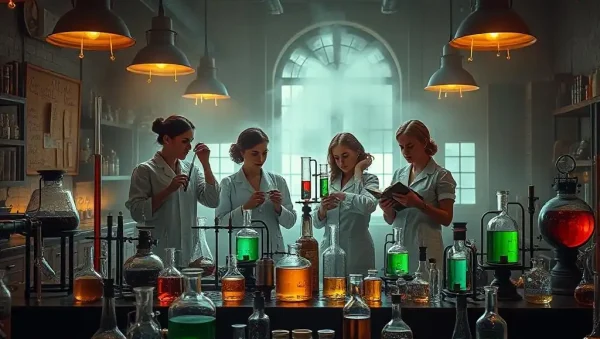
🧪 Self-Paced Chemistry Courses: Women's Contributions
Learn at your own rhythm with our self-paced chemistry courses that chronicle women such as Rosalind Franklin, Dorothy Hodgkin, and Gertrude Elion. Each unit pairs detailed biographies with practical chemistry concepts—crystallography, drug design, and radiochemistry—using interactive molecular models and virtual labs. Designed for flexible study schedules, these modules include downloadable worksheets, video demonstrations, and self-assessment tools, empowering learners to trace how these women’s innovations transformed pharmaceuticals, materials science, and biochemistry without rigid deadlines.
🔭 Learn Astronomy Online: Women Astronomers (Beginner-Advanced)
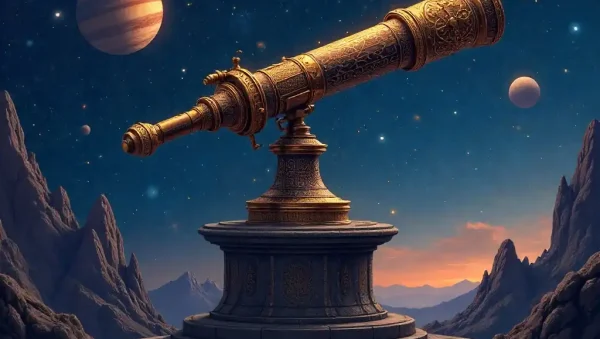
From beginner stargazers to advanced researchers, our online astronomy lessons celebrate women like Vera Rubin, Cecilia Payne-Gaposchkin, and Henrietta Leavitt. The curriculum escalates from basic celestial navigation to dark matter evidence and stellar classification, using interactive sky maps, historical data sets, and project-based assignments. Learners can progress through tiered levels, earning certificates that highlight both astronomical knowledge and the often-unsung pioneering work of female astronomers. Each module includes guided telescope sessions (or simulations) and critical analysis of discovery narratives.
Frequently Asked Questions
Do I need a science background to enroll in these online courses?
No. Our courses are scaffolded from introductory to advanced, so beginners are warmly welcomed. Biology and astronomy basics start with fundamental concepts, while physics and mathematics masterclasses offer optional refresher modules. University-level physics assumes some prior coursework, but every course provides contextual explanations to ensure historical narratives remain accessible to all adult learners.
Are these courses accredited or can I earn certificates?
Yes, we offer certificates of completion for each course, suitable for personal portfolios or continuing education credits. While our university-partnered physics series may offer transferable credit through affiliated institutions, the self-paced chemistry and astronomy courses provide verified digital badges. Check individual course pages for accreditation details and assessment pathways.
How much time should I allocate per week for a course?
Introductory biology and beginner astronomy require roughly 2–3 hours weekly, perfect for busy adults. Masterclasses in mathematics and university physics demand 4–5 hours due to problem sets and readings. Self-paced chemistry is flexible—you set your own pace, but most complete it in 6–8 weeks with 2 hours of engagement each week. All courses remain accessible for 12 months after enrollment.
Can I interact with instructors or other learners?
Absolutely. Every course includes moderated discussion forums, where you can pose questions to our historian-scientists. University physics and mathematics masterclasses host monthly live Q&A sessions. For self-paced options, our community board pairs you with study buddies, and instructors respond to queries within 48 hours, fostering collaborative learning around women’s scientific legacies.
Are there any free previews or sample lessons?
Yes, each course offers a free introductory module—including a video biography, one quiz, and a discussion prompt—so you can experience our teaching style before committing. These previews require only email registration and no payment. If you enjoy the sample, you’ll receive a discount code toward the full course, ensuring your learning journey starts with confidence.