Learn Astronomy Online: Women Astronomers (Beginner-Advanced)
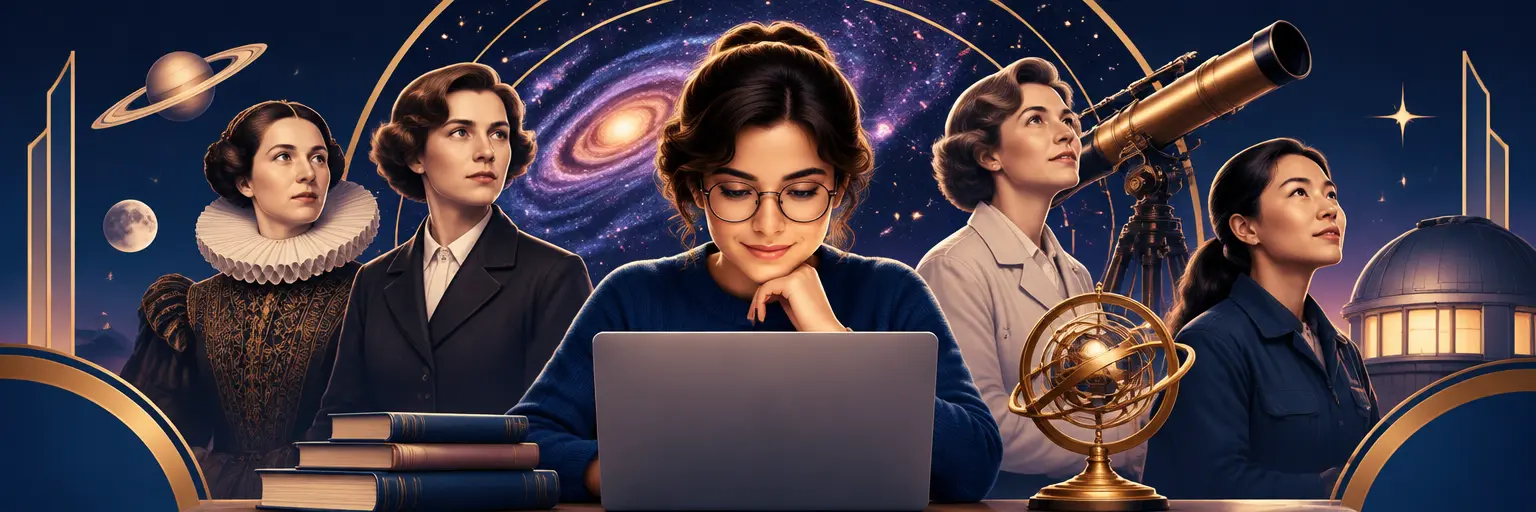
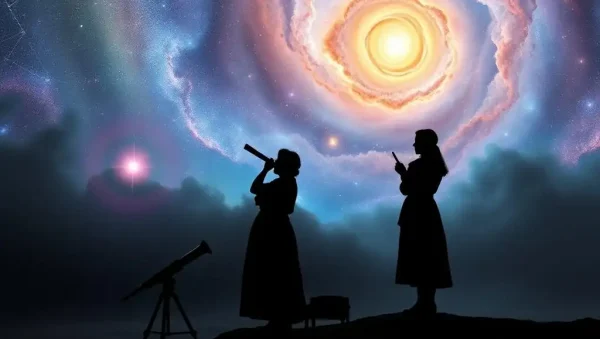
Explore the cosmos through the lens of history’s most brilliant female minds with our curated online astronomy courses. This subcategory bridges the gap between celestial science and feminist history, offering learners of all levels—from curious beginners to seasoned advanced stargazers—a chance to study the universe while uncovering the untold contributions of women astronomers. Each course integrates interactive lessons, archival imagery, and narrative storytelling, ensuring you gain both technical proficiency and a profound appreciation for these pioneers who mapped the stars despite societal barriers.
🌌 Beginner Pathways: Discovering the Night Sky Through Female Pioneers
Start your astronomical journey with foundational modules designed for absolute novices. You’ll learn basic constellations, planetary motion, and telescope usage, all while tracing how women like Caroline Herschel (the first female comet discoverer) and Maria Mitchell (America’s first professional female astronomer) made their initial observations. Courses emphasize hands-on activities, such as using free planetarium software and simple star charts, guided by video lectures from modern female astrophysicists who contextualize historical breakthroughs. Expect quizzes, visual aids, and community forums where you can ask questions without fear of judgment.
As you progress, you’ll explore the cultural and scientific climates of the 18th and 19th centuries, understanding why these women were often relegated to “assistant” roles. Interactive timelines and biographical spotlights help you connect the dots between their personal struggles and their astronomical achievements. By the end of beginner courses, you’ll confidently identify major stars and constellations while being able to name at least five pioneering women who charted them, setting a strong foundation for deeper study.
🔭 Intermediate Mastery: Analyzing Celestial Mechanics and Historical Data
Intermediate learners dive into orbital dynamics, spectroscopy, and stellar classification, using case studies from women like Annie Jump Cannon, who developed the stellar classification system still used today, and Henrietta Swan Leavitt, whose work on Cepheid variables unlocked cosmic distance measurement. These courses blend rigorous math—such as Kepler’s laws and parallax calculations—with archival research, teaching you to interpret historical observation logs and replicate their methodologies using modern tools like Python and virtual observatories. Each module includes project-based assessments, like plotting a light curve from raw data or reconstructing a historical star catalog.
You’ll also examine institutional biases of the early 20th century, particularly at Harvard College Observatory, where women “computers” processed thousands of glass plates without credit. Through candid lectures and primary source readings, you’ll critically analyze how gender shaped scientific priorities and discoveries. By completion, you’ll possess not only technical skills in data analysis but also a nuanced understanding of how collaborative yet hierarchical research environments influenced astronomical knowledge production, preparing you for advanced research or teaching roles.
🚀 Advanced Research: Cosmology and the Legacies of Modern Female Astronomers
For advanced students, this subcategory offers deep dives into dark matter, galaxy evolution, and black hole physics, highlighting contemporaries like Vera Rubin (dark matter evidence), Jocelyn Bell Burnell (pulsar discovery), and Margaret Burbidge (nucleosynthesis). Courses feature guest lectures from active researchers, advanced computational labs using real telescope datasets (e.g., SDSS or JWST archives), and seminars on scientific writing and peer review ethics. You’ll tackle complex problems like redshift interpretation and gravitational lensing, culminating in a capstone project where you propose a miniature research plan inspired by a historical figure’s unsolved question.
Beyond technical mastery, you’ll engage with meta-scientific topics: patent disputes, citation disparities, and the slow but steady diversification of astronomy. Case studies explore how Rubin’s rotation curve data was initially dismissed and how Bell Burnell’s Nobel omission sparked global advocacy for equitable recognition. These courses are discussion-heavy, encouraging you to debate policy reforms and mentoring strategies. By the end, you’ll be equipped not only to contribute original research but also to act as an informed advocate for inclusive scientific practices, carrying forward the legacy of these extraordinary women.
📚 Specialized Modules: Instrumentation, Observing Techniques, and Archival Skills
This focused track hones practical skills often overlooked in generic astronomy courses, tailored through the lens of women’s historical innovations. Learn to calibrate and use spectroscopes, build DIY radio telescopes, or digitize historical photographic plates, following the footsteps of figures like Cecilia Payne-Gaposchkin (stellar composition pioneer) and Ruby Payne-Scott (radio astronomy inventor). Each lesson combines step-by-step video tutorials with downloadable worksheets, plus virtual lab simulations for those without physical equipment. You’ll also master archiving techniques—metadata standards, digital preservation—using real correspondence and logbooks from women astronomers, transforming you into a skilled citizen historian.
Instructors include professional instrument specialists and librarians who demonstrate how to access and interpret fragile historical documents. You’ll practice writing research proposals that integrate historical context with modern feasibility, a skill prized in grant applications. These modules are ideal for educators, museum professionals, or lifelong learners seeking tangible competencies. Expect portfolio-ready outputs, such as a restored image of nebula from raw data or a narrated virtual tour of a historic observatory, making your learning both personally fulfilling and professionally valuable.
🌠 Community & Mentorship: Navigating Careers in Astronomy with Historical Role Models
Learning astronomy online is not just about solitary study; it’s about building a network. Our community subcategory offers live monthly webinars with female astronomers across academia, industry, and outreach, alongside moderated forums where you can share observations and ask career advice. We highlight mentorship frameworks inspired by women like Maria Mitchell, who trained dozens of students, and Annie Jump Cannon, who mentored future PhDs despite lacking one herself. Special sessions cover grant writing, applying to graduate programs, and overcoming imposter syndrome, using historical anecdotes to illustrate resilience strategies. You’ll also get access to a private job board featuring internships at observatories, planetariums, and research institutions.
Peer-led study groups are organized by time zone and skill level, allowing you to collaborate on practice problems or host virtual star parties. Monthly challenges, like recreating a historical experiment or identifying a mystery spectrum, earn digital badges. For advanced learners, we facilitate research collaborations with professional mentors who can co-author papers. This subcategory transforms passive course consumption into an active, supported learning ecosystem, ensuring that the legacy of women astronomers is not just studied but lived—empowering you to forge your own path in the stars.
Frequently Asked Questions
Do I need any prior science background to start beginner astronomy courses?
No, absolutely not. Beginner courses are designed for complete novices, requiring only curiosity and basic math skills. Lessons start with fundamental concepts like constellations and lunar phases, using simple language and visual aids. Historical narratives provide context, making science accessible. You’ll gradually build up to more complex ideas, with supporting glossaries and tutor support available.
Are the courses self-paced or do they follow a fixed schedule?
Most courses are fully self-paced, allowing you to learn on your own schedule with lifetime access to materials. However, some advanced modules include live webinars and group projects with set deadlines to foster collaboration. Interactive forums remain active year-round, so you can always ask questions, regardless of when you study.
Can I earn certificates or continuing education credits through these courses?
Yes, every completed course offers a downloadable certificate of completion, suitable for personal portfolios or professional development. Select advanced modules are accredited for continuing education units (CEUs) in partnership with educational institutions. Certificates detail your skills and historical knowledge, enhancing your resume or academic applications.
How are historical women astronomers integrated into technical astronomy lessons?
Each technical concept is paired with a mini-biography or historical case study showing how that concept was discovered or refined by a woman. For example, learning stellar classification includes Annie Cannon’s story. Video lectures and readings interweave science and history, ensuring you understand both the “how” and the “who” behind your knowledge.
Is there any support for educators to use these courses in classrooms?
Absolutely. We offer a dedicated educator portal with lesson plans, slide decks, and assessment tools aligned to curriculum standards. Bulk licensing is available for schools and colleges, alongside supplementary discussion guides that highlight gender equity in science history. Our team also provides virtual guest lectures upon request.