
The Secret Ingredients: How Women Revolutionized Chemistry (And How to Learn It SelfPaced)

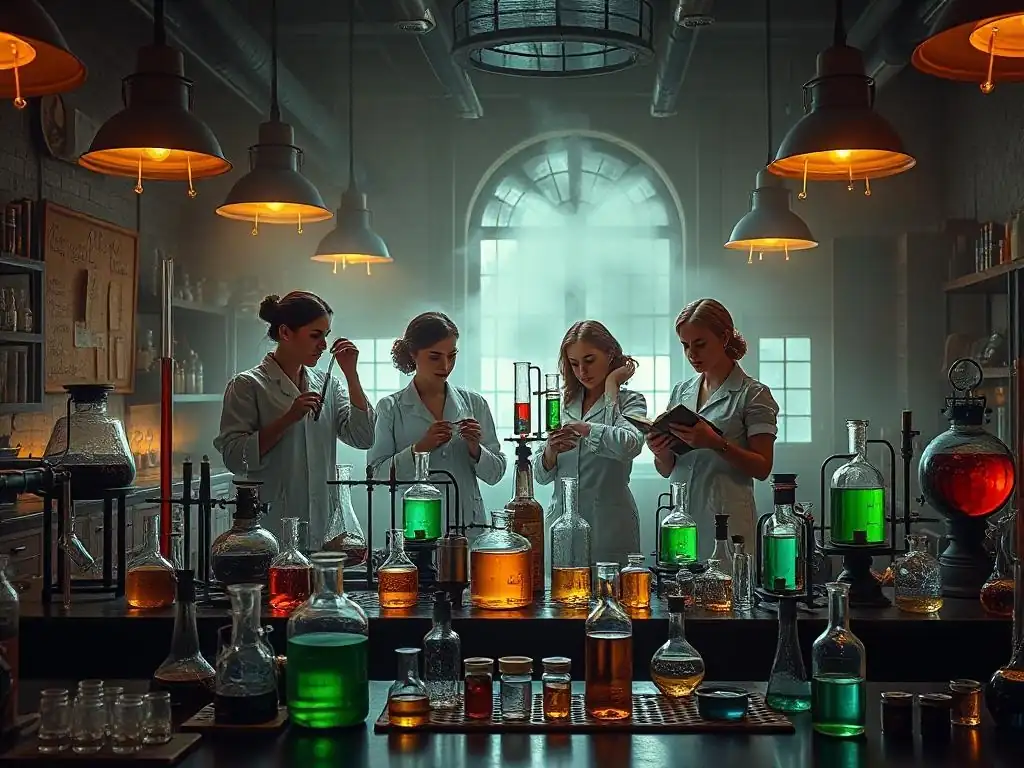
Welcome to WomenInScienceHistory.com, where we uncover the untold stories of brilliant minds! Did you know that women not only excelled in chemistry, but revolutionized how it's taught? Prepare to be amazed as we explore how women revolutionized chemistry education, pioneering innovative approaches to learning that empower students even today. Discover their secret ingredients and the impact of self-paced learning in our groundbreaking article below. Your journey into the fascinating world of female scientific pioneers starts now...
- Unveiling the Hidden Figures: How Women Revolutionized Chemistry Education
- Women's Innovations in Chemistry Education: A Self-Paced Learning Revolution
- Breaking Barriers: Pioneering Women in Chemistry and Their Impact on Learning Methods
- Mastering Chemistry Self-Paced: A Guide Inspired by Women Scientists
- Overcoming Challenges in Self-Paced Chemistry: Tips and Resources
- Celebrate the Legacy: Inspiring Future Generations of Women in Chemistry
- Conclusion: Empowering Women in Chemistry through Self-Paced Education.
-
Frequently Asked Questions
- How did women contribute to the field of chemistry despite facing significant obstacles?
- What were some of the major challenges women faced in pursuing careers in chemistry?
- How did women improve the way chemistry is taught and learned, particularly in the context of self-paced learning?
- Can you provide an example of a female chemist whose work significantly impacted chemistry education?
- Why is it important to highlight the contributions of women in science history?
- Final Reflection: Unlocking Potential, One Molecule at a Time
- Ignite Your Inner Chemist: Explore, Discover, and Revolutionize!
Beyond Madame Curie: Recognizing the Unsung Heroines of Chemical History
While Marie Curie remains a towering figure, her brilliance often overshadows the countless other women whose groundbreaking work profoundly shaped the field of chemistry and, by extension, chemistry education. For instance, Lise Meitner, an Austrian-Swedish physicist, played a pivotal role in the discovery of nuclear fission, a concept fundamental to modern chemistry and physics curricula.
Despite her essential contributions, including coining the term "nuclear fission" and explaining the process, she was notably overlooked for the Nobel Prize awarded solely to her male collaborator, Otto Hahn, in 1944, a stark example of how recognition for women revolutionized chemistry education through their discoveries was often denied.
Another formidable mind was Ida Noddack, a German chemist and physicist who, alongside her husband, discovered the element Rhenium in 1925. More remarkably, in 1934, she was the first to propose the idea of nuclear fission, a concept later proven by Meitner and Hahn.
Her prescient hypothesis, initially dismissed, fundamentally altered our understanding of atomic structure and reactions, directly influencing how nuclear chemistry is taught today. These untold stories illuminate a broader truth: the intellectual landscape of chemistry was cultivated by many brilliant women whose contributions often went uncredited, thus obscuring the true extent to which women revolutionized chemistry education through their scientific advancements.
The Persistent Problem: Why Women's Contributions in Chemistry Education Were Overlooked
The historical sidelining of women's achievements in chemistry stems from deep-seated societal biases and institutional structures that favored men. Many talented female chemists, despite their significant discoveries, faced barriers to employment, promotion, and recognition, often relegated to unpaid assistant roles or positions with limited research autonomy. This systemic exclusion meant their work was frequently attributed to male colleagues or simply ignored in academic narratives and textbooks, creating a skewed perception of scientific progress.
This "Matilda Effect," where women's scientific accomplishments are systematically undervalued or denied, profoundly impacted how chemistry history, and thus chemistry education, was presented. Until relatively recently, curricula primarily highlighted male scientists, inadvertently suggesting that women revolutionized chemistry education only in exceptional, isolated instances like Marie Curie. The lack of representation in educational materials not only perpetuated a distorted view of scientific history but also deprived aspiring female chemists of crucial role models, making it harder for them to envision themselves as leaders in the field.
Women's Innovations in Chemistry Education: A Self-Paced Learning Revolution
The Problem: Traditional Chemistry Education's Limitations & Barriers for Women
Traditional chemistry education models, characterized by rigid lecture schedules, fixed laboratory times, and often competitive, male-dominated environments, historically presented significant barriers for women. For decades, universities and research institutions were not designed with women's unique needs or societal roles in mind. Women often juggled academic pursuits with family responsibilities, making inflexible class schedules and mandatory on-campus attendance particularly challenging. This structural inflexibility meant that many talented women were either unable to pursue higher chemistry education or faced immense hurdles in completing their studies, limiting their potential to revolutionize chemistry education through their participation.
Furthermore, the pedagogical approach in many traditional settings often emphasized rote memorization and high-pressure examinations, which might not cater to diverse learning styles. The lack of female faculty role models in many departments also contributed to an unwelcoming atmosphere, making it difficult for women to feel a sense of belonging or to receive tailored mentorship. These systemic issues created a bottleneck, preventing a larger influx of female talent and ideas that could have further propelled and diversified the ways women revolutionized chemistry education from within its established frameworks.
The Solution: Self-Paced Chemistry Courses Designed with Women's Learning Styles in Mind
The advent of self-paced chemistry courses has emerged as a powerful solution, dismantling many of the traditional barriers that historically hindered women's participation and success in the field. These flexible learning formats empower individuals to study at their own speed, on their own schedule, and from any location, making advanced chemistry accessible to women balancing careers, family, or other commitments. This autonomy allows for a personalized learning journey, where students can revisit complex topics as many times as needed, fostering deeper understanding rather than just memorization.
Moreover, self-paced online platforms often incorporate a variety of learning modalities, including interactive simulations, video lectures, and discussion forums, which can cater to diverse learning preferences. This individualized approach creates a less intimidating and more supportive environment, particularly beneficial for women who might have felt marginalized in traditional, competitive settings. By offering unparalleled flexibility and a learner-centric approach, these courses are instrumental in ensuring that the next generation of women can fully engage with and continue to revolutionize chemistry education, building upon the legacy of their pioneering predecessors.
Breaking Barriers: Pioneering Women in Chemistry and Their Impact on Learning Methods
Rosalind Franklin: Her X-ray Diffraction and the Rise of Visual Learning in Chemistry
Rosalind Franklin's meticulous work with X-ray diffraction images was instrumental in revealing the helical structure of DNA, a discovery that reshaped biology and chemistry. Her famous "Photo 51" demonstrated the precise, ordered nature of the molecule, demanding a visual interpretation that transcended simple chemical equations. This groundbreaking approach to structural analysis emphasized the power of visual data in understanding complex molecular architectures, a concept now foundational to modern chemistry.
Franklin's legacy extends beyond her direct discoveries; it profoundly influenced how chemistry is taught by underscoring the importance of visual literacy. Today, students learn about molecular geometry, crystallography, and spectroscopy through various visual aids, from 3D molecular models and computer simulations to sophisticated spectroscopic data plots. Her work implicitly demonstrated that to truly grasp the intricacies of chemistry, one must be able to "see" the molecules, thereby showing how women revolutionized chemistry education by pushing the boundaries of analytical techniques that necessitated visual comprehension.
Dorothy Hodgkin: Solving Structures and Inspiring Problem-Based Chemistry Education
Dorothy Hodgkin, a Nobel laureate in Chemistry, was a pioneer in the field of X-ray crystallography, successfully determining the structures of complex biomolecules like penicillin, vitamin B12, and insulin. Her work was not merely about identifying structures but about solving intricate, multi-faceted chemical puzzles that required immense ingenuity, persistence, and a systematic approach. Each solved structure was a monumental achievement, involving years of meticulous data collection and interpretation.
Hodgkin's methodical, problem-solving approach serves as a powerful inspiration for problem-based learning (PBL) in chemistry education. Instead of merely presenting facts, PBL encourages students to tackle real-world chemical challenges, analyze data, formulate hypotheses, and devise solutions—much like Hodgkin did with her crystallographic puzzles. Her career exemplifies how deep scientific inquiry is inherently a process of complex problem-solving, thereby illustrating how women revolutionized chemistry education by demonstrating the power of rigorous, investigative scientific methodology.
Marie Maynard Daly: Her Groundbreaking Work on Histones and the Importance of Biochemistry in Chemistry Courses
Marie Maynard Daly, the first African American woman to earn a Ph.D. in chemistry in the United States, made significant contributions to biochemistry, particularly her pioneering work on histones. Her research in the 1950s helped elucidate the composition and structure of histones and their role in the organization of DNA within the cell nucleus. This work was critical in understanding gene expression and cellular function, bridging the gap between traditional organic chemistry and biology.
Daly's career highlighted the increasingly interdisciplinary nature of scientific inquiry, particularly the emergence of biochemistry as a vital field. Her research underscored that understanding biological processes requires a deep knowledge of chemical principles, from molecular structures to reaction pathways. This perspective has fundamentally influenced modern chemistry curricula, which now routinely integrate biochemistry, emphasizing the chemical basis of life. Her achievements exemplify how women revolutionized chemistry education by expanding its scope to encompass complex biological systems, making biochemistry an indispensable part of comprehensive chemistry programs.
Mastering Chemistry Self-Paced: A Guide Inspired by Women Scientists
Step 1: Building a Strong Foundation - Essential Introductory Chemistry Courses
Embarking on a self-paced chemistry journey, inspired by the meticulous work of pioneering women scientists, begins with establishing a robust foundational understanding. Essential introductory chemistry courses cover the fundamental principles that underpin all chemical phenomena, such as atomic structure, chemical bonding, stoichiometry, and basic thermodynamics. These core concepts are the building blocks upon which all advanced chemical knowledge rests, much like how early chemists laid the groundwork for future discoveries.
Utilizing online platforms like Coursera, edX, or even Open University materials can provide structured modules for general chemistry, often featuring interactive lessons, practice problems, and virtual quizzes. Dedicate sufficient time to truly grasp these basics, as a solid foundation will prevent struggles with more complex topics later. This systematic approach mirrors the rigorous initial training and theoretical understanding that enabled women like Marie Curie to conduct their groundbreaking experiments and revolutionize chemistry education through their published findings.
Step 2: Diving Deep - Exploring Specialized Areas of Chemistry
Once a strong foundation in general chemistry is established, the next step in self-paced learning involves delving into specialized areas that align with personal interests or career goals. This could include organic chemistry, focusing on carbon-containing compounds and their reactions; physical chemistry, exploring the physical principles behind chemical systems; or analytical chemistry, mastering techniques for identifying and quantifying chemical substances. For those inspired by Marie Maynard Daly's work, biochemistry courses offer an exciting dive into the chemistry of living systems.
Advanced MOOCs and specialized online university programs provide comprehensive modules in these fields, often taught by leading experts. Consider pursuing topics related to the specific contributions of women scientists – for example, a course on crystallography if inspired by Rosalind Franklin or Dorothy Hodgkin. By specializing, learners can truly appreciate how women revolutionized chemistry education by expanding the disciplinary boundaries of chemistry itself, adding depth and breadth to the field.
Step 3: Hands-On Experience - Virtual Labs and At-Home Chemistry Kits
While self-paced learning offers immense flexibility, practical experience remains crucial for a comprehensive understanding of chemistry. Since access to traditional labs might be limited, virtual laboratory simulations and at-home chemistry kits offer invaluable alternatives. Virtual labs, such as those offered by platforms like Labster or through PhET Interactive Simulations, allow learners to conduct experiments, manipulate variables, and observe reactions in a safe, digital environment, providing a realistic approximation of laboratory work.
For a more tactile experience, carefully curated at-home chemistry kits can facilitate safe and educational experiments, reinforcing theoretical knowledge with practical application. These kits often include essential chemicals and glassware, along with detailed instructions for experiments that can be performed with minimal risk. Engaging in these practical exercises, whether virtual or physical, is vital for developing the experimental intuition and problem-solving skills that characterized the work of pioneering women scientists who often had to overcome significant barriers to access laboratory resources, ultimately helping women revolutionized chemistry education by demonstrating the power of empirical investigation.
Overcoming Challenges in Self-Paced Chemistry: Tips and Resources
The Challenge: Staying Motivated and Focused
One of the most significant hurdles in self-paced chemistry education is maintaining consistent motivation and focus over an extended period. Without the external structure of traditional classes or the direct accountability to an instructor, it's easy to lose momentum or get sidetracked. This challenge is akin to the sustained dedication required by early women scientists who often worked in isolation or faced skepticism, yet persevered to make monumental discoveries.
To combat this, establish a disciplined study routine, setting specific, achievable goals for each week or study session. Break down large topics into smaller, manageable chunks, and celebrate each milestone to reinforce progress. Joining online study groups or forums dedicated to self-paced chemistry learners can provide a sense of community and peer accountability, fostering an environment where women revolutionized chemistry education through collaborative learning and mutual support.
The Challenge: Understanding Complex Concepts
Chemistry, especially at advanced levels, involves abstract concepts and intricate mechanisms that can be challenging to grasp without direct instruction. Topics like quantum mechanics in physical chemistry or complex reaction mechanisms in organic chemistry often require multiple explanations and active engagement to fully comprehend. This intellectual rigor is a testament to the depth of the field, which has been continually shaped by the insights of brilliant minds, including those who helped women revolutionized chemistry education.
To overcome this, leverage a variety of resources: supplement video lectures with detailed textbooks, explore interactive simulations to visualize abstract ideas, and utilize online tutorials from reputable sources. Active recall techniques, such as flashcards and self-quizzing, can solidify understanding. Don't hesitate to seek clarification in online forums or through virtual tutoring sessions, as explaining a concept to someone else, or having it explained in a different way, can often unlock a deeper understanding.
Celebrate the Legacy: Inspiring Future Generations of Women in Chemistry
To truly inspire the next generation, it is crucial to continually highlight the accomplishments of contemporary women who are leading the charge in chemistry. Figures like Jennifer Doudna and Emmanuelle Charpentier, Nobel laureates for their development of CRISPR-Cas9 gene editing, exemplify how fundamental chemical and biochemical principles are applied to revolutionize fields like medicine and biotechnology. Their work underscores that women are not just making incremental advances but are at the forefront of paradigm-shifting discoveries.
Sharing these success stories, whether through articles, webinars, or educational programs, demonstrates that the path for women revolutionized chemistry education continues to evolve and expand. It provides tangible role models for aspiring female chemists, showing them that a career in science is not only viable but can lead to world-changing impacts. These narratives empower young women to pursue their scientific passions with confidence and determination.
Resources for Aspiring Female Chemists: Scholarships, Mentorship Programs, and Career Guidance
Beyond inspiration, practical support is essential for aspiring female chemists. A wealth of resources exists to help navigate academic and professional pathways. Organizations such as the American Chemical Society (ACS) Women Chemists Committee and the Association for Women in Science (AWIS) offer invaluable networking opportunities, mentorship programs, and career guidance tailored to women in STEM. These platforms provide a supportive community and practical advice for navigating challenges and seizing opportunities.
Furthermore, numerous scholarships and fellowships specifically target female students and researchers in chemistry, helping to alleviate financial burdens and encourage continued pursuit of higher education and research. Access to these resources, coupled with robust mentorship, ensures that the legacy of women revolutionized chemistry education continues to grow, fostering an environment where talent is nurtured, and future scientific leaders are empowered to thrive.
Conclusion: Empowering Women in Chemistry through Self-Paced Education.
Frequently Asked Questions
How did women contribute to the field of chemistry despite facing significant obstacles?
Women often worked behind the scenes, contributing to research and analysis without recognition. They also revolutionized chemistry education through innovative teaching methods and accessible resources.
What were some of the major challenges women faced in pursuing careers in chemistry?
Women encountered gender bias, limited access to education and research opportunities, and social expectations that discouraged them from pursuing scientific careers.
How did women improve the way chemistry is taught and learned, particularly in the context of self-paced learning?
Women developed more engaging and student-centered approaches to chemistry education. They also created practical experiments and resources that made learning more accessible and effective.
Can you provide an example of a female chemist whose work significantly impacted chemistry education?
While many contributed, figures like Marie Curie, even indirectly, inspired generations and pushed for greater scientific literacy. The focus is on the development of accessible, practical chemical studies, and the women who pioneered that.
Why is it important to highlight the contributions of women in science history?
It's crucial to recognize their achievements, inspire future generations of female scientists, and correct historical biases that have marginalized their contributions.
Final Reflection: Unlocking Potential, One Molecule at a Time
The journey through the untold stories of women in chemistry reveals a powerful truth: innovation thrives where inclusivity blossoms. From groundbreaking discoveries to pioneering educational methods, the contributions of women have not only shaped the field of chemistry but also paved the way for more accessible and self-directed learning opportunities. Their legacy resonates today, urging us to dismantle barriers and empower future generations of scientists.
This exploration underscores the profound impact of diverse perspectives in scientific advancement. It reminds us that progress is not a solitary endeavor but a collaborative dance, where each voice, each experience, adds a unique and vital element. The self-paced learning models championed by these women, often born out of necessity, continue to inspire flexible and personalized educational pathways. The important thing is to never stop questioning.
- Albert Einstein, a sentiment perfectly embodied by the women who dared to challenge the status quo in chemistry.
Now, as we stand on the shoulders of these giants, let us embrace the spirit of innovation and inclusivity that defines their legacy. Consider how you can contribute to a more equitable and accessible scientific community. Whether it's mentoring a young aspiring scientist, advocating for inclusive educational policies, or simply sharing the stories of these remarkable women, your actions can help unlock the potential within each and every individual, ensuring a brighter future for chemistry and for all.
Ignite Your Inner Chemist: Explore, Discover, and Revolutionize!
Thank you for diving into the captivating history of women in chemistry! We hope you found inspiration and a renewed appreciation for their groundbreaking contributions. Now, let's channel that inspiration into action!
Here's how you can continue your journey:
- Embark on a self-paced chemistry course online! Unleash your potential and begin learning the fundamentals.
- Share this article with other science enthusiasts and inspire the next generation of female chemists. Spark their curiosity!
- Join the conversation in the comments below: What historical female chemist inspires you the most, and why?