Explore Introductory Biology Through the Lens of Female Scientists
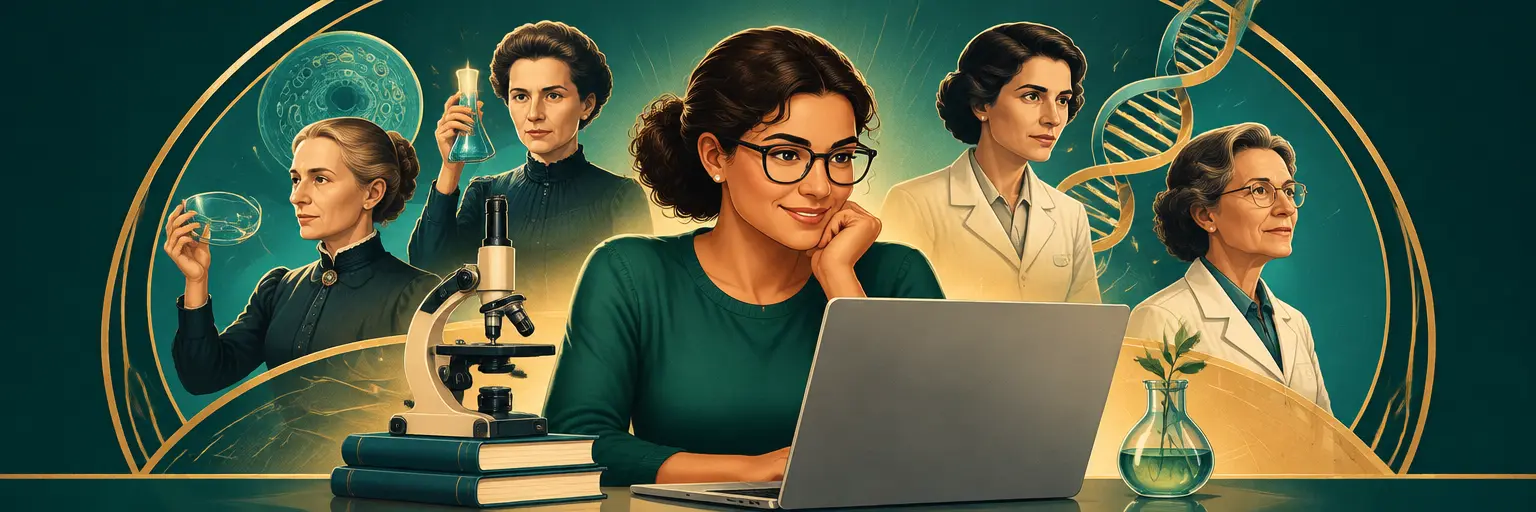
Welcome to our curated collection of introductory biology courses designed specifically for adult learners, with a unique focus on the remarkable contributions of female scientists. Here, you’ll not only grasp fundamental biological concepts but also discover how women like Barbara McClintock, Rosalind Franklin, and Rita Levi-Montalcini shaped modern understanding. Each course blends accessible science education with empowering historical narratives, making learning both enriching and inspiring. Whether you’re returning to education, changing careers, or simply feeding a curiosity, these resources offer a supportive, engaging entry point into the life sciences.
🧬 Foundational Concepts Rooted in Women’s Discoveries
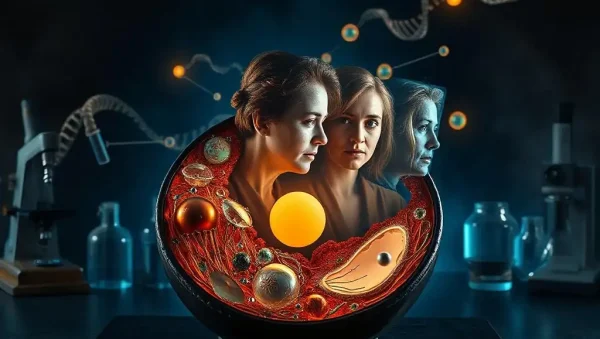
Our introductory courses start with cellular biology, genetics, and evolution, but they do so by weaving in the stories of female pioneers whose work defined these fields. For example, you’ll learn about DNA structure through Rosalind Franklin’s crystallography, or gene jumping via Barbara McClintock’s maize studies. This approach helps adult learners connect abstract principles to real, human achievements, making retention easier and more meaningful. Expect interactive diagrams, case studies, and video lectures that highlight both the science and the scientist behind each breakthrough.
As an adult learner, you’ll appreciate the self-paced modules that break complex topics into digestible lessons. Each unit includes quizzes and discussion prompts that encourage you to reflect on how gender barriers were overcome, adding a layer of critical thinking to your biology foundation. By the end, you’ll not only grasp mitosis or Mendelian inheritance but also understand the perseverance required to unlock those truths—a powerful motivator for any mature student.
🔬 Laboratory Skills and Safe Experimentation at Home
Hands-on learning is vital, but adult learners often lack access to traditional lab settings. These courses solve that by offering virtual labs and low-cost home experiments, many inspired by the techniques of female scientists like Gertrude Elion, who developed lifesaving drugs through meticulous trial and error. You’ll practice pipetting, microscopy, and even simple genetic extraction—all using household items or affordable kits. Safety protocols are emphasized, ensuring you build confidence without risk.
Each lab session is paired with historical context, such as how Elion’s methodology led to AZT for HIV, showing you that practical skills can have monumental impact. Discussion forums allow you to share results with a community of fellow adult learners, fostering collaboration. These activities are designed to be flexible, fitting into busy schedules, while still delivering authentic scientific inquiry. You’ll emerge feeling like a true researcher, ready to tackle more advanced biology topics.
👩🔬 Biographical Case Studies as Learning Tools
Biology becomes far more tangible when you study the lives of the women who questioned established norms. Our courses dedicate entire modules to figures like Mary Anning, whose fossil discoveries reshaped paleontology, or Jane Goodall, whose ethological studies transformed primatology. Each biography is presented with timelines, primary source excerpts, and critical analysis, showing how personal drive and institutional sexism shaped scientific progress. You’ll learn biology not as a set of facts, but as a lived, contested human endeavor.
These case studies encourage adult learners to draw parallels to their own careers and life experiences, making the content deeply relatable. For instance, you might explore how Christiane Nüsslein-Volhard’s genetic screens in fruit flies won a Nobel, despite initial funding rejections. This ensures that your learning is not passive—you’re prompted to consider ethical dilemmas, research funding, and collaboration. Each case ends with reflective essay prompts, perfect for building a portfolio or simply deepening comprehension.
📘 Flexible Assessment and Credentialing Options
Adult learners often need verified credentials for professional advancement, so our courses offer multiple assessment tracks. You can choose a non-graded audit path for pure enrichment or pursue a certificate of completion with proctored exams. Assessments are designed to be practical, focusing on scenario-based questions that test application rather than rote memorization. For example, you might diagnose a genetic disorder using principles learned from Nettie Stevens’ sex determination work.
These credentials are recognized by partner institutions and can be shared on LinkedIn or added to your CV. We also offer micro-credential badges for specific skill sets, such as “Lab Safety” or “Biostatistics Basics,” allowing you to highlight niche competencies. The grading rubrics are transparent, with detailed feedback from instructors who specialize in adult education. This flexibility ensures that whether you’re a hobbyist or a career changer, your effort yields tangible, valuable outcomes.
🌱 Community Support and Mentorship Networks
Learning biology as an adult can feel isolating, but our platform counters that with robust community features. Each course includes a moderated forum where you can post questions, share resources, and connect with peers from diverse backgrounds. More uniquely, we facilitate mentorship pairings with female scientists and educators, offering monthly live Q&A sessions. You’ll also find virtual study groups organized by time zone, ensuring you never face a challenging concept alone.
These networks are built on the belief that collaboration mirrors the historical alliances women scientists formed to survive hostile environments. For instance, you might discuss how the “Bluestocking” circles supported early female botanists. Expect weekly prompts that encourage you to share your own learning journey, fostering a sense of belonging. Our community managers are trained in adult pedagogy, ensuring respectful, constructive interactions. This support system significantly boosts completion rates and makes the learning experience genuinely enjoyable.
Frequently Asked Questions
Do I need any prior science background for these courses?
No, all introductory courses assume zero prior knowledge. They start with basic chemistry and cell structure, gradually building complexity. The materials are designed for adult learners who may be returning to education after a long break, with extensive glossaries and visual aids.
Can I study at my own pace, and how long does it take?
Yes, each course is fully self-paced, with no fixed deadlines. On average, adult learners complete an introductory module in 4 to 6 weeks, studying about 3 to 5 hours per week. You retain access for a full year, so time off is perfectly fine.
Will I get a certificate that is recognized by employers?
Yes, our certificates are accredited by several continuing education boards and are recognized by many tech and healthcare employers. You can verify them through a unique digital ID, making them easy to share on résumés or professional profiles.
Are the home experiments safe and affordable?
Absolutely. Every experiment uses non-toxic, everyday materials like baking soda, food coloring, or household plants. We provide budget-friendly alternatives for equipment, and each lab includes a full safety checklist tailored for home environments.
How do you highlight female scientists in an introductory course?
Each module features a “Her Story” segment that directly links a biological concept to a female scientist’s discovery. For example, you’ll learn about mitochondrial inheritance through the work of Lynn Margulis. This is woven into quizzes and discussion topics, ensuring it’s not just trivia but core learning.