Self-Paced Chemistry Courses: Women's Contributions
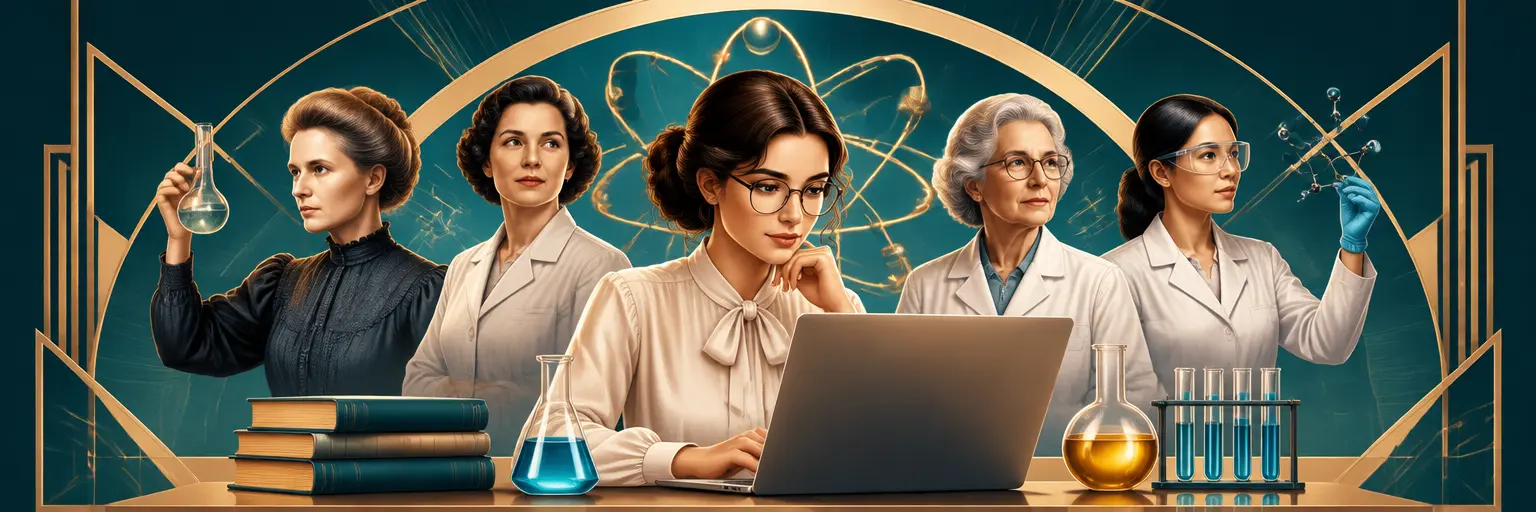
Dive into the remarkable world of chemistry through a lens that history has too often dimmed. Our self-paced courses on Women's Contributions in Chemistry are designed to illuminate the pioneering work of female scientists, from Marie Curie's radioactivity breakthroughs to Alice Ball's treatment for leprosy. Perfect for lifelong learners, students, and educators, these flexible modules let you explore at your own rhythm while gaining a deeper appreciation for the women who shaped modern chemistry despite formidable barriers.
🔬 Foundational Discoveries by Women Chemists
Begin your journey by examining the bedrock discoveries that transformed chemical science. You'll study the meticulous research of Dorothy Crowfoot Hodgkin, who mapped the structures of penicillin and vitamin B12, and the trailblazing work of Gertrude Elion, whose drug design methods revolutionized pharmacology. Each lesson unpacks the scientific context, experimental methods, and societal impact of these achievements, offering a rich, narrative-driven learning experience that standard textbooks often omit.
Our modules include interactive timelines, primary source excerpts, and video lectures that bring these discoveries to life. Expect to learn how women overcame educational exclusion and lab access restrictions, yet still produced Nobel-worthy science. By the end, you'll understand not just what they discovered, but how their unique perspectives and relentless persistence expanded the chemical frontier.
🧪 Overcoming Barriers: Gender and the Lab
This section focuses on the systemic challenges women faced, from denied university admissions to institutionalized bias. Explore the strategies used by pioneers like Ellen Swallow Richards, the first woman admitted to MIT, who had to fight for laboratory resources. Our self-paced format allows you to pause and reflect on case studies, discussion prompts, and personal letters that reveal the resilience behind the science, making history tangible and emotionally resonant.
You'll also examine the "Matilda Effect"—the phenomenon where women's scientific contributions are frequently attributed to male colleagues—and how it shaped the historical record. Through curated readings and video interviews with historians, you'll learn to critically evaluate narratives and recognize the invisible labor of women chemists. This section is essential for anyone interested in equity in STEM and the hidden stories behind famous discoveries.
⚗️ Modern Trailblazers and Contemporary Impact
Move beyond historical figures to see how women continue to shape chemistry today. Highlighting contemporary scientists like Frances Arnold, who won the 2018 Nobel Prize for directed evolution, and Jennifer Doudna, co-inventor of CRISPR, this module connects historical struggles to current breakthroughs. Self-paced lessons include lab demonstrations, research paper analyses, and interactive quizzes that test your understanding of cutting-edge chemical processes.
Expect to explore emerging fields such as green chemistry and biotechnology from a female perspective, including mentorship programs and current gender statistics in chemical professions. By profiling living role models, we aim to inspire your own scientific curiosity, whether you're a career switcher or a seasoned researcher. The flexibility means you can revisit complex topics—like enzymatic mechanisms or gene-editing protocols—until they click, without pressure.
📚 Interactive Activities and Practical Applications
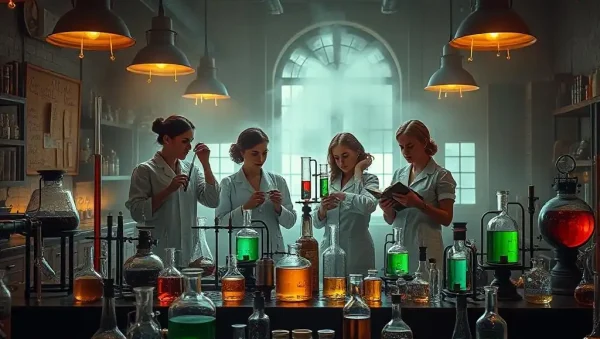
Learning is most effective when it's hands-on, even in a self-paced format. Our courses include virtual lab simulations, such as recreating Marie Curie's separation of radium or Rosalind Franklin's X-ray crystallography (in a simulated environment). Accompanied by data analysis exercises, these activities reinforce core chemistry concepts while honoring the original experimental contexts, turning passive reading into active discovery.
You'll also find downloadable worksheets, periodic table challenges, and essay prompts that encourage you to connect personal insights with historical facts. For educators, we provide ready-to-use lesson plans and assessment rubrics, making it easy to integrate these stories into high school or university curricula. The practical applications extend beyond the screen: you'll learn how to identify women's contributions in everyday products, from pharmaceuticals to sustainable materials.
🌍 Community Learning and Certification
Although the course is self-paced, you're never alone. Join our vibrant online community of learners and historians through discussion forums, monthly live Q&A sessions with guest speakers, and shared project galleries. This collaborative layer enriches your experience, allowing you to exchange interpretations and receive feedback on your capstone project—a biography of a lesser-known female chemist of your choice.
Upon completion, you'll earn a certificate of achievement, recognized by educational partners and professional development programs. Our assessment methods are transparent and flexible: you can choose between multiple-choice exams or portfolio-based evaluations, fitting your learning style. Lifelong access to course materials ensures that you can revisit lessons as your curiosity deepens, making this not just a course but an enduring resource.
Frequently Asked Questions
Do I need prior chemistry knowledge to enroll?
No, our foundation modules assume no formal background, introducing core principles in clear, accessible language. Advanced sections are clearly labeled, allowing beginners to start with basics while experienced learners can skip to specialized topics. Each lesson includes glossary links and optional deep-dive materials for further study.
How long does it take to complete the course?
Because it's self-paced, completion time varies by individual—most learners finish within 6-8 weeks (3-4 hours per week). However, you can move faster or slower as needed, with no deadlines. The platform tracks your progress, and you can pause and resume any time, even leaving modules unfinished for later.
Are there any live components or interactions?
Yes, while the core lessons are recorded, we host monthly optional live Q&A sessions with historians, scientists, and educators. You can submit questions in advance or join anonymously. Additionally, our discussion forums are monitored daily, offering peer interaction and facilitator responses within 24 hours.
Can I earn continuing education credits?
For educators and professionals, we offer CEUs (Continuing Education Units) through our partnership with accredited institutions. These require completing all quizzes, a final project, and a brief reflection paper. Check with your employer or licensing board to see if our certificate meets your specific requirements.
What tech do I need to access the course?
All modules are browser-based and mobile-responsive, so any device with internet access works. We recommend a stable connection for video lectures, but downloadable transcripts and audio versions are provided for offline study. No special software is required, and our help desk assists with any technical issues.