
Sylvia Earle: Her Deepness – Mapping Ocean Floors and Advocating for Marine Sanctuaries

Welcome to WomenInScienceHistory.com!
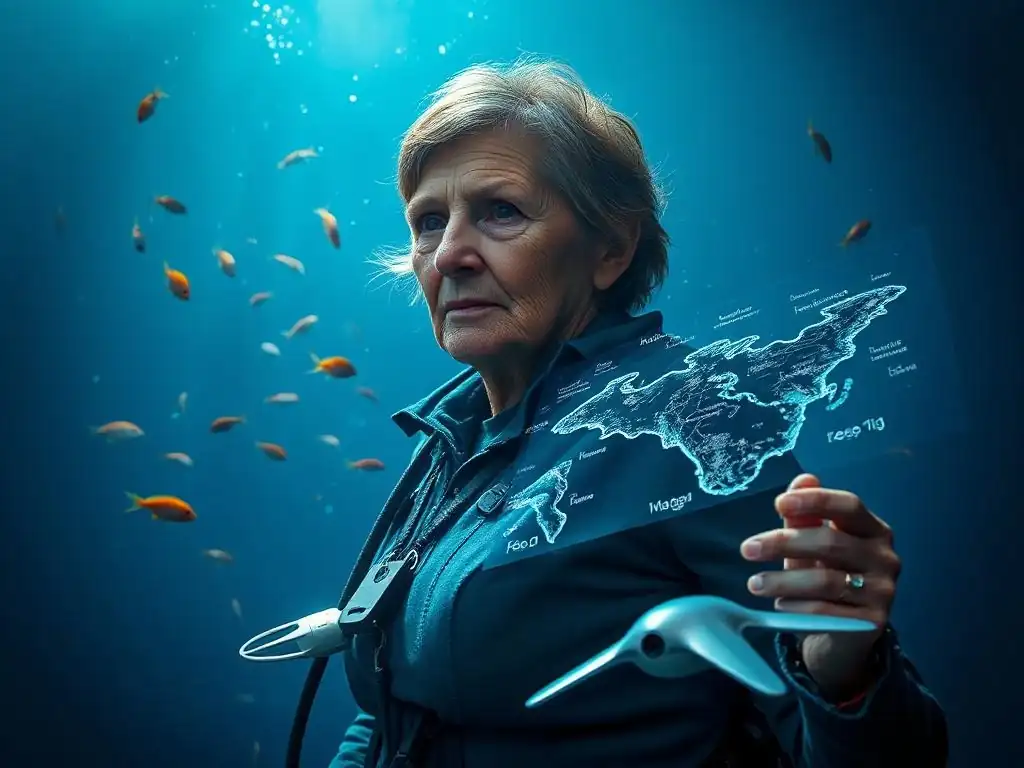
Dive into the extraordinary life of Sylvia Earle, a true pioneer whose relentless exploration and unwavering advocacy have transformed our understanding of the ocean depths. Her Deepness, as she's affectionately known, has charted unexplored ocean floors and championed the creation of vital marine sanctuaries. But what were the challenges she faced, and how did she become a global leader in ocean conservation? Keep reading to uncover the inspiring story of this remarkable environmental scientist.
- Introduction: Celebrating Sylvia Earle's Impact on Ocean Conservation
- Early Life and Education: The Making of a Marine Biologist
- Pioneering Underwater Exploration: Sylvia Earle's Deep-Sea Adventures
- Mapping the Ocean Floor: Sylvia Earle's Contributions to Marine Science
- Championing Marine Sanctuaries: Sylvia Earle's Ocean Conservation Advocacy
- Sylvia Earle's Legacy: Inspiring Future Generations of Marine Scientists
- Key Expeditions and Discoveries: A Timeline of Sylvia Earle's Career
- Conclusion: Sylvia Earle – A Role Model for Women in Science and a Voice for the Ocean
-
Frequently Asked Questions
- How did Sylvia Earle contribute to oceanography?
- What is Sylvia Earle's main focus in ocean conservation?
- What challenges did Sylvia Earle face as a woman in science?
- What is Sylvia Earle's legacy and impact on future generations?
- Where can I find more information about Sylvia Earle's biography and work?
- Final Reflection: A Legacy of Oceanic Stewardship
- Dive Deeper: Champion Our Oceans Like Sylvia Earle!
Introduction: Celebrating Sylvia Earle's Impact on Ocean Conservation
WomenInScienceHistory.com Honors Sylvia Earle, a Pioneer in Marine Biology
Sylvia Earle, affectionately known as "Her Deepness," stands as a titan in the realm of marine biology and ocean conservation. Her groundbreaking work has not only expanded humanity's understanding of the deep sea but has also ignited a global movement to protect the vital blue heart of our planet.
As a pioneering marine biologist, oceanographer, explorer, author, and lecturer, Earle has dedicated over six decades to exploring the ocean, advocating for its preservation, and pushing the boundaries of underwater exploration technology. Her relentless pursuit of knowledge and her passionate voice for the ocean have made her an iconic figure, inspiring countless individuals to look beneath the waves with awe and concern.
This article on WomenInScienceHistory.com celebrates Sylvia Earle's extraordinary contributions, highlighting her journey from a curious child to a global advocate. Her Sylvia Earle ocean conservation biography is a testament to the power of scientific inquiry combined with unwavering dedication to environmental protection. By showcasing her remarkable achievements and the challenges she overcame, we aim to inspire future generations of scientists and conservationists, emphasizing that the health of the ocean is inextricably linked to the well-being of all life on Earth.
Early Life and Education: The Making of a Marine Biologist
Sylvia Earle's Childhood Fascination with the Natural World
Born in Gibbstown, New Jersey, in 1935, Sylvia Earle's early life was marked by an innate curiosity about the natural world. This fascination deepened significantly when her family relocated to Dunedin, Florida, during her childhood. Living near the Gulf of Mexico, the young Sylvia spent countless hours exploring the intricate coastal ecosystems, observing marine life in tidal pools, and snorkeling in the shallow waters. These formative experiences fostered a profound connection to the ocean, laying the groundwork for her lifelong passion.
Her early observations of the diverse marine organisms and the dynamic nature of coastal environments instilled in her a deep appreciation for biodiversity and the delicate balance of aquatic ecosystems. This hands-on immersion in nature, combined with a supportive family environment that encouraged exploration and learning, solidified her resolve to pursue a career that would allow her to understand and interact with the underwater world. These foundational experiences were instrumental in shaping the future trajectory of her Sylvia Earle ocean conservation biography.
Academic Journey: From Florida State University to a PhD in Phycology
Sylvia Earle embarked on her formal academic journey at Florida State University, where she earned her Bachelor of Science degree in 1956. Her thirst for deeper knowledge led her to pursue graduate studies at Duke University, a pivotal step in her scientific career. At Duke, she specialized in phycology, the scientific study of algae, earning her Master of Arts in 1956 and subsequently her Ph.D. in 1966. Her doctoral dissertation focused on tropical marine algae from the Gulf of Mexico and Caribbean, a region she had come to know intimately during her childhood.
Her expertise in phycology proved foundational for her future work, providing her with a comprehensive understanding of the primary producers at the base of marine food webs. This specialized knowledge allowed her to identify and classify countless species, contributing significantly to the taxonomy of marine plants. Her rigorous academic training and early research laid the intellectual groundwork for her extensive explorations and her later influential advocacy for ocean conservation, making her an authoritative voice in marine science.
Pioneering Underwater Exploration: Sylvia Earle's Deep-Sea Adventures
Tektite II Habitat: Sylvia Earle Leads the First All-Female Aquanaut Team
In 1970, Sylvia Earle achieved a significant milestone by leading the first all-female team of aquanauts in the groundbreaking Tektite II project. This ambitious undertaking involved living for two weeks in an underwater habitat situated at a depth of 50 feet (approximately 15 meters) off the coast of St. John in the U.S. Virgin Islands. The mission, sponsored by the U.S. Department of the Interior, aimed to study marine life and the physiological and psychological effects of saturation diving on humans.
During their time in the Tektite II habitat, Earle and her team conducted extensive research, making detailed observations of marine ecosystems, studying fish behavior, and collecting data on the surrounding environment. This mission not only yielded valuable scientific insights but also shattered stereotypes about women's capabilities in extreme environments, proving their competence and resilience in a field traditionally dominated by men. The Tektite II mission cemented Earle's reputation as a fearless explorer and a leader, a pivotal chapter in her Sylvia Earle ocean conservation biography.
Record-Breaking Dive: Sylvia Earle's Solo Descent in the Jim Suit
A defining moment in Sylvia Earle's career as an explorer came in 1979 when she undertook a record-breaking solo dive using the Jim suit, a pressurized atmospheric diving suit. This extraordinary descent took her to a depth of 1,250 feet (381 meters) below the surface of the Pacific Ocean, off the coast of Oahu, Hawaii. The Jim suit allowed her to operate independently of a submersible, offering an unprecedented opportunity for direct observation of the deep-sea environment.
During her remarkable 2.5-hour solo excursion, Earle moved freely on the ocean floor, observing deep-sea organisms and their habitats in a way that was previously impossible. This dive provided invaluable firsthand data on rarely seen species and geological formations, significantly advancing deep-sea ecology. Her courageous and pioneering use of the Jim suit demonstrated the immense potential for human interaction with the deep ocean, inspiring further innovations in underwater technology and solidifying her status as a leading figure in marine exploration.
Mapping the Ocean Floor: Sylvia Earle's Contributions to Marine Science
Developing Deep Rover Submersible Technology for Oceanographic Research
Recognizing the limitations of existing underwater exploration equipment, Sylvia Earle co-founded Deep Ocean Engineering, Inc. in 1980 with engineer Graham Hawkes. Their shared vision was to design and build advanced submersibles that could provide scientists with unparalleled access to the deep sea. Among their notable creations was the Deep Rover, a highly maneuverable submersible capable of reaching depths of up to 3,000 feet (914 meters).
The Deep Rover and other submersibles developed by their company revolutionized oceanographic research. These innovative vehicles allowed scientists to conduct direct observations, collect samples, and deploy instruments in deep-sea environments with greater precision and safety than ever before. Earle herself piloted these submersibles on numerous occasions, further expanding the frontiers of underwater exploration and enabling new discoveries about the ocean's hidden depths.
Documenting Marine Biodiversity: Discoveries in Deep-Sea Ecosystems
Throughout her extensive career, Sylvia Earle has been a tireless advocate for documenting and understanding marine biodiversity, particularly in deep-sea ecosystems. Her expeditions have taken her to diverse and often unexplored regions of the world's oceans, from the vibrant kelp forests of California to the abyssal plains and hydrothermal vents of the Pacific. She has participated in more than 100 expeditions, spending over 7,000 hours underwater.
Her work has contributed significantly to identifying new species and observing previously unknown behaviors of marine organisms in their natural habitats. For instance, her early research on deep-sea algae and her later observations from submersibles provided crucial insights into how life thrives in environments of extreme pressure and darkness. These contributions are vital for understanding the complex web of life in the ocean and underscore the urgent need for conservation, a core theme in her Sylvia Earle ocean conservation biography.
Championing Marine Sanctuaries: Sylvia Earle's Ocean Conservation Advocacy
Mission Blue: Sylvia Earle's Global Initiative to Protect Hope Spots
In 2009, after being awarded the prestigious TED Prize, Sylvia Earle launched Mission Blue, a global initiative dedicated to establishing a worldwide network of marine protected areas known as "Hope Spots." Hope Spots are identified as special places critical to the health of the ocean, often characterized by high biodiversity, unique ecosystems, or areas vital for species reproduction. The goal of Mission Blue is to raise public awareness and support for the protection of these crucial marine environments.
Since its inception, Mission Blue has grown exponentially, collaborating with numerous conservation organizations, governments, and local communities to identify and advocate for the protection of these vital areas. By 2023, the Mission Blue network had expanded to include over 150 designated Hope Spots across the globe, from the Galapagos Islands to the Great Barrier Reef and the Sargasso Sea. This initiative is a cornerstone of her Sylvia Earle ocean conservation biography, mobilizing global action to safeguard the ocean's future.
Advocating for Marine Protected Areas (MPAs): A Call to Action
Sylvia Earle has consistently and passionately advocated for the establishment and expansion of Marine Protected Areas (MPAs) worldwide. She views MPAs as essential tools for ocean health, serving as refuges where marine life can thrive, recover from human impacts, and build resilience against environmental changes. These protected zones help to restore fish populations, preserve critical habitats, and maintain biodiversity, ultimately benefiting the entire marine ecosystem.
Her advocacy extends beyond scientific presentations to direct engagement with policymakers, world leaders, and the public. Earle tirelessly articulates the urgent need to protect at least 30% of the world's oceans by 2030, a target embraced by many nations and conservation bodies as part of global biodiversity frameworks. Her compelling message emphasizes that protecting these areas is not just about saving marine species, but about ensuring the health of the planet and the well-being of future generations.
Sylvia Earle's Legacy: Inspiring Future Generations of Marine Scientists
Awards and Recognition: Honoring Sylvia Earle's Contributions to Science and Conservation
Throughout her illustrious career, Sylvia Earle has received numerous prestigious awards and recognitions, underscoring her profound impact on science and conservation. Among her many accolades are the TED Prize (2009), which provided the platform for Mission Blue; her designation as a National Geographic Explorer-in-Residence since 1998, a role she continues to hold; and the Rachel Carson Award (1998) for her environmental leadership. She has also been honored with over 30 honorary doctorates from institutions worldwide, including from universities in the United States and abroad.
These awards are not merely tokens of appreciation; they signify the global recognition of her unparalleled scientific achievements and her unwavering commitment to ocean advocacy. Each honor highlights a different facet of her remarkable journey, from her pioneering explorations to her powerful voice for marine protection. Her consistent recognition across diverse fields solidifies her standing as one of the most influential figures in contemporary environmental science.
Books and Documentaries: Sharing the Wonders of the Ocean with the World
Beyond her direct scientific work and advocacy, Sylvia Earle has been a prolific author and an engaging presence in documentaries, effectively translating complex marine science into accessible narratives for a global audience. Her influential books, such as "Sea Change: A Message of the Oceans" (1995) and "The World Is Blue: How Our Fate and the Ocean's Are One" (2009), articulate the interconnectedness of human well-being and ocean health, serving as powerful calls to action. These works blend scientific insights with personal anecdotes and compelling arguments for conservation.
Her involvement in documentaries, most notably the 2014 Netflix film "Mission Blue," has brought her message to millions worldwide. This documentary chronicles her life and work, showcasing the beauty of the oceans and the threats they face, while also inspiring viewers to become advocates for marine protection. Through these various media, Earle has ensured that her Sylvia Earle ocean conservation biography resonates far beyond scientific circles, fostering a deeper public appreciation for the wonders of the ocean and the urgency of its conservation.
Key Expeditions and Discoveries: A Timeline of Sylvia Earle's Career
A Timeline of Sylvia Earle's Most Notable Expeditions and Discoveries
Sylvia Earle's career is marked by a series of pioneering expeditions and significant discoveries that have continually pushed the boundaries of marine science. In 1968, she became the first woman to serve as chief scientist aboard the RV Alpha Helix expedition to the Indian Ocean, a notable achievement in a male-dominated field. This was followed by her leadership of the Tektite II all-female aquanaut team in 1970, where she spent two weeks living underwater, conducting vital research.
Her daring solo descent in the Jim suit to 1,250 feet in 1979 showcased her unparalleled courage and scientific curiosity. Throughout the 1980s, her co-founding of Deep Ocean Engineering led to the development of advanced submersibles like the Deep Rover, enabling unprecedented access to deep-sea environments. From 1992 to 1995, she served as Chief Scientist of the National Oceanic and Atmospheric Administration (NOAA), a role that allowed her to influence national ocean policy. Her designation as a National Geographic Explorer-in-Residence in 1998 and the launch of Mission Blue in 2009 further underscore her enduring commitment to exploration and conservation.
The Enduring Relevance of Sylvia Earle's Work in the Face of Climate Change
Sylvia Earle's early warnings about ocean degradation, biodiversity loss, and the impacts of human activities have proven remarkably prescient, becoming even more critical in the accelerating context of climate change. Her work consistently highlights the ocean's indispensable role in regulating the planet's climate, absorbing a significant portion of anthropogenic carbon dioxide and heat. The ongoing threats of ocean warming, acidification, and sea-level rise underscore the profound relevance of her lifelong advocacy.
Her relentless championing of marine protection, particularly through the establishment of Hope Spots and Marine Protected Areas, offers tangible and scalable solutions for building resilience in ocean ecosystems. These protected zones serve as vital carbon sinks and biodiversity strongholds, helping to mitigate the worst effects of climate change on marine life and the broader planet. Her Sylvia Earle ocean conservation biography thus serves not only as a historical account but also as a timeless call to action for addressing the most pressing environmental challenges of our era.
Conclusion: Sylvia Earle – A Role Model for Women in Science and a Voice for the Ocean
Sylvia Earle's extraordinary life and career embody the spirit of exploration, scientific rigor, and unwavering advocacy for the natural world. As a pioneering marine biologist, intrepid explorer, innovative technologist, and tireless advocate, "Her Deepness" has profoundly shaped our understanding of the ocean and inspired a global movement for its protection. Her journey from a curious child exploring Florida's coastal waters to a world-renowned oceanographer is a powerful narrative of passion meeting purpose. She has consistently broken barriers for women in science, demonstrating immense courage and intellect in a field historically dominated by men.
Her Sylvia Earle ocean conservation biography is a testament to the transformative power of individual dedication. Through her groundbreaking research, her development of advanced submersibles, and her impassioned advocacy for marine sanctuaries like Hope Spots, she has provided both the knowledge and the inspiration needed to safeguard our planet's most vital ecosystem. Sylvia Earle stands as a living legend, a global icon, and an enduring role model for women in science, reminding us all that the future of humanity is intrinsically linked to the health and vitality of our oceans.
Frequently Asked Questions
How did Sylvia Earle contribute to oceanography?
Sylvia Earle is renowned for her deep-sea exploration and research, including pioneering underwater habitats. She has also mapped ocean floors and developed innovative diving technologies.
What is Sylvia Earle's main focus in ocean conservation?
Earle is a vocal advocate for marine sanctuaries and protecting biodiversity in the ocean. She emphasizes the urgent need for ocean conservation efforts.
What challenges did Sylvia Earle face as a woman in science?
As a woman in a male-dominated field, Earle faced discrimination and limited opportunities. She overcame these obstacles through perseverance and dedication to her work.
What is Sylvia Earle's legacy and impact on future generations?
Earle's legacy is one of scientific discovery and environmental advocacy, inspiring future generations of scientists and conservationists. She has shown the importance of protecting our oceans.
Where can I find more information about Sylvia Earle's biography and work?
You can find more information on websites like WomenInScienceHistory.com, which features biographies and discussions on the groundbreaking work of female scientists. The site features content on "Sylvia Earle ocean conservation biography".
Final Reflection: A Legacy of Oceanic Stewardship
The exploration and conservation efforts of Sylvia Earle, as detailed in this biography, are not merely historical accounts; they are urgent calls to action echoing across our increasingly threatened oceans. Earle's pioneering spirit and unwavering dedication to marine life serve as a potent reminder that the health of our planet is inextricably linked to the health of its seas. Her work underscores the critical need for continued research, sustainable practices, and the establishment of protected marine areas.
Sylvia Earle's influence extends far beyond scientific circles; she has inspired a generation to view the ocean not as a resource to be exploited, but as a vibrant ecosystem deserving of our utmost respect and protection. Her unwavering advocacy for marine sanctuaries resonates deeply, reminding us of the profound responsibility we have to safeguard these vital habitats for future generations. Even if you never have the chance to see or touch the ocean, the ocean touches you with every breath you take, every drop of water you drink, every bite you consume. Everyone, everywhere is inextricably connected to and utterly dependent upon the existence of the sea.
As we reflect on Sylvia Earle's remarkable journey and her profound impact on ocean conservation, let us each consider our own role in protecting these precious marine ecosystems. What small changes can we make in our daily lives to reduce our impact on the ocean? How can we support organizations dedicated to marine research and conservation? Let us embrace Earle's legacy and become active stewards of the ocean, ensuring that future generations can experience the wonder and abundance of the deep.
Dive Deeper: Champion Our Oceans Like Sylvia Earle!
Thanks for exploring the incredible life and work of Sylvia Earle! Now that you're inspired by her dedication to marine conservation, it's time to make waves of your own.
- Become an ocean advocate: Dedicate one hour this week to learning about a local marine issue and share your findings with your network.
- Explore a lesser-known marine sanctuary online and write a short letter to your representatives, urging them to support its protection.
- Challenge yourself: Swap one single-use plastic item for a reusable alternative each week for a month, and document the positive impact on your social media.
What small but significant step will you take this week to honor Sylvia Earle's legacy and protect our precious oceans?