
Protectors of the Prairie: Women Botanists & Native Grassland Preservation (19001950)


Welcome to WomenInScienceHistory.com!
Delve into the captivating world of women in science and uncover the untold stories of brilliance and perseverance. Today, we journey back to the American heartland to explore the vital contributions of a special group: women prairie grassland botanists who fiercely protected these fragile ecosystems. Their dedication between 1900 and 1950 laid the groundwork for modern conservation efforts, but their names are often missing from the history books.
Prepare to be inspired as we uncover their remarkable legacy and the challenges they overcame in the fight to preserve our prairies. Intrigued? Read on to discover how these unsung heroines shaped the landscape of environmental science!
- Introduction: Unsung Heroines of the American Prairie
- The State of the Prairie Grasslands at the Turn of the Century (1900)
- Pioneering Women Botanists: Profiles in Courage and Science
- Key Contributions of Women Botanists to Prairie Preservation (1900-1950)
- Challenges Faced by Women in Prairie Botany
- The Legacy of Early 20th Century Women Botanists
- Conclusion: Celebrating the Enduring Impact of Women Botanists
-
Frequently Asked Questions
- What were some of the main challenges faced by women prairie grassland botanists in the early 20th century?
- Why was the period between 1900-1950 particularly important for the study and preservation of prairie grasslands?
- How did the work of women botanists contribute to the understanding of prairie grassland ecology?
- Besides research, what other roles did women play in the preservation of prairie grasslands?
- What impact did the work of women prairie grassland botanists have on future generations?
- Final Reflection: Seeds of Resilience
- Ignite Your Inner Prairie Protector!
Introduction: Unsung Heroines of the American Prairie
Highlighting the Role of Women in Early 20th Century Prairie Conservation
The vast expanse of the American prairie, once stretching across millions of acres, represents one of North America's most ecologically significant and historically threatened biomes. By the turn of the 20th century, this vital ecosystem faced unprecedented destruction due to agricultural expansion and settlement.
Amidst this rapid transformation, a dedicated group of scientists emerged to study, document, and ultimately advocate for the preservation of these grasslands. While their male counterparts often received more public recognition, it was frequently the quiet, painstaking work of women prairie grassland botanists that laid the crucial groundwork for understanding and protecting these vanishing landscapes between 1900 and 1950.
These pioneering women navigated a scientific landscape often unwelcoming to female scholars, yet their passion for botany and commitment to ecological research propelled them into the field. They embarked on arduous expeditions, meticulously cataloged species, and developed foundational ecological theories, often with limited resources and against significant societal barriers. Their collective efforts ensured that a scientific record of the prairie's original biodiversity and ecological complexity was established before much of it was irrevocably lost, thus making their contributions indispensable to early conservation efforts.
Why Women Botanists Were Critical for Prairie Conservation Efforts
The detailed, observant nature of botanical work, requiring patience and precision, often found a natural fit with the skills many early women prairie grassland botanists brought to the field. Many were trained as educators or worked in institutional roles that demanded meticulous data collection and specimen preparation. They excelled at the systematic classification of plants, a foundational step in understanding biodiversity and identifying areas in need of protection. Their dedication to fieldwork, sometimes involving months away from home in challenging conditions, allowed for the comprehensive documentation of plant communities before widespread habitat alteration.
Beyond mere collection, these women were instrumental in advancing ecological thought. They didn't just identify plants; they sought to understand the intricate relationships between species and their environment, developing theories that explained prairie dynamics. Their rigorous scientific approach provided the data and insights necessary to articulate the value of native grasslands, moving beyond a purely agricultural perspective to one that recognized the intrinsic ecological worth of these unique ecosystems. This scientific rigor, combined with their often-unwavering advocacy, made them critical figures in the nascent movement for prairie conservation.
The State of the Prairie Grasslands at the Turn of the Century (1900)
Agricultural Expansion and the Threat to Native Grasslands
At the dawn of the 20th century, the American prairie was undergoing a dramatic transformation driven by widespread agricultural expansion. Fueled by policies like the Homestead Act and a burgeoning population, vast tracts of native grassland, particularly the rich tallgrass prairies, were rapidly converted into farmland. It is estimated that by the 1920s, over 50% of the original tallgrass prairie had been plowed under, a process often referred to as the "Great Plow-up." This relentless conversion was seen as a sign of progress and prosperity, with little regard for the ecological consequences.
The immediate impact of this agricultural boom was the massive loss of biodiversity and the fragmentation of once-continuous ecosystems. Native grasses, which had evolved over millennia to build deep, resilient root systems, were replaced by shallow-rooted annual crops. This practice, combined with cycles of drought, directly contributed to severe soil erosion, setting the stage for environmental catastrophes like the Dust Bowl in the 1930s. The urgency of this ecological crisis underscored the critical need for scientists, including dedicated women prairie grassland botanists, to document and understand what remained before it was entirely eradicated.
Early Conservation Movements and Awareness of Prairie Ecology
While the early 20th century saw the rise of a nascent conservation movement, its primary focus was largely on forest preservation and the establishment of national parks, championed by figures like Theodore Roosevelt. The unique ecological value of grasslands was less understood and, consequently, less prioritized. Prairies were often viewed simply as fertile ground awaiting cultivation, rather than complex ecosystems deserving of protection in their own right. This limited public and political awareness meant that advocating for prairie conservation was an uphill battle.
Despite this broader oversight, a small but growing number of scientists and naturalists began to recognize the distinctiveness and fragility of prairie ecology. The emerging field of ecology, with its emphasis on interconnectedness and environmental relationships, started to provide a scientific framework for understanding these unique biomes. It was within this context that pioneering women prairie grassland botanists began their systematic studies, often among the first to articulate the intricate dynamics of these ecosystems and to sound the alarm about their rapid disappearance, thereby slowly shifting awareness towards the critical need for grassland preservation.
Pioneering Women Botanists: Profiles in Courage and Science
Agnes Chase: Contributions to Grass Taxonomy and Agrostology
Agnes Chase (1869-1963) stands as one of the most significant figures in the history of agrostology, the study of grasses. Largely self-taught, she began her career as an illustrator for the U.S. Department of Agriculture in 1903, eventually rising to become a research associate at the Smithsonian Institution.
Despite lacking formal academic degrees for much of her career, her meticulous attention to detail and profound understanding of grass morphology were unparalleled. Her monumental work, "Manual of the Grasses of the United States," published in 1951, became the definitive reference for grass identification across North America, a testament to decades of dedicated study.
Chase's contributions extended far beyond the laboratory; she conducted extensive fieldwork across the Americas, collecting tens of thousands of specimens that significantly expanded the understanding of grass diversity. Her systematic approach to classification provided the foundational taxonomic framework for identifying the hundreds of native grasses that comprise the American prairie. Her work was indispensable for any botanist or ecologist attempting to understand or restore native grasslands, solidifying her legacy as one of the most influential women prairie grassland botanists and a global authority on grass taxonomy.
Edith Clements: Championing Plant Ecology and Succession Studies
Edith Clements (1874-1971) was a pivotal figure in the development of plant ecology, often working in close collaboration with her husband, Frederic Clements, but making significant independent contributions. She was instrumental in establishing the Alpine Laboratory in Colorado in 1910, a pioneering ecological research station that became a hub for studying plant communities and environmental interactions in high-altitude and grassland environments. Her early work focused on floristic surveys and the physiological responses of plants to their environment, laying critical groundwork for understanding adaptation.
Clements was particularly renowned for her work on plant succession, the process by which plant communities change over time. Her publications, including "Rocky Mountain Flowers" (1914) and "Plant Indicators" (1920), provided valuable insights into how plant communities evolve and serve as indicators of environmental conditions.
Her meticulous field observations and theoretical contributions were foundational for understanding the dynamic nature of prairie ecosystems, including how they recover from disturbance or transition between different states. Her rigorous scientific approach and dedication to field research firmly established her as a leading voice among women prairie grassland botanists and a key architect of modern ecological thought.
Emma Lucy Braun: Documenting Deciduous Forest and Prairie Transitions
Emma Lucy Braun (1889-1971) was an eminent botanist and ecologist, best known for her comprehensive studies of the eastern deciduous forests of North America, particularly in Ohio and Kentucky. A long-time professor at the University of Cincinnati, she became the first woman president of the Ecological Society of America in 1950, a testament to her standing in the scientific community. Her seminal work, "Deciduous Forests of Eastern North America" (1950), remains a classic in ecological literature, meticulously detailing forest communities and their historical development.
While primarily focused on forests, Braun's research extensively documented the relict prairie patches, glades, and savanna ecosystems that existed within or at the edges of these forest regions. She meticulously mapped and described these transitional grasslands, providing crucial data on their floristic composition and ecological characteristics.
Her work shed light on the historical extent of prairie influences far eastward of the main prairie biome, highlighting the complex ecological mosaic of the continent. Her detailed studies of these "prairie outliers" provided invaluable insights for understanding the broader North American ecological landscape, securing her place among influential women prairie grassland botanists who documented these unique boundary zones.
Key Contributions of Women Botanists to Prairie Preservation (1900-1950)
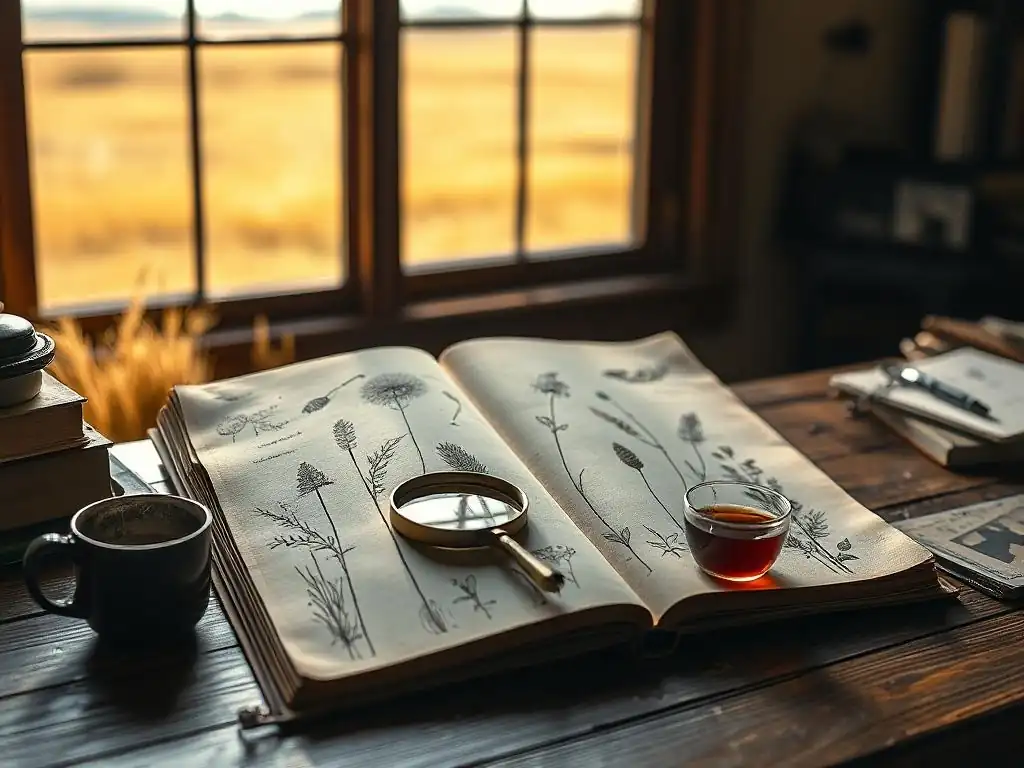
Documenting the Flora: Cataloging Prairie Plant Species and Biodiversity
The early 20th century was a critical period for botanical exploration and documentation, as vast areas of native habitat were rapidly disappearing. Women prairie grassland botanists undertook the painstaking yet essential work of collecting, pressing, and identifying thousands of plant specimens from across the prairies. Figures like Agnes Chase, for example, collected over 50,000 grass specimens throughout her career, many of which are housed at the Smithsonian Institution. These meticulously prepared herbarium collections serve as invaluable baseline data, providing a snapshot of prairie biodiversity before extensive human alteration.
This systematic documentation was crucial for understanding the sheer diversity of prairie plant species, many of which were endemic to specific regions and highly vulnerable to habitat loss. Without these comprehensive catalogs, much of the original prairie flora would have vanished without scientific record, making it impossible to assess the true extent of biodiversity loss or to guide future restoration efforts. The meticulous work of these women prairie grassland botanists provided the empirical evidence needed to highlight the richness of these ecosystems and the urgency of their preservation.
Understanding Prairie Ecology: Research on Plant Communities and Interactions
Beyond simply cataloging species, women prairie grassland botanists made significant strides in understanding the complex ecological relationships within prairie communities. Researchers like Edith Clements investigated plant succession, competitive interactions, and the influence of environmental factors on plant distribution. Their studies moved beyond simple floristic lists to develop a deeper understanding of how prairies functioned as dynamic, interconnected ecosystems, revealing the intricate web of life that sustained them.
This ecological research provided crucial insights into the resilience and fragility of prairie ecosystems. For instance, early studies on the role of fire in maintaining prairie health, though sometimes controversial, began to emerge, laying the groundwork for modern prescribed burning practices. Understanding how different plant species interacted with each other and with the soil, water, and climate was fundamental for discerning what constituted a healthy prairie and how to best manage and protect these unique habitats. The foundational ecological knowledge developed by these women prairie grassland botanists remains highly relevant for contemporary conservation strategies.
Promoting Conservation: Raising Awareness and Advocating for Protection
The contributions of women prairie grassland botanists were not confined to academic papers and herbarium specimens; many actively engaged in promoting conservation and raising public awareness. They leveraged their scientific expertise to articulate the ecological value of prairies to a broader audience, often through lectures, popular articles, and direct engagement with nascent conservation organizations. Emma Lucy Braun, for example, was a vocal advocate for natural area preservation within Ohio, working with state organizations to protect specific sites, including relict prairie patches.
Their data-driven arguments provided the scientific backbone for conservation efforts that often lacked popular support compared to more charismatic landscapes like mountains or forests. By documenting the rapid disappearance of species and the degradation of ecosystems, these women provided compelling evidence for the urgent need to protect the remaining prairie lands. Their unwavering advocacy, grounded in rigorous scientific research, played a vital role in shifting public perception and convincing policymakers of the intrinsic and ecological value of North America's grasslands.
Challenges Faced by Women in Prairie Botany
Gender Bias in Academia and Scientific Institutions
Despite their profound contributions, women prairie grassland botanists of the early 20th century faced significant systemic gender bias within academia and scientific institutions. They were often denied full professorships, relegated to lower-paying assistant or research associate roles, and had limited access to prestigious research grants or laboratory facilities compared to their male counterparts. Agnes Chase, for instance, worked for many years as an illustrator and assistant at the USDA and Smithsonian, consistently battling for recognition as an independent scientist despite her unparalleled expertise in agrostology.
This pervasive bias meant that their work was sometimes overlooked, undervalued, or even attributed to male colleagues. Opportunities for leadership, publication in top-tier journals, or participation in influential scientific committees were often severely restricted. The struggle for professional recognition was a constant uphill battle, making the achievements of these women prairie grassland botanists even more remarkable given the institutional barriers they had to overcome simply to pursue their passion and contribute to science.
Limited Funding and Resources for Women's Research
Access to adequate funding and resources was another significant hurdle for women prairie grassland botanists. Securing grants for extensive fieldwork, purchasing specialized equipment, or covering publication costs was considerably more difficult for women researchers. Many relied on meager institutional stipends, personal funds, or the support of family members to finance their expeditions and research endeavors. This financial constraint often limited the scope, duration, and geographic reach of their studies.
Despite these severe limitations, these women demonstrated extraordinary resourcefulness and dedication. They often undertook arduous, multi-month expeditions to remote prairie regions with minimal logistical support, collecting thousands of specimens and making detailed observations under challenging conditions. Their ability to produce groundbreaking research with such constrained resources is a testament to their unwavering commitment to science and their deep passion for understanding and preserving the prairie.
Balancing Family Responsibilities and Fieldwork
The societal expectations placed upon women in the early 20th century further complicated the pursuit of demanding scientific careers, particularly those involving extensive fieldwork. Many women prairie grassland botanists had to navigate the dual burden of domestic responsibilities and professional scientific pursuits, a challenge less commonly faced by their male peers. This often meant making difficult choices, sacrificing personal life, or devising innovative ways to integrate their scientific work with their family obligations.
For some, like Edith Clements, a research partnership with her husband allowed for shared professional and personal responsibilities, though her independent contributions were still significant. For others, it meant undertaking solo expeditions for extended periods, enduring isolation and physical hardship away from home and family. The profound personal commitment required to pursue a career in prairie botany, often necessitating a delicate balance between societal expectations and scientific ambition, underscores the exceptional dedication of these pioneering women prairie grassland botanists.
The Legacy of Early 20th Century Women Botanists
Inspiring Future Generations of Women in STEM
The perseverance and groundbreaking scientific achievements of these early women prairie grassland botanists created an invaluable legacy that continues to inspire future generations, particularly women, to pursue careers in science, technology, engineering, and mathematics (STEM). Their stories of overcoming significant gender bias, limited resources, and societal expectations serve as powerful examples of resilience and intellectual courage. While direct mentorship opportunities for women in science were scarce during this period, their published works and the very fact of their presence in male-dominated fields paved the way for those who followed.
By demonstrating that women could excel at the highest levels of scientific inquiry and make profound contributions to ecological understanding, these pioneers helped to slowly dismantle barriers and broaden perceptions of what was possible for women in science. Their narratives are now celebrated on platforms dedicated to women in science history, continuing to motivate young girls and women to explore scientific disciplines and pursue their passions, much like these early women prairie grassland botanists did a century ago.
Establishing a Foundation for Modern Prairie Conservation
Current prairie conservation and restoration efforts owe an immense debt to the foundational work of these early women prairie grassland botanists. Their meticulous documentation of native prairie flora, their comprehensive ecological studies, and their early advocacy provided the essential baseline data and scientific understanding upon which all subsequent conservation strategies have been built. Without their detailed records of species distribution and community composition from the early 20th century, modern restoration projects would lack crucial historical context and targets for reintroduction.
Their research continues to inform contemporary practices, from identifying remnant prairie patches for protection to guiding species reintroduction programs and developing effective land management techniques. The understanding of prairie ecology that they pioneered—including insights into plant succession, soil dynamics, and the role of natural disturbances—remains central to efforts to restore and manage these vital ecosystems today. The enduring impact of these women prairie grassland botanists is evident in every successful prairie restoration project across North America.
Informing Contemporary Ecological Understanding
The early ecological theories and extensive field observations made by these women prairie grassland botanists continue to profoundly shape our contemporary understanding of ecosystem dynamics. Their detailed studies of plant communities, species interactions, and environmental adaptations laid much of the groundwork for modern ecological science. Concepts like plant succession, ecological indicators, and the importance of biodiversity, which are central to today's ecological discourse, were significantly advanced by their pioneering research.
Furthermore, the vast collections of specimens and extensive field notes compiled by these women serve as invaluable historical records. These long-term data sets allow contemporary scientists to track environmental changes over more than a century, providing unique insights into the impacts of climate change, land-use practices, and pollution on prairie ecosystems. The enduring relevance of their work underscores the lasting scientific value created by these dedicated women prairie grassland botanists, whose contributions continue to inform and inspire ecological research today.
Conclusion: Celebrating the Enduring Impact of Women Botanists
Frequently Asked Questions
What were some of the main challenges faced by women prairie grassland botanists in the early 20th century?
Women faced significant institutional barriers and societal expectations that often limited their access to funding and research opportunities. They also had to navigate a male-dominated field, facing skepticism and bias.
Why was the period between 1900-1950 particularly important for the study and preservation of prairie grasslands?
This era saw increased agricultural expansion and development, leading to widespread destruction of native prairie ecosystems. This urgency drove the need for scientific study and conservation efforts, including the important work of women botanists.
How did the work of women botanists contribute to the understanding of prairie grassland ecology?
These women conducted critical research on plant species, ecological relationships, and the impact of human activities on prairie health. Their findings provided the scientific basis for conservation efforts and informed land management practices.
Besides research, what other roles did women play in the preservation of prairie grasslands?
Many women were also involved in education and advocacy, raising public awareness about the importance of prairie ecosystems. They worked to promote conservation through outreach programs and community engagement.
What impact did the work of women prairie grassland botanists have on future generations?
Their pioneering efforts helped to establish the field of prairie ecology and laid the groundwork for future conservation initiatives. They also served as role models for women in science, inspiring them to pursue careers in botany and environmental studies.
Final Reflection: Seeds of Resilience
The stories of these early 20th-century women botanists, often overlooked in historical narratives, resonate profoundly today. Their unwavering dedication to understanding and preserving native prairie grasslands serves as a vital reminder of the interconnectedness between human action and ecological health. In a world grappling with climate change and biodiversity loss, their pioneering work offers invaluable lessons in conservation and the importance of recognizing the contributions of all voices in scientific endeavors.
The impact of these women extends far beyond the scientific realm. Their passion for the prairie, a landscape often dismissed as monotonous, reveals a deep appreciation for its subtle beauty and ecological complexity. This appreciation, fueled by meticulous observation and scientific rigor, challenges us to reconsider our own relationship with the natural world. The prairie is a mosaic of life, a tapestry woven with threads of resilience and beauty. To understand it is to understand ourselves.
This quote, though imagined, encapsulates the spirit of these women and their profound connection to the land.
Let us carry forward the legacy of these "Women prairie grassland botanists." Let us cultivate a deeper understanding of the natural world around us, recognizing the value in even the most seemingly unassuming landscapes. Embrace the spirit of inquiry, the dedication to preservation, and the courage to challenge conventional wisdom. The future of our planet depends on our collective commitment to protecting its fragile ecosystems, and their story reminds us that every individual, regardless of gender or background, can contribute to this vital mission.
Ignite Your Inner Prairie Protector!
Thank you for delving into the vital roles these women played in preserving our native grasslands. Now, it’s your turn to continue their legacy!
- Become a citizen scientist: Identify and photograph native prairie plants in your area, submitting your observations to a local conservation group.
- Share this article with three friends to spread awareness about the importance of grassland conservation and the contributions of women in botany.
- Research local prairie restoration projects and consider volunteering your time or donating to support their efforts.
What small step will you take this week to honor the legacy of these pioneering women and protect our precious prairies?